In Downtown Miami supertalls, elevator performance is not a technical footnote. It is a daily quality-of-life metric that shapes privacy, arrival rituals, and the lived value of the highest floors. Destination dispatch, a system that groups riders by selected floors before they enter the cab, has become a defining strategy for managing vertical traffic where residential, hotel, and amenity programs share a single tower. For buyers, the question is not whether destination dispatch exists, but how it is deployed. The best systems feel invisible: short waits, calm lobbies, predictable rides, and fewer intermediate stops. Poorly tuned systems can do the opposite, introducing friction precisely where luxury should feel effortless. This editorial translates elevator strategy into buyer-centric signals to watch for in Downtown Miami.
In Downtown Miami and neighboring Brickell, the modern supertall functions less like a single building and more like a vertical neighborhood. Residents, guests, staff, deliveries, amenity users, and, in some cases, hotel patrons converge through the same limited entry points. When that choreography is seamless, the tower reads as serene. When it is not, even exceptional interiors can feel oddly transactional.
Elevator efficiency sits at the center of that lived experience. Day to day, it determines how long you wait in the lobby, how often you stop between your floor and the ground, and how predictable your routine feels. For buyers who prioritize discretion, it also shapes privacy: how many unfamiliar faces share the cab, how frequently doors open on other floors, and how exposed the elevator core feels during peak arrivals.
Destination dispatch has become a preferred approach in tall, high-density towers because it treats the elevator group as an integrated system rather than a collection of independent cars. The promise is straightforward: smoother flow, fewer stops, and less time waiting or riding. The outcome, however, is more nuanced-and it depends on design choices you can evaluate.
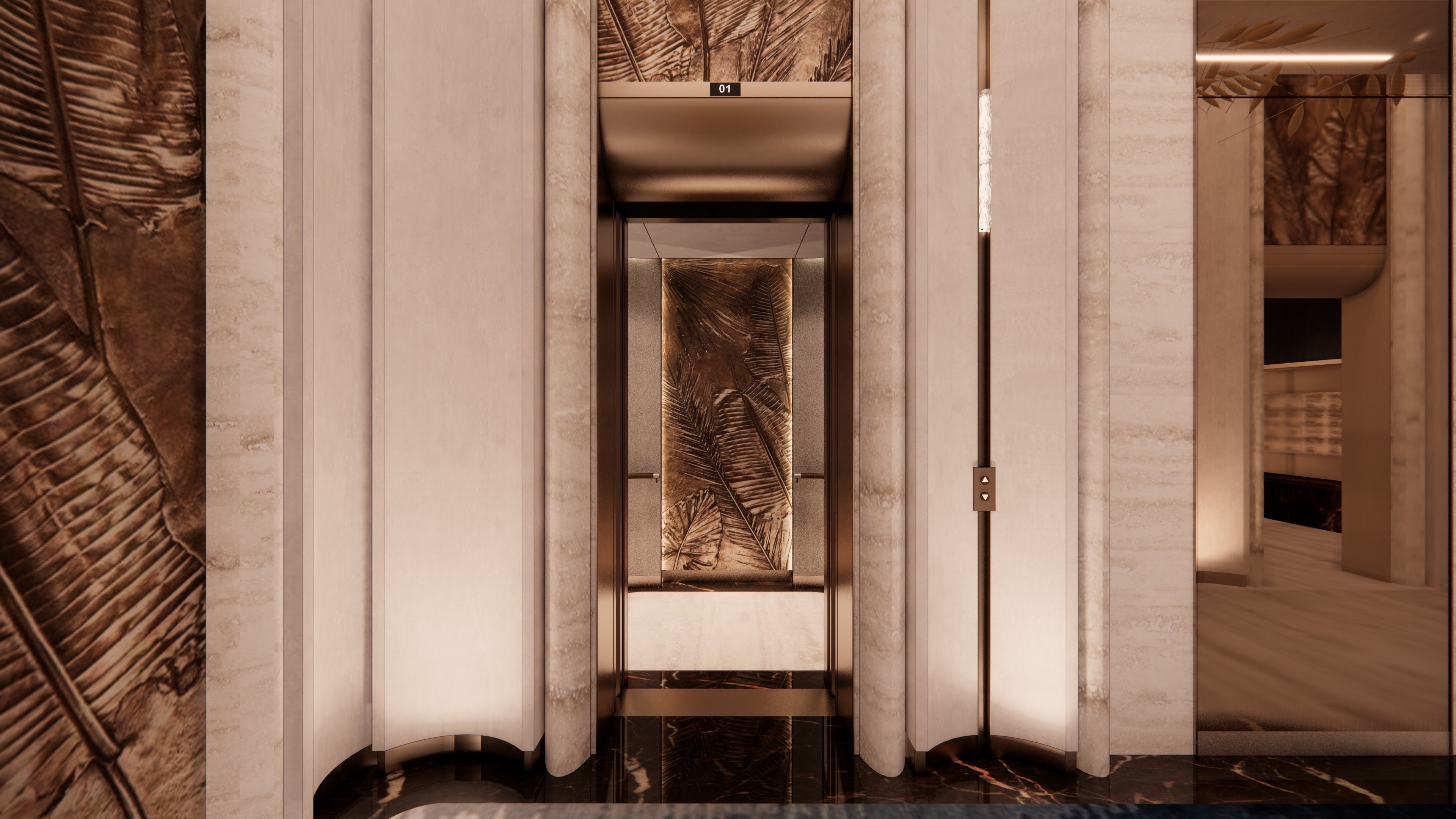
Traditional elevators follow a first-come, first-served call model: you press up or down, then select a floor inside the cab. Destination dispatch reverses that sequence. You choose your floor at a lobby terminal first, and the system assigns you to a specific cab-typically labeled with a letter or number. It does this by grouping passengers with similar destinations and scheduling cars to minimize total stops.
In a supertall, the benefit is not only speed; it is composure. A well-executed dispatch lobby can feel like a private terminal: you arrive, select your destination, and move to a clearly indicated car with minimal hesitation. Fewer intermediate stops usually mean fewer door openings, which tends to reduce noise, casual conversation, and the overall sense of exposure.
Where systems can underdeliver is in the gap between software logic and real-world behavior. Heavy amenity usage, frequent short trips, and significant guest traffic can all strain the algorithm. And if the tower’s vertical circulation was not planned with clear zoning, dispatch can become a sophisticated way to manage a layout that is already under pressure.
Elevator marketing often defaults to a vague idea of speed. For buyers, efficiency is a composite of measurable, repeatable experiences:
Lobby wait time: the time between entering the queue and stepping into a cab.
Time to destination: not just travel speed, but how many intermediate stops occur.
Predictability: whether peak hours remain consistently manageable.
Privacy and load: how many riders you share a cab with, especially to upper floors.
Recovery after disruption: how the building performs when a cab is out of service.
Destination dispatch can improve each of these-but only when the tower’s vertical strategy accounts for human patterns. In Downtown Miami, those patterns often include morning departures, late-afternoon returns, weekend social movement, and surges created by shared amenities and valet operations.
The strongest dispatch outcomes begin with planning, not programming. Buyers rarely see technical schedules, but the most important decisions leave visible clues.
Clear elevator zoning and sky-lobby logic.
In very tall buildings, the most reliable way to reduce congestion is to limit how many floors each elevator bank serves. Dispatch performs best when each bank has a defined territory. If everyone competes for the same set of cars across a broad floor range, the software can only do so much.
Separation of populations.
Luxury towers typically perform best when residents do not share their primary bank with service traffic. Service elevators should have real capacity and an operations plan that keeps deliveries and staff circulation from spilling into the residential lobby.
Access control that feels discreet.
Destination dispatch lobbies are often paired with key fobs or credentialing. When executed well, it improves both security and flow. When executed poorly, it creates a procedural bottleneck.
Amenity placement that respects peak flow.
Amenities placed on mid-level floors can generate high-frequency elevator trips throughout the day. In a supertall, you can feel the difference immediately between an amenity floor that is easy to serve and one that constantly competes with residential traffic.
Many of Downtown Miami’s most compelling buildings are mixed-use in spirit, even when they are purely residential. Residents want hotel-level services, dramatic lobbies, and amenity programs that feel curated. The trade-off is that the building becomes a destination in itself-and that internal “city life” raises elevator demand.
This is where destination dispatch either excels or shows its seams. When a tower’s amenity program is intense, dispatch must be tuned to anticipate bursts: pre-dinner departures, post-event returns, and weekend daytime circulation. The outcome you want is not merely faster rides, but a building that never feels crowded.
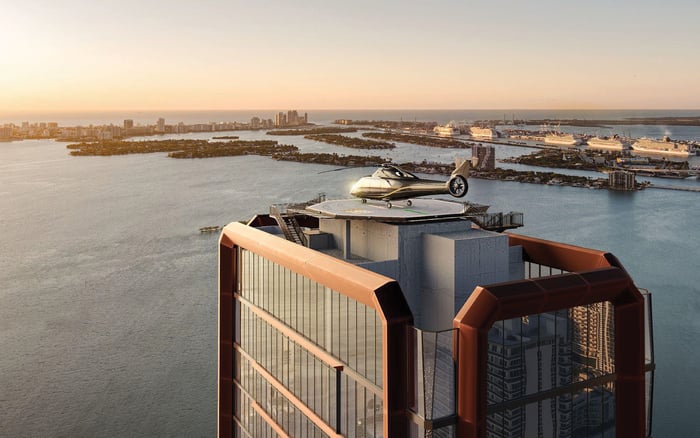
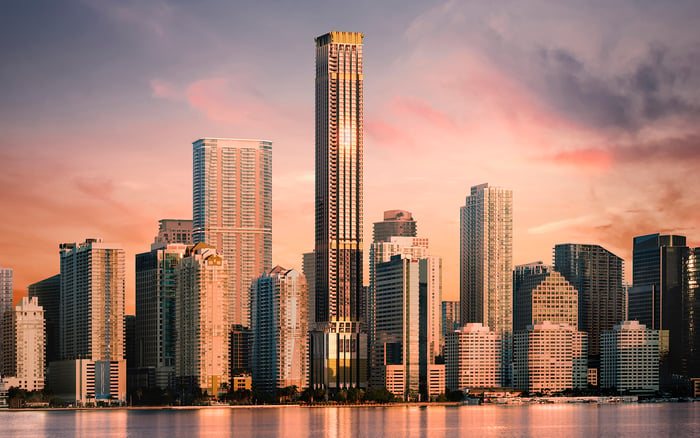
In icon-driven towers, the arrival sequence can matter as much as the residence. A building like Aston Martin Residences Downtown Miami sets an expectation of precision. In that context, elevator performance becomes part of brand delivery-the difference between a private residential experience and a lobby that reads like a busy venue.
You can learn an extraordinary amount without requesting technical documents.
Watch the decision points.
Are the destination terminals intuitive? Do residents hesitate, or does the flow look natural? Confusion creates micro-delays that compound during peak windows.
Listen for the soundscape.
A quiet, orderly lobby often correlates with well-managed elevator flow. When people cluster, ask repeated questions, or constantly check screens, the system may be creating uncertainty.
Observe cab loading.
Dispatch should typically direct you to a car that clearly aligns with your direction of travel. If cars are routinely overfilled, the building may be operating near capacity at peak times.
Notice the “second stop” problem.
If your ride regularly includes multiple intermediate stops, the building may lack effective zoning-or the dispatch settings may be optimized for average performance rather than a premium experience.
Ask staff for peak-hour patterns.
The most useful answers are concrete: when mornings are busiest, how weekends differ, and how move-ins and deliveries are managed.
In Brickell, the buyer profile often expects a near-frictionless daily rhythm: quick departures, effortless returns, and the feeling that the building anticipates lifestyle rather than reacting to it. That expectation has pushed newer towers to treat vertical circulation as a primary component of the luxury package.
Positioning and programming can materially change elevator demand. A tower built around wellness, dining, or social membership spaces can generate more internal movement than a quieter, purely residential building with a smaller amenity footprint. In that environment, the practical question becomes: is the elevator strategy designed to keep the residential experience insulated from the building’s social energy?
A project such as 2200 Brickell reflects that preference for calm, residential-first living in a high-profile corridor. Meanwhile, the ultra-branded verticality of 888 Brickell by Dolce & Gabbana signals a different demand profile: higher service intensity, strong identity, and a lobby experience that must remain composed even when the building itself is a destination.
Downtown towers often optimize for density, mixed programs, and high-frequency movement. Miami Beach luxury, by contrast, can lean into slower, resort-like rhythms and a stronger emphasis on quiet arrival. That contrast shapes what “efficient” feels like.
In a beachfront setting, the most important test may be separation between resident circulation and guest or amenity circulation. A building such as 57 Ocean Miami Beach carries the expectation that coming home should feel like entering a private enclave, even during season. In that environment, the best destination dispatch is the one you barely notice-because the elevator core simply never feels busy.
Destination dispatch is often treated as a checkbox feature. A more effective approach is to ask scenario-based questions that reveal whether the tower is built for daily reality.
Ask:
How are elevator banks zoned, and do residents have a dedicated set of cars?
How does the building handle move-ins, contractor access, and deliveries without compromising the residential lobby?
What happens when a car is down for maintenance, and how quickly does the system recover?
Are amenity floors served in a way that avoids constant competition with upper-floor residents?
Does access control integrate cleanly with dispatch, or does it create a second queue?
You are not looking for a sales pitch about speed. You are looking for evidence of engineered predictability and discretion.
High-floor owners often assume the highest floors automatically deliver the most privacy. In practice, privacy is partly an elevator outcome. When the system groups riders efficiently, you tend to share rides with fewer people headed to fewer stops. When it does not, you can spend more time in a cab with more door openings-an experience that can feel surprisingly public.
For penthouse-level living, the ideal is a vertical experience that mirrors a private driveway: direct, controlled, and consistent. That typically requires a combination of zoning, access control, and operational discipline. Destination dispatch is the interface; the underlying circulation plan is the foundation.
In luxury real estate, value is not measured only in finishes and views. It is measured in friction. A building that performs well at peak times tends to age better in residents’ minds because daily life stays composed.
Destination dispatch supports that longevity when it is treated as part of an integrated hospitality strategy. Its highest value is often cognitive: you do not plan your day around the elevator, and you do not brace for the lobby at certain hours. In Downtown Miami supertalls, that is a meaningful form of luxury.
What is a destination dispatch elevator system? It is an elevator control approach where you select your floor before entering, and the system assigns a specific cab to group riders efficiently.
Does destination dispatch always reduce wait times? Not always; it performs best when elevator zoning, access control, and amenity circulation are designed to support it.
Is destination dispatch better for privacy? Often yes, because it can reduce intermediate stops and limit who shares your cab, but outcomes depend on traffic patterns.
What should I observe during a building tour? Watch lobby flow, confusion at terminals, cab crowding, and how often rides include multiple intermediate stops.
How do amenities affect elevator performance? Amenity-heavy towers generate frequent short trips that can compete with residential traffic, especially on weekends and evenings.
Do higher floors automatically mean faster elevator service? No; higher floors can be slower if zoning is broad or if amenity and guest traffic share the same elevator banks.
What is elevator zoning in a supertall? It is the practice of assigning different elevator banks to specific floor ranges to reduce stops and manage peak demand.
Why does mixed-use programming complicate elevators? It introduces multiple rider types with different peak times, increasing the need for separation and strong operations.
What due diligence questions matter most to buyers? Ask about dedicated resident banks, service-elevator planning, recovery when a cab is down, and how amenity floors are served.
Can a great dispatch system fix a poor core layout? Software helps, but it cannot fully overcome insufficient elevator capacity or a circulation plan that concentrates demand.
To compare the best-fit options with clarity, connect with MILLION Luxury.
If branded residences are on your mind — as a home or as an allocation — we would be glad to share what we are seeing, privately.
Begin a quiet conversation