Downtown Miami is entering a new vertical chapter, with supertall proposals and branded residential towers reshaping what “city living” means in South Florida. For buyers, the appeal is not simply height, but the lifestyle that height enables: privacy, panoramic water views, curated amenities, and a front-row position to Miami’s most walkable, culture-forward core. This editorial frames what living above 1,000 feet can deliver, what it demands in day-to-day practicality, and which nearby luxury projects best express the new standard.
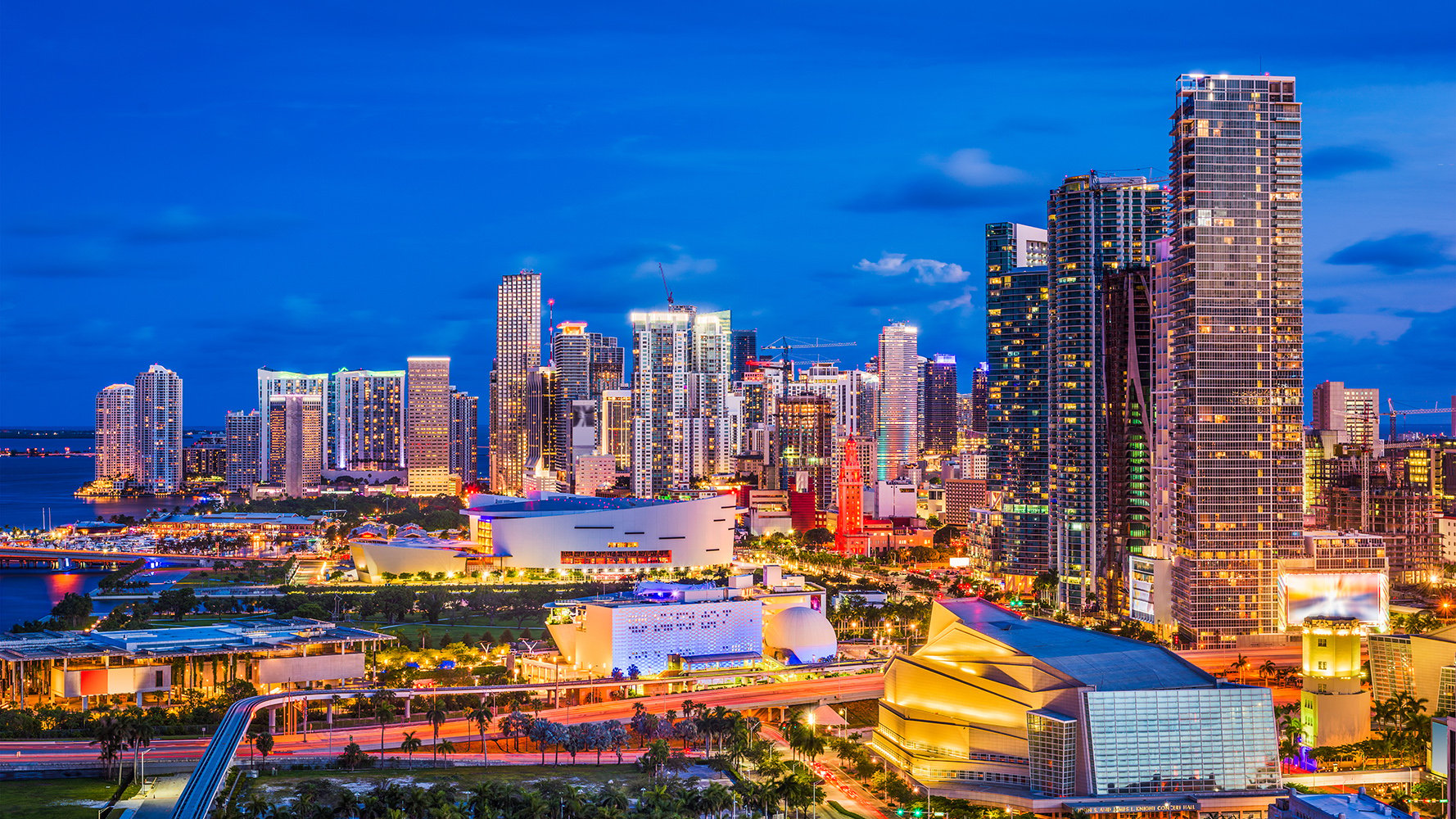
In South Florida, height has long signaled status. In Downtown Miami’s next cycle, it becomes something more precise: a way to engineer daily life to feel quieter, more private, and more controlled. Living above 1,000 feet is less about bragging rights and more about reducing friction. Street noise recedes, horizons expand, and the city reads like a curated map rather than a crowded chain of errands.
At that altitude, the emotional value of a residence often outperforms the purely functional. The morning routine shifts: sunrise becomes a scheduled event, weather becomes a moving composition, and the bay and ocean begin to feel like part of the interior palette. For many buyers, this is the real luxury of Downtown-living inside the city while remaining visually and acoustically removed from it.
Still, the supertall era isn’t simply the same condo, scaled taller. It’s an architectural and operational category with its own realities. The strongest buyers approach it the way they would a yacht or a private aircraft: beautiful, yes, but also an ecosystem of systems.
Downtown Miami and Brickell increasingly operate as a single luxury corridor, linked by walkable streets, waterfront edges, and the gravitational pull of dining, culture, and finance. The difference is tonal. Downtown is leaning harder into arts, design, and the city’s most cinematic skyline composition. Brickell remains the polished business address, now paired with a deeper residential layer of branded, service-driven living.
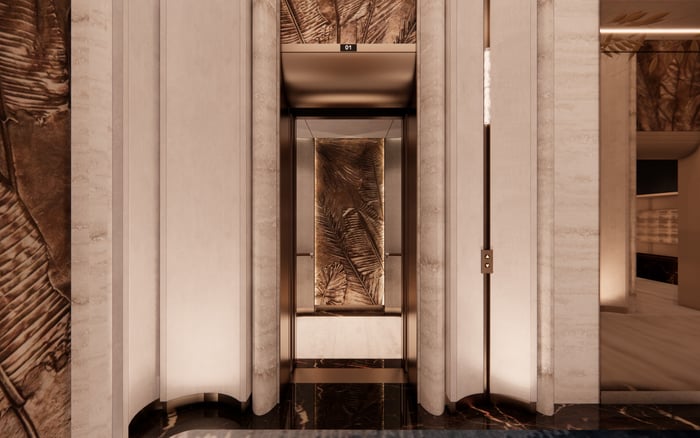
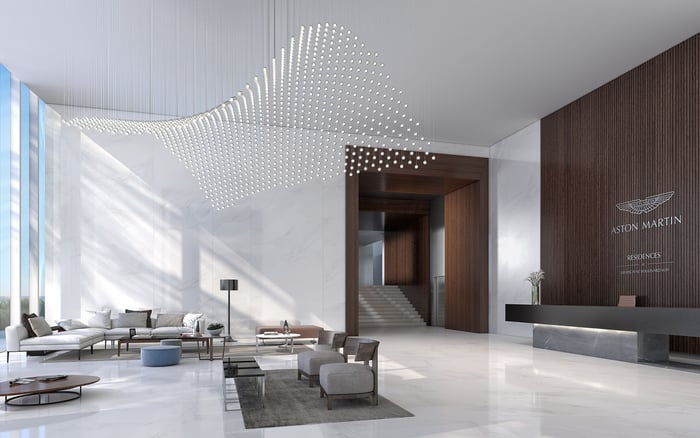
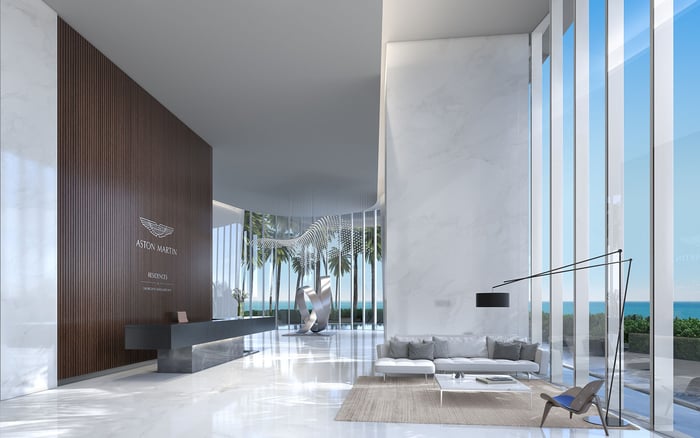
For buyers who want a Downtown identity with a direct waterfront relationship, Aston Martin Residences Downtown Miami captures where the market has headed: statement architecture paired with a lifestyle engineered around arrival, privacy, and view corridors.
Brickell’s pipeline, meanwhile, is sharpening the idea of “vertical hospitality,” where a tower functions like a private club with residences above. In that context, 888 Brickell by Dolce & Gabbana reflects an emerging buyer preference: design-forward branding, theatrical interiors, and a daily rhythm supported by service.
The larger point is simple: if you’re underwriting life above 1,000 feet, you’re also underwriting the neighborhood beneath you. Walkability, traffic patterns, weekend noise profiles, and waterfront access aren’t secondary-they’re the ground truth that decides whether a supertall home feels effortless or complicated.
High-floor residences have always commanded premiums, but supertall living intensifies the value proposition in three clear ways.
First, privacy becomes tangible. Sightlines from neighboring towers diminish, and the day-to-day feeling of being observed fades. Second, light quality changes. Above the visual clutter, rooms often read brighter and calmer-especially in the morning and late afternoon, when Miami’s atmosphere turns painterly. Third, the horizon becomes the most persuasive amenity. Water, weather, and city lights create a natural spectacle that doesn’t require programming.
For many households, this is where the purchase becomes generational. A residence that makes ordinary days feel composed isn’t merely a place to sleep; it’s a platform for hosting, retreating, and returning.
The romance of altitude should come with a practical checklist. Above 1,000 feet, operational design becomes part of the lifestyle.
Elevator strategy matters more than any marble finish. The best buildings plan for peak-hour flow, service separation, and redundancy that protects residents from long waits. You’re not only buying a unit-you’re buying time.
Wind exposure is another real variable. Higher floors can experience stronger gusts, which affects how often terraces feel comfortable, how doors and windows behave, and how the building reads during seasonal weather shifts. This doesn’t eliminate outdoor living; it makes orientation, balcony depth, and wind mitigation meaningful.
Finally, amenities should be evaluated as a system. In a supertall, there may be multiple amenity levels, dining spaces, wellness floors, and distinct arrival experiences. Buyers should decide whether they want a discreet residence that happens to have amenities-or a vertical club where amenities define the identity.
Beyond aesthetics, the most intelligent purchases are anchored in governance, resilience, and long-term maintainability. A few priorities tend to separate a satisfying ownership experience from an expensive lesson:
In a complex tower, maintenance isn’t optional. Strong management, transparent budgeting, and realistic reserves protect the lifestyle you’re paying for.
The higher the building, the more redundancy, pressurization strategies, and service continuity should matter.
Height can remove street noise, but mechanical vibration and wind-related movement can become the new variables. Construction quality and engineering choices matter.
Valet flow, package handling, private elevator access, and service corridors shape daily comfort.
In short, the best supertall homes feel serene not because the city goes quiet, but because the building is intelligently run.
Many supertall buyers aren’t choosing one address-they’re designing a portfolio of places. Downtown or Brickell can serve as the weekday platform, paired with an oceanfront counterpart for weekends and a seasonal rhythm.
If the skyline residence is about access to culture and commerce, the beach residence is about horizon and ritual. For a clean, design-led beachfront statement, 57 Ocean Miami Beach captures Miami Beach living that is residential first, with a calm, boutique sensibility.
Others pair Downtown with a more private, residential enclave that stays connected to the core. In that vein, The Well Bay Harbor Islands reflects a different definition of luxury: wellness-forward, discreet, and neighborhood-rooted.
This is where the supertall era becomes culturally consequential. It isn’t only pushing Miami higher; it’s changing how high-net-worth households think about the city’s geography. Downtown becomes a primary address, not a novelty-and that reshapes demand for surrounding nodes.
At four digits, interior design decisions behave differently. Glare can intensify, reflections can become more pronounced, and the view can dominate the room in ways that flatten furniture and art if the palette isn’t disciplined.
The most successful supertall interiors typically do three things exceptionally well:
Window treatments, lighting, and furniture heights are chosen to preserve sightlines.
Soft materials, layered textiles, and thoughtful ceiling treatments keep the space from feeling like a glass instrument.
A large, panoramic living area benefits from subtle boundaries: a reading corner, a bar moment, a gallery wall. The goal is to make the residence livable, not only photographable.
For buyers, the takeaway is straightforward: in a supertall, the view is the headline, but the interior is what determines whether you stay.
Because the Research Pack and Fact Table for this topic do not specify a verified roster of towers above 1,000 feet, it’s more useful to focus on what the trend implies for ownership.
Supertall living tends to concentrate demand among buyers who value a blend of privacy and proximity: the ability to be five minutes from a reservation, a meeting, or a gallery opening, while living in a home that feels removed from the city’s tempo. Over time, that profile can support pricing resilience-particularly for well-run buildings with strong brand positioning, scarce high-floor inventory, and protected view corridors.
However, height also concentrates costs. Mechanical systems, facade maintenance, and staffing models are more complex. Long-term value isn’t only about the skyline; it’s about whether building governance keeps the experience consistent.
For the buyer who underwrites those realities, the supertall era isn’t a speculative bet. It’s an investment in a particular kind of Miami: global, vertical, and increasingly sophisticated.
Is living above 1,000 feet meaningfully different from a typical high floor? Yes. Privacy, horizon views, and noise reduction increase, and building systems matter more.
Do supertall residences always feel windy on balconies? Often, wind is more noticeable at higher elevations, so balcony design and orientation matter.
What should I prioritize in a supertall building beyond finishes? Elevator performance, management quality, and long-term maintenance planning typically lead.
Is Downtown or Brickell better for supertall-style living? It depends on lifestyle: Downtown leans cultural and scenic; Brickell skews corporate and club-like.
Are branded towers automatically a safer purchase? Not automatically. Branding can elevate service expectations, but governance and execution decide outcomes.
Will a higher floor always have better resale demand? Generally, higher floors are more liquid, but view protection and building reputation are decisive.
How do I think about noise in a tower that high? Street noise drops, but mechanical noise and wind-related sound can vary by building and floorplan.
Do supertall buildings change how you use the neighborhood? Yes. Many residents rely more on walkability and curated building amenities than short car trips.
Should I expect higher monthly costs in a supertall? Often, yes, due to staffing, systems, and maintenance complexity at greater scale and height.
What makes a supertall home feel truly livable day-to-day? Efficient arrival, quiet mechanical performance, and interiors that balance comfort with the view.
To compare the best-fit options with clarity, connect with MILLION Luxury.
If branded residences are on your mind — as a home or as an allocation — we would be glad to share what we are seeing, privately.
Begin a quiet conversation