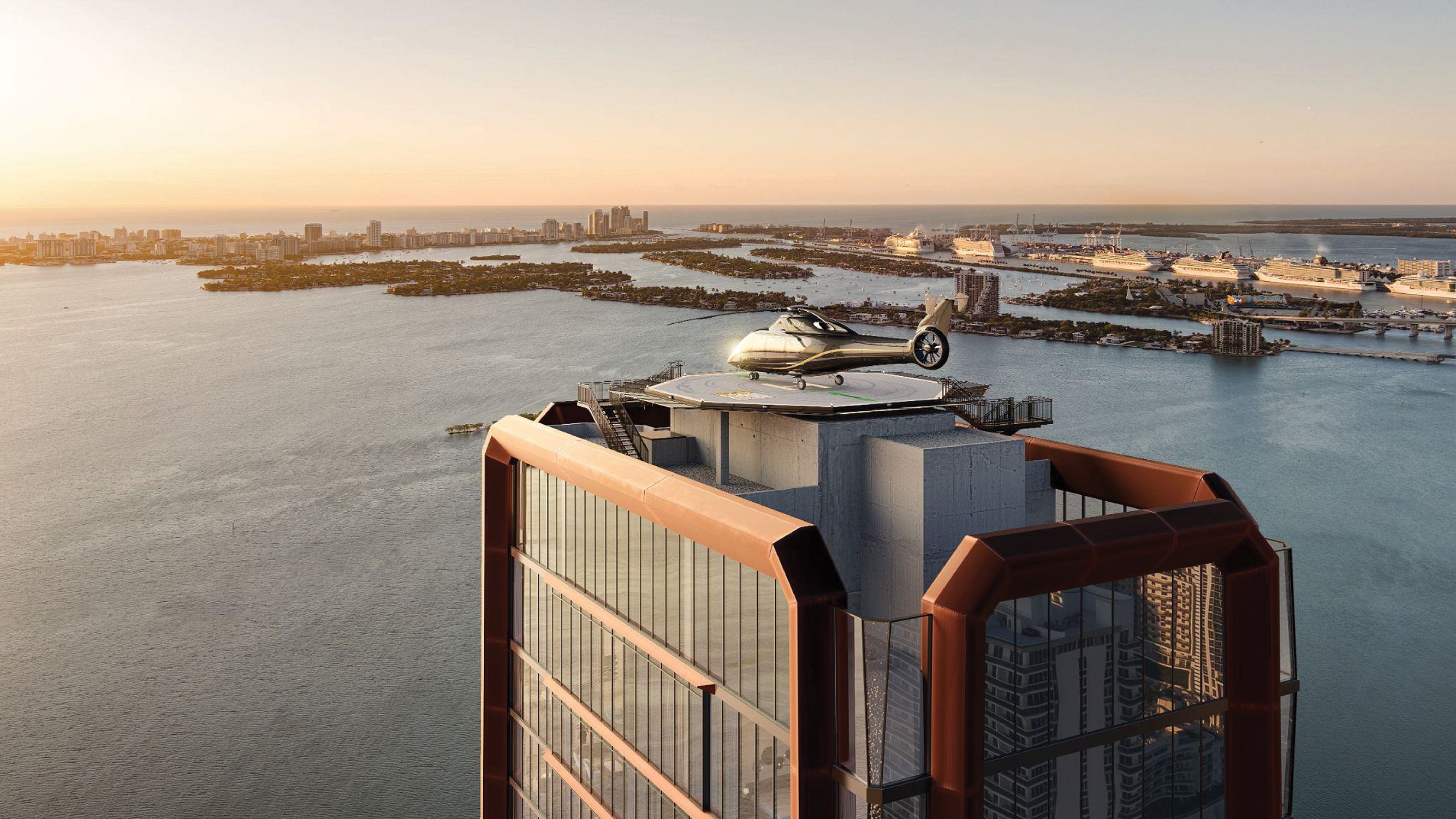
In Downtown Miami and Brickell, private aviation is less about owning a rooftop helipad and more about managing transfer time, noise exposure, and the choreography from cabin door to front door. This buyer-oriented guide outlines how to evaluate heliport and airport access, what “proximity” truly means on the ground, and which due-diligence questions protect privacy and resale.
In a market defined by speed and discretion, “close to a helipad” is often shorthand for a larger promise: less friction between meetings, residences, and regional destinations. In Downtown, Brickell, and nearby waterfront neighborhoods, the value is rarely the novelty. It’s the predictability.
Helipad proximity can shape how you plan arrivals, how often you host, and how insulated your home feels during peak traffic windows. It also comes with the practical tradeoffs: ambient rotor noise, occasional visual activity along the skyline, and building-level rules that govern rooftops, terraces, and access-controlled areas.
That’s why sophisticated buyers evaluate aviation access as a system-not a single distance metric. The right residence supports a clean sequence from vehicle drop-off to private elevator to front door, and back again, with minimal exposure.
Aviation access in Downtown Miami typically falls into three practical categories:
Commercial airports serving private terminals. Many private flyers use dedicated terminals rather than the main passenger experience. What matters is not the airport name, but the end-to-end time from your residence to the aircraft door, including security protocol and ramp access.
Helicopter operations and landing facilities. Even when a property is “near a helipad,” operations can be intermittent and subject to strict rules, weather limitations, and routing.
Seaplane and water-adjacent transfers. For waterfront lifestyles, marine access can complement aviation by reducing ground congestion. This can be particularly meaningful when your daily pattern already includes a marina.
For Downtown and Brickell buyers, the better question isn’t “How close is it?” It’s “How reliably can I move-without compromising privacy?” A refined high-rise can outperform a closer address if it delivers stronger arrival management and cleaner separation between residents and public-facing areas.
In Brickell, for instance, residences such as 2200 Brickell are often evaluated not only for the address, but for how the building handles the moments that become daily: vehicle approach, controlled entry, and the transition from street energy to residential calm.
Every aviation-oriented purchase in an urban core can be mapped to a triangle:
The consistent, repeatable minutes required to get from home to aircraft.
The ability to enter and exit without visibility, photography, or crowding.
The reality of overhead activity, rooftop mechanical zones, and outdoor space usability.
Optimizing one corner often pulls on the others. The shortest transfers may place you nearer busier corridors. The quietest corners may require an extra leg in ground transportation. The most private arrival sequences can exist in highly visible districts-if the building is designed for separation.
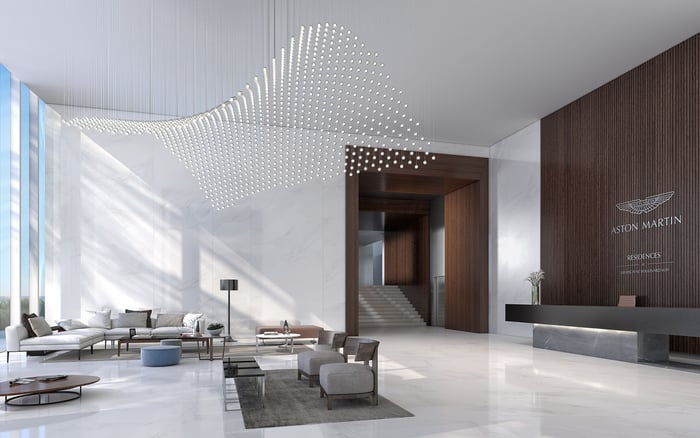
If you are considering a signature Downtown tower such as Aston Martin Residences Downtown Miami, keep aviation access in the same conversation as view corridors and vertical transportation. If your lifestyle depends on efficient departures, elevator strategy and the motor court experience matter as much as the skyline.
Because the Research Pack and Fact Table do not specify particular helipads or operating details, the most dependable approach is disciplined due diligence. Prioritize what you can verify through building documentation and direct observation.
A short straight-line distance can be misleading if typical flight paths approach from a different direction or altitude. Spend time on-site across multiple windows-including weekday mornings and late afternoons-and evaluate:
Whether rotor noise is noticeable with doors closed.
Whether terrace use feels compromised at certain times.
Whether skyline-facing exposure includes visible helicopter activity.
High-rise rooftops are complex zones, often dominated by mechanical equipment, safety requirements, and restricted access. Even if a building has a flat roof, that does not imply landings are possible. Request the governing documents and confirm:
Rules related to roof access and use.
Policies concerning chartered arrivals, filming, and special events.
Any disclosures related to nearby aviation activity.
Private aviation clients notice the final moments: curb approach, lobby sightlines, and elevator control. Consider:
Whether there is a separate residential entrance versus mixed-use traffic.
How valet queues operate during peak times.
Whether service corridors and staff routes are segregated from resident pathways.
These operational details often separate a beautiful address from a truly functional one.
Brickell’s advantage is concentration: finance, dining, and luxury residential density. The challenge is also concentration-traffic, visibility, and a public realm that can feel performative. In that context, aviation access isn’t only about proximity to facilities. It’s about how discreetly you can move within the neighborhood itself.
Consider newer, brand-forward concepts such as 888 Brickell by Dolce & Gabbana, where buyers often prioritize an elevated hospitality mindset. For an aviation-led routine, that mindset translates into consistent service, predictable arrival handling, and an environment that doesn’t require you to announce yourself.
Brickell buyers should also be realistic about outdoor spaces. If terraces matter, verify that the unit’s orientation and height align with your tolerance for city sound and occasional overhead movement. The goal is a residence that feels serene even when the neighborhood is not.
Downtown’s appeal is its immediacy: cultural venues, waterfront promenades, and the sense that the city’s future is unfolding in real time. For private flyers, it can also function as an efficient central node-connecting the Design District, Miami Beach, and Coral Gables without committing to a single-direction commute.
Residential choices in and around Downtown, including Waldorf Astoria Residences Downtown Miami, are often evaluated through a hospitality lens: staff competency, security posture, and the ability to support high-profile patterns without friction.
When you tour, don’t stop at the view line. Walk the arrival path as if you’re returning late, with luggage, and want to be invisible. Ask where vehicles stage. Observe where guests wait. Those moments determine whether a building truly supports an aviation routine.
Helipad and private aviation adjacency introduces questions that belong in legal and insurance review. Without leaning on unverified specifics, the high-level categories are consistent:
Understand what the building has disclosed about external activity-and what your remedies are if conditions change.
Confirm whether proximity to aviation activity affects premiums or underwriting posture for high-value contents.
Align building security with your travel patterns, including late arrivals and third-party drivers.
For buyers who maintain multiple residences, also consider consistency across properties. A routine that feels seamless in Brickell can feel exposed in another neighborhood if protocols differ.
Use this as a practical framework during showings, especially if you are comparing multiple towers across Downtown and Brickell:
Once with windows closed, once on the terrace.
Peak-hour waits and access control matter.
Vehicle to lobby to unit, then unit to vehicle, without improvisation.
Can the public see the entrance, the valet stand, and the elevator bank?
How are late-night arrivals managed, and who is present?
Aviation access is not a marketing line. It’s operational design.
Downtown and Brickell aviation-minded buyers tend to fall into a few discreet archetypes:
Who values reliable transfers and a neutral, professional arrival.
Who requires predictable privacy and staff-forward service.
Who wants Downtown as a central connector between coastal and inland properties.
If you recognize yourself in any of these profiles, prioritize building operations and privacy architecture over superficial proximity claims.
What does “helipad proximity” actually mean for a Downtown Miami condo? It typically signals convenient helicopter access nearby, but the lived impact is transfer time, routing, and whether you hear or see aircraft activity.
Can a residential high-rise in Downtown Miami add a helipad later? It can be extremely difficult due to rooftop constraints, safety requirements, and approvals-so buyers should not assume future capability.
Is helicopter noise always noticeable from high floors? Not always; it depends on routing, altitude, building envelope quality, and whether you’re evaluating with windows closed or on a terrace.
Should I avoid units facing the water if I care about aviation noise? Not necessarily; orientation can change what you perceive, so the best approach is to visit at different times and test the outdoor space.
Do luxury buildings have specific protocols for discreet arrivals? Many do, but they vary; confirm valet procedures, access control, and whether residential circulation is separated from public areas.
Is private aviation access more about airports than helipads in Miami? For many flyers, yes-private terminals can offer predictable processing and planning, while helicopters are more situational.
How can I evaluate privacy at the entrance quickly during a tour? Stand across the street and observe sightlines, foot traffic, and where vehicles queue, then walk the arrival path as a resident.
Will proximity to aviation affect resale value? It can-positively for buyers prioritizing speed and negatively for noise-sensitive buyers-so it’s best treated as a market-segmentation factor.
What building documents should I request related to helipad or aviation concerns? Ask for governing rules on roof access and use, security policies, and any relevant disclosures that address external activity.
What is the simplest way to compare two Downtown condos for aviation lifestyle fit? Compare curb-to-door privacy, elevator control, and terrace usability across multiple site visits rather than relying on map distance.
When you're ready to tour or underwrite the options, connect with MILLION Luxury.
If branded residences are on your mind — as a home or as an allocation — we would be glad to share what we are seeing, privately.
Begin a quiet conversation