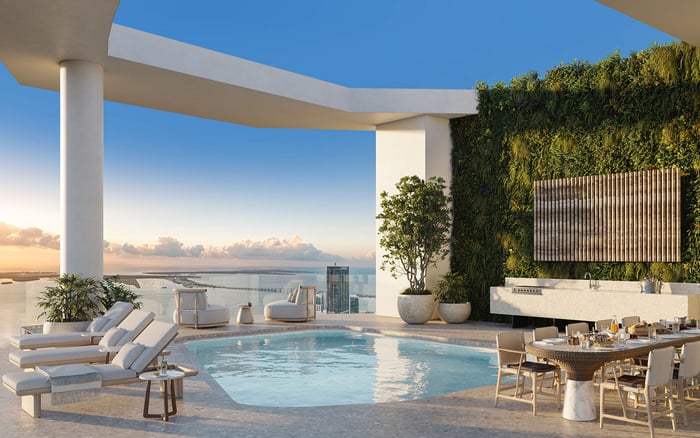
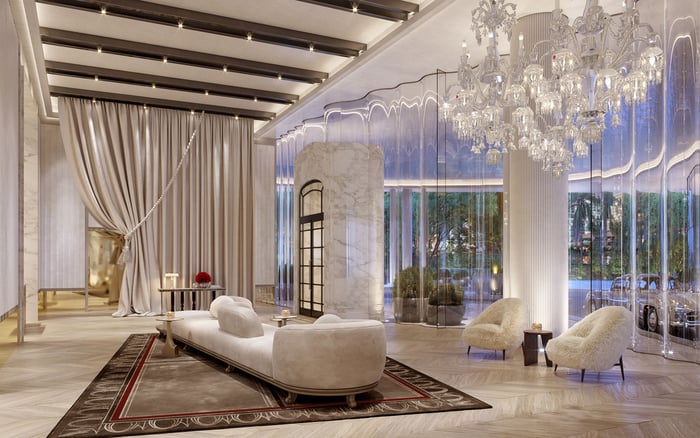
Wellness in Brickell luxury real estate is evolving from spa-adjacent perks to purpose-built recovery programming. Intravenous drip lounges and cryotherapy chambers reflect a buyer who treats time, performance, and privacy as primary amenities, and expects the same level of curation once reserved for pools and concierge.
Brickell has long sold lifestyle through design: resort pools, skyline lounges, and white-glove service calibrated for residents who move between boardrooms, airports, and waterfront dinners with minimal friction. The newest layer is quieter, more clinical, and more performance-minded. Intravenous drip lounges and cryotherapy chambers are entering the amenity conversation because they answer a modern luxury prompt: how do you feel at 7 a.m. on a Monday, not just at 7 p.m. on a Saturday.
For today’s high-net-worth buyer, wellness is shifting from occasional pampering to routine optimization. In that frame, a building’s wellness offering is assessed the way a resident assesses a gym or a kitchen: by access, discretion, and execution. It is also judged by how effortlessly it fits into daily life-especially in a dense, walkable neighborhood like Brickell, where time is the scarce resource.
Classic luxury amenities were designed to be seen. The new wellness stack is designed to be repeated. IV therapy and cryotherapy carry particular appeal because they are perceived as efficient: a short appointment, a defined protocol, and a clear beginning and end. Whether a resident uses these experiences for travel recovery, training support, or simply the comfort of a structured reset, the value proposition is consistency.
That is why these features are increasingly discussed alongside staples like fitness, pools, and concierge. They are not replacing the traditional spa. They are extending it with a more targeted, appointment-driven rhythm.
In Brickell, this also mirrors how residents use towers as curated ecosystems. Many buyers want fewer errands, fewer appointments across town, and fewer moments where privacy feels exposed. A building that can deliver a discreet wellness circuit within the same elevator ride begins to read like a private club-only more personal.
An IV drip lounge inside a residential tower is not simply a room with chairs. In high-end contexts, it signals a shift in what “service” means. The old model was concierge as problem-solver. The new model is concierge as lifestyle operator, coordinating routines that touch health, travel, and performance.
For buyers evaluating Brickell offerings, the presence of an IV lounge communicates several things:
First, the building is targeting residents with high-cadence lives. The amenity presumes frequent travel, demanding schedules, and a willingness to invest in recovery.
Second, it suggests a more sophisticated operational backbone. Even without making medical claims, a space intended for supervised wellness procedures typically requires tighter protocols than a standard lounge. That can translate into more controlled access, sharper housekeeping standards, and a higher baseline of discretion.
Third, it reframes “membership-like” programming as a value driver. In the same way a wine room becomes more meaningful with a reliable calendar, a wellness space becomes more valuable when scheduling is dependable and the user experience is consistent.
Cryotherapy is often marketed as dramatic, and that drama can make it read as a trend. In luxury development terms, however, the more durable story is design: cryotherapy chambers force a building to think carefully about sound attenuation, ventilation, humidity management, and circulation.
The most successful wellness amenity floors avoid turning recovery into theater. They prioritize calm transitions: a changing area that feels closer to a hotel spa than a gym locker room, a waiting zone that shields residents from view, and a layout that prevents awkward crossings between wet and dry zones.
This is where luxury is expressed quietly-through adjacency and flow. A cryotherapy room positioned near a fitness studio, stretch space, or treatment room supports a coherent ritual. A cryotherapy room treated as a novelty beside a party lounge does not. Buyers in Brickell increasingly recognize the difference.
In the neighborhood’s premium tier, buyers already compare buildings as curated universes. The addition of recovery-minded, wellness-forward amenities is a natural escalation.
At Cipriani Residences Brickell, the broader expectation is service and polish. In that context, any wellness programming has to feel flawlessly managed and aligned with an elevated residential tempo.
At Baccarat Residences Brickell, the benchmark is a hospitality-grade experience. Buyers drawn to that sensibility tend to respond to amenities that feel like private hotel privileges rather than add-on features.
At The Residences at 1428 Brickell, the conversation often leans toward next-generation luxury, where expectations extend beyond finishes into systems, programming, and everyday usability. Wellness amenities in this tier are evaluated for how they perform as part of the building’s overall “operating system.”
And while the headline may mention Brickell specifically, the trend carries a wider gravitational pull. Developments like Mercedes-Benz Places Miami illustrate how lifestyle branding and amenity curation are converging. As branded ecosystems become more prevalent, wellness features are less likely to be generic and more likely to be conceived as signature experiences.
For a luxury buyer, the question is rarely “Does the building have it?” The question is “How is it run?” Intravenous drips and cryotherapy introduce an operational intensity that separates serious wellness programming from marketing gloss.
Key diligence points to consider during a purchase decision or pre-construction evaluation:
Privacy and discretion. How visible is the entrance to the wellness suite? Are there sightlines from high-traffic amenities? Is there a separate check-in flow that prevents residents from feeling on display.
Access rules. Is usage included, member-based, or pay-per-visit. Are guests allowed. Are there limits during peak hours. The best experience is predictable.
Staffing and supervision. A resident should understand whether the space is independently operated, staffed by trained personnel, or made available only for visiting practitioners. Operational clarity matters more than buzz.
Maintenance cadence. Cryotherapy and other recovery experiences can be unforgiving about cleanliness and downtime. Ask how often equipment is serviced and how closures are communicated.
Insurance and documentation. Luxury buyers often underestimate this. A building’s policies, waivers, and operating procedures shape whether an amenity remains a consistent offering over time.
None of these considerations need to diminish the appeal. They simply reflect the reality that performance wellness is closer to a facility than a lounge. In a well-run building, that distinction becomes part of the value.
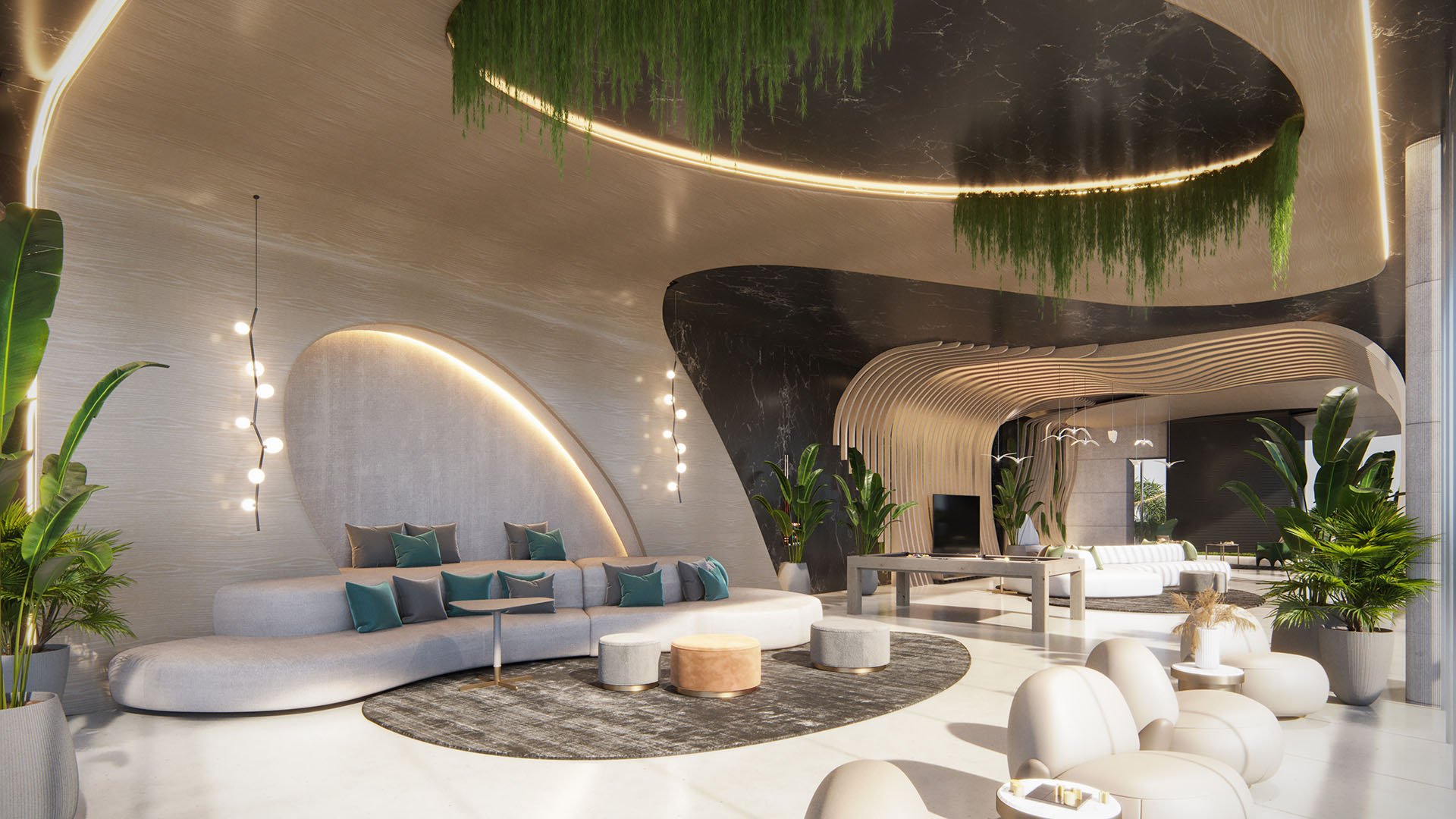
Design language is shifting. The traditional Brickell amenity deck emphasized spectacle: double-height glass, dramatic lighting, and large social zones. Recovery-focused wellness calls for a different mood: softer acoustics, warmer materials, and a sense of controlled quiet.
Expect to see more of the following in premium developments:
Zoned soundscapes. Silent corridors and buffered treatment rooms that separate recovery from high-energy fitness.
Neutral, hygienic finishes. Materials that read residential and luxurious while also supporting frequent cleaning.
Intuitive circulation. Short, private paths from residences to wellness floors, with minimal exposure to party amenities.
Technology-forward scheduling. A building’s resident app increasingly becomes the interface for booking, access control, and preference profiles.
The result is a new kind of amenity floor: less like a clubhouse, more like a private members wellness suite.
In ultra-competitive submarkets, amenities influence buyer choice-and they also shape the story told at resale. Wellness offerings that are timeless, like high-quality fitness, treatment rooms, and spa circuits, tend to age better than single-purpose novelties.
Where do IV lounges and cryotherapy land. The answer depends on integration. If these features operate as part of a broader wellness ecosystem, with adaptable rooms and coherent day-to-day management, they can strengthen a building’s positioning over time. If they are installed as isolated attractions without a sustainable operating plan, they may be the first line item reconsidered.
For Brickell specifically, the floor plan of a building’s lifestyle will matter as much as the floor plan of a residence. Buyers increasingly ask whether a tower supports the way they actually live: early workouts, fast recovery, high privacy, and a sense of control. When those needs are met, wellness becomes less of a perk and more of a reason to choose one address over another.
A strong sales narrative can make any amenity sound compelling. The discerning move is to translate the pitch into operational questions that reveal durability.
Ask where the wellness suite sits relative to elevators and other amenities, and whether you can move from residence to recovery space without crossing social traffic. Ask whether there are dedicated hours for residents and whether booking is frictionless. Ask what happens when equipment is down, who is responsible, and what the communication protocol is.
Finally, ask whether the spaces are designed to evolve. The most future-proof luxury buildings create flexible treatment rooms that can accommodate shifts in wellness preferences over time. Today’s cryotherapy room may become tomorrow’s different recovery modality. The building that planned for adaptability is the building that will still feel current.
Are IV drip lounges and cryotherapy chambers common in Brickell buildings? They are increasingly part of the amenity conversation in Brickell, especially in premium new development.
Do these wellness amenities meaningfully affect property value? They can, but the impact is strongest when the programming is well-managed and consistently available.
What matters more: having the equipment or having an operator? Operations matter more, because staffing, scheduling, and upkeep determine whether residents actually use it.
Should buyers worry about privacy with in-building wellness suites? Yes, and the best buildings design discreet circulation and controlled access to protect resident anonymity.
Can these amenities be removed or repurposed later? In many buildings, spaces can be adapted, so flexibility in layout is an important long-term advantage.
Are these amenities typically included in HOA dues? It varies; some buildings include access while others charge per use or through a membership-style model.
What is the biggest red flag when evaluating a wellness amenity? Vague answers about staffing, maintenance, and scheduling often signal the amenity is more marketing than service.
Do these features replace a traditional spa in a luxury tower? Not usually; they tend to complement spa-style amenities with a more routine, recovery-focused option.
How can a tour reveal whether the wellness offering is serious? Look for thoughtful adjacency, cleanliness, sound buffering, and a clear booking and access process.
Which Brickell projects reflect the neighborhood’s shift toward curated lifestyle amenities? Buyers comparing Cipriani Residences Brickell, Baccarat Residences Brickell, and The Residences at 1428 Brickell often focus on how wellness and service are executed.
For a confidential assessment and a building-by-building shortlist, connect with MILLION Luxury.
If branded residences are on your mind — as a home or as an allocation — we would be glad to share what we are seeing, privately.
Begin a quiet conversation