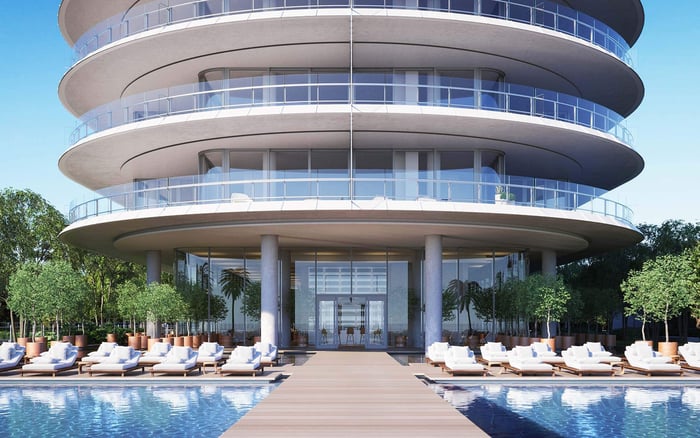
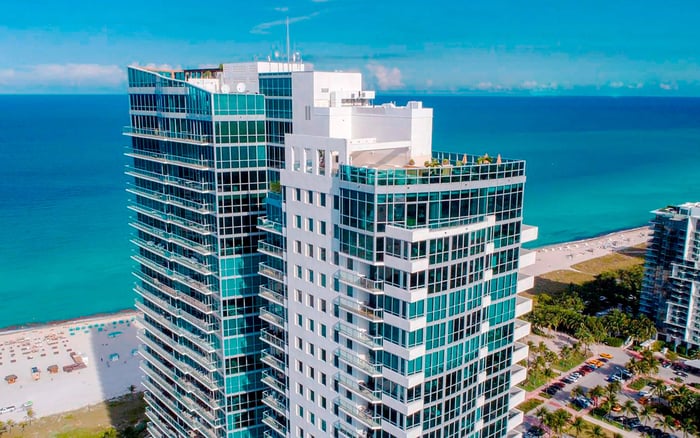
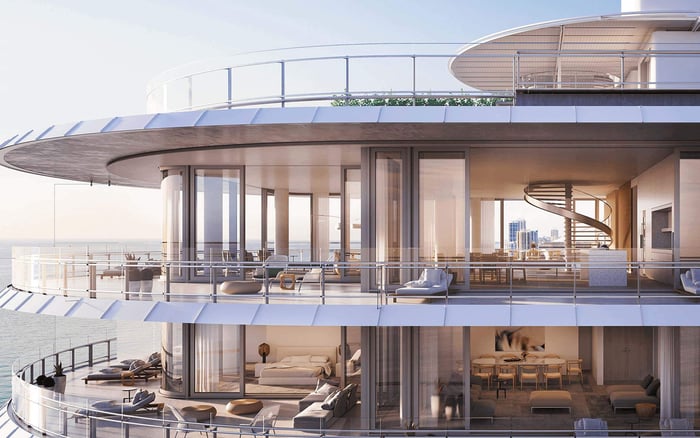
A discreet buyer’s guide to comparing Eighty Seven Park Surfside and Setai Residences Miami Beach through light, privacy, views, interiors, and everyday livability.
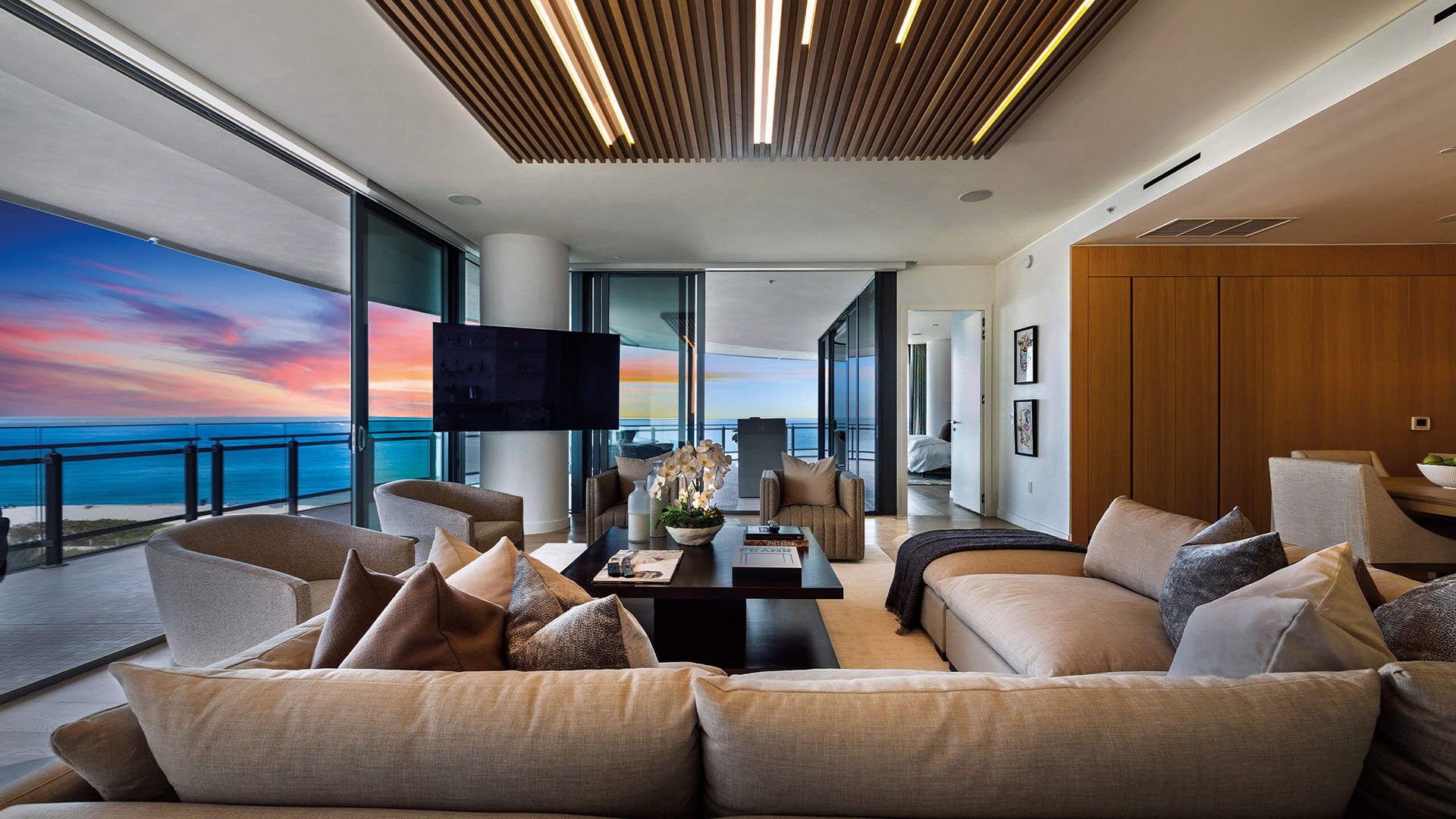
Eighty Seven Park Surfside vs Setai Residences Miami Beach is not a simple contest between two prestigious names. For a serious South Florida buyer, it is a quieter question: how should the day begin, where should the evening land, and how should each room perform when life is not staged for a showing?
That distinction matters. A residence may impress immediately with a dramatic arrival, a cinematic view, or a recognizable setting. Yet long-term satisfaction usually comes from smaller rituals: coffee before the first call, a shaded reading chair, dinner without glare, guests who can circulate without interrupting the private wing, and a primary suite that remains calm when the rest of the home is active.
This is ultimately a Miami Beach versus Surfside question, with oceanfront expectations, balcony habits, and privacy preferences all competing for priority. Eighty Seven Park Surfside and Setai Residences Miami Beach invite that comparison because both speak to buyers who already understand the value of address, but now want to refine the experience of living.
Morning light is not a decorative feature. It sets the first mood of the day. Buyers drawn to an early routine tend to focus less on how a residence photographs at noon and more on how it performs between waking, exercise, breakfast, and the first serious conversation of the day.
For some, the ideal morning is quiet, private, and elemental. The appeal lies in a residence that supports a slow start: an open terrace, a calm kitchen sequence, and a living room that does not feel overly exposed before the household is ready for the world. In that mindset, Eighty Seven Park Surfside may be evaluated through the lens of retreat. The question becomes whether the home feels restorative before it feels social.
Other buyers want the morning to carry more immediate energy. They may prefer a setting that places them closer to the cultural tempo of Miami Beach, with a stronger sense of movement and access. For those buyers, Setai Residences Miami Beach enters the conversation as part of a broader lifestyle pattern, where the day may begin quietly but is never far from restaurants, wellness routines, meetings, and evening plans.
The practical test is simple. Imagine the first ninety minutes of a normal weekday, not a holiday weekend. If the residence improves that sequence, it will likely hold its appeal after the novelty of acquisition fades.
Sunset has a different power. It is less about discipline and more about reward. In South Florida, the late-day view can become a form of theater, especially when the light softens interiors and makes terraces feel like outdoor salons. Buyers often overvalue this moment, then later realize that a spectacular angle is not always the same as an easy home.
A sunset-oriented decision should include a study of glare, furniture placement, room depth, and how often the buyer actually entertains at that hour. A living room that looks magnificent at dusk may still need to function at 10 a.m., during a video call, or on a humid afternoon when the terrace is not the center of life. The view should enhance the plan rather than dominate it.
Setai Residences Miami Beach may appeal to buyers who want the evening to feel connected to a larger Miami Beach rhythm. Dinner plans, visiting friends, and an active social calendar can make the home feel like a private base within a more animated setting. The important question is whether that energy feels like convenience or intrusion.
Eighty Seven Park Surfside may resonate with buyers who prefer the evening to become quieter after the day’s obligations. The value is not only what can be seen from the residence, but how the space allows the household to come down from the day. If the sunset is beautiful but the plan is restless, the romance will not be enough.
Luxury buyers often speak in terms of views, square footage, and amenities, but daily living is decided room by room. A great residence is not merely large or prestigious. It has a sequence that makes sense.
Start with the entry. Does it create a moment of privacy before revealing the main living area, or does it expose the home too quickly? Then study the kitchen. Is it a showpiece, a working room, or both? Can staff, family, and guests move through it without congestion? In a South Florida residence, the kitchen often becomes the informal command center, even in homes designed for formal entertaining.
The living area should be judged by usable walls, not only glass. Window lines can be extraordinary, but furniture still needs an anchor. Art, lighting, and conversation zones require surfaces and proportions. A room that is all exposure can feel exciting for ten minutes and difficult for ten years.
Bedrooms require a different standard. The primary suite should feel protected from the social life of the residence. Secondary bedrooms should be more than overflow space; they should support children, guests, caregivers, or a work-from-home pattern without compromising privacy. A den should not be accepted simply because a floor plan labels it as one. It must have a believable use.
This is where the comparison between Eighty Seven Park Surfside and Setai Residences Miami Beach becomes most personal. The better choice is not necessarily the one with the more memorable first impression. It is the one where every room earns its place.
The strongest luxury real estate decisions begin with an honest calendar. How many nights will the owner sleep there each month? Will the home be used as a primary residence, a seasonal base, or a family gathering point? Will guests stay often? Is the buyer seeking solitude, access, or a calibrated blend of both?
Surfside often enters buyer conversations as a desire for restraint, while Miami Beach often signals access and energy. Those are not absolute rules, and each buyer will read the settings differently. Still, the contrast is useful. It helps clarify whether the residence should act as a sanctuary from Miami’s pace or a refined platform within it.
Privacy is not only about security or exclusivity. It is also acoustic, visual, and emotional. Can the owner step onto the terrace without feeling observed? Can dinner remain intimate when guests are present? Can a spouse take a call while another hosts friends? These questions rarely appear in listing language, but they shape the ownership experience.
Prestige should confirm a decision, not make it. A buyer comparing these two addresses should build a short list of nonnegotiables before revisiting price, reputation, or availability. The list should include morning light, evening use, terrace comfort, kitchen function, bedroom separation, guest circulation, parking routine, and the level of neighborhood energy that feels right.
Then the buyer should walk each residence mentally from morning to night. Where are the keys dropped? Where does the first coffee happen? Where does luggage go when guests arrive? Where does a child read, a partner work, or a host place flowers before dinner? These details may sound small, but in the ultra-premium market, small frictions are magnified because expectations are so high.
The right residence should feel composed even before it is furnished. It should not require constant explanation. If the plan works, the buyer senses it quickly: rooms connect naturally, light is generous but not punishing, views are present without overwhelming the interiors, and private spaces remain genuinely private.
For many buyers, the final decision between Eighty Seven Park Surfside and Setai Residences Miami Beach will come down to temperament. One buyer may prioritize stillness, discretion, and a quieter return at day’s end. Another may prefer the pulse of Miami Beach and the confidence of being close to its established lifestyle circuits. Neither choice is inherently superior. The better residence is the one that makes the owner’s ordinary days feel better designed.
Is Eighty Seven Park Surfside better for a quieter lifestyle? It may suit buyers who prioritize a more restrained residential rhythm, but the right answer depends on the specific residence, exposure, and floor plan.
Is Setai Residences Miami Beach better for access and energy? It may appeal to buyers who want a Miami Beach setting with a more active daily and evening pattern.
Should sunrise or sunset matter more in the decision? Sunrise matters if mornings define your routine, while sunset matters if entertaining and evening decompression are central to how you live.
What is the most overlooked factor in this comparison? Room-by-room livability is often overlooked, especially the way kitchens, bedrooms, terraces, and work areas function on ordinary days.
How should buyers evaluate a balcony in either residence? Buyers should consider shade, privacy, furniture depth, wind comfort, and how often the outdoor space will actually be used.
Does a stronger view always mean a better residence? No. A view should support the floor plan, not compensate for awkward circulation, limited privacy, or difficult furnishing conditions.
Which buyer might prefer Surfside? A buyer seeking a more subdued residential experience may find Surfside especially compelling when privacy and calm are top priorities.
Which buyer might prefer Miami Beach? A buyer who values proximity to a livelier social and cultural rhythm may find Miami Beach better aligned with daily habits.
How important is furniture planning before purchase? It is essential. Furniture planning reveals whether rooms are genuinely usable or merely impressive in an unfurnished presentation.
What is the best way to shortlist comparable options for touring? Start with location fit, delivery status, and daily lifestyle priorities, then compare stacks and elevations to validate views and privacy.
If you'd like a private walkthrough and a curated shortlist, connect with MILLION.
If branded residences are on your mind — as a home or as an allocation — we would be glad to share what we are seeing, privately.
Begin a quiet conversation