Auberge Beach Residences & Spa Fort Lauderdale, La Baia North Bay Harbor Islands, and Mila Bay Harbor Islands reveal how South Florida luxury condos are increasingly being shaped for primary residence use, with practical layouts, daily services, and neighborhood context moving to the foreground.
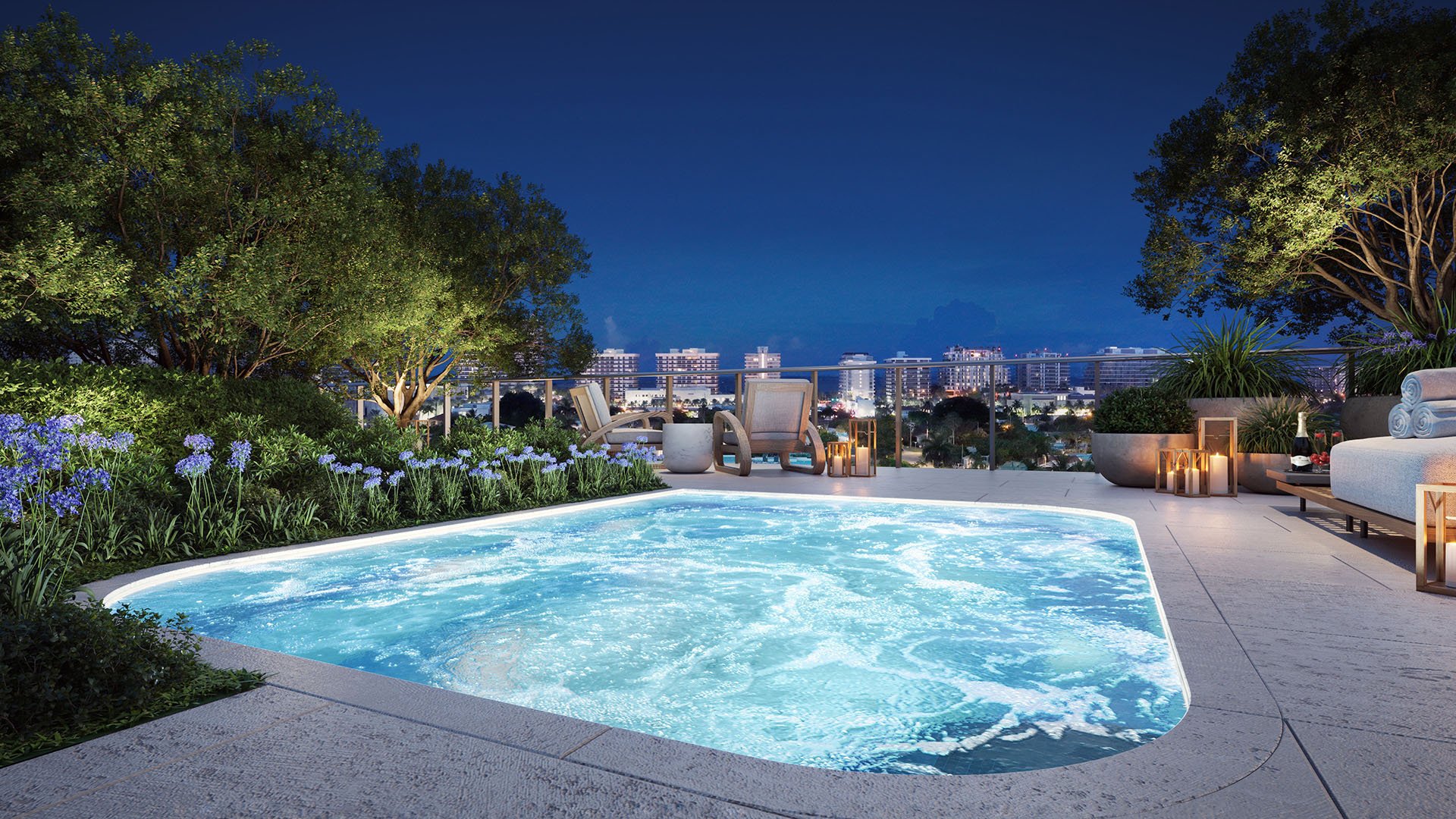
For years, the South Florida luxury condominium was often judged through a seasonal lens. Buyers asked how it performed as a winter retreat, a beach base, or a lock-and-leave escape. That conversation has not disappeared, but it is no longer sufficient. A growing share of high-net-worth buyers now approaches South Florida as an operational home base, not simply a warm-weather interlude.
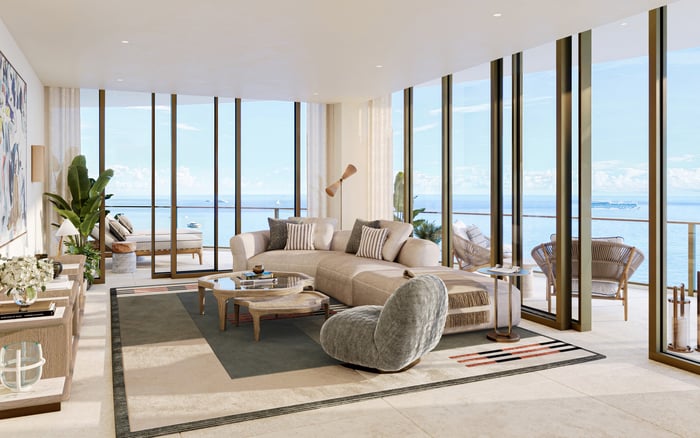
That shift changes what matters. The pool, spa, and view still count, but they are no longer the entire brief. Full-time residents scrutinize kitchens, storage, office-ready layouts, parking, privacy, and the quiet convenience of living well every day. The most compelling buildings translate resort polish into residential steadiness.
Three projects illustrate the recalibration with particular clarity: Auberge Beach Residences & Spa Fort Lauderdale, La Baia North Bay Harbor Islands, and Mila Bay Harbor Islands. Together, they span Fort Lauderdale and Bay Harbor Islands, two settings that show how luxury living in South Florida is becoming more rooted, more practical, and more deliberately residential.
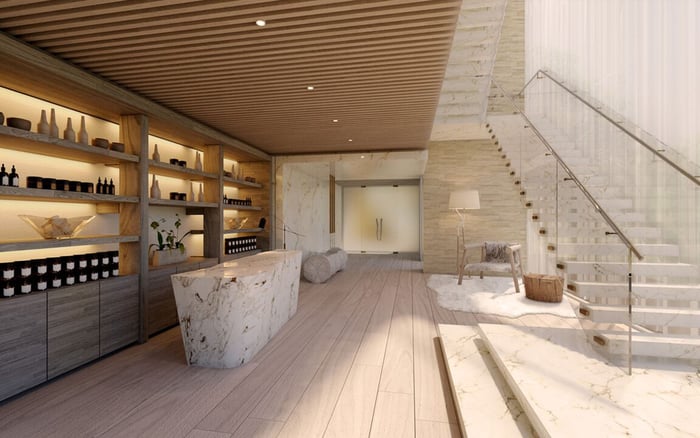
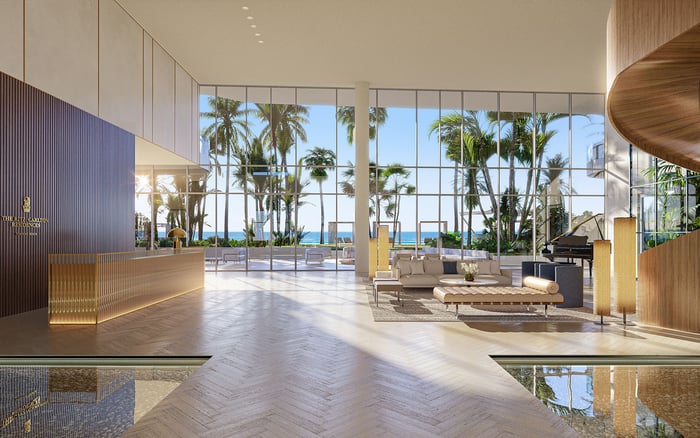
Auberge Beach Residences & Spa Fort Lauderdale is an instructive Fort Lauderdale case study because it sits at the intersection of beach identity and full-time domestic life. The property’s beach-and-spa character makes clear why hospitality-style amenities became so desirable in the first place. What is more revealing now is how that hospitality language is being absorbed into everyday living.
For the full-time buyer, a spa environment is not simply a vacation indulgence. It can become part of a weekly rhythm. Beach access is not only a seasonal pleasure, but a daily extension of the home. Services that once felt like resort extras are increasingly viewed as residential infrastructure, especially by buyers who expect their primary residence to support health, privacy, and ease without constant planning.
That is where Auberge helps define the Fort Lauderdale Beach conversation. It reflects a market in which the appeal of resort-caliber living is being reframed around longer-term occupancy. The question is not whether a residence can impress guests for a week. The question is whether it can support life for a year, then another year, with grace.
Fort Lauderdale also brings a distinct tone to the shift. Compared with the more transient associations of certain resort corridors, it can offer a sense of coastal continuity for buyers who want South Florida without feeling perpetually in vacation mode. In this context, lifestyle is not a decorative category. It is the operating system of the home.
Bay Harbor Islands offers a different but equally important lens. The area shows demand for waterfront condominium living within a neighborhood setting rather than a purely resort-driven environment. For buyers considering a permanent move, that distinction matters.
La Baia North Bay Harbor Islands represents this movement toward residences that feel both elevated and livable. Its relevance is not only that it is a waterfront condominium, but that it sits within a broader Bay Harbor Islands context where buyers may be thinking about daily routines, neighborhood continuity, and long-term comfort. Waterfront living becomes more persuasive when it is connected to a sense of place, rather than detached from it.
Mila Bay Harbor Islands strengthens that point by giving the neighborhood a second example of demand beyond the traditional Miami Beach resort pattern. Mila helps show how the new luxury buyer values community, functionality, and year-round use. The emphasis is less on occasional arrival and more on inhabitation, the slower, more revealing test of any residence.
This is why Bay Harbor Islands has become an important residential alternative within the Miami-area luxury market. It allows buyers to consider water, privacy, and scale through a residential lens. The result is a quieter kind of prestige, measured not only by views or finishes, but by how naturally a home supports full-time life.
The rise of full-time South Florida living has made the luxury buyer more exacting. A beautiful living room still matters, but so does where the school bags, golf equipment, luggage, files, pet supplies, and weekly household deliveries go. A dramatic kitchen still matters, but it must also function for real cooking, hosting, and daily traffic.
Office-ready layouts have become central. Even when a buyer is not working from home full time, the residence must accommodate calls, privacy, and quiet concentration. A second bedroom that photographs well is not necessarily the same as a flexible room that can operate as a study, guest suite, or family overflow space.
Parking has also become a more serious part of the full-time calculus. Seasonal users may tolerate friction. Primary residents usually do not. They want a residence that works before dinner reservations, during school runs, after airport arrivals, and on ordinary weekdays when convenience is not a luxury, but a requirement.
Storage is another revealing measure. In a second home, limited storage can feel manageable. In a primary home, it quickly becomes a design failure. The more South Florida attracts buyers who intend to stay, the more practical capacity becomes part of the luxury proposition.
The most sophisticated amenity programs are moving from spectacle toward usefulness. That does not mean amenities are becoming less refined. It means they are being judged by whether residents will use them repeatedly, privately, and comfortably.
A beach-and-spa identity, as seen in Auberge, can still be highly compelling. But the deeper value lies in whether those features are integrated into daily life rather than reserved for special occasions. Likewise, waterfront settings in Bay Harbor Islands carry greater weight when they connect to a livable neighborhood rhythm.
This is a subtle but significant change. The old luxury question was often, “What does the building offer?” The full-time luxury question is, “How does the building make life easier?” That shift favors residences with practical layouts, meaningful services, and a sense of stability. It also favors locations that can support routine without sacrificing beauty.
For buyers, the implications are clear. A residence that feels spectacular for a weekend may not be the same residence that performs gracefully as a primary home. The best South Florida buildings increasingly aim to do both.
Auberge, La Baia North, and Mila create a useful cross-section because they do not tell the same story in the same setting. Auberge frames the Fort Lauderdale evolution, where resort-caliber services and beach life are being recast for longer-term living. La Baia North shows how Bay Harbor Islands can deliver waterfront condominium living in a more residential neighborhood context. Mila reinforces the same Bay Harbor Islands trend through community, long-term occupancy, and everyday functionality.
Together, they reflect a broader luxury-condo recalibration toward stability, services, and permanence. South Florida is still a destination, but for many buyers it is now more than that. It is where they expect to run their households, host family, work when needed, and live with the same seriousness they once reserved for New York, Chicago, Los Angeles, or abroad.
That does not make the market less glamorous. If anything, it makes the glamour more disciplined. Full-time living demands that beauty be backed by function. It asks architecture, amenities, and location to perform beyond the first impression. In the ultra-premium segment, that may be the new definition of value.
Why are South Florida luxury condos being evaluated differently now? More buyers are considering them as primary residences, so daily function matters as much as seasonal appeal.
What makes Auberge relevant to full-time living in Fort Lauderdale? It shows how beach-and-spa living can be integrated into daily residential life rather than treated only as a resort experience.
Why does Bay Harbor Islands matter in this trend? Bay Harbor Islands offers waterfront condominium living within a neighborhood setting, which appeals to buyers seeking longer-term residence.
How does La Baia North Bay Harbor Islands fit the full-time living theme? It illustrates demand for practical waterfront living in a residential environment rather than a purely transient resort context.
What does Mila Bay Harbor Islands add to the discussion? Mila reinforces the focus on community, everyday functionality, and year-round occupancy in Bay Harbor Islands.
Are amenities becoming less important to luxury buyers? No. They are being judged more by daily usefulness, privacy, and consistency than by spectacle alone.
What features do full-time buyers scrutinize most closely? Kitchens, storage, office-ready layouts, parking, and family practicality are increasingly central to the purchase decision.
Is Fort Lauderdale competing with Miami-area luxury markets? Fort Lauderdale offers its own coastal residential appeal, especially for buyers who want beach living with a more settled rhythm.
Is waterfront living still a primary driver? Yes, but the strongest appeal comes when waterfront views are paired with practical layouts and neighborhood livability.
What is the main takeaway for buyers? The best luxury condo is no longer just the most impressive retreat, but the one that performs beautifully as a full-time home.
For a confidential assessment and a building-by-building shortlist, connect with MILLION.
If branded residences are on your mind — as a home or as an allocation — we would be glad to share what we are seeing, privately.
Begin a quiet conversation