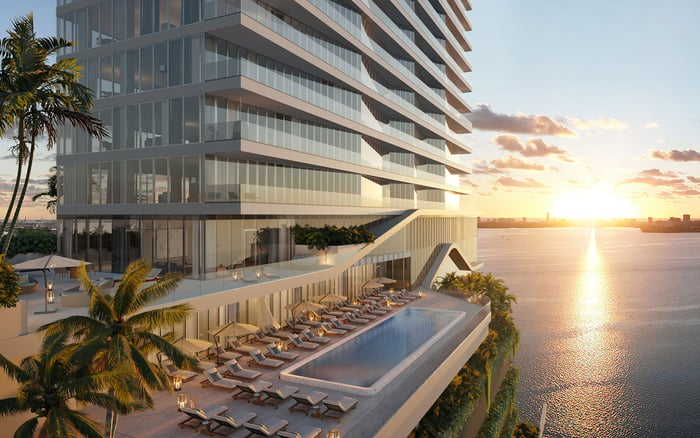
In Edgewater, the next premium differentiator is not just view corridor or ceiling height. It is the operating philosophy that sits behind the lobby desk. EDITION Edgewater and Cove Miami represent two distinct approaches: a hospitality platform designed to deliver hotel-caliber residential service, and a boutique tower built around curated partnerships and targeted lifestyle conveniences. For buyers, the decision is less about which amenity list is longer and more about which service architecture matches how you actually live, host, travel, and lease.
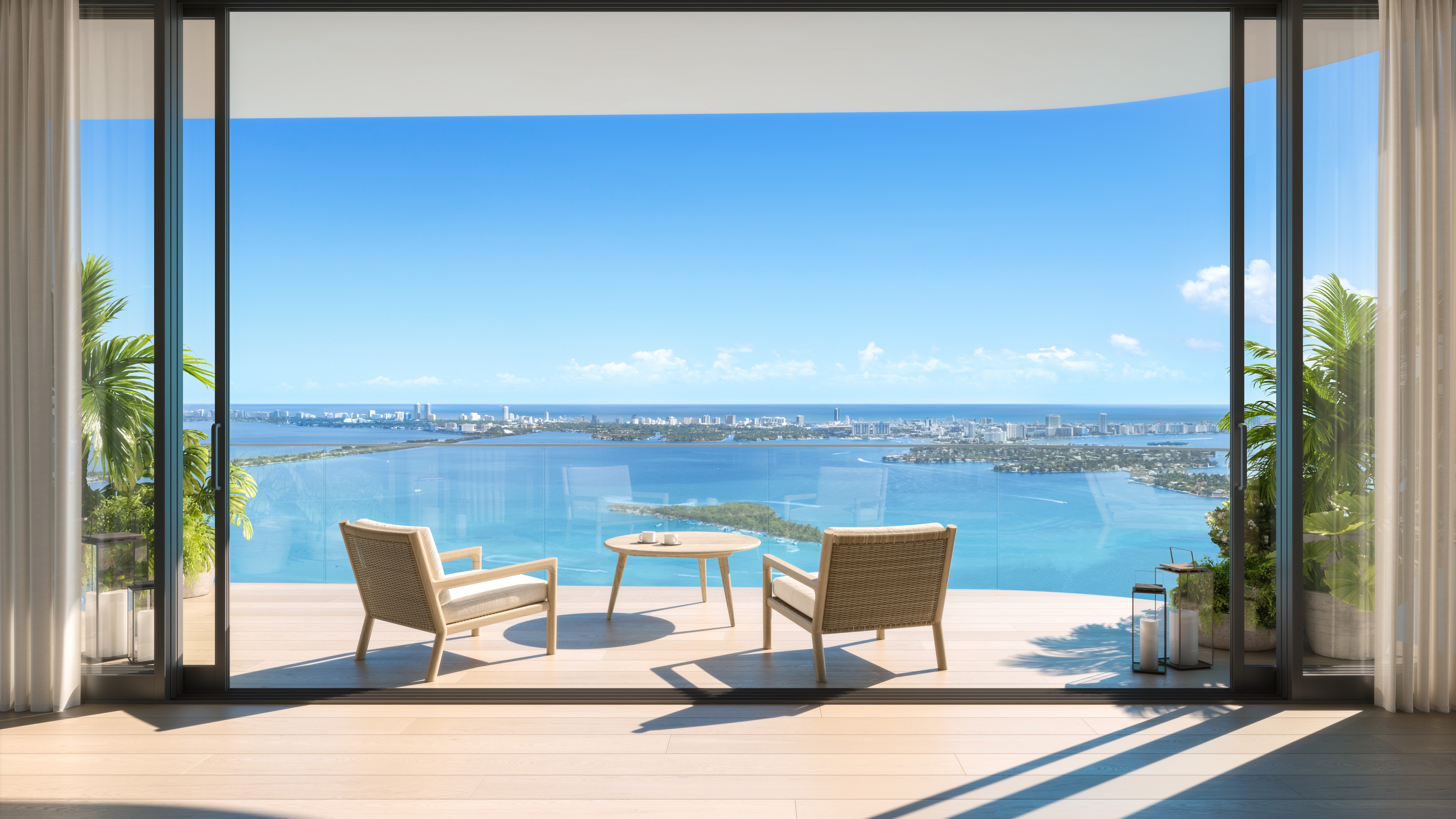
Edgewater has become one of Miami’s clearest case studies in modern luxury: waterfront adjacency, design-led new construction, and a buyer profile that expects discretion paired with real operational capability. At this level, finishes still matter, but the real differentiator often arrives after closing. Who picks up when you call from abroad. How requests are routed and resolved. Whether “wellness” is a pretty room on a plan set or a system that works every day.
Two projects capture that shift with unusual clarity: EDITION Edgewater and Cove Miami. Both target a design-forward audience, yet each is built on a different operating philosophy. One is positioned as a residence-first extension of a global hospitality brand. The other is a boutique-leaning tower centered on curated partnerships and select lifestyle conveniences.
That difference is not theoretical. It influences staffing depth, service culture, day-to-day rhythm, and ultimately your monthly operating costs. For buyers weighing pre-construction options, understanding the service model is as important as reviewing the floor plan.
At a headline level, EDITION Edgewater is marketed as a standalone EDITION Residences project without a hotel component or transient use. It has been publicly described as a 55-story tower with 185 residences on Biscayne Bay, designed to deliver hotel-caliber residential living supported by the EDITION and Marriott hospitality platform.
In contrast, Cove Miami is presented as a boutique-scale alternative in the same neighborhood, planned as a 40-story tower with 116 residences at 456 NE 29th Street. Its positioning emphasizes curated partnerships rather than a single hospitality operator overseeing the full service stack.
The practical takeaway is straightforward. EDITION Edgewater is selling an integrated hospitality operating identity. Cove Miami is selling a tailored lifestyle playbook assembled through specialist providers.
Luxury buyers often talk about “service” as if it were one amenity. In practice, service is an organizational system: hiring, training, escalation paths, vendor standards, and the everyday discipline of follow-through.
With EDITION Edgewater, the promise is an EDITION-style experience translated into full-time residential life. The project is positioned around personalized service, concierge-led lifestyle support, and access to a broader Marriott residences ecosystem that can extend beyond the building.
With Cove Miami, the service narrative is more modular. Its curated-partnership approach implies the building can add, adjust, or refine offerings without rebuilding the entire operation. One widely discussed example is an in-house medical concierge offering through LEAA Medical Providers, framing wellness and healthcare coordination as a signature layer of resident support. Another is the Zipcar partnership, which places transportation convenience directly into the resident-services experience.
Neither model is automatically “better.” The correct fit depends on whether you prefer a unified, brand-governed standard or a flexible network of best-in-class specialists.
In ultra-premium condos, monthly fees are rarely just a line item. They are the most visible expression of the building’s operating philosophy.
EDITION Edgewater’s projected HOA and maintenance fees have been commonly cited around approximately $1.90 per square foot, reflecting a higher-service cost structure often associated with hospitality-level staffing and programming.
Cove Miami’s projected HOA and maintenance fees have been commonly cited around approximately $1.35 per square foot, consistent with a model that prioritizes partnerships and selective services rather than a fully hospitality-operated environment.
The better framing is not simply “higher” versus “lower.” It is: which operating system do you want to underwrite over the next decade? If high-touch, concierge-forward living is central to your definition of value, a higher fee can make sense. If you want a more boutique feel with targeted services and potentially lower carrying costs, Cove Miami’s profile may align.
As with most pre-construction fee guidance, these figures are marketing-era estimates and can evolve before closing and as operations stabilize.
Wellness is now table stakes in luxury development. The real question is execution.
Cove Miami leans into wellness in both amenity planning and service delivery. The medical concierge concept is not simply a spa-adjacent talking point. It suggests a resident support mechanism for scheduling, coordination, and day-to-day health logistics, which can be particularly relevant for second-home owners and globally mobile buyers.
EDITION Edgewater’s positioning is less about a single signature partner and more about a hotel-grade approach to resident care. Its amenity programming has been marketed as extensive across fitness, wellness, social, and entertainment spaces, built to operate within a high-touch service environment.
A sophisticated question in either scenario is simple: which wellness experiences require staff, coordination, and follow-up, and which are self-serve rooms? The answer often determines whether the building feels effortless or merely well-appointed.
Leasing rules are not just an investment footnote. They influence who you share elevators with, how frequently the lobby resets, and the long-term tone of ownership.
Cove Miami’s leasing rules have been commonly marketed as allowing rentals up to two times per year with a minimum three-month lease term. That structure typically reduces short-term turnover and supports a calmer, more residential cadence.
EDITION Edgewater is marketed without transient use, consistent with the idea of a residence-first environment. For buyers who are sensitive to privacy, consistency, and day-to-day atmosphere, that positioning matters.
If leasing is part of your plan, evaluate more than the permission itself. Consider operational friction. Fewer, longer stays can be easier on staff and systems, and it often reads as more residential in practice.
Construction financing does not guarantee a lifestyle, but it can signal momentum and execution capacity.
Cove Miami has been reported as having a $170 million construction loan secured by SB Development Group and Hazelton Capital. For prospective buyers, disclosures like this can be meaningful, as they indicate the project has crossed a key threshold in capitalization.
Still, financing does not define the end product. The operating plan, staffing quality, and partnership execution determine whether service feels curated or inconsistent. In a partnership-led model, continuity and quality control are where the premium is won or lost.
Many Edgewater buyers arrive already calibrated by Miami Beach’s long history of hotel-adjacent residential living. The market has been trained to expect strong discretion, design credibility, and fast response times.
For those benchmarking service culture, Miami Beach provides useful reference points. Faena House Miami Beach reflects a design-forward, statement-property approach that shows how “experience” can become part of a building’s identity.
Similarly, Setai Residences Miami Beach and The Ritz-Carlton Residences® Miami Beach are often used as shorthand for a specific caliber of hospitality-aligned living. For an Edgewater buyer, these references help clarify preference: do you want your residence to operate with a singular hotel-grade standard, or with a more flexible, residential-first sensibility?
If Miami Beach is your baseline, decide which parts of that model you truly use, and which parts you simply expect to be present.
Luxury purchases reward specificity. Before you commit, pressure-test the service architecture as carefully as the finishes.
First, define your service dependency. If you want a consistent team that can manage details of daily life with hospitality discipline, EDITION Edgewater’s operator-driven positioning may feel natural.
Second, identify your signature need. If wellness logistics, transportation access, or a tightly edited roster of third-party experts is the center of your lifestyle, Cove Miami’s partnership-led model can be compelling.
Third, run the lifestyle math. A higher HOA can be efficient if it replaces personal staffing or eliminates daily friction, but it can also be wasteful if your usage is minimal. A lower projected fee can be attractive, but only if the service layer you care about is delivered reliably.
Finally, remember that both concepts are living systems. Operations evolve, partnerships can change, and resident expectations shift. The strongest decision is the one that matches your routine, not the brochure.
What is the core difference between EDITION Edgewater and Cove Miami? EDITION Edgewater is positioned around a hospitality-platform residential model, while Cove Miami emphasizes curated partnerships for targeted services.
Is EDITION Edgewater a condo-hotel? It has been marketed as a standalone residential project with no hotel component or transient use.
How large is EDITION Edgewater as planned? It has been publicly described as a 55-story tower with 185 residences.
How large is Cove Miami as planned? It has been publicly described as a 40-story tower with 116 residences at 456 NE 29th Street.
How do projected HOA fees compare? EDITION Edgewater has been commonly cited around $1.90 per square foot, while Cove Miami has been commonly cited around $1.35 per square foot, subject to change.
What does “curated partnerships” mean at Cove Miami? It refers to using specialized third-party providers for selected resident services rather than a single hospitality operator managing everything.
What wellness-oriented service has Cove Miami highlighted? Cove Miami has announced an in-house medical concierge offering through LEAA Medical Providers.
Does Cove Miami offer transportation-related services? It has promoted transportation convenience via a Zipcar partnership.
What are Cove Miami’s commonly marketed leasing rules? They have been commonly marketed as allowing rentals up to two times per year with a minimum three-month lease term.
Should buyers treat pre-construction details as final? No. Service specifics, amenity programming, and fees are often marketed pre-construction and can change before or after closing.
For discreet guidance on South Florida’s most design-forward residences, connect with MILLION Luxury.
If branded residences are on your mind — as a home or as an allocation — we would be glad to share what we are seeing, privately.
Begin a quiet conversation