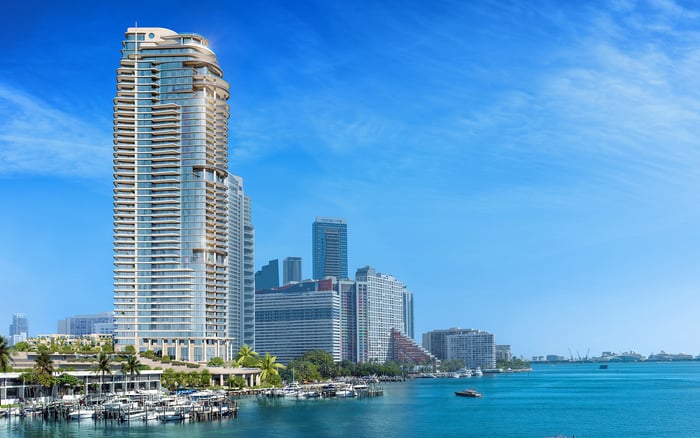
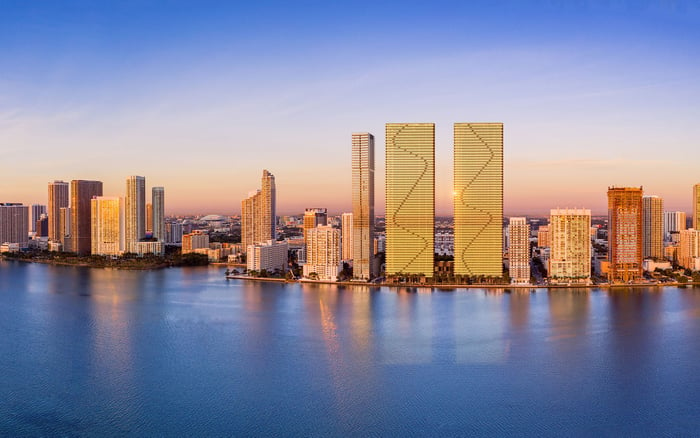
For discerning buyers at EDITION Edgewater, the most durable value signals rarely come from decor alone. In Miami’s luxury market, proximity to Michelin-starred dining acts as a proxy for neighborhood momentum, service expectations, and the kind of discretionary spending that stabilizes resale demand. This editorial explains why the relationship matters, how to evaluate it without overpaying for a headline, and what to watch as Edgewater continues to mature as a lifestyle district.
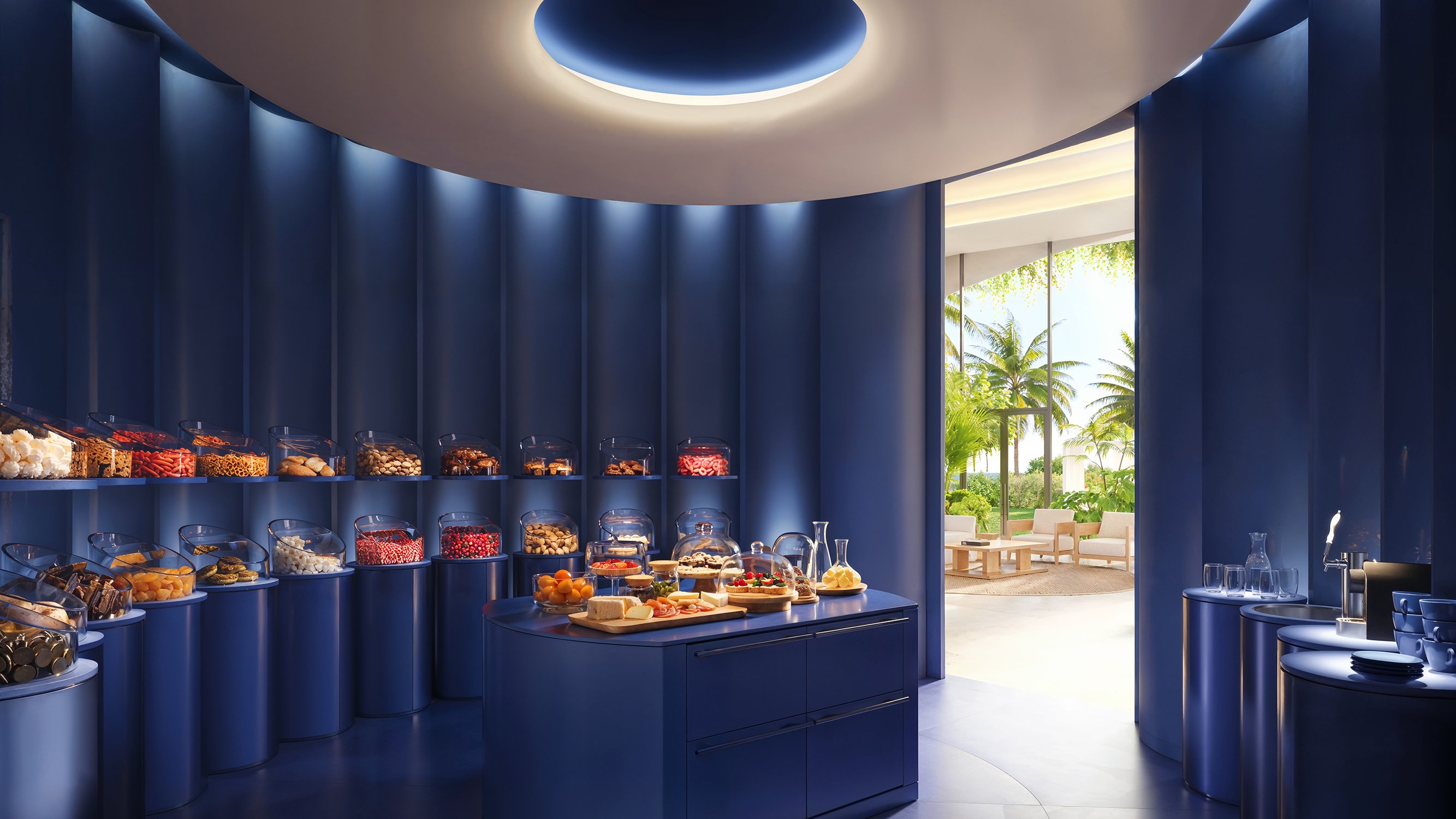
In global luxury markets, Michelin-starred dining operates less as a restaurant accolade and more as an urban signal. It indicates a district has crossed a threshold of disposable income, consistent foot traffic, hospitality talent, and investor confidence. In South Florida-where new neighborhoods can move from “next” to “now” in a single development cycle-that signal increasingly shapes how buyers perceive resale risk.
For a buyer considering EDITION Edgewater, Michelin proximity is not simply about securing an exceptional reservation nearby. It reflects the ecosystem that often follows: elevated service expectations, a more international visitor profile, improved public-realm investment, and a wider mix of lifestyle amenities that can make a residence easier to resell when the market turns selective.
The nuance matters. Michelin stars can be temporary, restaurant concepts evolve, and chefs move. What tends to endure-and what resale markets ultimately price-is the underlying pattern: neighborhoods that repeatedly attract high-performing operators often attract high-performing buyers.
In luxury residential underwriting, brand is shorthand for expectations. At EDITION Edgewater, that expectation reads as a hospitality-inflected standard of living: discreet arrival sequences, carefully curated social spaces, and a tone that draws residents who value experience as much as square footage.
That distinction matters because resale value is often driven by buyer confidence. When a building’s identity is crisp and legible, a future buyer isn’t only purchasing a unit-they’re purchasing a clear promise about how life will feel. Michelin-starred dining in the broader orbit reinforces that promise. It helps the neighborhood read as “complete,” the emotional threshold that separates an area that is merely developing from one that has arrived.
Edgewater’s appeal is also geographic. It sits between the Design District, Wynwood, and Downtown, with a waterfront sensibility distinct from Brickell’s financial intensity. From a resale standpoint, the key question becomes whether the surrounding lifestyle mix feels mature enough to hold price in a cautious market. Sustained Michelin-level dining is one of the cleaner tells.
Michelin proximity can influence resale value through several channels. None is guaranteed, but together they shape the “bid” a buyer is willing to place on a home.
First is lifestyle convenience. Buyers pay for time and friction reduction. When genuinely special dining sits within a manageable radius, the residence becomes a more self-contained lifestyle purchase rather than a logistics exercise. That can deepen demand, particularly among second-home owners and executives who want Miami access without constant planning.
Second is the quality-of-place halo. Michelin-level operators tend to cluster where design, safety perceptions, valet culture, and late-night comfort align. This isn’t about nightlife; it’s about an environment polished enough that high-spend residents can host friends and family without explanation.
Third is rental and hold appeal-even for owners who never intend to rent. In prime condo markets, a strong lifestyle ecosystem expands the pool of future buyers, including those who want flexibility. Even when a building isn’t positioned for short-term stays, neighborhood hospitality gravity can lift long-term desirability.
Finally, there’s the reputational loop. People talk about where they dine, and that social proof becomes a subtle marketing engine for the neighborhood itself. The more Edgewater appears in the same conversations as Miami’s best tables, the easier it is for a buyer to justify paying for waterfront lines and branded living.
The most common mistake is treating Michelin proximity as a binary attribute: either you have it or you don’t. In reality, any value effect depends on whether the dining scene is both usable and durable.
Start with walkability, not miles. A restaurant that is “nearby” on a map but requires an inconvenient drive, difficult parking, or an unpleasant pedestrian route won’t meaningfully shape day-to-day living. Buyers underwriting resale should ask: would a future purchaser actually use this weekly, or is it merely a talking point?
Next, evaluate the corridor, not a single address. Resale markets reward clusters-multiple strong operators across several categories, from casual daytime to formal dining. If the Michelin conversation hinges on one star and little else, the premium is fragile.
Then look at the service ecosystem. Michelin-level dining typically thrives where there’s a parallel culture of boutique fitness, design retail, and high-touch hospitality. This is where Edgewater’s adjacency becomes part of the narrative, because lifestyle corridors rarely respect neighborhood boundaries.
For context, buyers comparing Edgewater to other prime nodes often consider what “complete” feels like within their preferred daily radius. In Brickell, that completeness can show up through branded towers and hospitality-driven living, such as 2200 Brickell or ORA by Casa Tua Brickell, where the lifestyle narrative is tightly packaged. Edgewater competes differently: more waterfront calm, less corporate density, and a growing roster of destination experiences nearby.
Luxury buyers want energy-without surrendering serenity. The ideal relationship between a residence and Michelin-level dining is close enough to enjoy, and far enough to preserve quiet.
For EDITION Edgewater, that balance can become a resale advantage. A future buyer may want Miami’s best experiences available on demand, while still expecting the building to feel residential rather than touristic. In that sense, Edgewater can read as “access without chaos,” especially relative to nodes where the street scene is more kinetic.
The resale takeaway is straightforward: you’re not buying the restaurant. You’re buying the option value of a neighborhood that continues to attract high-caliber operators. When a building delivers privacy, strong management, and a refined resident experience, Michelin adjacency becomes additive-not disruptive.
The Michelin effect becomes easier to interpret when you compare how different submarkets monetize lifestyle.
In Miami Beach, the dining conversation is naturally intertwined with resort culture and oceanfront living. A buyer seeking that “all-in” experience may benchmark against properties like 57 Ocean Miami Beach, where beachfront identity is central to value. Here, Michelin proximity often amplifies a destination narrative: the home participates in a broader hospitality stage.
In Edgewater, the story leans toward daily livability and adjacency to cultural districts. Any premium tends to express itself through ease and balance, not spectacle.
In North Bay Village and nearby waterfront pockets, the value proposition can revolve around emerging neighborhoods and new branded inventory, such as Continuum Club & Residences North Bay Village. In these areas, a Michelin-level ecosystem can function as a forward indicator: it suggests the lifestyle curve is steepening, which can support early resale optimism.
And in Hallandale, the equation may tilt toward resort amenities, golf, and integrated hospitality, with projects like Shell Bay by Auberge Hallandale illustrating how a curated environment can become the destination, even as the broader neighborhood dining scene continues to evolve.
These comparisons matter because resale value is relative. Buyers decide what to pay for EDITION Edgewater by weighing it against other places where luxury living feels fully articulated.
Rather than trying to quantify a generic Michelin premium, sophisticated buyers can underwrite the effect using four practical tests.
Replaceability test: If a restaurant closed tomorrow, would the neighborhood still feel like a luxury lifestyle district? If yes, the value driver is the ecosystem-not the star.
Convenience test: Can you access top-tier dining without sacrificing the building’s residential calm? If yes, proximity is working in your favor.
Buyer-pool test: Would this location appeal to multiple buyer personas, including primary residents, second-home owners, and international purchasers? Michelin adjacency can widen that pool, but only if the rest of the lifestyle stack is strong.
Micro-location test: Within Edgewater, quiet streets, view corridors, and ease of arrival matter. Resale markets often reward the unit that delivers a composed daily experience more than the one that simply sits closest to a “hot” address.
Applied consistently, these tests keep the Michelin conversation disciplined-part of an investment thesis rather than a headline.
For EDITION Edgewater, proximity to Michelin-starred restaurants can support resale value when it reinforces a broader truth: the neighborhood has become a repeatable, high-confidence lifestyle purchase. The real driver isn’t a single dining room; it’s the gravitational pull of quality, taste, and consistency.
In a market as design-forward and experience-driven as Miami, these signals matter-and they’re easy to misprice. The best outcomes come when a buyer treats Michelin proximity as a confirming indicator, then underwrites what reliably compounds: building identity, service culture, and the quiet competence of location.
Does being near a Michelin-starred restaurant always raise resale value? Not always; it tends to help most when it reflects a durable lifestyle ecosystem, not a one-off headline.
Is walkability more important than being “close by car”? Yes; true convenience and a pleasant route are more likely to influence daily use and buyer appeal.
Can Michelin status disappear and hurt resale? A single restaurant can change, but neighborhoods with multiple strong operators often retain desirability.
Does Michelin proximity matter more for second homes than primaries? Often yes, because second-home buyers place a premium on effortless, high-quality experiences.
Could great dining ever be a negative for a building? If it brings congestion or noise to the immediate frontage, it can; balance and buffering are key.
Should buyers underwrite a specific dollar premium for Michelin proximity? It is better to underwrite through comparable sales, micro-location, and buyer-pool depth than a fixed premium.
How does Edgewater compare to Miami Beach for lifestyle-driven pricing? Miami Beach tends to price destination energy, while Edgewater often prices access plus residential calm.
What matters more than dining for resale at EDITION Edgewater? Building identity, service standards, views, and long-term neighborhood confidence usually lead the equation.
Do branded buildings benefit more from luxury dining nearby? Typically yes, because the lifestyle narrative becomes more coherent and easier for future buyers to understand.
What is the simplest way to think about Michelin proximity at resale? Treat it as a supporting indicator of neighborhood maturity, not the core asset itself.
To compare the best-fit options with clarity, connect with MILLION Luxury.
If branded residences are on your mind — as a home or as an allocation — we would be glad to share what we are seeing, privately.
Begin a quiet conversation