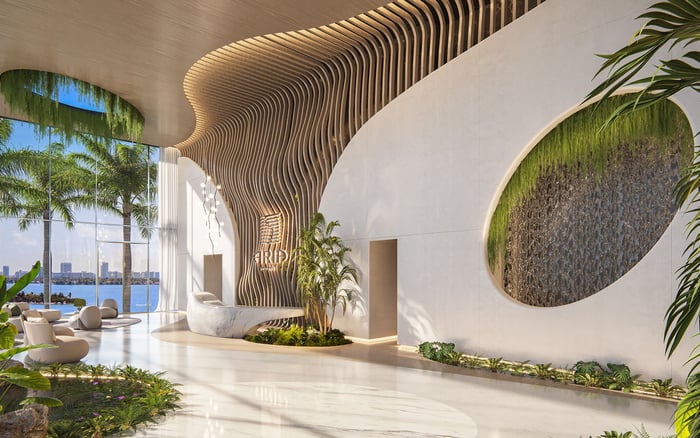
A refined buyer’s guide to Edgewater’s arts-forward bayfront lifestyle versus the more private, villa-oriented waterfront sensibility associated with Villa Miami, with Coconut Grove and Coral Gables framing the culinary and residential tradeoffs.
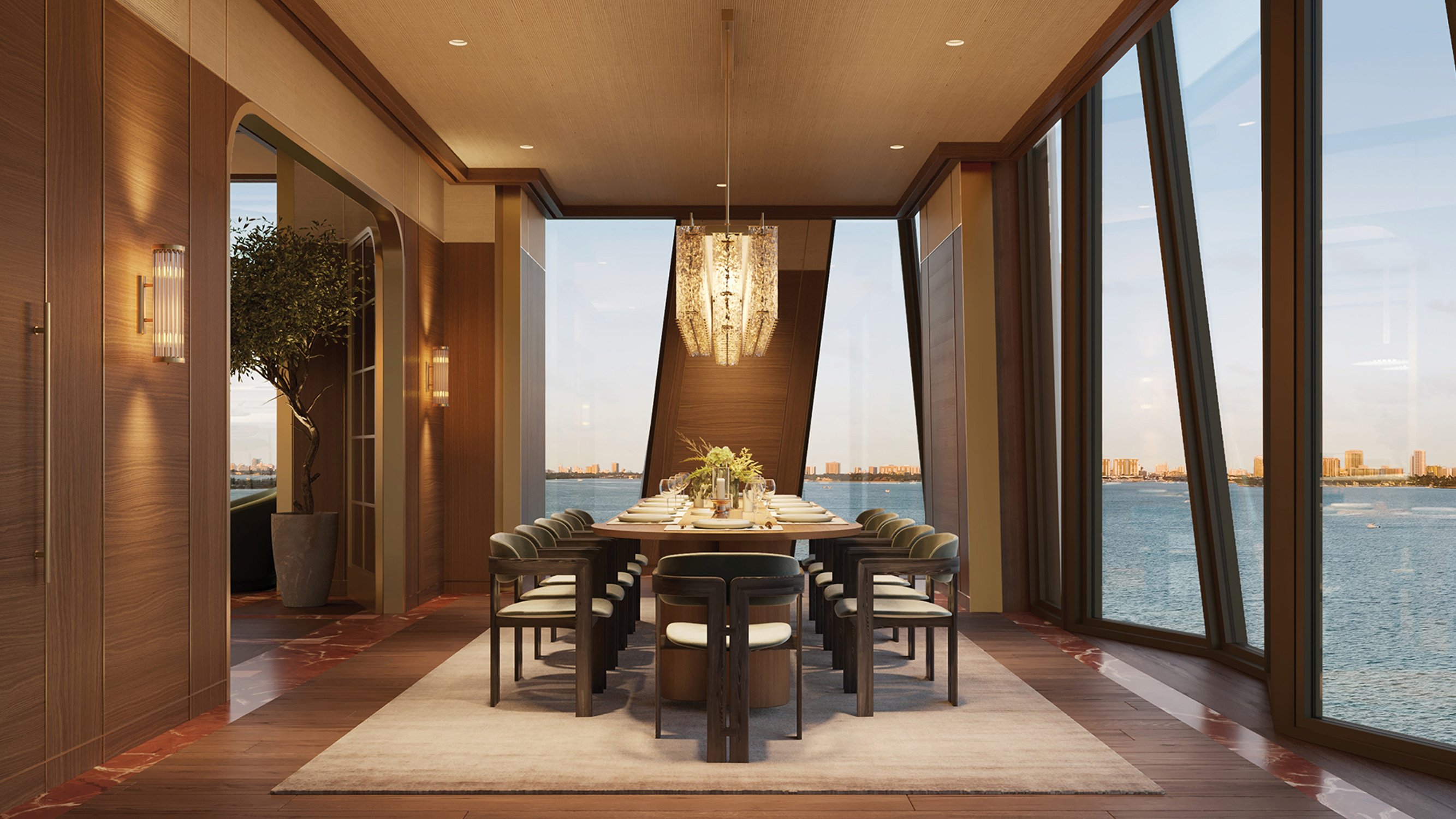
For affluent buyers, the most meaningful Miami decision is rarely water versus no water. It is the more nuanced question of which kind of waterfront life best aligns with daily ritual. In that sense, EDITION Edgewater and Villa Miami offer two distinct answers to the same luxury brief.
Edgewater is a bayfront neighborhood immediately north of Downtown and the Arts & Entertainment District. The result is a waterfront setting that feels urban, vertical, and increasingly refined, with Biscayne Bay views as a constant and the city’s cultural core close at hand.
That is the context in which EDITION Edgewater resonates. It belongs to a part of Miami where the strongest luxury proposition is not only the residence itself, but also the ease of moving between home, museum, park, dining room, and design destination.
By contrast, the phrase Villa Miami evokes a more intimate, estate-like aspiration. Publicly, it is better understood as a residential project than as a recognized standalone neighborhood. For lifestyle purposes, the clearest comparison is not another dense urban district, but Miami’s villa-leaning waterfront enclaves, especially Coconut Grove and Coral Gables, where lower-rise living, private grounds, marinas, and a more secluded cadence shape the experience. In project terms, Villa Miami speaks to that desire for a rarer, more private expression of the bay.
For the culturally minded purchaser, Edgewater’s advantage is unusually precise. It places bayfront residential living beside one of the city’s most important contemporary art institutions, with Museum Park extending that experience into the public realm. This means art is not reserved for weekends. It becomes part of the neighborhood rhythm, alongside waterfront promenades, green space, and the visual calm of Biscayne Bay.
Edgewater also benefits from adjacency. Wynwood, Midtown, Downtown, and the Design District are all part of its practical orbit, giving the neighborhood a broader cultural catchment than its residential profile alone might suggest. One evening may begin on the bay, continue through a museum visit, and end with dinner or design-led shopping a short drive away. For residents who want culture to feel immediate rather than destination-based, that geography matters.
This is where Edgewater separates itself from more purely residential waterfront environments. Its luxury is not pastoral. It is curatorial. Buyers are choosing access to a living cultural network while retaining the prestige and calm of a Biscayne Bay address. That same logic also supports interest in neighboring product such as Aria Reserve Miami, where the appeal of Edgewater remains the district itself as much as any individual tower.
If the brief is arts first, Edgewater is highly persuasive. If it is dining first, the analysis becomes more selective.
Edgewater participates in Miami’s restaurant culture, but its dining identity remains more emergent than definitive. It is a neighborhood that performs especially well on proximity. Residents are close to excellent meals across the urban core, yet the district itself is not as singularly concentrated around destination dining as some competing luxury zones.
For buyers who prefer their social life to revolve around restaurant reservations, Coral Gables offers a more mature dining ecosystem. Its streetscape, cadence, and established restaurant corridors create a style of luxury that is less about skyline drama and more about polished repetition: favored tables, familiar hosts, elegant sidewalks, and a district that feels fully inhabited at lunch and dinner.
That distinction matters. Edgewater is ideal for the buyer who wants to live on the bay and dine across Miami with flexibility. A villa-oriented buyer, especially one considering a more grounded lifestyle in the Grove or Gables mold, may prefer to live within a neighborhood where dining is more deeply woven into local identity. In that spirit, Ponce Park Coral Gables and The Village at Coral Gables align naturally with a culinary-first mindset.
The deepest divide between Edgewater and a villa-led vision of Miami is product type.
Edgewater is primarily a high-rise condominium environment. Its luxury proposition is framed by elevation, water views, service, and lock-and-leave convenience. This appeals to global owners, design-conscious buyers, and anyone who values a residence that can function as a polished urban base with immediate access to the city’s strongest cultural districts. The skyline is part of the purchase. So is efficiency.
A villa-oriented waterfront lifestyle is different in nearly every emotional register. It privileges land, discretion, and a lower-density relationship to the bay. In Coconut Grove, for example, the identity is more organic and village-like, with marinas, leafy streets, and a residential texture that feels less choreographed by towers. Here, luxury often reads as privacy first and spectacle second. For buyers drawn to that cadence, Opus Coconut Grove offers a useful point of orientation, as does The Well Coconut Grove for those who prioritize a more grounded, neighborhood-embedded lifestyle.
One of Edgewater’s most understated strengths is that its appeal is not limited to private amenities. In luxury markets, that matters because the best addresses are rarely sustained by a single building alone. They are reinforced by the quality of the district around them.
In practical terms, that means Edgewater’s value proposition includes more than views. It includes the experience of stepping into a neighborhood shaped around bay access, open space, and a more complete urban fabric. For an international buyer or second-home owner, this can be especially compelling: the area offers an elegant, low-friction way to inhabit Miami without sacrificing cultural immediacy.
By comparison, villa-centric living often draws its long-term strength from the opposite qualities. It is not public realm intensity that defines the experience, but enclosure, maturity, and neighborhood character already long established. Neither model is inherently superior. They simply serve different expressions of luxury.
Choose Edgewater if your ideal day begins with a bay view, unfolds through galleries, museums, design destinations, and city dinners, and ends in a residence that feels elevated, serviced, and visually connected to Miami’s modern skyline. It is particularly well suited to buyers who see art and architecture as part of daily life, not an occasional indulgence.
Choose a villa-oriented alternative if privacy, lower density, and a more intimate neighborhood rhythm lead your brief. Buyers who want marinas, village character, and a lifestyle shaped by local dining patterns may find Coconut Grove or Coral Gables more emotionally satisfying than a vertical bayfront district.
The most sophisticated way to read this comparison is not as a contest between better and worse, but between edited urbanity and cultivated seclusion. EDITION Edgewater suits the buyer who wants Miami’s arts and waterfront narratives to meet within one daily frame. Villa Miami suits the buyer who wants waterfront luxury interpreted through rarity, intimacy, and a more private sense of arrival.
Is Edgewater a true neighborhood or just a condo corridor? Edgewater is a recognized Miami waterfront neighborhood with a strong residential identity and close ties to the city’s cultural core.
Is Villa Miami a neighborhood? In this context, Villa Miami is best understood as a residential project and lifestyle concept rather than a standalone neighborhood.
Who should choose Edgewater over a villa-style address? Buyers who value museums, design districts, skyline living, and lock-and-leave convenience will usually feel more at home in Edgewater.
Who is the ideal buyer for a villa-oriented waterfront lifestyle? Someone prioritizing privacy, lower density, and a more intimate relationship to the bay will likely prefer a Grove or Gables style of living.
Is Edgewater appealing for arts-focused residents? Yes. Its location near major cultural destinations and nearby arts districts makes it especially compelling for buyers who want culture in their daily routine.
Does Edgewater match Coral Gables on dining identity? Not in the same way. Edgewater offers access to dining across Miami, while Coral Gables feels more established as a dining-centered neighborhood.
Why does Biscayne Bay access matter in this comparison? The bay shapes both value and lifestyle, influencing views, atmosphere, and the overall sense of prestige tied to each setting.
Is Edgewater well suited to second-home ownership? Often yes, particularly for buyers who want convenience, service, and efficient access to Miami’s urban core.
Why is Coconut Grove a useful comparison point? Coconut Grove offers a lower-rise, more village-like waterfront atmosphere that contrasts clearly with Edgewater’s vertical bayfront character.
How should buyers think about long-term value here? Focus on the fit between product type and lifestyle, while recognizing that district quality and neighborhood character both influence enduring appeal.
For a tailored shortlist and next-step guidance, connect with MILLION Luxury.
If branded residences are on your mind — as a home or as an allocation — we would be glad to share what we are seeing, privately.
Begin a quiet conversation