An editorial analysis for privacy-sensitive trophy buyers weighing Villa Miami against South Florida’s true villa enclaves, with a focus on separation, sight lines, zoning context, and the qualitative nature of resident-to-resident privacy.

For a certain class of buyer, privacy is not an abstract luxury. It is a daily operating condition. The real question is not whether a residence is branded, serviced, or visually striking. It is how often an owner is likely to see, hear, cross paths with, or be overlooked by other residents. That is the essence of what many buyers informally mean by a resident-to-resident privacy ratio.
In South Florida, that ratio is rarely expressed as a formal metric. It is usually understood through more tactile signals: how many immediate neighbors fall within direct sight lines, whether one side of the property opens to water rather than another home, how much perimeter treatment is in place, and how circulation is managed for owners, guests, and staff. That is why privacy-minded trophy buyers often gravitate toward standalone **villa**s and estate neighborhoods rather than amenity-heavy towers.
That framing is especially useful when evaluating Villa Miami. The project speaks to buyers who want architectural theater and a strong waterfront identity, but the privacy-sensitive purchaser will inevitably compare it with true villa environments where the land itself does more of the work.
Villa Miami belongs in the conversation because it adopts the language of villa living while existing within a broader urban waterfront context. For some buyers, that is precisely the appeal: a more design-forward expression of privacy without giving up the energy and convenience of Edgewater. For others, the benchmark remains a detached estate in Coral Gables, Coconut Grove, Palm Island, or Fisher Island, where low density creates a different level of separation from the start.
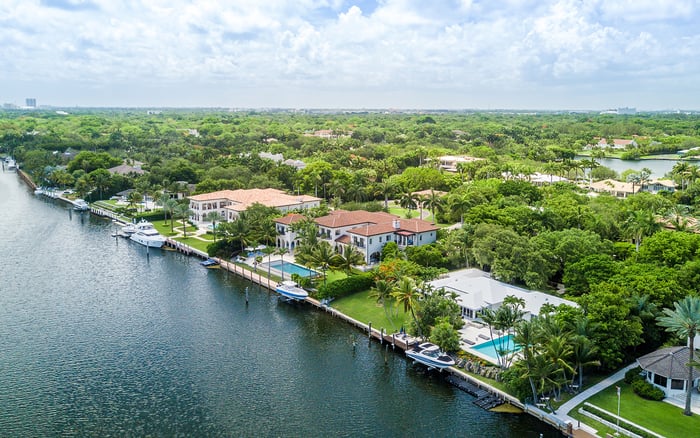
The distinction matters. In a traditional villa enclave, privacy is often structural. Larger lots create distance. Gates and walls control approach. Mature landscaping softens sight lines. Waterfront orientation can eliminate a neighboring structure from one entire side of the ownership experience. In a vertical setting, privacy can still feel luxurious, but it is managed through planning, floorplate design, circulation, and screening rather than land area alone.
This is where comparison becomes more useful than branding. A buyer considering Villa Miami should not simply ask whether the residence feels exclusive. The sharper question is whether that form of exclusivity matches the buyer’s tolerance for incidental interaction.
The most effective privacy drivers are surprisingly old-fashioned. Lot size comes first. Distance remains the cleanest luxury. The second is perimeter treatment, meaning gates, walls, hedges, mature trees, and layered landscaping that interrupts visibility before anyone reaches the front door. The third is blocked sight lines, including setbacks, orientation, and the ability to face water rather than another residence.
Waterfront homes in Biscayne Bay and Coconut Grove hold an enduring advantage here. Open water can function as a privacy buffer in a way no shared corridor can. In older estate sections of Coral Gables, mature canopy creates what many buyers recognize immediately as organic privacy: not just concealment, but a softened visual experience that makes neighboring homes feel farther away than they are.
That is one reason buyers who value low-density living continue to study projects and neighborhoods tied to villa patterns, even when they also admire refined newer developments such as Arbor Coconut Grove and Ponce Park Coral Gables. The appeal is not merely prestige. It is reduced exposure.
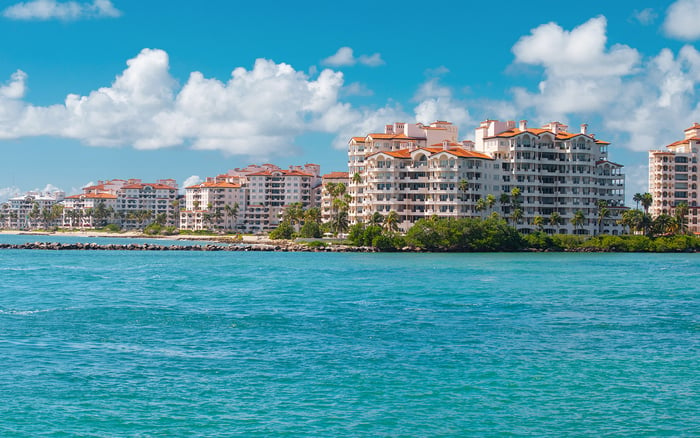
Among South Florida privacy references, Fisher Island remains difficult to ignore. Its appeal is not just wealth signaling. It is the combination of controlled access, low density relative to its land area, and a residential environment that feels deliberately buffered from routine urban overlap. That combination creates a powerful benchmark for anyone evaluating privacy at the top of the market.
Buyers looking at island or bayfront privacy often compare the atmosphere around The Links Estates at Fisher Island or The Residences at Six Fisher Island with newer mainland offerings. The point is not that every buyer should choose an island setting. It is that these environments clarify what a very high privacy ratio feels like in practice: fewer casual encounters, stronger access control, and less visual compression between residences.
For the Villa Miami buyer, Fisher Island is useful as a measuring stick, not a direct substitute. One offers a highly curated urban bayfront statement. The other represents the low-density benchmark that privacy-first trophy purchasers often keep in mind.
Sophisticated buyers know privacy is not just about today’s landscaping or current neighbor spacing. It is also about what can happen next. Local zoning and planning rules shape setbacks, fences, walls, lot use, and the potential for future subdivision. In practical terms, that means a home that feels secluded at contract may not offer the same level of separation indefinitely if the surrounding framework allows closer future development.
That is one reason privacy-sensitive acquisitions involve more than architecture and finishes. Buyers routinely examine whether neighborhood character is protected, whether minimum lot standards are meaningful, and whether there is any realistic risk of privacy erosion over time. In villa-heavy submarkets such as Coral Gables, that diligence can be especially important because planning controls help preserve the very spatial conditions that trophy buyers are paying for.
Within a building context, the same logic applies differently. Buyers should study elevator arrangements, entry sequencing, guest handling, service access, and how staff circulation intersects with owner circulation. Separate guest access, private docks where relevant, and thoughtfully isolated service areas all reduce unnecessary overlap.
In the upper tier of the market, privacy is no longer treated as a soft lifestyle bonus. It has become part of pricing language itself. Seclusion, screened sight lines, gates, and protected approach sequences are now embedded in how top-tier properties are positioned. Waterfront and estate residences often command a premium in part because they pair prestige with lower immediate neighbor exposure.
That does not mean every buyer should default to a detached estate. Some will prefer the managed ease and design confidence of a project like Villa Miami, particularly if they value bayfront presence and a more composed ownership format. Others may find that nearby alternatives such as EDITION Edgewater sharpen the comparison by showing how different luxury towers interpret exclusivity in the same broader geography.
The critical point is to separate luxury theater from privacy mechanics. A beautiful arrival experience is not the same as a low-interaction living environment. Trophy buyers who care about both understand the difference.
A discreet buyer usually benefits from a simple checklist. How many residences can see into primary entertaining areas? Is there water frontage or another natural buffer on at least one side? How controlled is access for visitors and staff? Are there meaningful layers between public arrival and private living space? Could zoning or subdivision eventually compress the sense of separation that exists today?
For buyers drawn to Villa Miami, these questions do not diminish the project’s appeal. They refine it. The right purchaser may decide that its version of privacy-urban, serviced, and design-led-is exactly the right trade. But anyone using the language of resident-to-resident privacy ratios should compare it against South Florida’s true villa and estate benchmarks, where low density, mature screening, and controlled access remain the gold standard.
What does resident-to-resident privacy ratio mean in practice? It is an informal way of describing how much separation exists between you and other residents visually, acoustically, and through daily circulation.
Is Villa Miami the same as buying a standalone villa? No. It may evoke villa living in spirit, but detached estate ownership typically delivers more structural separation.
Why do trophy buyers favor low-density enclaves? Lower density usually means fewer direct sight lines, fewer incidental encounters, and more control over approach and access.
Does waterfront location improve privacy? Often, yes. Open water can replace one neighboring exposure with a natural buffer.
Why is Fisher Island so relevant in privacy conversations? Its controlled-access setting and lower-density feel make it a benchmark for buyers who prioritize separation.
Can landscaping matter as much as architecture? Yes. Mature trees, hedges, and layered perimeter treatment can materially improve seclusion.
Do zoning rules affect privacy value? Yes. Setbacks, wall allowances, and subdivision potential can shape how private a property remains over time.
Are privacy claims standardized across listings? No. In this segment, privacy is usually presented qualitatively rather than through a universal metric.
What should buyers inspect inside a luxury building? Focus on entry sequencing, elevator arrangements, guest handling, and whether service circulation overlaps with owner movement.
Who is Villa Miami best suited for? Buyers who want bayfront design prestige and a curated ownership experience, while accepting that true villa enclaves still set the highest privacy bar.
For a confidential assessment and a building-by-building shortlist, connect with MILLION Luxury.
If branded residences are on your mind — as a home or as an allocation — we would be glad to share what we are seeing, privately.
Begin a quiet conversation