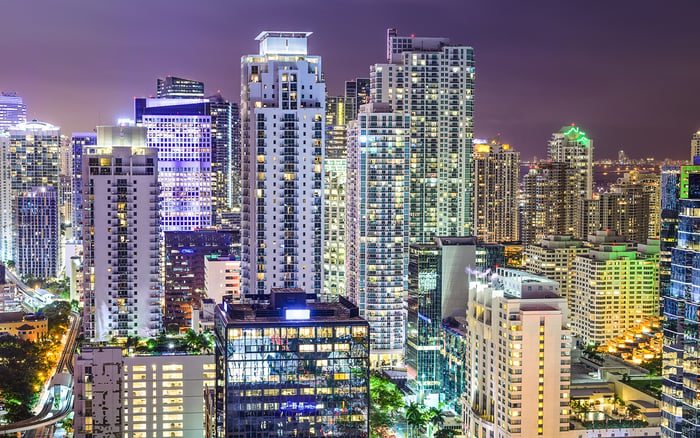
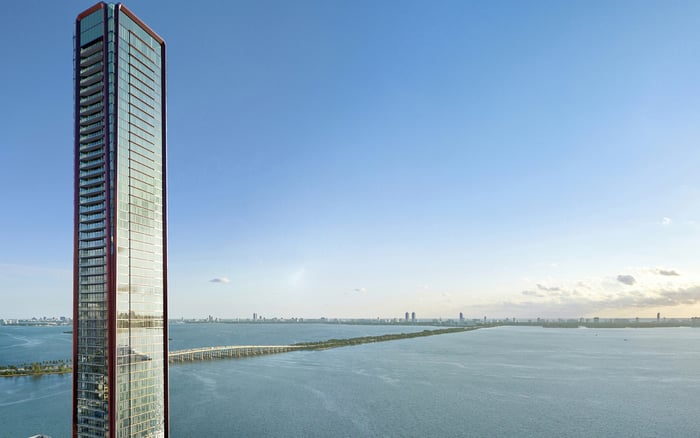
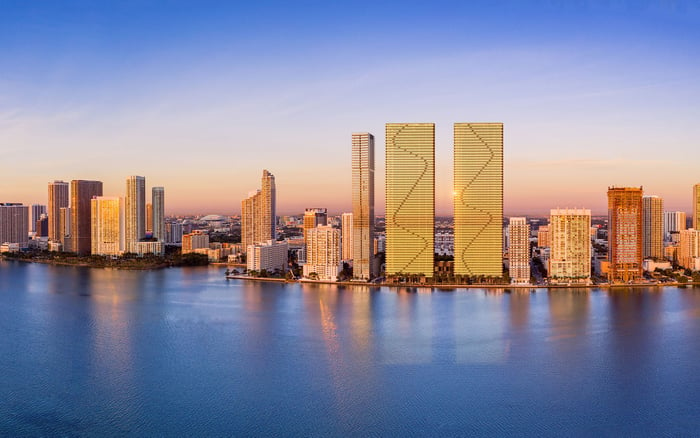
Edgewater’s rise has been less a single boom than a steady refinement: waterfront land revalued, lifestyle infrastructure upgraded, and a new residential skyline shaped around Biscayne Bay views. For today’s buyer, the neighborhood’s appeal is the combination of immediacy and escape: minutes to the Design District and Wynwood, yet oriented to parks, marinas, and sunrise light over the water.
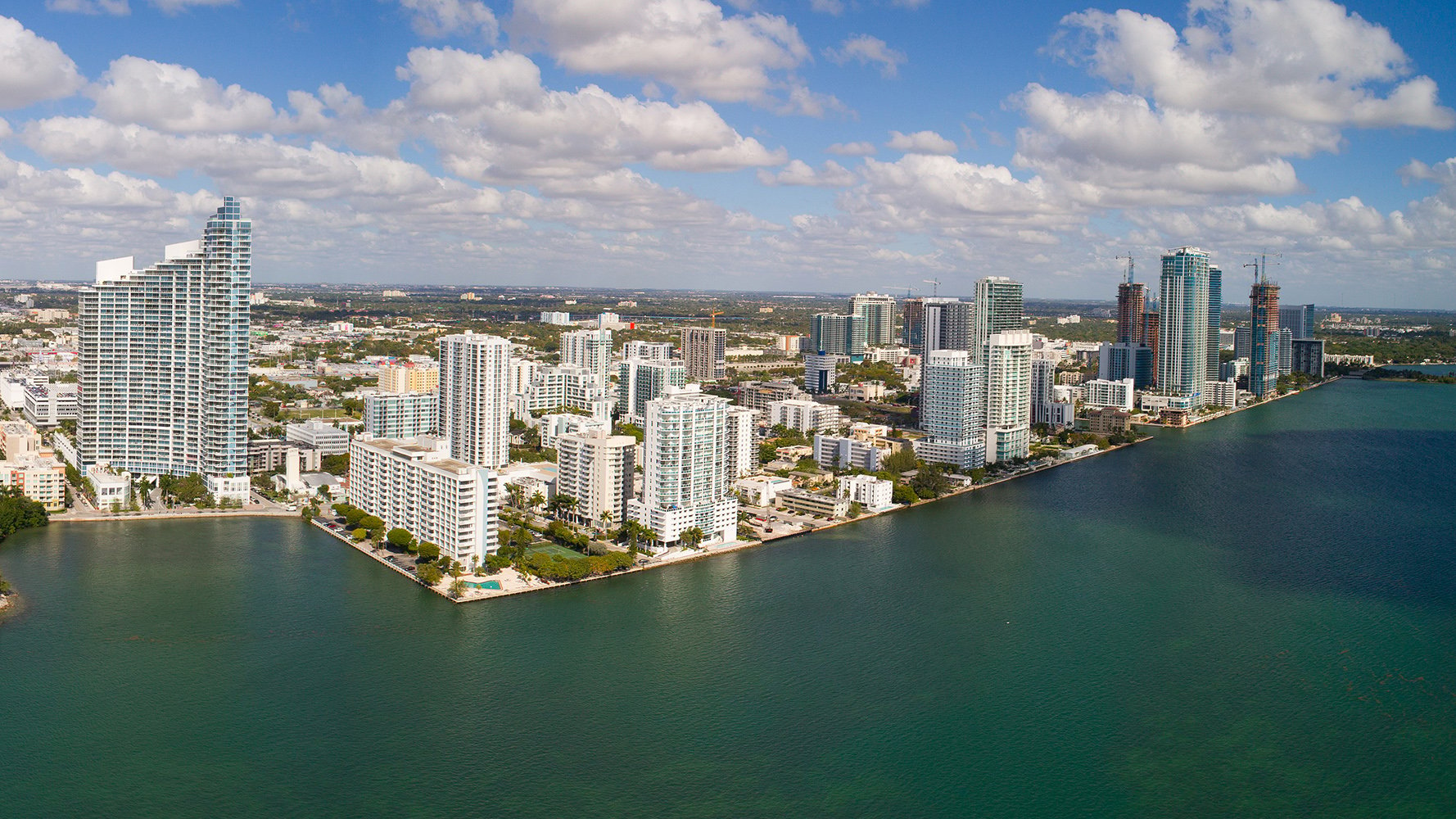
Edgewater has always been a place of edges: the firm line of the shoreline and the softer, shifting line of taste in a city built on reinvention. What began as a practical, low-rise corridor along Biscayne Bay gradually absorbed Miami’s broader cultural momentum. As nearby creative districts matured, Edgewater became the natural next chapter-quieter than an arts corridor, more residential than a commercial core, and still close enough that an opening night, a design fair, or a gallery dinner can feel effortless.
That proximity reshaped the buyer profile. Edgewater is no longer simply “near” culture. For many residents, it serves as the calm counterpoint: a home base where the view is the amenity, the park functions like a front yard, and the skyline becomes a backdrop rather than a destination. The result is a district that reads as quietly premium. It doesn’t need to declare itself; it simply performs.
Miami’s cultural map is famously dynamic, and Edgewater benefited from its adjacency to some of the city’s most energy-rich blocks. Buyers who wanted access to Wynwood and the Design District-but preferred a more composed residential setting-began to look along the bay. The shift positioned Edgewater as a bridge neighborhood: close enough for spontaneity, removed enough for rest.
In practical terms, arts-driven gravity tends to do three things to residential markets. First, it raises expectations for architecture and interiors. Second, it expands the definition of “walkable” beyond errands to include experiences. Third, it draws a more international buyer set that values design credibility as much as square footage.
That’s why Edgewater’s evolution is best read as a change in lifestyle language. The neighborhood moved from functional to curated. It became a place where a buyer can maintain a private rhythm, yet step into the city’s cultural pulse within minutes.
Edgewater’s newer residential identity is inseparable from vertical living. The modern high-rise here isn’t just about height; it’s about vantage. Biscayne Bay views, early light, and open-water horizons create an experience that’s difficult to replicate inland-even within the same price band.
Today’s luxury buyer is also more exacting about what a tower must deliver beyond a view. The expectation is a fully realized environment: wellness programming, quiet arrival sequences, layered security, dedicated service, and common areas that feel more like private clubs than amenity decks. This is where Edgewater has sharpened its appeal, particularly for residents who want the polish of a resort without performative social theater.
A telling signal is the caliber of projects choosing the neighborhood. Developments such as Aria Reserve Miami have helped position Edgewater as a long-term residential address rather than a speculative stopover. The message is straightforward: elevated design, a waterfront mindset, and day-to-day living engineered for ease.
Luxury real estate in South Florida is rarely about a single variable. In Edgewater, value is typically underwritten through a blend of four buyer priorities.
First, view corridors. Not every “bay view” reads the same. Experienced buyers look for breadth, durability, and orientation: sunrise exposure, wider water angles, and sightlines that feel protected.
Second, park adjacency. Edgewater’s relationship to waterfront green space has become a defining advantage. Park frontage isn’t merely scenic; it creates breathing room that towers alone can’t replicate.
Third, access without immersion. Edgewater’s location can feel unusually efficient: near Downtown for business, near the Design District for retail and dining, and close to Wynwood for culture-while maintaining a residential calm.
Fourth, building ethos. In a market crowded with luxury claims, the distinction comes down to livability: elevator strategy, privacy at arrival, thoughtful storage, acoustics, and the quiet competence of service.
Projects like EDITION Edgewater reflect this standard, where hospitality influence is less about branding and more about operational finesse: consistent service culture, considered amenity programming, and details that hold up over time.
“Edgewater” is often spoken of as a single place, but buyers tend to shop it as a set of micro-locations. Some prioritize proximity to Downtown for shorter commutes and a more metropolitan tempo. Others prefer a slightly more removed stretch, where mornings feel quieter and the bay becomes the main character.
The waterfront edge is naturally the headline, yet the interior blocks can offer a different kind of privacy and, in some cases, a more intimate neighborhood cadence. Sophisticated buyers often tour both-not just to compare views, but to assess how each pocket handles traffic flow, noise, and the feeling of arrival at different times of day.
This is also where the “high-rise haven” idea becomes tangible. The best experiences in Edgewater aren’t only vertical; they’re buffered. When site planning, landscaping, and entry sequencing are executed well, the neighborhood’s energy becomes something you access by choice rather than absorb by default.
Edgewater’s current desirability aligns with a broader luxury shift toward wellness and time affluence. The bay encourages earlier mornings. Parks encourage walking rather than driving. And the neighborhood’s closeness to cultural districts reduces the friction of making plans.
This lifestyle stack is why Edgewater is drawing buyers who might otherwise choose Brickell for convenience or Miami Beach for brand recognition. Edgewater offers a different kind of luxury: less nightlife-forward, more daylight-forward.
For buyers comparing waterfront options, Edgewater can also feel like a clean line between leisure and logistics. You can keep a workday anchored near Downtown and still return to a home environment that reads as serene. And when you want a more overtly social scene, it’s close rather than constant.
A complementary example of this “refined city living” ethos in the broader core is 2200 Brickell, which underscores how buyer demand has shifted toward design integrity, privacy, and long-term livability even in more established districts.
Even without leaning on headline statistics, the negotiation logic in Edgewater is fairly consistent: certainty commands a premium. Homes with protected views, strong building reputations, and layouts that live well tend to trade with less discounting. Conversely, product that feels interchangeable will compete harder on price, concessions, or timing.
For buyers, that translates into a clear question: are you purchasing a view, a floor plan, or a building? The most resilient outcomes typically combine all three. It’s worth spending time on the “boring” due diligence: condominium governance, reserve posture, elevator performance, and the true day-to-day experience of amenities.
For sellers, the market rewards crisp positioning. Edgewater buyers are visually literate; they understand design and can spot cosmetic staging that doesn’t align with real quality. Clean, honest presentation-with an emphasis on light, flow, and the view-tends to outperform.
Edgewater’s transformation has been substantial, but it doesn’t feel finished. The neighborhood’s appeal is anchored in a durable set of advantages: waterfront orientation, adjacency to cultural districts like Wynwood, and a residential identity that can absorb new development without losing the sense of calm buyers seek.
The most persuasive long-term thesis is that Edgewater has become a “primary home” neighborhood for luxury buyers who want Miami’s creative and business centers nearby, but prefer the living experience to be quieter, greener, and more design-led.
As newer projects continue to set expectations, the definition of luxury here will likely become even more operational: service consistency, acoustic comfort, and privacy as a form of wellbeing. In other words, Edgewater will keep rising not simply because towers rise, but because standards do.
To see how Edgewater’s waterfront residential vision is being expressed today, explore Villa Miami for a perspective on the neighborhood’s next layer of refined, bayfront living.
Is Edgewater considered a luxury neighborhood in Miami? Yes. Edgewater is widely viewed as a luxury-leaning waterfront district defined by high-rise living and Biscayne Bay views.
What makes Edgewater different from Brickell? Edgewater is more residential and park-oriented, while Brickell is more business-centric and intensely urban in feel.
Is Edgewater close to Wynwood? Yes. Edgewater offers quick access to Wynwood, making it convenient for dining, galleries, and cultural events.
Do Edgewater condos typically have bay views? Many do, but view quality varies by orientation and surrounding development; protected, wide-water views carry a premium.
Is Edgewater walkable? Portions are walkable for daily routines and waterfront parks, though many residents still prefer a car for broader errands.
What should buyers prioritize when touring Edgewater towers? Focus on view corridors, privacy at arrival, elevator performance, and how the floor plan lives in real daylight.
Are newer buildings always better in Edgewater? Not always. Newer towers may offer modern amenities, but overall quality depends on design, management, and execution.
Does Edgewater feel quiet compared with Downtown? Generally, yes. Many buyers choose Edgewater for a calmer residential atmosphere while staying close to Downtown.
Is Edgewater suited for full-time residents? Yes. The neighborhood’s parks, access to core districts, and newer residential services support full-time living.
How can I evaluate long-term value in Edgewater? Look for buildings with strong reputations, livable layouts, and enduring advantages like park frontage and bay views.
For a tailored shortlist and next-step guidance, connect with MILLION Luxury.
If branded residences are on your mind — as a home or as an allocation — we would be glad to share what we are seeing, privately.
Begin a quiet conversation