A buyer-focused look at how EDITION Edgewater purchasers should evaluate Biscayne Bay views, floor height, sightline durability, and resale risk as Edgewater continues to densify.
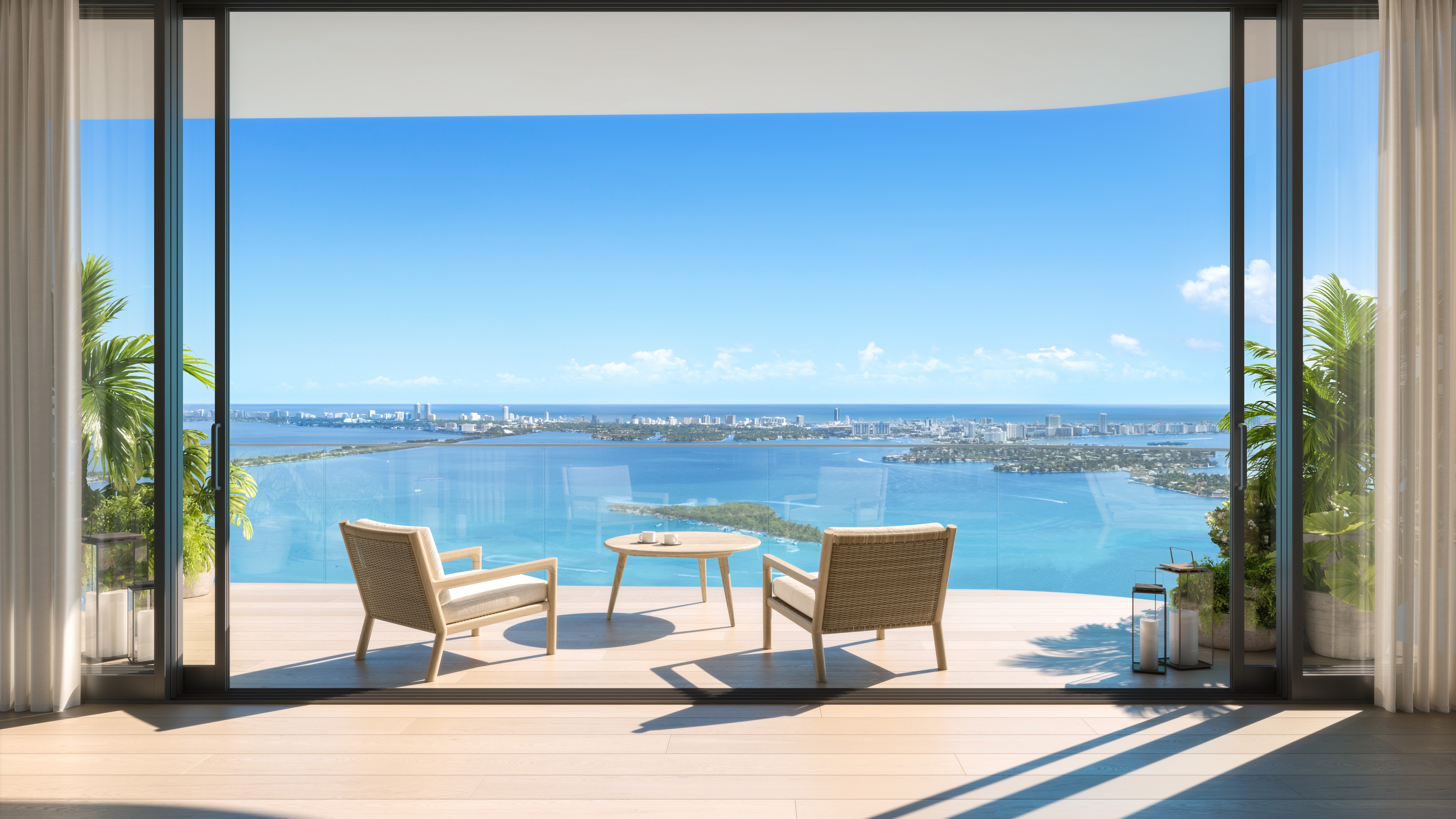
EDITION Edgewater enters the conversation as Miami’s bayfront buyer becomes more analytical. A water view remains emotional, certainly. It sets the morning light, frames the terrace, and defines the mood of a residence before a single finish is considered. Yet in Edgewater, that view also behaves like a financial variable. The right sightline can support long-term desirability; the wrong assumption can become a resale discount.
That is why the 2026 buyer test is not simply whether the sales-gallery image is seductive. It is whether the view corridor has a durable reason to remain substantially open as the surrounding neighborhood continues to absorb new density. EDITION Edgewater is positioned for buyers who care deeply about Biscayne Bay, but the prudent purchaser should move beyond lifestyle language and ask a more exact question: what protects the view?
In Edgewater, view quality is not a single condition. It is a stack of conditions: exposure, elevation, sightline angle, neighboring parcels, street width, existing built form, ownership patterns, and the presence or absence of permanent physical buffers. The more a residence depends on those factors aligning favorably, the more carefully the premium should be underwritten.
The most important distinction for an EDITION Edgewater buyer is between view certainty and view probability. A view may feel secure because it is open today. That does not make it structurally protected. Certainty comes from geometry that is difficult or impossible to change: broad Biscayne Bay exposure, water itself, meaningful setbacks, public space, existing massing that already defines the corridor, or other physical conditions that reduce the number of privately developable sites inside the view cone.
Probability is different. It may be reasonable, even attractive, but it remains conditional. A residence may have a compelling bay view because a neighboring site is currently low-rise, underdeveloped, or positioned in a way that leaves the sightline open. The premium attached to that residence should reflect the difference between what is protected by durable conditions and what is merely available under present circumstances.
This is especially relevant for bay-facing residences in Edgewater, where the waterfront has been evolving into a denser tower corridor. Buyers who treat water view as a simple amenity category may miss the deeper underwriting question. A bay view is not just a prettier outlook; it is part of the value architecture of the home.
A disciplined buyer should begin with three variables: exposure, floor height, and sightline angle. Exposure establishes the primary direction of value. Is the residence oriented toward broad bay water, a partial water angle, a skyline composition, or a corridor between existing buildings? Each answer carries a different risk profile.
Floor height is the next test. In a dense waterfront district, even a one- or two-floor difference can matter. A residence may sit within a compromised view band on one level and move into a more defensible category slightly higher. This is where high floors can earn a meaningful premium, provided the premium is tied to actual view break points rather than a vague assumption that higher is always safer.
The third test is sightline angle. A direct, broad bay exposure is generally more defensible than a narrow diagonal view that threads between parcels. The narrower the aperture, the more sensitive the view is to future construction. A buyer should ask not only what is visible from the center of the living room, but what happens from the terrace, the primary bedroom, and the principal entertaining areas.
The phrase “view break point” should become part of the buyer’s vocabulary at EDITION Edgewater. It refers to the floor level at which nearby structures no longer materially interrupt the primary bay or skyline sightline. Below that point, a residence may still be beautiful, but the view may be more segmented. Above it, the composition may become cleaner, broader, and more durable.
This is not a generic high-floor preference. It is a unit-specific exercise. The break point may differ by stack, exposure, and the location of neighboring built form. A buyer comparing two residences should not assume that the more expensive one is automatically better protected. The correct comparison is whether the incremental price buys better geometry, fewer private parcels in the view cone, and a stronger relationship to open water.
This matters for investment logic as much as daily enjoyment. Future buyers often respond quickly to view narratives. “Open bay” and “partial obstruction” are not equivalent descriptions in a resale conversation, and the market can price that difference with little sentimentality.
Pre-construction purchasing adds a layer of complexity. Before a tower and its surroundings are fully experienced in real life, buyers often rely on renderings, gallery visuals, model views, and pro forma materials. These tools are useful for understanding design intent, but they should not be mistaken for a guarantee of future view conditions.
A sophisticated buyer should request unit-specific view studies, sightline diagrams, neighboring parcel context, and written clarification on whether represented views are guaranteed or illustrative. The wording matters. Most condominium views are not legally guaranteed simply because they are shown in marketing materials. A naturally protected corridor is also not the same thing as a contractually protected view.
The goal is not to remove all uncertainty. In an urban waterfront market, that is rarely possible. The goal is to price uncertainty correctly. A premium-priced bay-view unit should be tested against downside scenarios: partial obstruction, new tower construction on nearby parcels, and future resale discounting if the view story becomes less compelling.
For EDITION Edgewater buyers, the strongest views are typically those with broad Biscayne Bay exposure and fewer privately developable parcels directly inside the view cone. Water is the cleanest buffer. Parkland, wide rights of way, and established built form can also improve durability. By contrast, the most vulnerable views are those that rely on low-rise neighboring sites remaining unchanged.
This does not mean every less-protected view should be avoided. It means the price should be honest. A residence with a probable but not certain view may still be a refined choice if the buyer values the floor plan, brand position, terrace experience, and neighborhood access. But the view premium should be calibrated to probability, not fantasy.
The safest strategy is to pay up where the premium is tied to durable view geometry rather than speculative assumptions about what nearby owners will not build. In a maturing Edgewater market, restraint by others is not an investment thesis.
Before reserving or contracting for a residence, buyers should separate the emotional response from the asset review. First, identify the exact primary view: bay, skyline, partial bay, or corridor view. Second, map the sightline against adjacent and nearby parcels. Third, determine whether the view is protected by water, public space, street width, established structures, or only by current underdevelopment.
Next, compare neighboring floor options within the same stack. If a small move upward crosses a view break point, the added cost may be more rational than it initially appears. If the view remains similarly exposed to future obstruction, the premium may be more about perception than protection.
Finally, ask for written clarification. Buyers should know which visual materials are illustrative, which assumptions inform the sales presentation, and whether any view representation is guaranteed. The answer may not eliminate risk, but it can prevent misunderstanding.
For the right buyer, EDITION Edgewater offers a lens into the next era of Edgewater luxury: less about surface spectacle, more about intelligent selection. In 2026, the best residences will not simply be the ones with the most beautiful views today. They will be the ones whose views are supported by the strongest underlying geometry.
Why is view-corridor protection important at EDITION Edgewater? Because view quality can influence both daily enjoyment and long-term resale value, especially in a densifying waterfront district.
Are Biscayne Bay views automatically protected? No. Broad water exposure can be more defensible, but each residence still requires unit-specific sightline review.
What is the difference between view certainty and view probability? View certainty is supported by durable physical conditions, while view probability depends more on today’s surrounding context.
Do higher floors always have safer views? Not always. Floor height matters most when it crosses a specific view break point for that stack and exposure.
What should a presale buyer request before signing? Unit-specific view studies, sightline diagrams, neighboring parcel context, and written clarification on view representations.
Are marketing renderings a view guarantee? They should be treated as illustrative unless written contract language clearly states otherwise.
Which views are typically most vulnerable? Views that rely on low-rise or underdeveloped neighboring parcels remaining unchanged tend to carry more risk.
Which views are typically most defensible? Broad Biscayne Bay exposures with fewer privately developable parcels inside the view cone are generally stronger.
Can a partial obstruction still be acceptable? Yes, if the price, floor plan, brand value, and lifestyle benefits align with the actual view risk.
How should buyers think about the view premium? Pay for durable geometry and documented clarity, not assumptions about what future neighboring owners will avoid building.
When you're ready to tour or underwrite the options, connect with MILLION.
If branded residences are on your mind — as a home or as an allocation — we would be glad to share what we are seeing, privately.
Begin a quiet conversation