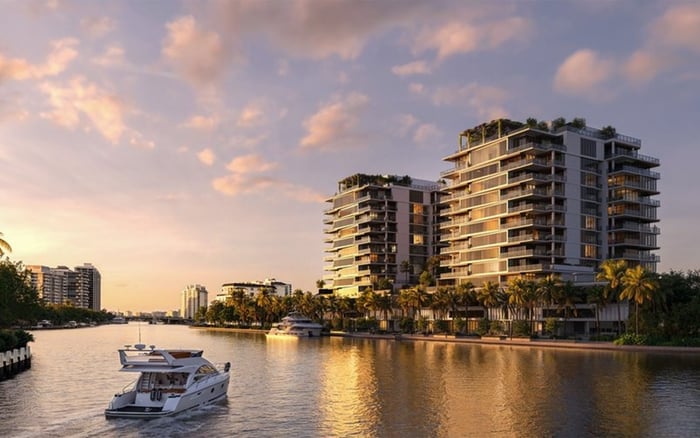
A buyer-focused guide to the distinct diligence questions surrounding an operating oceanfront condominium, a private-club-centered Auberge community, and a newer waterfront tower in a fast-changing West Palm Beach setting.

In South Florida luxury real estate, the most elegant purchase is often the one that withstands disciplined review. Branding, architecture, service language, and waterfront setting all matter, but none can replace condominium documents, engineering questions, insurance analysis, or a precise understanding of how lifestyle privileges are funded and controlled.
That distinction is especially important when comparing Auberge Beach Residences & Spa Fort Lauderdale, Shell Bay by Auberge Hallandale, and Shorecrest Flagler Drive West Palm Beach. Each speaks to a sophisticated waterfront buyer, yet each carries a distinct diligence profile: an established operating condominium in Fort Lauderdale, a private-club-centered community in Hallandale Beach, and a newer waterfront tower positioned within West Palm Beach’s momentum.
The central question is not which address feels most luxurious. It is which structure, legal framework, and operating model best match the buyer’s tolerance for cost, control, timing, and long-term ownership obligations.
For Auberge Beach Residences & Spa Fort Lauderdale, diligence begins with its status as an established operating condominium. That gives buyers a meaningful advantage: they can review actual performance rather than rely solely on projections.
The review should begin with condominium documents, budgets, reserves, meeting minutes, assessment history, insurance, maintenance obligations, and the association’s governance record. Buyers should ask what has been maintained, what is planned, what has been deferred, and how prior capital needs were funded. In an operating building, the tone and consistency of board decisions can be as revealing as the numbers themselves.
Because Auberge Beach is waterfront, a refined buyer should also examine the physical plant closely. Structural systems, façade and window performance, elevators, mechanical systems, flood and wind insurance, and any capital projects tied to coastal exposure deserve careful attention. The goal is not to presume a problem. It is to determine whether the building’s luxury experience is supported by disciplined long-term stewardship.
The operating nature of Auberge Beach also allows buyers to test lifestyle promises in real time. Amenity operations, staff consistency, branded-service covenants, actual carrying costs, and resale liquidity can all be evaluated with greater clarity than in a purely pre-construction environment.
Shell Bay by Auberge Hallandale is best approached as more than a conventional condominium purchase. Its diligence profile centers on the private-club nature of the community, including membership structure, initiation fees, dues, transferability, owner-use rights, guest rules, and whether obligations continue through resale.
For buyers drawn to golf, marina-style living, and a club-driven environment, the essential questions concern control and permanence. Who owns the amenities? Who controls access? Who funds maintenance? Which rights are embedded in the residence documents, and which depend on separate club agreements? A club can deepen the lifestyle value of ownership, but it can also introduce obligations that differ materially from standard condominium carrying costs.
Buyers should review developer covenants, branded-operator obligations, construction timelines, amenity-delivery commitments, and available remedies if promised facilities are delayed, revised, or delivered differently than expected. The prestige of a club environment is most meaningful when the legal documents clearly define the buyer’s rights and costs.
Hospitality branding deserves its own line of inquiry. Service standards, brand-license duration, termination rights, owner costs, and resale effects should be reviewed for their legal effect, not simply their aesthetic appeal. At this level, the brand should be an enhancement, not a substitute for clear ownership economics.
Shorecrest Flagler Drive West Palm Beach sits within a different diligence category: a newer waterfront tower in a rapidly changing urban environment. The buyer review should focus on new-development documents, completion risk, warranty provisions, developer control periods, projected budgets, and the assumptions behind early maintenance fees.
Early budgets can appear elegant on paper, but buyers should understand what they include, what they exclude, and how they may evolve once the building is fully operating. Developer control periods also matter because they shape how decisions are made before the association assumes mature governance.
The West Palm Beach setting adds another layer. Buyers should evaluate surrounding development, traffic patterns, view-corridor risk, zoning changes, public-realm improvements, and the broader direction of the city’s growth. Urban momentum can support long-term value, but it can also change the feel, access, and views that initially attracted a purchaser.
Waterfront diligence is equally important. Flood elevation, storm-hardening, insurance structure, emergency power, drainage, and future climate-resilience costs should be reviewed before contract deadlines expire. In West Palm Beach, as in Fort Lauderdale and Hallandale Beach, water views are an asset, but coastal ownership requires a sober look at future operating exposure.
Across these three properties, the strongest buyers separate hard diligence from lifestyle diligence. Hard diligence includes title, condominium documents, reserves, insurance, structural systems, warranties, budgets, developer obligations, and association control. Lifestyle diligence includes service standards, club rules, guest access, branded-residence obligations, amenity operations, and the day-to-day reality of living in the building or community.
Auberge Beach asks buyers to interpret an operating history. Shell Bay asks them to understand a layered club and amenity structure. Shorecrest asks them to evaluate new-tower risk while also reading the future of a changing waterfront district. None of these questions diminishes the appeal of the properties. Instead, they help a serious buyer determine whether the ownership experience aligns with personal priorities.
The most desirable South Florida purchase is not merely beautiful. It is documented, insurable, governable, and resilient. For buyers operating at this tier, discretion and discipline are part of the luxury.
What is the first diligence priority at Auberge Beach? Buyers should begin with operating condominium materials, including budgets, reserves, meeting minutes, assessment history, insurance, and maintenance obligations.
Why is Auberge Beach different from a pre-construction purchase? It offers an operating history, allowing buyers to evaluate actual carrying costs, service consistency, amenity performance, and resale behavior.
What makes Shell Bay diligence more complex? Shell Bay centers on a private-club lifestyle, so buyers should study membership obligations, dues, transfer rights, guest rules, and owner-use rights.
Should Shell Bay buyers review amenity ownership? Yes. Buyers should understand who owns, controls, funds, and maintains golf, marina-style, and club-related amenities.
What should Shorecrest buyers focus on first? They should review new-development documents, warranty provisions, developer control periods, projected budgets, and completion-related obligations.
Why does West Palm Beach growth matter for Shorecrest? Surrounding development, traffic, zoning, public improvements, and view-corridor risk can influence long-term value and daily livability.
Are branded residences automatically safer purchases? No. Buyers should review the legal effect of service standards, brand-license terms, termination rights, costs, and resale implications.
What waterfront issues apply across all three properties? Flood elevation, storm-hardening, wind and flood insurance, drainage, emergency power, and future resilience costs should be reviewed.
How should buyers compare these three opportunities? Compare the risk type: operating condominium at Auberge Beach, club obligations at Shell Bay, and new-tower urban exposure at Shorecrest.
Is luxury positioning enough for contract confidence? No. A confident purchase depends on legal, financial, physical, insurance, climate, and lifestyle diligence before deadlines pass.
For a tailored shortlist and next-step guidance, connect with MILLION.
If branded residences are on your mind — as a home or as an allocation — we would be glad to share what we are seeing, privately.
Begin a quiet conversation