A practical luxury-buyer guide to the title-review questions that matter before purchasing waterfront property at Delano Residences & Hotel Miami, with focus on rights, easements, condo-hotel documents, insurance, and closing risk.

A waterfront purchase at Delano Residences & Hotel Miami should begin with a deceptively simple question: what, precisely, is being conveyed? In luxury condominium transactions, the answer is rarely limited to the private residence itself. It may include an undivided interest in common elements, limited common elements, parking rights, storage rights, amenity access, hotel-related privileges, or use rights defined by documents rather than by the sales presentation.
Ask counsel to reconcile the contract, condominium declaration, title commitment, survey materials, association documents, and any hotel or rental program materials. If a right is central to your enjoyment or investment thesis, it should appear in the governing documents or be confirmed in writing before closing. Waterfront living is often marketed through views and access; title review determines which elements are legally yours, shared, conditional, or merely adjacent.
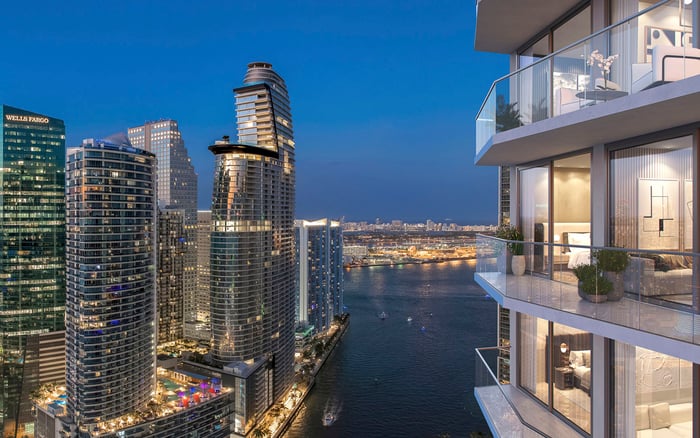
This is especially important in Downtown Miami, where high-design waterfront and near-waterfront residences often sit within complex urban ownership structures. Buyers comparing Delano with Faena Residences Miami Downtown Miami or Aston Martin Residences Downtown Miami should treat the title file as a bespoke dossier, not a closing checklist.
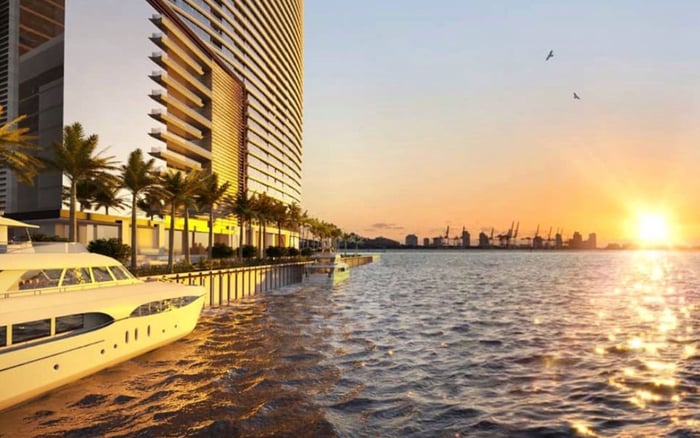
Water views are visual. Waterfront rights are legal. Ask whether the property includes any riparian, littoral, access, dockage, seawall, marina, promenade, or shoreline-related rights, and whether those rights are private, shared, assignable, revocable, or subject to governmental approval. If boat access, slips, tender service, or water-based amenities matter, clarify whether they are deeded, licensed, leased, part of the common elements, or controlled by a separate operator.
The essential question is whether the title commitment lists exceptions that affect the shoreline. Waterfront parcels can involve easements, submerged land questions, access corridors, maintenance obligations, public-use rights, or legacy restrictions. A polished amenity deck does not answer who maintains the property’s edge, who controls access, or who bears the future cost if improvements are required.
A buyer focused on waterfront value should also ask whether any recorded instruments restrict alterations, repairs, docks, seawalls, landscaping, lighting, or access. Even if no immediate change is planned, limitations can shape resale value and future flexibility.
Easements deserve calm, careful attention. They may allow utilities, drainage, emergency access, hotel operations, valet circulation, service corridors, neighboring property access, maintenance work, or public passage. Some are routine. Others can affect privacy, quiet enjoyment, security, or future development around the building.
Ask for a plain-English schedule of every title exception that remains after closing. Which easements are active? Which are historical? Which affect the unit, the common elements, or the waterfront perimeter? Are there reciprocal easement agreements with adjacent parcels, hotel components, retail areas, parking facilities, or shared infrastructure?
This is where a sophisticated buyer’s team should be exacting. New-construction projects often involve layered documents because land, improvements, hotel areas, residential areas, amenity spaces, and operating rights may be separated with precision. That separation can be elegant, but only if the buyer understands it.
For a condo-hotel purchase, title review is not limited to ownership. It intersects with governance, operations, use restrictions, rental rules, branding, service standards, and cost allocation. Ask whether the residential association, hotel operator, master association, commercial owner, or developer retains rights that affect the property after closing.
Key questions include: who controls the lobby, pools, restaurants, spa spaces, elevators, parking, loading areas, and back-of-house areas? Which amenities are common elements, limited common elements, hotel facilities, or privately owned components? Can access be modified? Can operating standards change? Are owners required to participate in any rental or hotel program, or is participation optional?
In Miami’s branded and hospitality-linked residential market, buyers frequently compare structures across projects, not architecture alone. A buyer considering Baccarat Residences Brickell or The Residences at Mandarin Oriental, Miami may face different governance and service frameworks. The point is not that one structure is inherently superior; the point is that title and governing documents should match the buyer’s intended lifestyle.
A residence can be exquisite and still be unsuitable for a buyer’s intended use. Ask whether the condominium documents restrict short-term rentals, hotel-program participation, guest use, owner occupancy, pets, renovations, financing, corporate ownership, transfers, or resale. If the purchase is partly an investment, rental rules should be reviewed before signing, not after closing.
Also ask whether there are blackout periods, minimum stays, operator approvals, revenue-sharing arrangements, brand standards, housekeeping requirements, furniture-package rules, or limitations on self-management. If any rental concept is central to the acquisition, request a written explanation of permitted and prohibited use.
For buyer’s guides, this is one of the most important distinctions in South Florida luxury real estate: lifestyle value and income potential can coexist, but only when the documents allow both without ambiguity.
Title review should be coordinated with insurance review. Ask whether the title file reveals recorded obligations tied to seawalls, drainage systems, shoreline stabilization, shared utilities, or infrastructure that may influence future assessments. Then ask the association and insurance professionals how property, wind, flood, liability, and business-interruption considerations are handled across residential and hotel components.
The goal is not to predict every future cost. It is to identify whether ownership includes obligations that are not obvious from a residence tour. Waterfront assets can carry long-term responsibilities, and those responsibilities may sit in association budgets, master agreements, easements, or maintenance covenants.
Buyers who also evaluate Brickell waterfront residences such as Una Residences Brickell should use a consistent diligence lens: title, association governance, insurance, and physical-condition review should speak to one another before the deposit becomes nonrefundable.
Ask your title team what the proposed owner’s policy will insure, what it will exclude, and whether endorsements are available for condominium ownership, access, survey matters, encroachments, contiguity, zoning-related concerns, or other issues relevant to the transaction. Not every endorsement is available or necessary, but the question forces clarity.
A strong review should identify open permits, pending liens, unpaid assessments, tax issues, construction-related claims, code matters, association estoppels, and any developer obligations that could affect closing. If the property is newly delivered or recently completed, ask how mechanic’s lien risk is being addressed. If the building is established, ask whether assessments, reserves, litigation, or major repairs appear in association disclosures.
The buyer’s closing posture should be simple: accept known risks intentionally, not accidentally.
Before the inspection or diligence period expires, ask for written answers to the questions that matter most. What rights transfer with the unit? What waterfront or shoreline obligations exist? Which title exceptions remain? Are there easements that affect privacy, access, operations, or future maintenance? Who controls hotel-related areas? What use and rental limits apply? What insurance structure covers the property? What title endorsements are available? What association or master-association obligations could lead to future assessments?
The best luxury purchases feel effortless after closing because the hard questions were asked quietly before closing. At Delano Residences & Hotel Miami, the title review should serve as a private map of ownership, helping the buyer understand not only what is beautiful, but what is durable, transferable, insurable, and enforceable.
Why is title review different for waterfront property? Waterfront property can involve shoreline rights, access obligations, easements, and maintenance duties that do not apply to a typical inland residence.
Should I ask whether water views are protected? Yes, but view protection is only enforceable if it appears in recorded rights, governing documents, or applicable legal restrictions.
What is the most important title question before buying at Delano Residences & Hotel Miami? Ask exactly what rights, interests, and obligations transfer with the residence, including common elements, limited common elements, and any hotel-related rights.
Do easements always create a problem? No. Many easements are routine, but they should be understood because they can affect access, privacy, utilities, service areas, and future maintenance.
How does a condo-hotel structure affect ownership? It can separate residential ownership from hotel operations, amenities, services, rental programs, and cost-sharing arrangements.
Should rental rules be reviewed by counsel? Yes. Rental permissions, minimum stays, hotel-program requirements, and owner-use limits should be confirmed before the contract becomes firm.
Can title review reveal future assessment risk? It can identify recorded obligations, maintenance covenants, easements, or association structures that may contribute to future costs.
Is title insurance enough on its own? No. Title insurance is important, but buyers should also review surveys, association documents, insurance structure, permits, and closing deliverables.
When should waterfront title questions be raised? Raise them during the contract and diligence period, before deposits harden and before closing documents are finalized.
What is the best way to shortlist comparable options for touring? Start with location fit, delivery status, and daily lifestyle priorities, then compare stacks and elevations to validate views and privacy.
To compare the best-fit options with clarity, connect with MILLION.
If branded residences are on your mind — as a home or as an allocation — we would be glad to share what we are seeing, privately.
Begin a quiet conversation