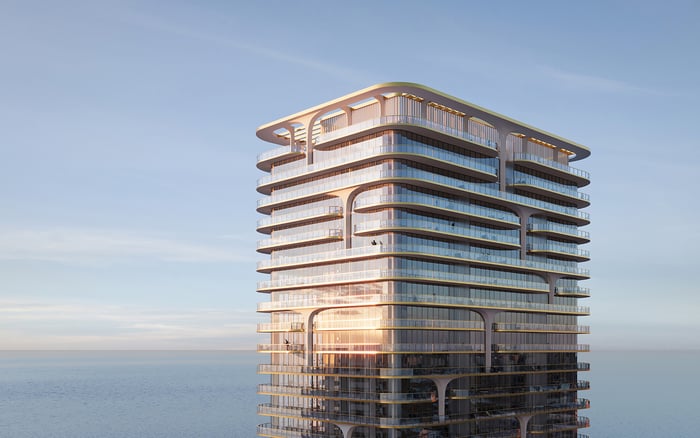
A discreet due diligence guide for buyers evaluating Armani/Casa Residences Pompano Beach, with attention to branding, site context, unit selection, legal terms, carrying costs, and long-term ownership resilience.

Armani/Casa Residences Pompano Beach enters the market as branded residences remain one of South Florida’s most scrutinized luxury categories. The name creates an immediate expectation: disciplined design, controlled materiality, refined interiors, and a residential experience that feels more curated than conventional. For a buyer considering a reservation, however, the essential question is not whether the brand is recognizable. It is whether the Armani/Casa identity translates into measurable value across the residence, common areas, amenity experience, and daily rhythm of ownership.
That is the correct lens for evaluating Armani Casa Residences Pompano Beach. The project is positioned as a luxury branded residential offering tied to the Armani/Casa design brand, but reservation decisions should be governed by specifics, not atmosphere. Buyers should ask what is contractually included, what remains aspirational, and where the brand’s influence is visible in architectural, interior, and service standards.
Pompano Beach should be assessed within the broader South Florida luxury oceanfront market, not as an isolated address. The city offers a different proposition from Miami, Fort Lauderdale, Sunny Isles Beach, and Palm Beach: less established in the global trophy-condo narrative than some neighboring markets, yet increasingly relevant for buyers seeking coastal access and a more emerging luxury profile.
That positioning can be attractive, but it requires discipline. Compare Pompano Beach’s lifestyle, convenience, and long-term market depth with nearby alternatives. Fort Lauderdale buyers may consider the hospitality-led sensibility around Four Seasons Hotel & Private Residences Fort Lauderdale, while Pompano Beach comparisons may naturally include The Ritz-Carlton Residences® Pompano Beach and W Pompano Beach Hotel & Residences. For buyers focused on branded residential precedent, nearby South Florida markets can also provide useful context, though every building must be judged on its own documents and execution.
Before reserving, buyers should study the site context in person. Beach-access conditions matter, but so do surrounding development, traffic patterns, ingress and egress, nearby construction, and the visible trajectory of the neighborhood. In an oceanfront purchase, the coastline may be the emotional driver, yet the surrounding blocks often determine day-to-day satisfaction.
Walk the area at different times of day. Observe how traffic moves, how pedestrians reach the beach, where future development could appear, and whether the immediate neighborhood feels aligned with the price point. A polished sales environment can communicate lifestyle beautifully, but the site itself is the permanent amenity.
The most important decision may not be whether to reserve, but what to reserve. Unit selection should account for stack positioning, view corridors, floor height, exposure, and the possibility of future obstruction. In coastal towers, two residences with similar interior programs can live very differently depending on orientation, natural light, balcony usability, and sightline protection.
Buyers should request clear explanations of what each stack faces, what may be developed nearby, and how different floors change the relationship to ocean, city, and neighboring buildings. High-floor appeal is understandable, but value is not only elevation. A well-positioned exposure with durable views can be more compelling than a more dramatic selection with avoidable uncertainty.
For a branded project, specifications deserve close reading. Buyers should confirm what is promised for private residences, common areas, and amenity spaces. That review should include finishes, appliance packages, cabinetry, flooring, bath specifications, lighting intent, terrace conditions, and any stated design involvement.
The same scrutiny applies to amenities and service areas. A render can suggest elegance, but legal documents and specification sheets define what is delivered. Ask which elements are standard, which are upgrades, which may be substituted, and who approves substitutions. The Armani/Casa connection should be evaluated not as decoration, but as a standard of execution.
Pre-construction buyers should understand exactly what the reservation secures. Review reservation terms, deposit handling, cancellation rights, purchase-contract obligations, and developer disclosures with qualified counsel before moving forward. The goal is not to slow the process unnecessarily, but to know precisely when a reservation becomes a binding commitment and what remedies exist if expectations change.
Unit-specific rights also matter. Parking, storage, elevator access, and other appurtenances can materially affect convenience and resale appeal. Confirm whether they are assigned, deeded, licensed, limited, or subject to future allocation. Buyers should also ask what customization options exist, when selections must be finalized, and how changes are priced and documented.
Luxury ownership is not defined only at closing. Buyers should review projected monthly carrying costs, association budgets, insurance exposure, assessments, property taxes, and closing costs. In South Florida, insurance and coastal maintenance deserve particular attention, especially for buyers comparing new construction with resale alternatives.
Long-term ownership analysis should also include coastal resilience, ongoing building maintenance, future capital needs, and the property’s ability to retain resale liquidity. A compelling residence should be enjoyable to own, but also legible to the next buyer. That is where branded design, location, view quality, service expectations, and disciplined operating costs converge.
Armani Casa Residences Pompano Beach may appeal to buyers who want a branded design experience in a coastal market with room to define itself further. The opportunity is not simply to buy a name. It is to determine whether the residence, location, documents, and ownership economics support the promise implied by the brand.
Approach the decision as a buyer’s guide exercise: verify the site, interrogate the specifications, understand the contract, compare nearby markets, and select the right unit with resale in mind. For the right buyer, that rigor can make the reservation feel less speculative and more strategic.
What is Armani/Casa Residences Pompano Beach? It is positioned as a luxury branded residential project in Pompano Beach tied to the Armani/Casa design brand.
What should buyers evaluate first? Start with whether the brand translates into tangible design, finish, amenity, and service value.
Why does the Pompano Beach location matter? Pompano Beach should be compared with South Florida’s wider luxury coastal market, including Miami, Fort Lauderdale, and Palm Beach.
What site factors should be reviewed? Buyers should study beach access, nearby development, traffic patterns, and the neighborhood’s trajectory.
How should buyers choose a unit? Review stack position, floor height, exposure, view corridors, and future obstruction risk.
What documents deserve legal review? Reservation terms, purchase obligations, cancellation rights, deposit handling, and disclosure documents should be reviewed with qualified counsel.
Are parking and storage important? Yes. Parking rights, storage allocations, elevator access, and appurtenances can affect daily use and resale value.
Should buyers ask about customization? Yes. Buyers should confirm available options, deadlines for selections, and how upgrades or changes are documented.
What financial items should be modeled? Carrying costs, association budgets, insurance, assessments, taxes, and closing costs should all be reviewed.
What is the best way to shortlist comparable options for touring? Start with location fit, delivery status, and daily lifestyle priorities, then compare stacks and elevations to validate views and privacy.
When you're ready to tour or underwrite the options, connect with MILLION.
If branded residences are on your mind — as a home or as an allocation — we would be glad to share what we are seeing, privately.
Begin a quiet conversation