A discreet buyer’s guide to assessing Edgewater water views for lasting beauty, livability, privacy, light, balcony comfort, and long-term ownership confidence.
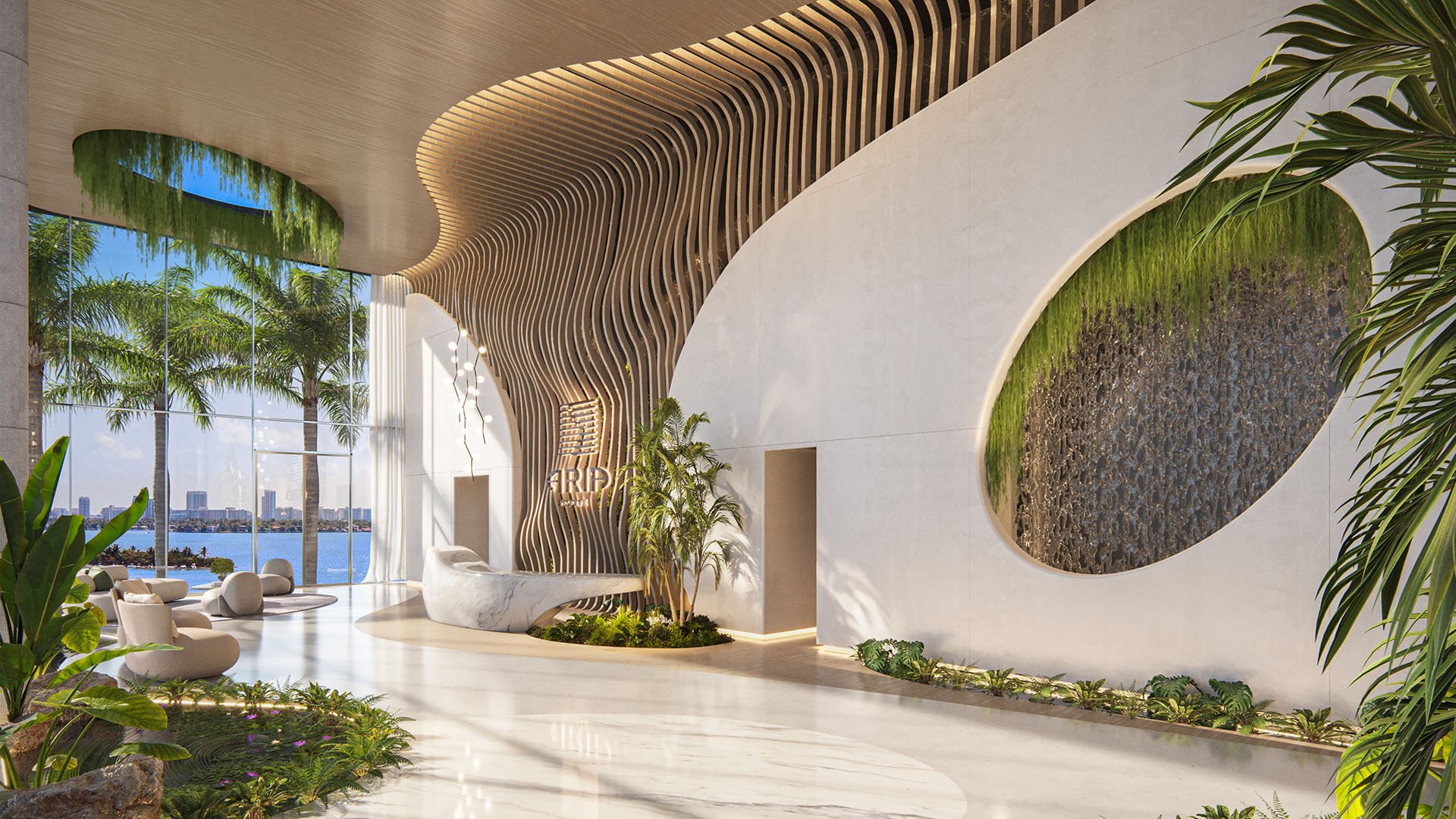
In Edgewater, a water view is often the emotional reason a buyer pauses, returns, and begins to imagine life in the residence. Biscayne Bay can give a room its rhythm: silver in the morning, blue at noon, reflective at dusk. Yet the view that feels cinematic during one showing is not always the view that remains compelling through every season, weather pattern, and daily routine.
For a sophisticated buyer, the question is not simply whether the residence has a water view. The sharper question is whether that view has enough depth, variation, privacy, and comfort to stay rewarding after the novelty fades. A year-round view should feel alive without becoming harsh, open without feeling exposed, and dramatic without requiring compromise in furniture placement, glare control, or balcony use.
This is why the strongest Edgewater evaluations are practical as well as poetic. A buyer should stand in the primary living room, the principal bedroom, the kitchen, and the terrace, then ask: what will I actually see from where I actually live?
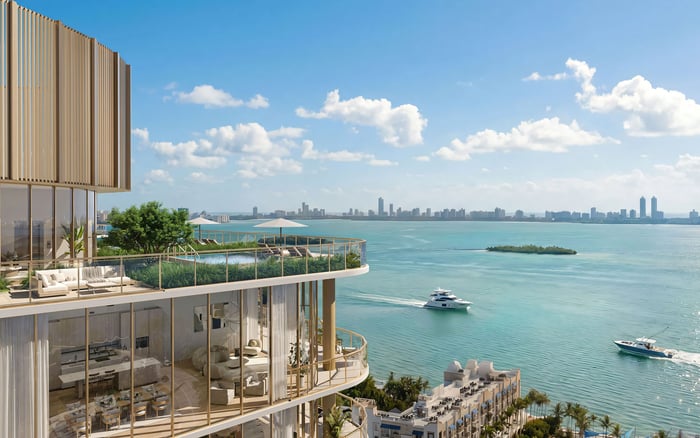
The most resilient water views are rarely one-dimensional. A broad sheet of water is beautiful, but a composition that layers bay, sky, passing boats, distant shoreline, and city light often holds attention longer. In Edgewater, buyers should evaluate whether the view has foreground, middle distance, and horizon, rather than only a flat expanse visible from one corner of the room.
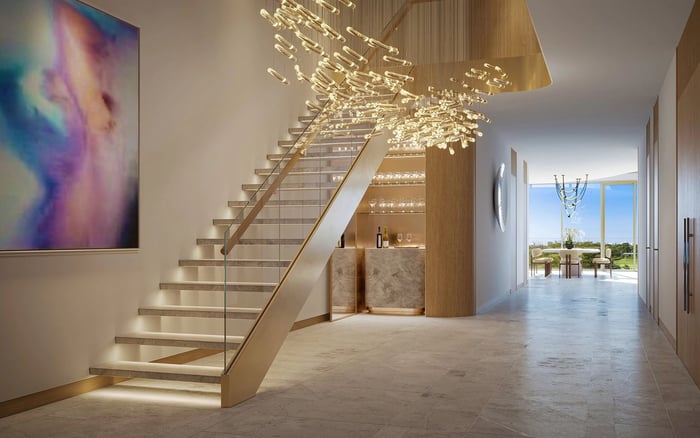
Inside the residence, sightline geometry matters. A view centered from the main seating area will be experienced every day. A view that appears only when standing at the glass may be less valuable in practice. Before committing, sit where the sofa, dining table, desk, and bed would likely be placed. The finest waterfront residences do not force the owner to rearrange life around the view. They allow the view to become part of the architecture of daily living.
This is especially relevant in new and recent Edgewater towers such as Aria Reserve Miami, where buyers often compare exposures, height, and floor plan orientation with great care. The most compelling residence is not always the highest or widest on paper. It is the one where the water reads beautifully from the rooms that matter most.
A golden-hour showing can flatter almost any water view. Serious buyers should return at different moments: early morning, midday, late afternoon, evening, and preferably after rain or heavy cloud cover. The bay changes character constantly, and so does the comfort of the home.
Morning light may be serene in one exposure and piercing in another. Midday brightness can reveal whether glass, flooring, or pale surfaces create glare. Evening conditions show how the residence feels when the water darkens and city lights begin to define the outlook. A view that stays interesting under ordinary light is far more valuable than one that depends on a single theatrical moment.
High floors deserve particular scrutiny. Elevation can create a magnificent sense of release, but it can also reduce the intimacy of the water if the eye loses detail. Lower and mid-level residences may offer more texture, while higher homes may offer openness and sky. The right answer depends on the buyer’s desired mood, not a universal hierarchy.
A water view should not come at the cost of feeling observed. In a dense waterfront corridor, buyers should study neighboring towers, angled terraces, amenity decks, and potential sightlines from nearby buildings. Privacy is not only about distance. It is about angles, glass orientation, terrace depth, and whether daily life can unfold without constant adjustment of shades.
At projects such as EDITION Edgewater, buyers may be drawn to design, services, and bay-facing drama, but the final decision should still come back to the lived view. Can one enjoy breakfast on the terrace without feeling exposed? Does the bedroom view feel peaceful at night? Are neighboring lights visually intrusive, or simply part of the urban composition?
The best year-round views balance openness and discretion. They allow the owner to feel connected to the bay while preserving the calm expected in a private residence.
A balcony can transform a water view from visual pleasure into a daily ritual. But terrace comfort depends on more than size. Buyers should consider wind, shade, heat, railing transparency, overhangs, and the ability to furnish the space elegantly. A terrace that looks generous on a floor plan may feel less useful if it is too exposed, too bright, or too narrow for the way the owner wants to live.
Stand outside long enough to notice sound, breeze, and sun. Consider whether morning coffee, an evening drink, or a quiet reading hour would actually be pleasant. If the terrace is meant for dining, confirm that the view remains visible from a seated position and that railings do not interrupt the sightline.
Residences such as The Cove Residences Edgewater invite this kind of close evaluation because Edgewater buyers often prize the transition between indoor space and bay-facing outdoor living. The terrace should feel like an extension of the room, not a decorative ledge.
Water views are emotional, but the purchase should be disciplined. Buyers should ask direct questions about window systems, exterior maintenance, building reserves, and any known future development context that could affect view corridors. When details are not clear, the prudent response is not alarm but diligence.
It is also wise to consider how interior finishes will perform with strong light. Dark woods, delicate fabrics, and art placement may need thoughtful protection. Mechanical shades, high-quality glazing, and proper lighting design can preserve both comfort and aesthetics.
Edgewater buyers comparing boutique and larger-scale offerings, including Villa Miami, should weigh the full ownership experience: arrival, amenity placement, parking flow, elevator privacy, and how the water view interacts with everyday convenience. A magnificent view is most valuable when the rest of the residence supports it quietly.
Before writing an offer, return mentally to the simplest question: would this view still feel special on an ordinary Tuesday? Not during a launch event, not at sunset with perfect weather, not with staged furniture, but during real life. The answer should be yes from multiple rooms, at multiple hours, and in multiple moods.
The enduring water view is the one that offers beauty without fatigue. It has composition, privacy, comfort, and resilience. In Edgewater, that is the difference between buying a postcard and buying a home.
What makes an Edgewater water view compelling year-round? A strong year-round view has depth, changing light, privacy, and comfort from the rooms where daily life actually happens.
Should I prioritize the highest floor available? Not automatically. High floors can offer openness, but lower or mid-level homes may provide more texture, intimacy, and connection to the bay.
How many times should I view a residence before buying? Ideally, visit at different times of day so you can evaluate glare, mood, privacy, and how the water reads in changing conditions.
Is a direct bay view always better than an angled view? A direct view can be powerful, but an angled view may offer better privacy, softer light, or a more layered composition.
What should I look for from inside the residence? Sit where furniture will likely be placed and confirm that the view feels natural from the living area, bedroom, dining space, and kitchen.
How important is balcony usability? Very important. A terrace should be comfortable enough for real use, with manageable wind, shade, sound, and seated sightlines.
Can interior design improve a challenging view? Design can soften glare and frame the outlook, but it cannot create privacy, depth, or openness where the view corridor lacks them.
What questions should buyers ask before making an offer? Ask about potential view obstruction, exterior maintenance, window performance, shade solutions, and the practical use of outdoor areas.
Are water views more about investment or lifestyle? They are both, but the lifestyle test comes first. A view that improves daily living is usually the one with the most enduring appeal.
Which details are easiest to overlook when evaluating a water view? Buyers often overlook seated sightlines, railing height, shade needs, neighboring light, wind, and how the view feels outside the ideal showing hour.
When you're ready to tour or underwrite the options, connect with MILLION.
If branded residences are on your mind — as a home or as an allocation — we would be glad to share what we are seeing, privately.
Begin a quiet conversation