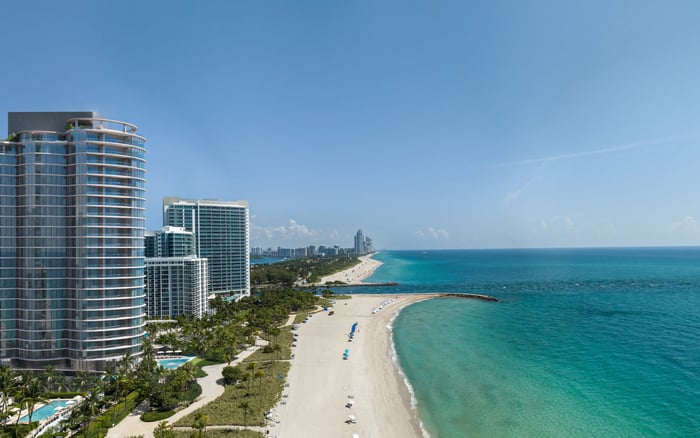
For ultra-prime buyers in South Florida, privacy is less a single tactic than a coordinated strategy: quiet exposure, contractual confidentiality, and thoughtful ownership structuring. Yet “anonymous” has never meant invisible, and it is becoming meaningfully harder to keep beneficial ownership completely off the regulatory radar. With FinCEN’s finalized Residential Real Estate Reporting Rule set to take effect March 1, 2026, non-financed transfers to entities and trusts will be reported through the closing ecosystem. Here is how discretion works today, where it breaks down, and what a modern privacy-minded buyer should align with their counsel, broker, and settlement team before committing capital.

Discretion has long carried a premium in South Florida, especially at the ultra-prime end of the market. For many ultra-high-net-worth buyers, the objective is rarely secrecy for its own sake. It is control. Control of timing, messaging, personal security, and a lasting digital footprint.
In practice, privacy is built through overlapping layers that limit who knows what, when they know it, and how long the information remains discoverable. In Miami Beach and adjacent enclaves, that often translates into fewer public-facing marketing assets, narrower distribution of materials, and deal terms that treat images, floor plans, and even baseline property context as confidential.
But a quiet purchase is not a purchase without consequences. The more a transaction relies on privacy tools, the more it depends on sound legal drafting, disciplined execution by the deal team, and a realistic understanding of what can still be seen by regulators even when the public cannot.
In luxury real estate, “anonymous” most often means that a buyer’s identity is not easily connected to a deed through routine public searches. It does not mean the buyer cannot be identified.
Ownership layers can be revealed through bank records, subpoenas, cross-border information sharing, and enforcement actions that follow money flows. Recent U.S. enforcement filings have illustrated how investigators can connect layered structures to a beneficial owner when the facts and jurisdiction allow it. The practical caution for sophisticated buyers is straightforward: privacy strategies should be built for discretion and security, not for the assumption of perfect invisibility.
That reality also links reputational risk and compliance risk. A well-run private purchase is not only about avoiding headlines. It is about ensuring the structure and the process can withstand scrutiny if the transaction is ever reviewed.
Most discreet luxury purchases rely on a stack of tactics rather than a single maneuver, because each layer addresses a different point of exposure.
First is quiet exposure. When a property is not broadly marketed, not widely syndicated, and not amplified through social media, the number of people who know about it and discuss it naturally shrinks. Industry reporting has described how off-market transactions can keep buyer identity and pricing out of the public narrative.
Second is contractual confidentiality. NDAs are frequently used as gatekeepers in ultra-prime transactions, often signed by brokers, attorneys, and other participants before sensitive details are shared. In many cases, the NDA is the first “door” a buyer walks through before receiving interior photography, floor plans, private remarks, or access instructions.
Third is ownership structuring. In the U.S., LLCs are a common discretion tool because title can be recorded in the entity’s name rather than an individual’s name. That can make the beneficial owner harder to identify through standard public property record searches.
These layers are typically used together because no single tactic covers every vulnerability. Quiet exposure reduces public marketing noise, an NDA influences human behavior and expectations, and entity ownership affects what becomes permanently visible in the public record.
In today’s luxury market, confidentiality clauses increasingly go beyond “do not disclose.” They often address digital exposure directly: limiting marketing use, restricting distribution of listing materials, requiring removal of photos online, and controlling what can be said about the property outside a defined circle.
For privacy-minded buyers, the NDA is best treated as both a behavioral agreement and a digital hygiene tool. If a property has circulated online, a well-drafted NDA can set clear expectations around takedowns, future postings, and the boundaries for agents, assistants, and vendors who might handle materials.
For sellers, NDAs also function as brand protection. In a high-visibility market, uncontrolled imagery and casual remarks can attach an unofficial story to a home long before a contract is signed. The result is often unnecessary exposure, increased inbound interest from non-qualified parties, and less control over the tone of public conversation.
Quiet marketing is often positioned as a premium service, and in the right circumstances it is. It can reduce the number of showings, limit disruptions, and narrow the universe of viewers to serious, vetted prospects.
Still, discretion has an economic dimension. Reporting on research has found that off-MLS transactions may sell for less than comparable MLS-listed homes, suggesting sellers may “pay” for privacy through reduced price discovery.
For buyers, that dynamic is not automatically negative. In certain situations, a seller may prefer a clean, controlled process and accept less exposure in exchange for speed, certainty, and fewer eyes on the asset. The key is simply to understand who is subsidizing the discretion.
The practical takeaway is that when privacy is a priority, negotiations often expand beyond price. The value equation can include timeline, certainty of execution, publicity risk, and what the home’s future digital footprint will look like after closing.
Using an LLC to take title is not inherently suspicious. It is a common tool for privacy, estate planning, and liability management. At the top end of the market, shell-company buying has been widely documented in major cities, including analyses showing that a large share of very high-priced purchases have involved entity structures.
At the same time, the regulatory environment continues to move toward greater visibility into beneficial ownership for government agencies, even when the public record stays limited.
Two developments shape the current reality:
The nuance that matters most to buyers is the difference between structuring for discretion and structuring to avoid reporting. Discretion is about limiting unnecessary public exposure. Avoiding required reporting is a risk that can compromise the transaction if it conflicts with applicable rules.
FinCEN’s finalized Residential Real Estate Reporting Rule is designed to capture information on certain non-financed residential transfers to entities and trusts. In broad terms, it targets the type of transaction where lender due diligence is not present, which is why all-cash and other non-financed deals are central to anti-money-laundering discussions.
The rule uses a “reporting person” framework, often placing responsibility on settlement or closing agents, and requires transaction details along with beneficial ownership information.
For the South Florida luxury market, the immediate implication is operational. The closing process becomes a structured point of information collection when a transaction fits the covered profile. The market has time to prepare because FinCEN materials and legal analysis point to an effective date of March 1, 2026.
A disciplined buyer should plan for more standardized questions, more documentation, and more coordination among counsel, trust advisors, and the closing team. Put simply, privacy can remain achievable at the public level, but the workflow will increasingly assume regulators can look through the entity wrapper.
Discretion works best when it is designed early and executed consistently, not retrofitted late in the process.
Key practices that tend to keep private deals smooth:
These principles matter most in non-financed purchases, where the closing ecosystem becomes the primary diligence layer. When the buyer, counsel, and settlement team are aligned early, discretion can be maintained without introducing avoidable delays.
In Miami Beach, privacy often functions like a non-quantifiable amenity. Buyers value it alongside location, service, and design pedigree. In many deals, discretion is not a side preference. It is part of the purchase terms and the experience being negotiated.
That is one reason residences associated with hospitality-grade service and controlled access can feel naturally aligned with discreet ownership. In conversations about Miami Beach purchases, projects such as Shore Club Private Collections Miami Beach and Setai Residences Miami Beach often enter the discussion not as a promise of secrecy, but as a framework for orderly living: predictable protocols, professional staffing, and a culture that tends to respect boundaries.
For buyers who live in the public eye, those soft factors can matter as much as the floor plan. Privacy is rarely one clause in a contract. It is a daily operating system, and the built environment can either support it or fight it.
Bal Harbour occupies a rare position in South Florida: internationally recognized, commercially active, and still capable of feeling removed when the right property and process are chosen.
In submarkets like this, the buyer’s privacy plan often becomes as curated as the residence itself. Discretion requires coordination among the listing side, the buyer’s representatives, and the broader closing ecosystem. The goal is to limit casual distribution of materials, reduce unforced disclosures, and keep the process predictable.
Branded residential environments can support this by professionalizing the “human layer” of discretion. Fewer ad hoc interactions and more consistent standards reduce randomness, which is often where privacy breaks down.
Within the broader Miami Beach luxury corridor, developments like The Ritz-Carlton Residences® Miami Beach can be considered in that context. The point is not that a building makes a buyer anonymous. The point is that it can reduce friction, set expectations, and help enforce the calm, structured lifestyle many privacy-minded owners want.
Oceanfront transactions can feel inherently private because the asset is physical, the setting is expansive, and access is often controlled. Yet these deals can also attract attention because oceanfront homes and condominiums are scarce and widely watched.
For buyers considering properties such as 57 Ocean Miami Beach, discretion is often best preserved by controlling early distribution of materials and tightening the circle of people with access to interior photography and architectural details.
This is where modern NDAs matter. The NDA is not simply “do not talk.” It is about managing the reproducibility of a home online, where images can be copied, reposted, screen-captured, and archived. Even when a listing is never publicly syndicated, a single forwarded PDF can turn into a permanent record if expectations are not clear.
Some privacy strategies fail not because of the deed, but because of social gravity. Buildings and clubs have scenes, routines, and recognizable rhythms. A buyer may be technically anonymous in public records yet still become widely “known” through informal networks.
For certain owners, the solution is not to avoid social environments altogether. It is to choose them deliberately and to structure the purchase so that staff, vendors, and counterparties are contractually committed to discretion.
In that lifestyle-forward segment, projects like Casa Cipriani Miami Beach are sometimes evaluated as much for their culture as for their real estate. The throughline is consistency: a setting where expectations are clearer, access is more controlled, and the daily rhythm reduces unnecessary exposure.
Counsel can help ensure that privacy expectations are reflected in the process, particularly around what can be shared, with whom, and how long digital materials may remain accessible.
The luxury market has normalized privacy tools: off-market exposure, NDAs, and entity ownership. Yet the direction of travel is clear. Regulators are building better visibility into non-financed transfers to entities and trusts, and industry participants will increasingly be expected to capture beneficial ownership details through standardized workflows.
For a serious buyer, the modern goal is not secrecy at all costs. It is elegant discretion with clean compliance: a process that limits public noise while remaining defensible if examined.
Privacy is still achievable in South Florida, but it is achieved through planning, coordination, and realistic expectations. Align counsel early, structure ownership thoughtfully, and treat confidentiality as a system that covers marketing, documentation, and day-to-day behavior.
Is an NDA standard in ultra-luxury real estate deals? In ultra-prime transactions, NDAs are widely used before sensitive details are shared, especially when buyer identity, pricing, and property information are tightly controlled.
Does buying through an LLC keep my name off public records? Often, yes. Title can be recorded in the LLC’s name, which can make the beneficial owner harder to identify through typical public property searches.
Will the FinCEN Residential Real Estate Reporting Rule affect all luxury purchases? It is designed to capture certain non-financed residential transfers to entities and trusts. If your transaction fits that profile, expect structured information collection through the closing process after the rule’s March 1, 2026 effective date.
Are off-market deals always better for privacy? They can reduce exposure because fewer people see the opportunity, but they may also involve trade-offs in price discovery depending on the seller’s priorities.
Can “anonymous” ownership be pierced? Yes. Enforcement actions and investigative tools can follow money flows and intermediaries, so anonymity should be treated as reduced public visibility, not guaranteed invisibility.
For discreet guidance on South Florida’s ultra-prime market, explore MILLION Luxury.
If branded residences are on your mind — as a home or as an allocation — we would be glad to share what we are seeing, privately.
Begin a quiet conversation