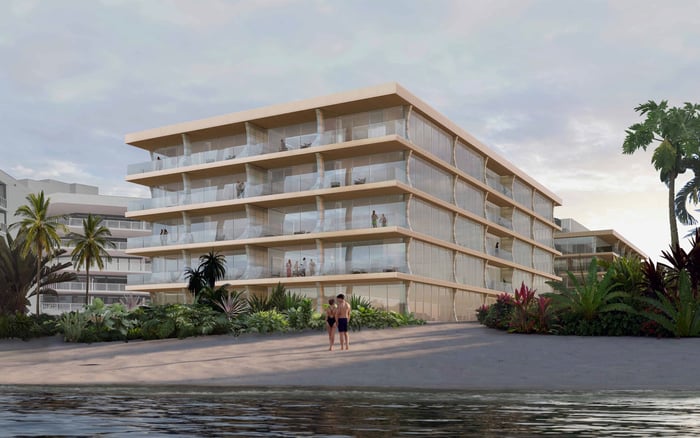
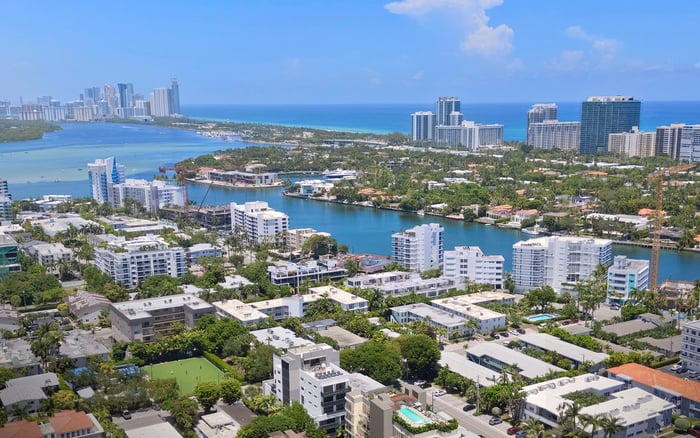
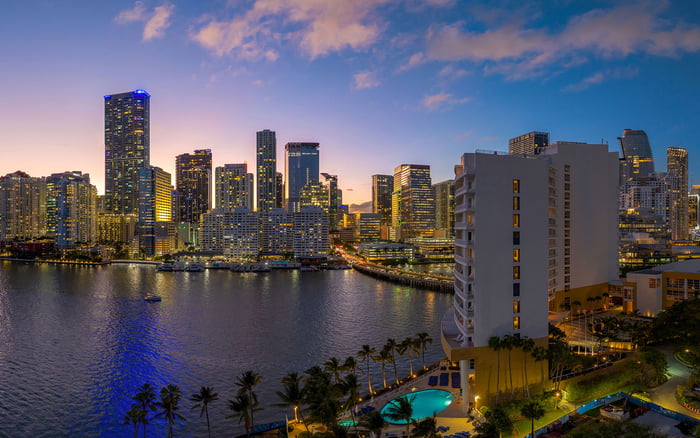
In South Florida’s ultra-luxury market, the decision between a boutique condominium and a mega development is less about aesthetics and more about daily lived experience: privacy, service cadence, governance, and exit liquidity. Globally, ultra-high-net-worth households are growing, and many buyers are adding a Second-home to an already complex portfolio. That reality has elevated a familiar question into a strategic one: do you want a quieter, lower-density building that optimizes discretion, or a larger, amenity-rich address designed to function like a self-contained ecosystem? Below, MILLION Luxury breaks down the tradeoffs that matter most to sophisticated buyers evaluating Miami-beach, Brickell, and Palm-beach.
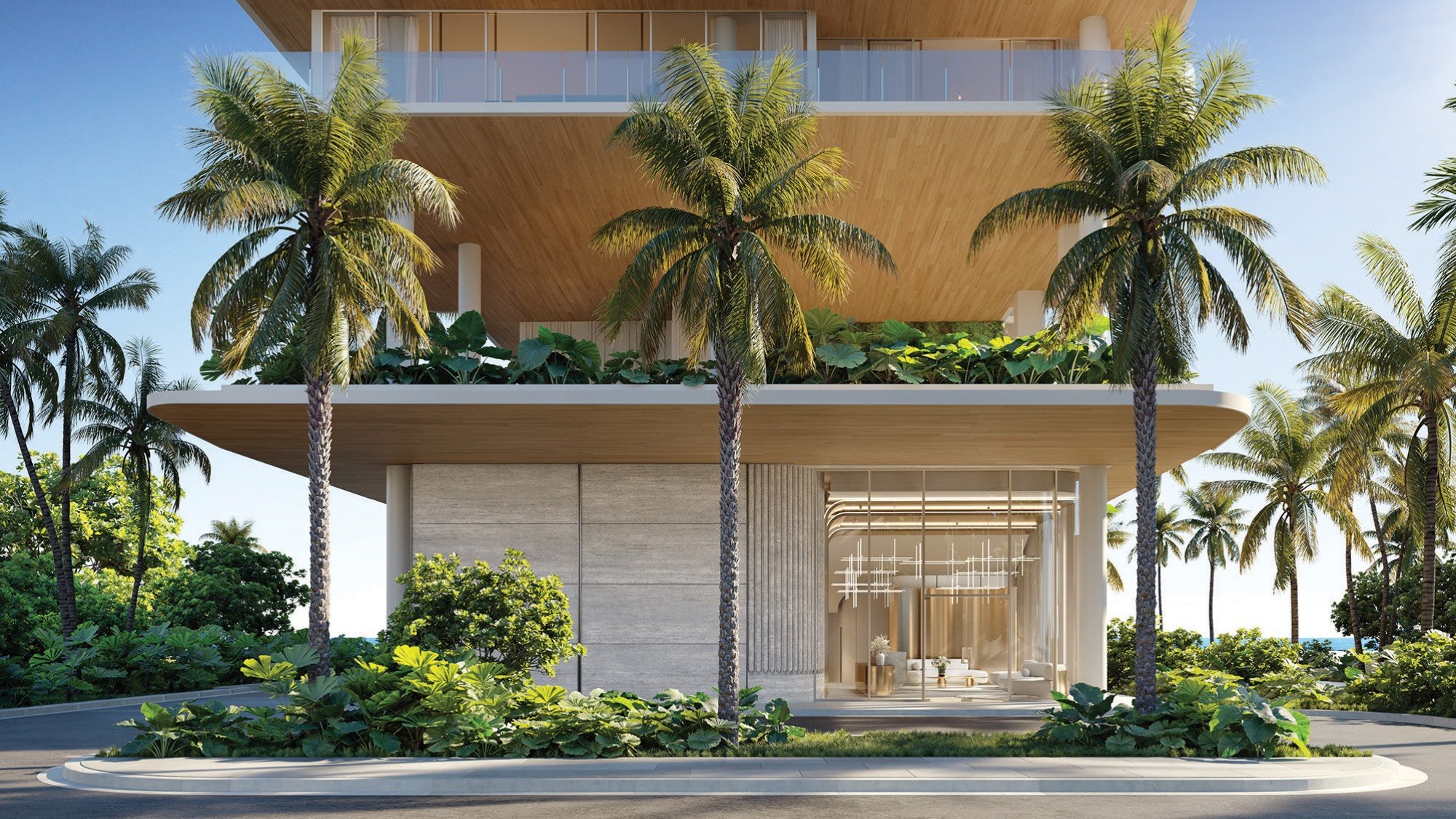
“Boutique” and “mega” are often framed as architectural categories. In practice, they function more like operating models. The difference is less about façade and more about how the building runs day to day: how you arrive, how you move through shared spaces, how service is delivered, how decisions are made, and how the asset behaves when you eventually sell.
At its simplest, boutique is generally associated with a low unit count, often under roughly 50 to 100 residences. Mega developments can reach 800 to 1,000 or more. That scale differential is not just a statistic. It drives the lived experience in ways sophisticated buyers notice immediately: the density of elevator traffic, the rhythm of the lobby, the frequency of shared-space contention, and how quickly staff learns preferences and patterns.
For South Florida buyers, this question tends to surface at a specific moment in the decision process. Often, the purchase is not simply “a home.” It is one component in a broader lifestyle system: a seasonal base, a tax-residency anchor, or a coastal complement to a primary residence elsewhere. In that context, new-construction selection is not only about finishes and floorplans. It is about friction, predictability, and time.
If you are evaluating Miami-beach, Brickell, and Palm-beach, the core question becomes straightforward: do you want a quieter, lower-density building engineered around discretion, or a larger, amenity-forward address designed to operate as a self-contained ecosystem?
Boutique buildings are typically prized for intimacy and calm. Fewer residences can mean fewer elevator stops, less traffic in corridors, and fewer conflicts over high-demand shared spaces. The overall cadence often feels closer to a private club than a vertical neighborhood.
For ultra-wealthy buyers, privacy is repeatedly cited as a primary selection driver. Boutique formats can deliver privacy more consistently because the building is engineered around low throughput. When fewer residents are competing for vertical circulation and common areas, concepts like direct entry and private-elevator access are easier to execute and easier to live with. Arrival and departure become quieter and more controlled, which is often the point.
Palm-beach offers a clear illustration of how privacy is positioned as a core luxury value, not an afterthought. The Berkeley Palm Beach explicitly markets private elevator access for every residence, underscoring how boutique-scale planning can turn the threshold of the home into a discreet ritual rather than a shared event.
The less obvious advantage is social. Boutique living often creates a stronger, quieter community dynamic: you are more likely to recognize faces, and less likely to feel as though you are moving through a hotel. For many Second-home owners, that balance is ideal. It is familiar without being demanding, and social without feeling performative.
None of this means boutique is automatically “better.” Boutique simply concentrates the experience. When the building is well run, the intimacy reads as elevated. When it is not, shortcomings can feel more personal because there is less distance between residents and the building’s operational choices.
Mega developments compete on breadth and programming. Multiple pools, multiple fitness rooms, layered social lounges, and sometimes retail components can create a true “everything is here” proposition. For residents living full-time in a tower, that platform effect can be a genuine advantage. It reduces the need to leave the property for daily routines and provides a steady rhythm of options for visiting family.
The tradeoff is that abundance can introduce friction. The same amenities that look immaculate in a sales gallery can become scheduling bottlenecks in real life. High-demand spaces attract high demand, and the experience can shift from serene to managed, particularly during seasonal peaks.
This is where mega living becomes highly personal. Some owners enjoy the energy, variety, and sense of community that comes with scale. Others discover they are underwriting amenities they rarely use, especially if the home is primarily seasonal. The question is not whether the amenity list is impressive. The question is whether it fits the way you actually occupy the residence.
In Miami-beach, the mega-versus-boutique decision often plays out within the same general area because both formats can exist within a short drive. A buyer looking for a more vertical, city-adjacent lifestyle might gravitate to an address such as Five Park Miami Beach for its larger-scale proposition. Meanwhile, buyers who want Miami-beach with a more curated, hospitality-forward experience may find the serviced-residence concept at Setai Residences Miami Beach aligns better with how they live and travel.
At the top end of the market, a notable shift is underway: from “more” to “better.” Luxury coverage can portray the market as an amenities arms race, but many sophisticated buyers are increasingly prioritizing refinement, wellness, and high-touch service over a long checklist.
Boutique projects often benefit from this trend because they can focus capital and staffing on doing a narrower set of experiences exceptionally well. When the footprint is smaller, the building can place greater emphasis on the quality of the spaces that matter, and on service that feels consistent rather than stretched.
Mega developments can absolutely deliver excellence, but the operational challenge is larger by definition: more square footage, more moving parts, and more resident demand to satisfy. Over time, the lived experience depends less on the ribbon-cutting story and more on the building’s ability to maintain standards at scale.
In Miami-beach, the strongest residences frequently win on the quality of the lifestyle narrative, not the raw volume of offerings. Shore Club Private Collections Miami Beach reflects how branding and a hospitality mindset can matter as much as the amenity count itself, particularly for buyers who define luxury as consistency, discretion, and a dependable service cadence.
In ultra-luxury condominiums, monthly fees are not a footnote. They are a material part of the ownership experience and an ongoing line item that should be evaluated with the same rigor as purchase price.
Boutique buildings have fewer owners to share fixed costs, which can push per-unit maintenance or HOA fees higher even if the building is operationally simpler. Mega developments can spread certain expenses across a larger base, but they also tend to maintain more amenity space and staff, which can offset the advantage. In other words, scale can dilute some costs while simultaneously creating new ones.
For a discerning buyer, the goal is not to assume one format is “cheaper.” The goal is to understand what you are paying for, how the costs are allocated, and whether the spend matches your usage. A building with extensive programming can be excellent value for a full-time resident who uses it daily. The same building can feel inefficient for an owner who arrives for short stays and prioritizes quiet over variety.
Questions that tend to clarify value quickly:
Governance is a subtle but decisive differentiator, and it is easy to underestimate until you have owned in a condominium association. The association effectively protects, or dilutes, the asset’s day-to-day experience: arrival privacy, quiet hours, renovation protocols, guest policies, and how consistently standards are enforced.
With fewer owners, boutique associations can be more cohesive. They can move faster, align on priorities, and enforce standards with less procedural friction. The flip side is concentration risk: a small group can exert outsized influence. In some cases, one dominant personality can steer culture and policy, for better or for worse.
In mega developments, governance becomes more institutional. There may be more committees, more formal processes, and sometimes more political complexity simply because there are more stakeholders. The benefit is resilience. Decisions may be less likely to swing dramatically with the preferences of a single owner.
For UHNW buyers, governance is not about a rulebook in isolation. It is about whether the building’s culture protects the experience you are buying. Discretion, calm, and service standards can be preserved, or eroded, by how the association and management team operate.
At the very top of the market, scale introduces a different type of risk: absorption. When a building delivers a large volume of similar inventory at ultra-high price points, the resale environment can become more sensitive to timing and sentiment.
Luxury reporting on Manhattan’s Billionaires’ Row has noted that nearly half of inventory in certain mega-tower contexts remained unsold at the time of coverage. The same reporting highlighted meaningful discounting in One57 resales, illustrating how headline towers can experience price volatility in the secondary market.
The lesson for South Florida is not that large towers are inherently fragile. It is that supply dynamics matter. When many comparable units are available, buyers gain leverage and resale can require more patience or sharper pricing.
Boutique inventory behaves differently because it is naturally scarce. That scarcity can support pricing power and discretion, particularly when the building is viewed as a true peerless product in its submarket. In New York, 80 Clarkson Street has been widely covered for boutique-like dynamics, including private marketing and deals that move without broad public exposure. Even though its unit count stretches stricter boutique definitions, the strategy signals something relevant: at the highest end, discretion itself can function as a feature of liquidity.
For South Florida buyers, the practical takeaway is to evaluate resale not just by “location and views,” but by how many comparable units will be competing with you if you decide to exit. The more interchangeable the inventory, the more the market can behave like a commodity, even at luxury price points.
Sophisticated decisions become clearer when you anchor them to use cases. This is less about ideology and more about matching an operating model to a real schedule.
Boutique often wins. Many seasonal owners want a residence that feels calm on arrival and effortless to lock and leave. Lower density can mean fewer unknowns, fewer variables in shared spaces, and a greater sense that the building is tuned for discretion.
Mega can win, especially for buyers who want variety and routine built into the property. If the building functions like a lifestyle campus, it can simplify daily choices and keep wellness, social space, and convenience under one roof.
Service consistency becomes the differentiator. Hospitality-branded operations are often compelling here, because they can deliver predictable standards and make the residence feel like an extension of a well-run hotel.
Boutique scarcity may support long-term positioning, but mega scale can also be highly liquid if the product is differentiated and demand remains broad. The goal is to avoid being one of many identical offerings. Scarcity and differentiation can both support an exit, but they work through different mechanisms.
South Florida’s luxury market compresses choice into a relatively short radius. Buyers can access urban, coastal, island, and resort lifestyles without the long transitions required in many other global markets. That breadth makes the boutique-versus-mega question unusually relevant because the “right” format can change quickly by neighborhood and by use case.
In Miami-beach, buyers often calibrate between energy and seclusion. The market can deliver a social calendar and a true resort sensibility, but many buyers still treat privacy as a baseline requirement. Boutique-minded purchasers tend to prioritize quiet lobbies, low traffic in common areas, and a service cadence that feels predictable rather than reactive.
In Brickell, the calculus often tilts toward vertical convenience and programming. Many buyers want the city at their feet and appreciate a building that offers multiple social and wellness options without leaving the property. In that environment, the question becomes how well the building’s scale serves your routines, not just how many amenities it can list.
In Palm-beach, discretion is part of the language of place. Boutique scale, private arrival, and low-density planning can read as the most authentic expression of luxury, particularly for buyers who already hold extensive assets elsewhere and want this residence to feel quiet, protected, and simple to manage.
The throughline across South Florida is that the market increasingly rewards intention. Whether you choose boutique living or a mega platform, value tends to follow the buyers who align the building’s operating model with their daily realities, and who underwrite not only the product, but the way it will be run.
Is boutique always under 100 units? Often, yes. Boutique is commonly associated with roughly under 50 to 100 residences, though some projects feel boutique-like due to discretion and design even when larger.
Do mega developments always have lower HOA fees? Not necessarily. Mega scale can spread some fixed costs, but larger amenity footprints and staffing can be expensive. The right comparison is cost versus actual usage.
Why do UHNW buyers emphasize privacy so much? Privacy and security are widely cited as primary drivers, especially for buyers who maintain multiple homes and want predictable discretion in daily routines.
Which format is better for resale? It depends on scarcity, differentiation, and the volume of comparable inventory. Boutique can benefit from rarity, while mega can be liquid if demand stays broad.
For tailored guidance on choosing the right building model for Miami-beach, Brickell, or Palm-beach, connect with MILLION Luxury.
If branded residences are on your mind — as a home or as an allocation — we would be glad to share what we are seeing, privately.
Begin a quiet conversation