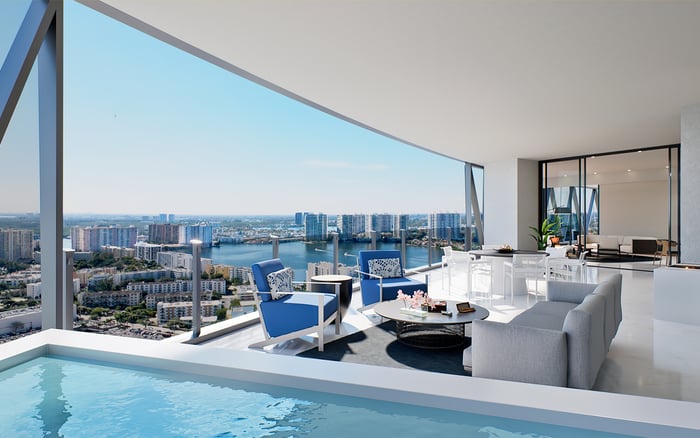
For ultra-high-net-worth buyers, South Florida’s waterfront is no longer a backdrop. It is transportation, privacy, lifestyle, and long-duration value support. Miami’s bayfront favors the cosmopolitan owner who wants a marina-ready address within reach of culture and capital, while Fort Lauderdale’s marina ecosystem speaks to owners who prioritize operational ease and proximity to yachting infrastructure. From branded residences that treat arrival as theater to controlled-access island living and even fly-in communities up the coast, the region’s most coveted homes increasingly trade on access: to water, to runways, and to time itself.
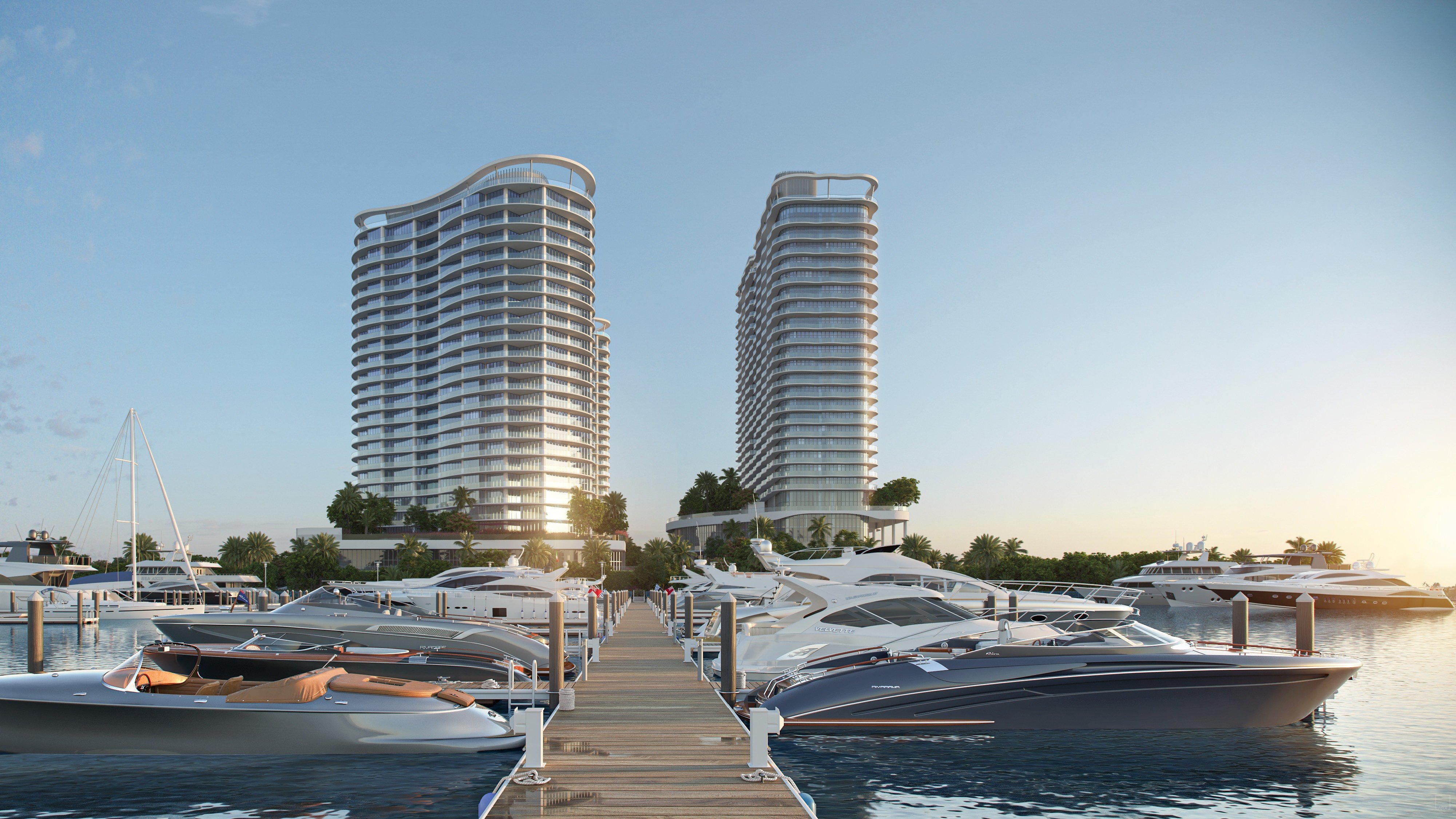
Luxury buyers have always paid for water, but South Florida’s current cycle is clarifying what the most sophisticated purchasers are truly underwriting. It is not simply frontage or an attractive horizon line. It is mobility, privacy, and a daily cadence in which the yacht can matter as much as the car. In this tier of the market, “waterfront” functions less like scenery and more like an operating system for how the household moves.
Biscayne Bay, in particular, underscores that the waterfront is not merely aesthetic. Miami-Dade’s Biscayne Bay Economic Study Update (2023) frames the bay as an economic engine with an estimated $63.9B in output, $23.3B in income, 448,000 jobs, and $3.9B in tax revenue. For a buyer weighing a bayfront tower against an inland alternative, that scale of economic gravity matters. It signals long-term institutional attention, ongoing investment, and a shoreline that remains central to how the region functions.
At the ultra-premium level, the practical implication is straightforward. The best water-oriented addresses in Miami and Fort Lauderdale are increasingly chosen the way one selects infrastructure. You are buying access to the bay, the Intracoastal, and the ocean, plus the services that keep that access usable, orderly, and protected over time.
That shift also explains why the conversation has become more precise. Sophisticated buyers are no longer satisfied with “near the water.” They want to understand how quickly they can be on it, how easily they can maintain their equipment, and how reliably they can return home to a building or enclave that feels insulated, even during peak season.
Miami is the market for owners who want yachting integrated into a broader city narrative. The appeal is the blend: a skyline built for international commerce, culture with year-round relevance, and waterfront corridors that connect to dining, galleries, and the financial core. For many, the yacht is a lifestyle layer, not the entire lifestyle, and Miami accommodates that priority.
What does that look like in product?
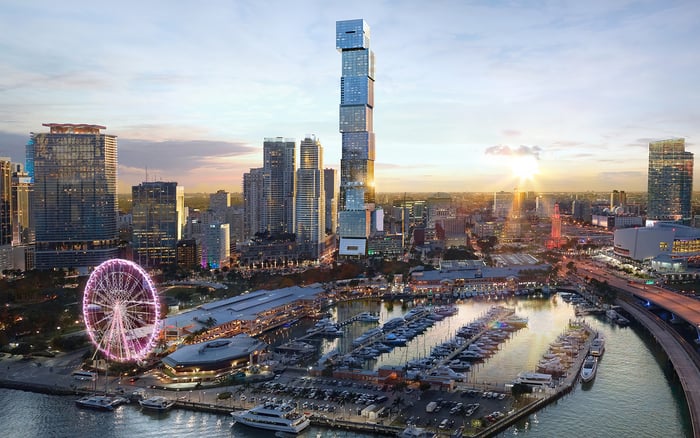
In Downtown, the idea often appears in a signature tower that reads as a decisive arrival statement while remaining fundamentally livable. Aston Martin Residences Downtown Miami fits this archetype and is frequently discussed within Miami’s “tower plus marina and downtown access” narrative. For the buyer, the relevance is not the logo in isolation. It is the clarity of the concept: a waterfront address that makes it easy to live in the city while keeping the water close at hand.
Miami’s bayfront lifestyle also carries a behavioral premium. Many high-net-worth owners do not want boating to dominate the day. They want it available, not necessarily central. The best-fit home is built around optionality: step onto the water when it suits you, then return to a residence that performs like a private club inside the city. That blend of convenience, service, and proximity is precisely where Miami’s strongest waterfront inventory concentrates.
This is also where the market begins to reward selectivity. When optionality is the product, the buyer’s lens tends to narrow to buildings and locations that reduce friction. How quickly can you get from lobby to car service, from car service to dock, from dock to open water, and then back again without the day feeling compromised? The properties that answer those questions cleanly often command outsized attention.
Market color supports the broader thesis that demand concentrates where this flexibility is strongest. Independent luxury market summaries have described momentum in the $2M-plus segment, with moderate price gains overall and submarkets performing differently depending on scarcity, brand strength, and the quality of the lifestyle offer. In other words, the premium is not paid evenly. It is paid where the experience is most coherent and easiest to execute.
Fort Lauderdale carries a different tone. It is less about cosmopolitan theater and more about yachting operations executed cleanly. This is why the city’s best new residential concepts increasingly treat marina adjacency as a primary differentiator, not a footnote. In Fort Lauderdale, luxury is often expressed through logistical ease: shorter steps between home and vessel, stronger alignment with yachting infrastructure, and an ecosystem built to support ownership at scale.
A clear example is the St. Regis Residences Bahia Mar, positioned as a yacht-forward branded residential and hotel concept above the Bahia Mar Yachting Center, with direct marina adjacency emphasized in its public positioning. That is not merely marketing language. For a buyer with a serious boating calendar, the relationship between home and marina is the lifestyle. Proximity is not a convenience; it is the schedule.
At the same time, not every Fort Lauderdale buyer wants magnitude. There is a meaningful segment that prioritizes a quieter building, fewer neighbors, and the sense that staff knows preferences without asking twice. Riva Residenze Fort Lauderdale has been marketed as a boutique luxury tower with limited inventory, a positioning that typically resonates with privacy-minded owners. In this lane, luxury is not “more.” It is “less, better,” with the added benefit that daily life tends to feel more controlled.
The Miami versus Fort Lauderdale decision often comes down to how you actually use the water. If you want the city to be the main event and the boat to be an extension, Miami reads as intuitive. If you want the boat to be the main event and the city to stay elegantly out of the way, Fort Lauderdale becomes compelling. Both are waterfront markets, but the operating philosophy differs. One sells velocity and proximity to the broader global city machine. The other sells yachting fluency and reduced operational friction.
Miami Beach functions like a showcase: beachfront glamour, global visitation, and a residential market that rewards discretion when it is executed well. For buyers, the best addresses translate energy into insulation. You can be close to the global conversation without living as if you are on stage.
Two product types tend to dominate the buyer’s shortlist.
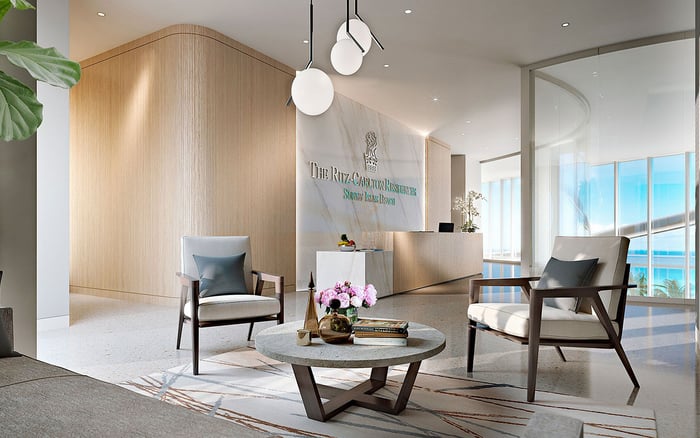
First, the branded, service-forward residence where the operator’s DNA is felt in staffing, arrival sequences, and the predictability of daily life. The Ritz-Carlton Residences® Miami Beach sits within this conversation, offering the sort of buyer-facing proposition that often appeals to owners who want a home to behave like a private hotel, but with residential scale. At this level, the appeal is not novelty. It is repeatability. Owners want to know what the experience will feel like on a Tuesday in July, not just during peak season.
Second, the ultra-curated coastal compound where the experience is intentionally edited. Shore Club Private Collections Miami Beach is another Miami Beach option that naturally fits a “managed privacy” narrative. In this category, the building acts as a filter: it controls flow, compresses friction, and delivers a consistent atmosphere in a city known for intensity. The best examples do not fight the energy of Miami Beach. They place it at a controllable distance.
This distinction matters because Miami Beach is not simply about beachfront access. It is about how effectively a residence can transform a high-visibility environment into something that feels private and stable. Buyers who spend time across multiple markets often value consistency above all else. A service model that reduces surprises can be just as meaningful as the view.
Miami Beach also benefits from proximity to enclaves whose defining trait is access control, which helps explain why buyers who want beachfront culture still sometimes choose addresses that sit near, but not inside, the most public corridors.
For some buyers, “waterfront” is less about boating and more about boundaries. South Florida’s most coveted enclaves are not simply expensive; they are hard to enter. The modern trophy is often defined by separation, and separation is increasingly created through geography, governance, and controlled points of entry.
Fisher-island is widely characterized as accessible primarily by boat or ferry, effectively creating a daily layer of separation from the mainland. The point is not inconvenience. The point is gatekeeping through geography. That kind of separation changes the psychological experience of ownership. Even when the broader region is busy, the enclave can feel removed, edited, and calm.
Indian Creek, often framed publicly with “Billionaire Bunker” language, operates on a similar psychological plane: visibility without easy access. The allure is the reassurance that a community can feel intimate even when it is globally known. In a media-saturated market, that is a form of luxury that can be difficult to replicate through architecture alone.
These enclaves also help explain why trophy sales still command attention. A record-setting $120M Star Island mansion sale, as covered in local media, reinforces that the top end of Miami’s waterfront housing is not only resilient but also capable of redefining benchmarks. For the ultra-premium buyer, these headlines are not just gossip. They reset comparable conversations and remind the market that scarcity still has teeth.
Just as importantly, controlled-access markets tend to attract buyers who value predictability. The purchase is not only a residence; it is a commitment to an environment with fewer variables. That mindset often mirrors how these buyers evaluate yachts and aircraft: reliability, privacy, and the ability to move without negotiation.
Not every luxury buyer defines access through the water. For a growing class of owners, time is also won through private aviation. South Florida supports this lifestyle in multiple ways, from proximity to major airports to residential communities built around flight.
Tailwinds Airpark in Jupiter is a direct expression of the fly-in concept, where aviation access is central to the community proposition. In practice, this represents a parallel to marina living: the runway becomes the driveway, and the hangar becomes a meaningful part of the home’s program.
The relevance to a waterfront conversation is practical. Today’s luxury buyer is often multi-nodal. The yacht, the aircraft, and the second-home portfolio operate as a single system. An owner who can move from a Miami meeting to a coastal weekend to a quieter residential corridor with minimal friction will often pay for the addresses that make that possible.
This is also why “access” has become a more powerful value driver than pure aesthetics. View corridors matter, but time corridors matter, too. Whether the asset is waterfront or runway-oriented, the premium tends to concentrate where the owner can compress transitions: less waiting, fewer bottlenecks, and more control over the day.
At the top end, waterfront real estate can look emotional from the outside. The decision is often practical when you unpack it. The highest-performing purchases usually come from an honest assessment of how you live, how you travel, and how much operational complexity you are willing to absorb.
Be honest about your habits. Do you want to see water, touch water, or depart on water? A tower with marina adjacency can be ideal for an owner who values convenience, while a more operational yachting environment can serve an owner who is on the water as a routine. The core question is not “Do you like boats?” The question is “How often will the boat be part of a normal week?”
Branded residences are not interchangeable. In the best examples, branding is shorthand for operational standards. The real questions are: Who runs the day-to-day? What does the staffing model look like? How does the building handle owner privacy, arrivals, and the logistics of entertaining? At this level, operational consistency is a form of security. It protects time, protects comfort, and protects the feel of the home.
Privacy is designed, not promised. Consider how vehicles enter, how guests flow, where common areas sit, and whether the building can feel calm even during peak season. The details matter: sight lines, elevator logic, lobby visibility, and the way staff interacts with residents and visitors. A truly private experience is often the result of many small decisions executed well.
A waterfront home can be priceless to you, but the market will ultimately decide who the next buyer is. Branded, well-located inventory can broaden the buyer universe, while highly idiosyncratic property may trade at a premium only when the perfect purchaser appears. Sophisticated buyers tend to balance personal fit with resale logic, particularly when the asset sits at the top of its segment.
Waterfront living is supported by an ecosystem: marinas, maintenance, yachting services, and governance that protects shoreline value. The Biscayne Bay economic impact numbers are a reminder that ecosystems are not abstract. They are measurable, and they influence long-term confidence. A residence can be exceptional, but if the surrounding system is weak, daily life becomes less elegant and ownership becomes more demanding.
South Florida is not one luxury market. It is a collection of micro-markets organized by access.
Miami is for the owner who wants marina-adjacent living inside a global city machine. Fort Lauderdale is for the owner who wants yachting operations to be effortless. Miami Beach is for the owner who wants energy nearby, but controlled at the doorstep. Fisher-island and Indian Creek are for the owner who wants the most valuable thing in modern luxury: separation.
The common thread is that the premium is increasingly paid for a life that runs smoothly, privately, and on schedule, whether the vehicle is a yacht, a car, or an aircraft. In this cycle, the most compelling waterfront properties are not simply the ones with the best view. They are the ones that make the owner’s life measurably easier.
For buyers evaluating South Florida at this level, the best decision framework is simple. Start with how you use the water, then map it to the ecosystem that supports that use. From there, the right building or enclave often becomes obvious, because the correct address is the one that lets your lifestyle run without constant coordination.
Is waterfront property in Miami mainly about lifestyle, or is it economic as well? Both. Public county research frames Biscayne Bay as a major economic engine, and lifestyle demand concentrates around the same waterfront corridors.
Should yacht owners choose Miami or Fort Lauderdale? Choose based on use. Miami tends to fit owners who want a city-first rhythm with marina adjacency, while Fort Lauderdale often suits owners who prioritize yachting practicality and proximity to yachting infrastructure.
Do branded residences matter at the ultra-luxury level? They can. The strongest branded residences offer a predictable service model and a buyer-recognizable identity, which can support enjoyment and resale appeal.
Why do enclaves like Fisher Island and Indian Creek command such attention? Because controlled access functions as an amenity. Geography and governance can create separation that is difficult to replicate elsewhere.
For a private conversation about waterfront strategy and the buildings defining it, connect with MILLION Luxury.
If branded residences are on your mind — as a home or as an allocation — we would be glad to share what we are seeing, privately.
Begin a quiet conversation