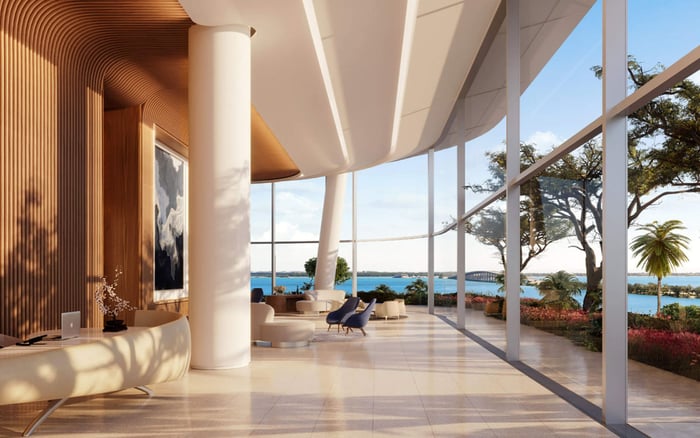
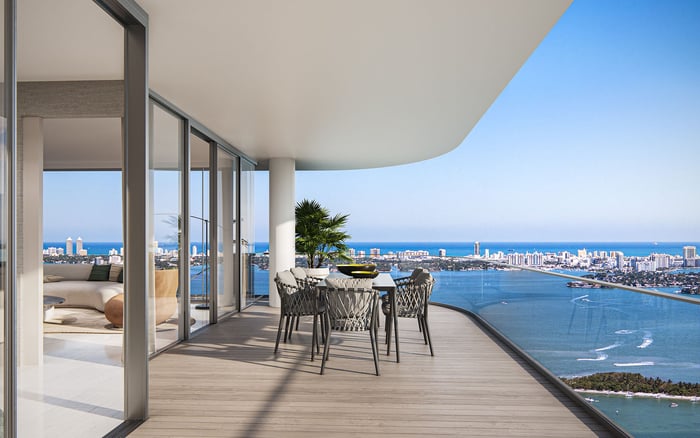
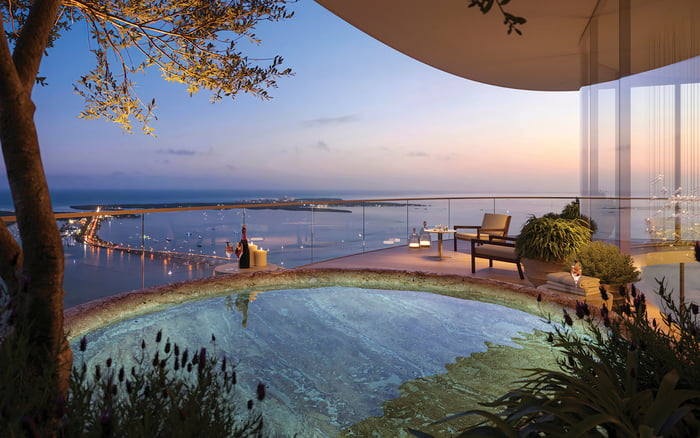
In South Florida, the most valuable amenity is often not inside the home, it is the horizon itself. From Biscayne Bay sunrise to Atlantic twilight, today’s best Miami residences are designed as viewing instruments: calibrated sightlines, climate-smart glazing, layered terraces, and interiors that keep water in frame from arrival to bedtime. This guide breaks down the architectural strategies that protect the view while balancing heat, glare, privacy, and storm performance, with practical decision points for buyers planning a renovation or new build.
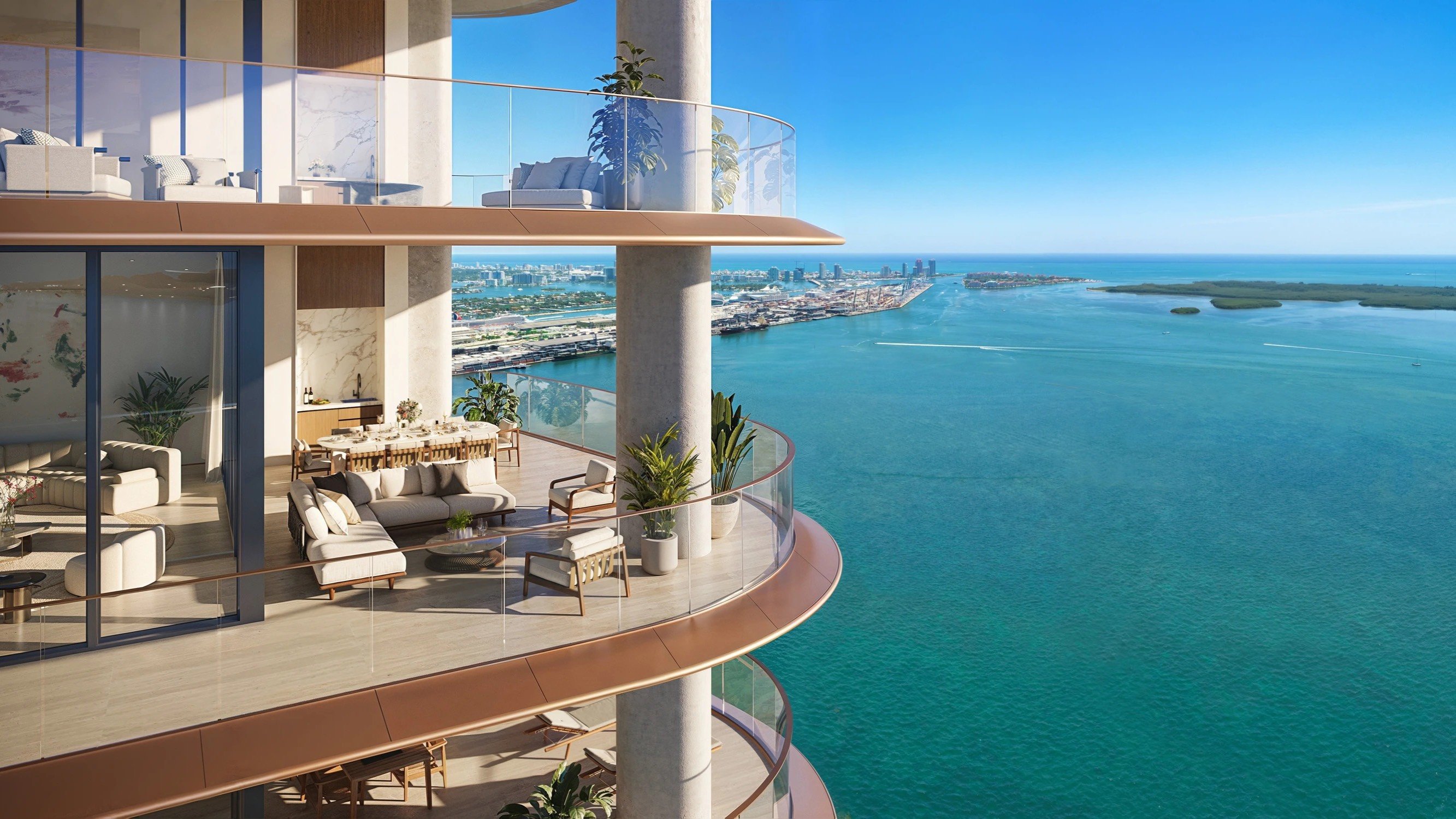
In Miami, water is not just scenery. It sets orientation, mood, and, often, value. Designing for the view means treating the horizon as a core program element, as essential as the kitchen or the primary suite, not as decoration added at the end.
The most successful homes begin with a clear discipline: decide which moments must feel inevitable, then design backward from those moments. Arrival should reveal water quickly, even if the reveal is controlled. The main living zone should keep the vista present while you are talking, dining, and moving through the room. The primary suite should deliver a calmer, more private version of the same connection, with sightlines that feel intentional rather than incidental.
For buyers, this mindset is a powerful filter. A residence can be impeccably finished and still feel visually flat if the plan turns you inward. Conversely, a home with more modest finishes can feel extraordinary when the architecture continually reintroduces the bay or ocean at the right height, angle, and distance. In neighborhoods where towers, palms, and shoreline activity compete for attention, the best view is often the one that feels composed.
This is also where South Florida design becomes highly specific. Heat, humidity, glare, wind, salt air, and privacy pressures do not reward generic solutions. The goal is not simply more glass. The goal is a comfortable, controlled Waterview that stays legible at noon, flattering at golden hour, and serene after dark.
The earliest site and massing decisions tend to shape vistas more than any finish package ever will. When a property offers more than one direction of water, the real question is experience: do you want one long, cinematic view anchored to the main living level, or a sequence of framed moments that unfolds as you move through the home?
Several strategies consistently deliver outsized results in South Florida:
Position the primary living volume where the view is most generous, then support it with quieter spaces behind. When the plan is reversed, water can become something you pass by, rather than something you live with.
Create an approach that holds the view back for a beat. A corridor, courtyard, or gallery-like entry can heighten the reveal, making even familiar water feel newly discovered.
Use landscape as a view editor. Palms, hedges, and sculptural planting can screen neighboring activity without cutting the horizon line. In Miami-beach contexts, where proximity and visibility are part of daily life, this editing is often as important as the architecture itself.
Avoid designing only for the brightest day. A view is not a static picture. Consider where boats, bridge lights, and shoreline movement will pull the eye at night, and how interior lighting can either support that experience or wash it out.
For buyers touring a waterfront home, ask a simple question early: does the plan make the water feel inevitable, or does it make you work for it? Luxury, at its best, removes effort from everyday rituals.
Floor-to-ceiling glazing is an obvious tool, but in Miami it must do more than provide transparency. It must manage heat and glare, hold up to coastal conditions, and remain comfortable enough that residents actually use the spaces it serves.
The real innovation is rarely about size alone. It is about performance and detailing: how frames are minimized, how corners are resolved, how the glass aligns with ceiling and floor planes, and how consistently the system is executed across a room. The sense of “disappearing” comes from clean alignment and tight tolerances as much as it comes from scale.
Design moves that help the view read as continuous:
Corner glazing and thoughtfully “turning the glass” around key rooms can eliminate dead zones where structure interrupts the panorama. In high-rise settings, this is often most impactful in living rooms and primary suites.
Deep reveals and carefully placed overhangs can reduce glare without sacrificing openness. The view remains bright, but your eyes are not forced to squint.
Layered window treatments preserve flexibility. Sheer shades maintain daylight and the outline of water while reducing the sense of being on display. Blackout layers, when needed, should disappear into pockets so they do not live in the view.
If you are shopping in Brickell, test the glass during a daytime tour. Can you stand near the glazing and comfortably enjoy the water, or do you instinctively retreat because of heat or brightness? That instinct is often a reliable predictor of how you will actually live in the space.
In South Florida, a terrace is not a balcony accessory. Done well, it becomes one of the most used rooms in the home. The design challenge is that terraces can also interrupt views when railings, columns, and outdoor ceilings are treated as purely structural elements instead of visual edges.
Think of terraces as optical devices. Their perimeter frames the horizon. Their ceilings control light. Their flooring creates a visual runway that pulls you outward. When the indoor-outdoor relationship is seamless, the view reads as one continuous composition.
Innovations and best practices that elevate the outdoor experience:
Thin-profile railing systems reduce visual clutter and keep the water continuous from interior to exterior. The view should not break at the threshold.
Outdoor kitchens and lounge zones belong slightly off the primary sightline. The centerline belongs to water. Functional elements can live in the periphery so the horizon remains the focal point.
Ceiling fans, discreet heating solutions, and thoughtful shading extend terrace use across seasons. Comfort increases the number of hours per year you actually inhabit your view.
For buyers who prioritize indoor-outdoor living, study how the terrace relates to interior furniture placement. If the threshold forces you to rearrange the living room just to access the outdoor room, the home is signaling that the terrace was treated as an add-on rather than a core design driver.
Maximizing vistas is not only about the largest window. It is about what you see while seated, while cooking, while working, and while waking up. Great plans protect sightlines the way a museum protects artwork: through alignment, restraint, and intentional sequencing.
Planning principles that consistently read as luxury:
Align circulation with the view. Hallways that terminate in water feel expansive and calm. Hallways that terminate in a wall feel compressed, no matter how wide they are.
Reduce visual “noise” in the foreground. Kitchens with tall pantry walls or bulky islands can block the horizon from the living zone. Consider whether the kitchen can keep lower profiles on the view side, with storage consolidated behind.
Use furniture planning early. In many residences, the best view is only available from a standing position. A sophisticated home delivers the horizon from the seated position as well, from the sofa, dining chair, and bed.
Prioritize the primary suite’s morning orientation. In Miami, the daily ritual of light and water often becomes the emotional center of ownership. The suite should feel like a private observatory rather than an extension of the living room.
In Coconut-grove and other greener waterfront pockets, interior planning can also take advantage of layered depth: water beyond, canopy in between, and a shaded interior foreground. That depth can read as composed and intimate, rather than exposed.
Water light is beautiful, but it is also relentless. Highly reflective finishes can double glare and make the view harder to enjoy. Architectural innovation here often looks like restraint: choosing materials that support the horizon instead of competing with it.
Design and renovation choices to consider:
Matte or honed stone and woods near windows reduce reflection. They allow the horizon to remain the brightest element, as it should be.
Low-sheen paint and controlled metallic accents prevent the interior from turning into a mirror. If every surface shines, the view has to fight the room.
Flooring direction matters. Running boards or slabs toward the water subtly pulls the eye outward and lengthens the perceived distance to the horizon.
Acoustics can also shape how a view feels. When a home is quiet, the vista becomes more intimate. Soft goods, rugs, and discreet acoustic treatments can make a glass-forward residence feel less like a showroom and more like a sanctuary, without changing the architecture.
One of the defining tensions in Miami waterfront living is that the best views often come with the most visibility. The most refined homes solve this without turning the residence into a fortress.
Privacy can be layered rather than absolute:
Use landscape, screens, and louvers to block specific angles while keeping the horizon open. The goal is to control sightlines from neighboring buildings or passing marine traffic without sacrificing daylight.
Place secondary rooms as buffers. A study, gallery wall, or service zone can separate the most public glazing from the most private daily living.
Plan for nighttime privacy. A glass-forward interior can become a lantern after dark. Lighting plans should include dimmable circuits and warmer tones that preserve mood without broadcasting the room.
When evaluating a residence, step back from the glass and look inward. If you can easily see your own reflection, assume others can see you more clearly than you would prefer at night, unless privacy solutions are already built in.
South Florida demands buildings that perform in challenging conditions. That reality should not diminish the romance of water, but it does influence detailing, maintenance expectations, and long-term clarity.
A view-centric home should anticipate:
Salt exposure that can affect metal finishes, hardware, and railings. Material selection and protective coatings may not be glamorous, but they preserve the clean lines that make a vista feel uninterrupted.
Wind-driven rain that tests thresholds and door systems. The best details keep interiors dry while maintaining minimal sightline interruption.
Operational ease. If opening a large door wall is difficult, owners will stop using it. Comfort and convenience protect the indoor-outdoor relationship.
For buyers, ask for clarity on maintenance responsibilities and replacement timelines for exterior-facing components. Even the most elegant glass wall is only as good as the care it receives, and long-term livability is part of true luxury.
The magic of Miami waterfront living often intensifies after sunset, when shoreline lights, reflections, and movement become more graphic. Yet interior lighting can just as easily flatten that experience by reflecting back into the glass.
Principles that help preserve night vistas:
Light the room, not the glass. Downlights and wall washes that avoid direct reflection help the water remain visible.
Use layered lighting with dimming. You want enough illumination to entertain, and enough control to let the exterior take the lead.
Warmth matters. Cooler interior light can feel harsh against the night water palette, while warmer tones tend to read as calmer and more flattering.
Keep outdoor lighting restrained and low-glare. It should support safety and ambiance without turning the terrace into a stage.
When touring a property, try to see it at dusk if possible. That transition period often reveals whether the home was designed as an all-day viewing experience, or primarily as a daytime postcard.
If you are building or renovating, treat the view as a scope item with measurable goals. “More glass” is not a brief. A useful brief describes the lived experience, the comfort requirements, and the specific sightlines you refuse to compromise.
Prompts that help your architect, designer, and builder translate “the view” into decisions:
Which three positions in the home must have the best Waterview, and why? Think: the main sofa, the kitchen sink, the bed.
Where should the eye land first upon entry? A straight-on horizon reads differently than an oblique, layered reveal.
What are the non-negotiables for comfort: glare control, shade strategy, and acoustic softness? If these are not addressed, the view will be admired, but not inhabited.
How will privacy be preserved in day and night conditions without permanent closure? The ideal solution is adjustable and discreet.
Local knowledge matters. In Miami, micro-context changes quickly from one block to the next. A strategy that works in Brickell may not be the best fit in Miami-beach, where the relationship to the shoreline and neighboring structures can feel more immediate.
If you are comparing view-centric options across the market, it can help to anchor your criteria to a single reference point as you evaluate glass, terraces, and interior planning. For a neutral starting point, explore The Residences at Mandarin Oriental, Miami, then translate what you respond to aesthetically into a checklist you can use across Brickell, Coconut-grove, and Miami-beach tours.
How do I evaluate a Waterview beyond “it looks nice”? Focus on comfort and repeatability. Confirm you can enjoy the water from seated positions, note whether glare pushes you away from the glass, and observe whether night lighting preserves the exterior rather than reflecting the interior.
What is the biggest design mistake that weakens waterfront views? Treating terraces and interiors as separate projects. When thresholds, railings, lighting, and furniture planning are not integrated, the view becomes fragmented and outdoor space often goes underused.
How can I keep privacy without sacrificing openness? Look for layered solutions like screens, landscape, and adjustable shades. The strongest approach blocks specific angles while keeping the horizon clear and the room bright.
Should I prioritize a bigger window wall or a better floor plan? A better plan usually wins. A single dramatic window can impress, but a home that keeps water in frame from multiple daily positions will feel more luxurious over time. For private guidance on view-driven buying and design strategy in South Florida, connect with MILLION Luxury.
If branded residences are on your mind — as a home or as an allocation — we would be glad to share what we are seeing, privately.
Begin a quiet conversation