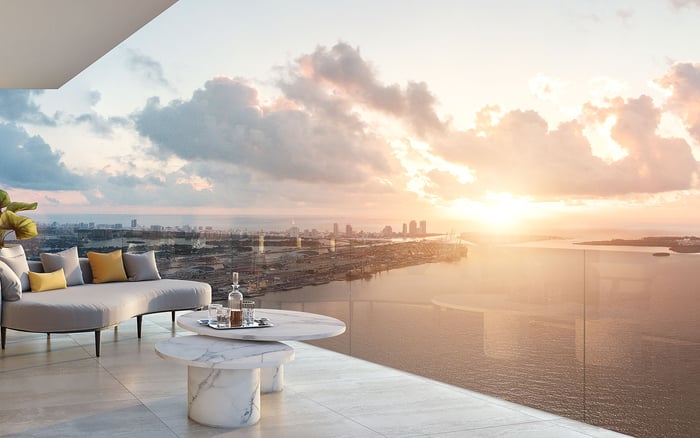
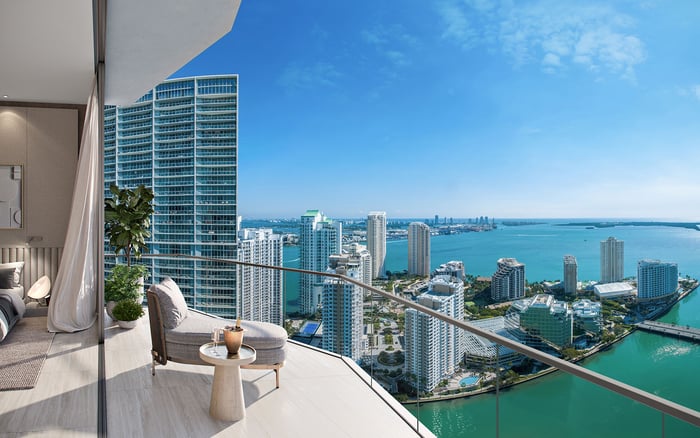
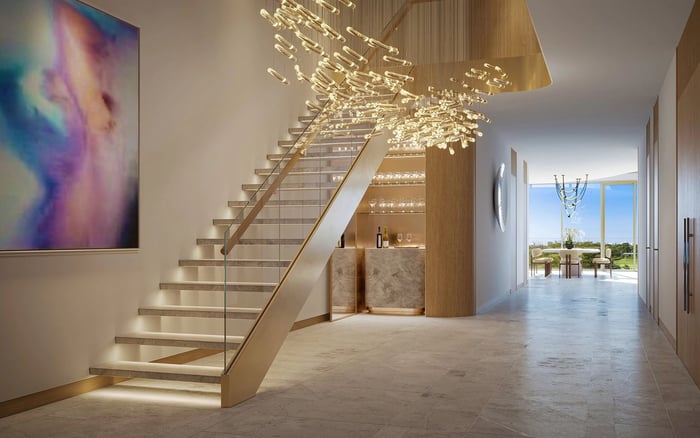
In South Florida, tropical modernism is less a look than a lifestyle contract: light, air, privacy, and resilience. The defining move is not a signature chair or a dramatic façade, but the moment a living room becomes a terrace without friction. When executed with discipline, indoor-outdoor transitions expand usable square footage, soften the climate, and elevate daily rituals from morning coffee to sunset entertaining. This is also where luxury is easiest to feel and hardest to fake. A seamless transition requires structural planning, precise detailing, and a clear understanding of wind, rain, salt air, and sun. Done well, it disappears; done poorly, it announces itself in misaligned floors, whistling gaps, damp corners, and furniture you cannot actually leave outside. For buyers and developers in Miami Beach, Brickell, Coconut Grove, and beyond, this threshold is now a primary indicator of quality.
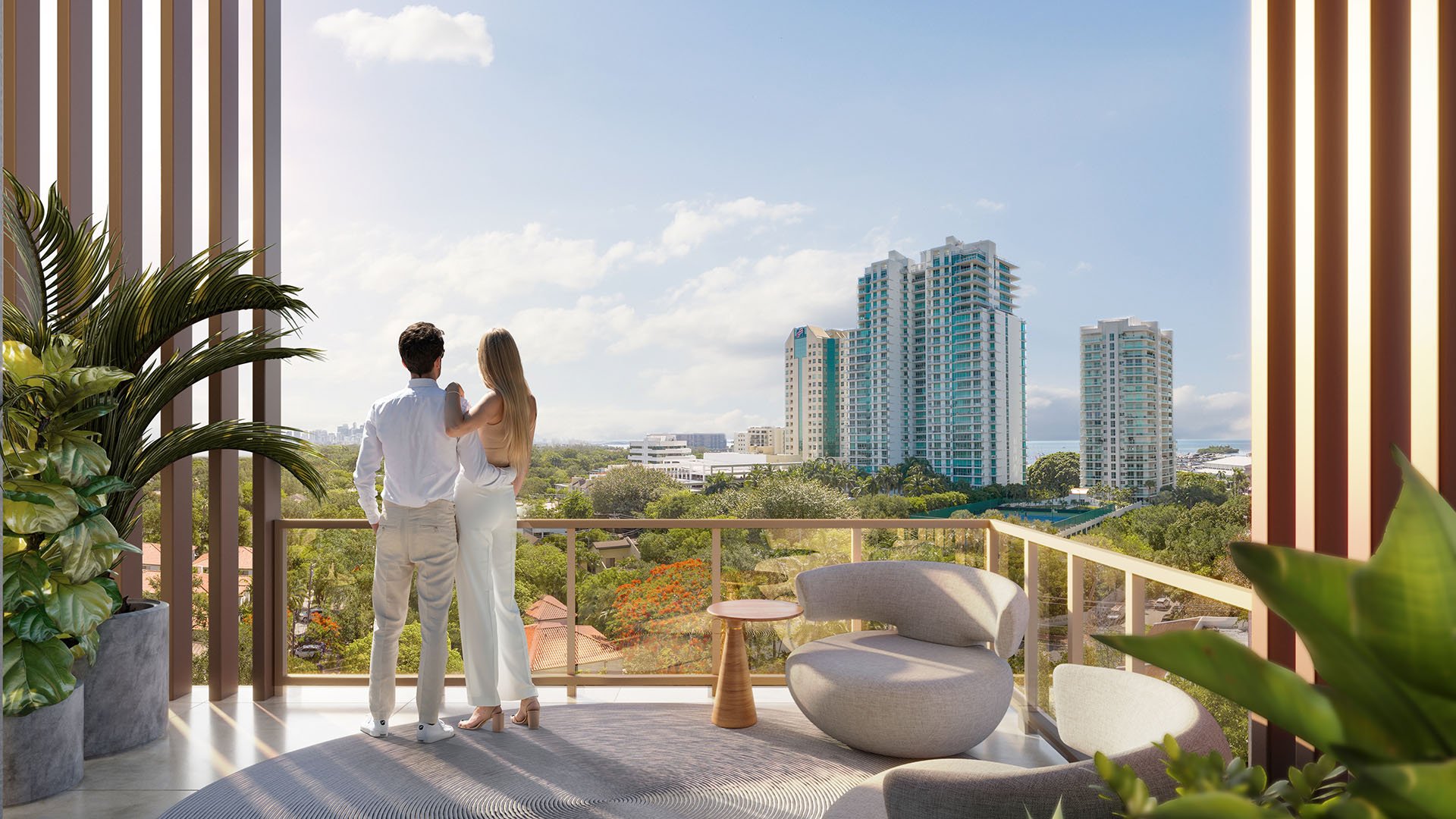
In a tropical climate, the outdoors is not an occasional amenity. It is an extension of the home’s core programming-dining, lounging, working, training, and recovery. Tropical modernism acknowledges this reality and treats the terrace, loggia, and garden as primary rooms, not decorative appendages.
At its best, a seamless transition is architectural quiet. The view reads uninterrupted. The floor plane stays continuous. Air moves the way you expect. And the boundary between conditioned and open space becomes adaptable-responding to time of day, seasonality, and entertaining needs.
In South Florida luxury real estate, that adaptability is increasingly the value proposition. Buyers are not simply paying for “outdoor space.” They are paying for outdoor space that performs like interior space: protected, private, and effortless to operate.
In the tropics, seamlessness is earned. Sun is intense, rain is sudden, and salt air is persistent. A transition that reads clean in a rendering has to hold up on a windy afternoon and in sideways rain.
The priorities are simple-even when the solutions are not:
First, treat water as a certainty. Think through slope, drain placement, and the exact way the terrace surface meets the interior finish. A clean threshold line should never rely on luck. The strongest projects hide the hard work: subtle pitches, drains that don’t fracture the visual field, and robust waterproofing designed with long-term maintenance in mind.
Second, plan for the sun’s path. In tropical modernism, shade is not decoration; it’s a comfort system. Deep overhangs, recessed balconies, and layered screens keep the outdoor room usable at noon, not only at golden hour.
Third, respect air and pressure. Wind can make a beautiful terrace loud, and it will exploit small weaknesses in door systems, seals, and detailing. On higher floors, the stakes rise-making precision hardware and thoughtful wind buffering essential.
When buyers say a residence “just flows,” they’re often responding to a few intentional alignments.
Floor continuity is the most immediate. The ideal is a near-flush condition where interior and exterior surfaces meet with minimal interruption-without compromising water management. The goal isn’t to erase the threshold, but to make it feel composed and calm.
Ceiling continuity is the quieter counterpart. Aligning soffits, lighting rhythms, and door pockets reduces visual noise. When a glass wall disappears into a pocket and the ceiling reads uninterrupted, the terrace starts to feel like part of the primary volume.
Material continuity completes the effect. Tropical modernism favors restrained palettes that can move indoors to outdoors without an abrupt shift in tone or sheen. Stone, porcelain, and well-specified woods or wood-look surfaces can create a cohesive atmosphere-provided they’re selected for heat, slip resistance, and salt-air durability.
In Brickell, where skyline views are part of daily life, this kind of alignment is often central to a buyer’s first impression in buildings such as 2200 Brickell, where the promise of modern living is inseparable from how naturally the terrace integrates with the interior.
A seamless transition is as much about movement as it is about aesthetics. How openings operate determines how you actually live with the outdoors.
Large-format sliding or pocketing doors can be transformative-but only when they glide smoothly and seal with confidence. Buyers should note how the doors meet the floor, how the handles feel, and whether the system invites daily use. If the mechanism is heavy, noisy, or temperamental, the terrace becomes a backdrop instead of a room.
Operability shapes entertaining, too. A wide opening creates a single social field where guests circulate naturally. A narrow opening-even with a generous terrace beyond-can make the outdoor room feel like a separate destination rather than a true extension of the gathering space.
In Miami Beach, where ocean breezes and sunlight set the tone, residences that prioritize an effortless indoor-outdoor rhythm, such as 57 Ocean Miami Beach, speak directly to tropical modernism’s core ambition: to make nature feel curated, not negotiated.
The hardest part of luxury indoor-outdoor living isn’t openness. It’s controlled openness.
South Florida’s premium market spans intimate, low-rise neighborhoods and high-density coastal corridors. In either setting, privacy has to be designed-without turning the home into a fortress. Tropical modernism excels through layered edges: screens, fins, textured glass, strategic planting, and recessed terraces that deliver shade and seclusion.
The most livable outdoor rooms feel buffered. You can read, take a call, or host dinner without performing for nearby balconies. That’s true on the sand and on the bay.
In Hallandale, where beachfront living can be both glamorous and exposed, the appeal of thoughtfully shielded terraces at 2000 Ocean Hallandale Beach reflects the broader shift toward outdoor spaces that are genuinely usable, not merely photogenic.
Luxury buyers increasingly judge a residence by how well it supports daily wellness without requiring a change of venue. Seamless indoor-outdoor transitions contribute directly.
A terrace that works as a morning fitness deck, meditation corner, or open-air dining room changes the cadence of the day. It also removes the need to “schedule” outdoor time. When the threshold is frictionless, being outside becomes the default-not an occasional treat.
This is where tropical modernism separates itself from generic contemporary design. The goal isn’t to add outdoor space. The goal is to make the outdoor room part of the home’s core circulation and comfort.
In Coconut Grove, a neighborhood prized for its greenery and walkable energy, projects such as The Well Coconut Grove align naturally with a wellness-forward lifestyle where indoor calm and outdoor vitality are meant to coexist.
Seamlessness is easy to claim-and easy to stage. Buyers can protect themselves by focusing on a few tactile checkpoints.
Start at the threshold. Stand with one foot inside and one foot out. Does the transition feel like stepping into another room, or like exiting the home? Look for misalignments that signal rushed detailing.
Then listen. Close the doors and note how quiet the interior becomes. Open them and track what changes-wind noise, street noise, neighbor noise. A sophisticated indoor-outdoor setup isn’t just expansive; it’s controllable.
Next, evaluate shade. Visit when the sun isn’t flattering. Does the seating area stay comfortable? Are overhangs, recesses, or screening strategies doing real work to make midday feasible?
Finally, place furniture in your mind-honestly. Can you set pieces where you would actually use them? Is there room for dining that doesn’t read like a narrow balcony tableau? Seamless transitions only matter when the outdoor room is proportioned for real life.
In a market where buyers can choose from extraordinary views and amenities, the differentiator is increasingly livability. A well-executed indoor-outdoor transition becomes a multiplier on the home’s most valuable components: light, air, and view.
It also supports longevity. When the building envelope, door systems, and drainage strategies are integrated with intent, the residence is better positioned to age gracefully in a demanding climate. Maintenance becomes more predictable than reactive, and the home keeps the sense of calm it had at delivery.
For ultra-premium buyers, this is the essence of tropical modernism in South Florida: not a style statement, but an everyday performance.
What does “seamless indoor-outdoor transition” mean in practice? It means the terrace or garden functions like a true room, with easy access, visual continuity, and comfortable usability.
Are floor-to-ceiling sliding doors always the best choice? Not always; the best choice is a system that balances view, smooth operation, and reliable sealing in wind and rain.
Why do flush thresholds matter so much in tropical modernism? They reduce visual interruption and make circulation effortless, while still requiring careful drainage and detailing.
How can a terrace feel private in a dense coastal setting? Layered design elements like screens, recesses, and planting can create privacy without sacrificing openness.
What role does shading play in indoor-outdoor livability? Shading is a comfort system that makes outdoor rooms usable during hotter parts of the day.
Does a larger terrace automatically increase lifestyle value? Only if it is proportioned for real furniture and is comfortable enough to use regularly.
What should I listen for when evaluating an indoor-outdoor setup? Pay attention to wind and exterior noise changes when doors open and close, and how controllable the environment feels.
How do salt air and humidity affect indoor-outdoor design choices? They demand durable materials and robust hardware, because corrosion and moisture can quickly degrade lesser specifications.
Is indoor-outdoor living as important on higher floors? Yes, but wind and exposure often increase, making door engineering, buffering, and comfort strategies even more critical.
Can indoor-outdoor transitions influence resale appeal? Yes; buyers often prioritize homes where outdoor space reads as an extension of the interior, not an add-on.
For a tailored shortlist and next-step guidance, connect with MILLION Luxury.
If branded residences are on your mind — as a home or as an allocation — we would be glad to share what we are seeing, privately.
Begin a quiet conversation