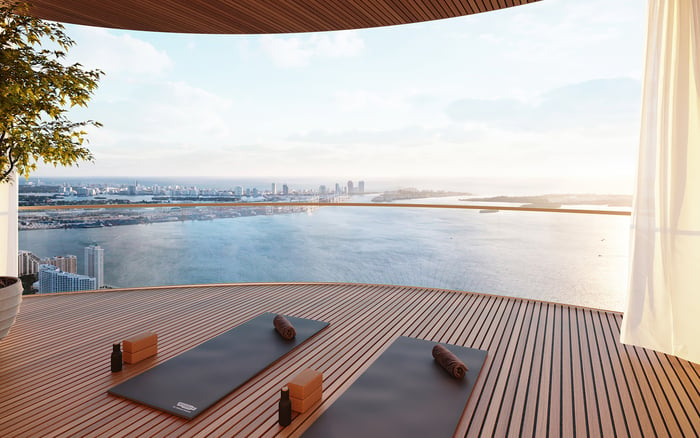
From Biscayne Bay to the Intracoastal, South Florida’s most coveted addresses are defined by their horizons. Yet in a climate shaped by intense sun, salt air, and hurricane engineering, “more glass” is never the whole answer. The most successful waterfront residences treat glazing as a system: heat management, wind performance, privacy, and interior planning all coordinated so the view reads as effortless. This MILLION Luxury editorial outlines the design moves that preserve sightlines while improving comfort: low‑E glass that controls infrared heat, laminated impact glazing that holds together under debris impact, shading that mitigates water glare, and outdoor details like near-frameless railings that keep the terrace from cutting the horizon line. Just as important, we look at how plans, kitchens, furniture layouts, and smart shading routines can protect the vista from inside, not only at the glass.
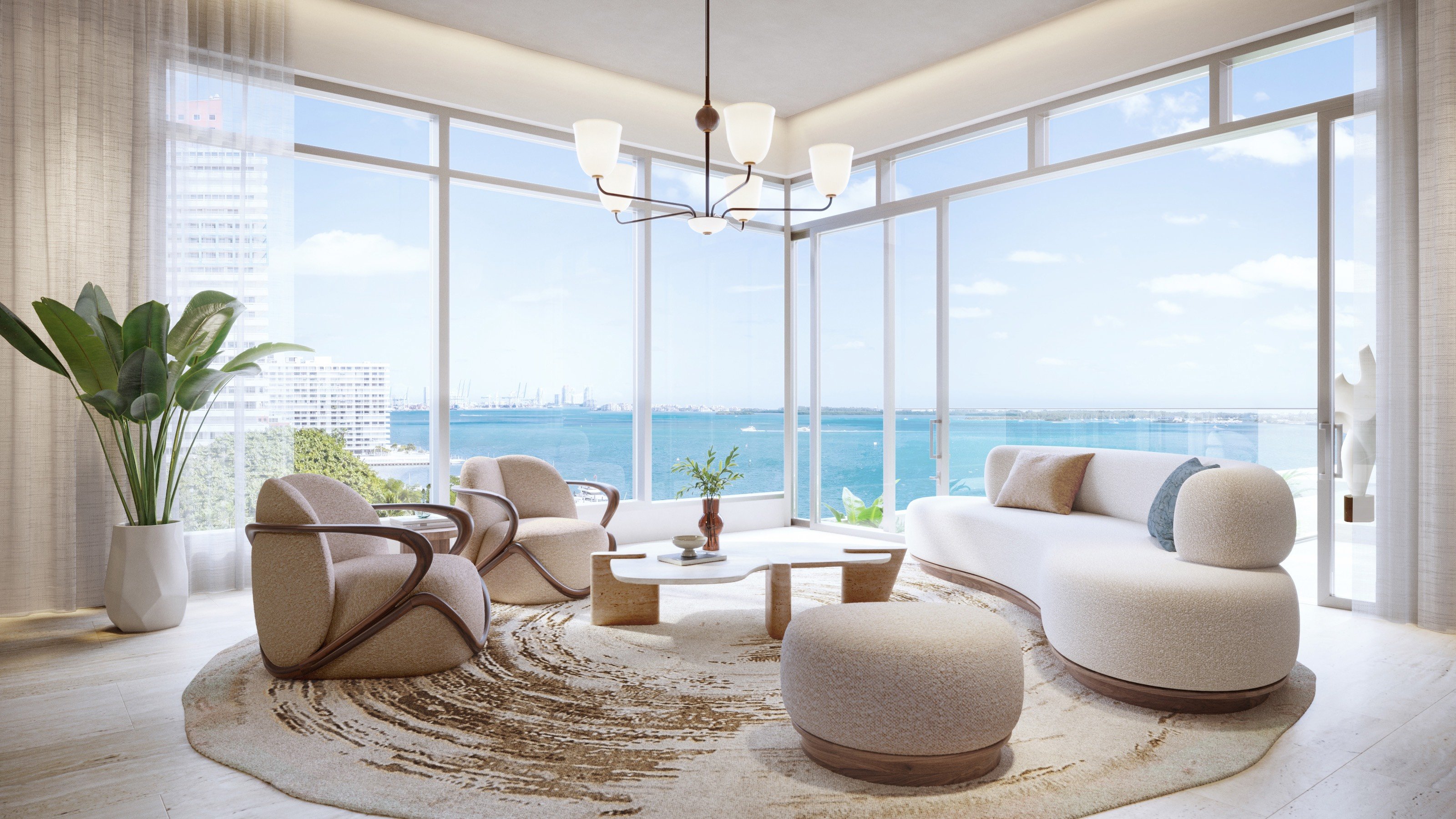
In a true waterfront home, the view is not a single moment at the window. It is the way the horizon follows you from entry to living room to terrace-and how it stays legible after dark, when interior lighting competes with the black mirror of glass. In South Florida, that experience must also hold up to bright sun, salt-laden air, and the engineering demands of the High-Velocity Hurricane Zone.
The most refined glass-wall residences treat glazing, structure, shading, and interior planning as one coordinated composition. The goal is not mere transparency, but a controlled, comfortable panorama that feels effortless.
South Florida’s waterfront light is seductive-and relentless. Low-emissivity (low‑E) coatings, applied as microscopically thin metallic layers on glass, are designed to reflect infrared heat while still allowing visible light through. In practice, that allows rooms to remain bright and crisp while reducing solar heat gain, a particularly relevant advantage in Miami’s warm, humid conditions.
In a luxury context, the difference is in selection and coordination. Glass that is “clear enough” for a rendering can feel punishing at noon on a bayfront exposure. Conversely, overly dark or reflective glass can flatten the water and mute the depth that makes a skyline or sandbar view so compelling. The right specification balances visible-light quality with thermal comfort so the panorama remains the hero-not the HVAC.
For buyers evaluating a new-construction tower or a custom home, ask one direct question: is the glass package being framed as an aesthetic choice, or as a performance strategy tuned to heat and glare? That distinction often separates a pretty view from a livable one.
Along Miami-Dade and much of the coast, the High-Velocity Hurricane Zone shapes window and door decisions. Impact-resistant windows typically rely on laminated glass with an interlayer. If struck by wind-borne debris, the glass can crack, but it stays bonded and continues protecting the opening rather than failing catastrophically.
The luxury takeaway is not fear, but confidence. Impact-rated systems support large openings with the assumption that safety and continuity are inherent-not added later. That shows up in daily life as well: fewer temporary storm preparations, stronger air and water control at the perimeter, and a steadier relationship with weather events that are part of coastal ownership.
When touring properties, the best signals are quiet. Doors should close with precision, seals should feel substantial, and the glass wall should read as an engineered boundary-not a fragile sheet.
Water views are often compromised at the edges, where structure and mullions create dead zones. Corner and wraparound glazing can materially expand the perceived panorama by reducing visual interruption and extending the horizon into peripheral vision.
But corners are also where shortcuts reveal themselves. They demand careful structural coordination and waterproofing detailing, particularly in wind-driven rain. A beautiful corner that is not properly resolved becomes a maintenance narrative, not a lifestyle asset.
For buyers, this is where discretion matters. Ask how the corner is built and how water is managed at frame transitions. The most sophisticated projects treat the corner as a signature detail-not a risk.
Direct sun is only half the story on the water. Reflected light off bay or ocean can create intense glare that hits at unexpected angles. Deep overhangs and properly sized shading devices remain core tactics for glare control on glass-heavy waterfront elevations.
On terraces and amenity decks, motorized or operable louvered pergolas offer a particularly elegant approach: shade when you need it, open sky when you don’t. The advantage is adjustability. Waterfront conditions change hour by hour, and static solutions often force an unnecessary compromise.
For privacy without sacrificing openness, exterior screens and landscape elements can function as selective veils. The objective is to protect sightlines to the water while softening exposure to adjacent neighbors-especially on canal lots, where the opposing dock can feel uncomfortably close.
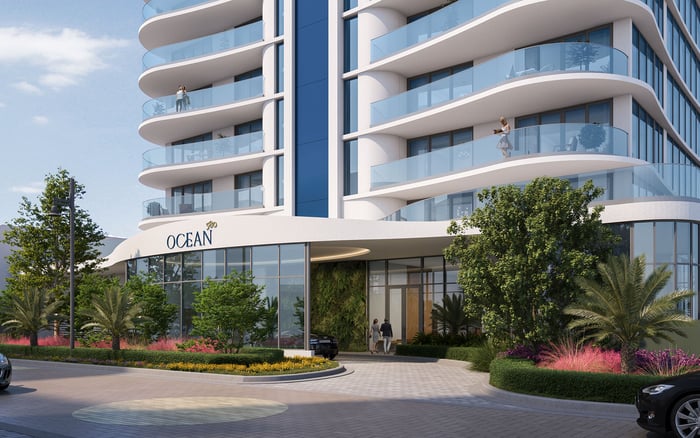
In Brickell, this indoor-outdoor calibration is part of the appeal of newer waterfront high-rises and bay-facing residences, including Una Residences Brickell, where the value proposition is not just a view, but how that view can be lived with every day.
The terrace is where many waterfront homes quietly fail. A perfect living-room view can be cut in half by a heavy railing profile or a poorly considered balcony edge.
Near-frameless glass railing systems preserve sightlines by minimizing horizontal interruption between interior and horizon. This isn’t a trend for trend’s sake; it’s a compositional decision that keeps the eye traveling outward-especially when seated.
Equally important is the threshold. Indoor-outdoor continuity, with aligned floor levels and large openings, helps exterior space function as a true extension of interior living near water. When the terrace reads as a room, not an appendage, the view becomes a daily ritual rather than an occasional backdrop.
In Miami Beach, where terraces often serve as the primary entertaining zone, the premium is on edges that feel invisible. Buyers drawn to boutique coastal living frequently gravitate to projects like 57 Ocean Miami Beach because the lifestyle promise hinges on uninterrupted ocean presence.
Not every lot or building orientation delivers a single cinematic vista. Some of the most intelligent waterfront designs create a sequence of view moments.
An H-shaped plan with courtyards and glazed connectors can frame multiple angles of landscape and water while pulling daylight deep into the interior. This approach is especially effective on constrained sites, where a narrow frontage can still feel expansive when the plan is orchestrated to reveal the water progressively.
Clerestory windows offer another refinement: they bring in daylight while preserving wall space and privacy. In neighborhoods where side setbacks and adjacency make full-height glazing uncomfortable, clerestories can deliver light without giving away the entire interior.
For Coconut Grove, where mature landscaping and varied lot conditions often encourage a more curated relationship to openness, residences such as Park Grove Coconut Grove reflect the idea that privacy and view can coexist through planning discipline, not brute transparency.
Luxury on the waterfront is partly defined by what you don’t see: fasteners that don’t stain, hardware that doesn’t seize, rail components that don’t pit. Coastal corrosion is a primary driver for marine-grade material selections-from balcony components to door hardware-because salt air isn’t seasonal. It’s constant.
On the construction side, concrete block is often promoted in Miami coastal contexts for resilience benefits, including durability in humidity and salt air and reduced susceptibility to moisture-related issues compared with wood framing. While every project has its own structural strategy, the larger principle holds: waterfront homes reward materials that tolerate time, not just photography.
For buyers, ask what is designed to be serviced-and what is designed to endure. The difference shows up in ten years, not ten minutes.
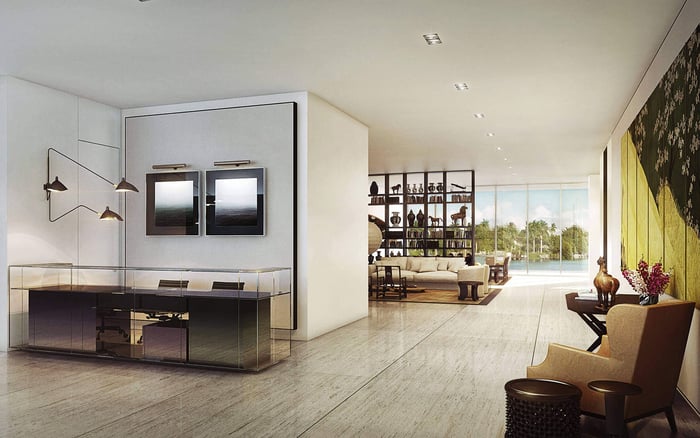
A glass wall can be undermined by the room behind it. Kitchen and interior planning can protect view corridors by keeping tall visual obstructions away from the primary glazing wall and the main sightline axis.
In open plans, the kitchen island is often the most dangerous object in the view. An oversized hood, a high backsplash element, or a pantry tower placed too close to the water-facing glass can introduce a permanent visual speed bump. The most successful waterfront interiors keep the tallest masses to the interior side and let the perimeter stay light.
Furniture layout matters just as much. In many homes, the view is optimized for standing at the glass, not for living. Seated sightlines should still capture the water. That typically means lower-profile seating near the glazing, disciplined media placement, and a deliberate avoidance of high-backed pieces that block the horizon.
In Sunny Isles, where high-floor living emphasizes a continuous horizon, owners often refine interiors to protect that seated panorama-a sensibility aligned with residences like Bentley Residences Sunny Isles.
The most luxurious homes don’t ask you to manage them. Smart home systems in Miami often prioritize automated shading, lighting, and climate routines designed to improve comfort while managing glare and privacy.
For waterfront glass walls, automation is less about novelty and more about preserving the view’s emotional quality. Timed shade drops can prevent mid-afternoon glare that forces curtains closed. Scene-based lighting can reduce nighttime reflections that turn windows into mirrors. When calibrated properly, the home maintains its outward focus with minimal intervention.
The ideal is subtle: technology that disappears, leaving only the sensation that the water is always present.
A quick tour can reveal whether a waterfront glass wall is truly engineered for South Florida.
Start with comfort. Stand near the glazing during the brightest part of the day if possible. Does the room feel composed-or does it feel like you’re sitting under a heat lamp? Look for a shading strategy beyond interior drapery.
Then watch the edges. Evaluate corners, balcony thresholds, and railing profiles. The luxury outcome is a horizon that reads as continuous, without interruptions that pull attention back to the building.
Finally, look at how the plan supports the view. If the kitchen, tall casework, or media wall competes with the water, the architecture is asking the interior to solve a problem it created.
When these elements align, the glass wall becomes what it should be: an elegant boundary that amplifies the setting while protecting you from it.
Do low‑E coatings make the glass look tinted? They can, depending on the specification, but many options preserve a clear aesthetic while reducing infrared heat.
What makes a window “impact-rated” in coastal South Florida? Impact-rated systems typically use laminated glass with an interlayer so the pane can crack yet stay bonded.
Are corner windows worth the added complexity? Yes-when properly detailed-because they reduce view dead zones, but they demand careful structure and waterproofing.
Why is glare worse on the water than inland? Sunlight reflected off bay or ocean surfaces can create discomfort even when the sun is not directly in the window.
What is the most discreet way to control glare on a glass wall? Deep overhangs, properly sized shading devices, and automated shades can manage glare without heavy drapery.
Do glass railings hold up in salt air? They can, but hardware and fasteners should be selected for coastal corrosion resistance to maintain performance.
How do I keep privacy on a canal without blocking the view? Selective exterior screens and landscape elements can shield neighbor sightlines while keeping the water corridor open.
What interior choice most often ruins a waterfront view? Tall kitchen elements or bulky furnishings placed in the primary sightline can interrupt the horizon from key seating areas.
Can smart home routines meaningfully improve a waterfront living room? Yes-automated shading and lighting can reduce glare and nighttime reflections so the view stays usable.
What should I prioritize first: bigger glass or better detailing? Better detailing, because comfort, storm performance, and waterproofing determine whether the view is livable long-term.
For a confidential assessment and a building-by-building shortlist, connect with MILLION Luxury.
If branded residences are on your mind — as a home or as an allocation — we would be glad to share what we are seeing, privately.
Begin a quiet conversation