A lockout floorplan is a design strategy that lets one residence perform like two, with a primary suite and a secondary, self-contained wing separated by a controlled interior door. In a market like Brickell, where owners frequently divide time between cities, this flexibility can be more valuable than raw square footage. For buyers evaluating **[888 Brickell by Dolce & Gabbana](https://www.millionluxury.com/brickell/888-brickell-miami-dolce-gabbana)**, “lockout” is not a gimmick. It is a way to protect privacy for principals, host guests without compromising the main residence, and potentially structure occupancy for extended stays, staff, or family visits. The most sophisticated use cases are less about maximizing nights and more about maximizing control.
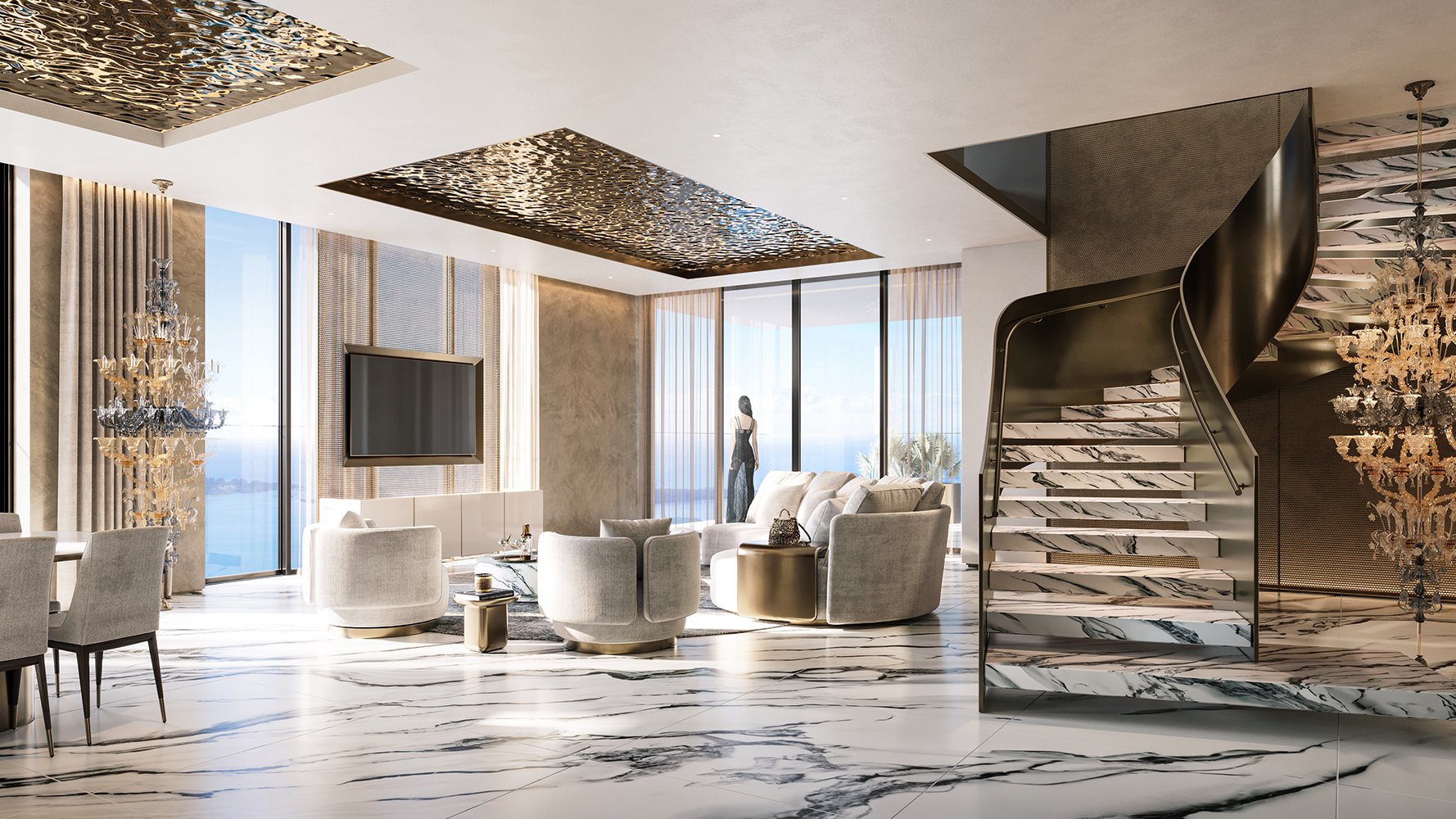
A lockout floorplan is best understood as an internal “split” within a single residence-two zones designed to operate independently. Typically, they connect via a lockable interior door, with each side maintaining a measure of self-sufficiency. In practical terms, that often means separate sleeping quarters and a secondary entry sequence or vestibule that lets one wing feel private even when the other is occupied.
What it is not: a guaranteed income machine, a promise of hotel-style operations, or a loophole around building rules. A lockout is architecture. How it performs depends on the condominium’s governing documents, the building’s operations, and the owner’s objectives.
In Brickell, the appeal is straightforward. Many owners want a home that can expand and contract with life: a week with family in town, an executive assistant on a long project, grown children returning for holidays, or simply the ability to host without sacrificing the sanctity of the main suite. A lockout delivers that flexibility without requiring the buyer to carry a second full residence.
Brickell’s luxury buyer is often optimizing for time and optionality. Primary residences are sometimes elsewhere, and Miami becomes a seasonal base, a business anchor, or both. In that context, floorplans that support multiple modes of living tend to outperform those built around a single “perfect” scenario.
A lockout layout can also reconcile two competing priorities: a refined, highly curated principal residence and an adjacent space that can better absorb guests, luggage, and late-night arrivals. When the secondary wing is designed with its own sense of completeness, it becomes an elegant buffer between lifestyle and logistics.
This is one reason branded and design-forward projects in the urban core draw such attention. Buyers comparing Brickell options may look at newer, amenity-rich towers like 2200 Brickell for neighborhood texture and livability, while also weighing how different floorplan philosophies serve real life-not just a rendering.
At 888 Brickell by Dolce & Gabbana, “lockout” is best evaluated as a privacy and circulation problem. Ask: can the residence feel composed when it’s shared by people on different schedules? Can the principal suite remain serene if the secondary wing is active? Does the plan let you host with discretion?
Sophisticated lockout plans tend to work when three design cues are present:
The lockable door should sit within a small “moment” of space-not mid-hallway where sound and light spill through. A threshold can be as subtle as a vestibule, but it shifts the experience from “adjacent bedroom” to “separate suite.”
Guests should be able to arrive, enter, and settle without crossing the principal living room. When the secondary wing’s circulation is clean, the main residence stays dignified.
The secondary wing shouldn’t rely on the main kitchen or the main laundry routine to function. Even without a full second kitchen, thoughtful storage, beverage capacity, and closet planning are what make a lockout feel intentional.
The key is restraint. A lockout isn’t about forcing more uses into the same square footage. It’s about engineered separation so the home can host-and still feel like a private residence.
Most buyers understand “guests.” The higher-value use cases are the ones that reduce friction and protect the principal’s routines.
1) Executive and staff stays without compromising privacy.
A long weekend with an assistant, security, or a personal trainer becomes workable when there is a defined secondary wing. It’s not about formality. It’s about boundaries.
2) Multigenerational visits with dignity on both sides.
Parents visiting for a month, or adult children returning for holidays, often want autonomy. A lockout can preserve togetherness while avoiding the feeling of sharing a hotel room.
3) Separate work-and-rest rhythms.
Brickell is a 24-hour neighborhood. Some owners keep late calls and early workouts. Separation can allow one party to sleep while the other operates.
4) Ownership over “arrival.”
One of the most underrated luxuries is controlling the first five minutes at home. A lockout suite can absorb luggage, deliveries, and check-in-style arrivals while the main residence stays calm.
Because the Fact Table provided for this article includes no verified, project-specific operating details, the most responsible approach is to focus on buyer-side diligence items that apply broadly.
Sound and scent management.
Ask how the dividing door is specified and how adjacent walls are built. If the lockout is meant to function like a true suite, acoustic performance matters as much as finishes.
Access and keying strategy.
Confirm how access is managed for the secondary wing. The best experiences rely on controlled entry-not improvised key handoffs.
Owner storage and lockable closets.
A lockout only works if the principal can secure personal storage when the secondary wing is occupied. Look for dedicated owner closets or lockable millwork that doesn’t read as an afterthought.
Housekeeping workflow.
If the secondary wing is used frequently, consider where linens live, where hampers go, and whether the plan can be serviced discreetly. Luxury is often a choreography problem.
Insurance and liability mindset.
Even when the secondary wing is used by friends and family, it helps to think like a hotelier: clear inventory, clear rules, and clear boundaries.
The most successful lockouts read as intentional architecture. A few strategies consistently elevate the experience.
Treat the lockout door like a piece of millwork, not hardware.
When the separation point feels integrated into the wall language, it visually disappears. That’s the goal.
Give the secondary wing a “destination” moment.
A small lounge chair, a reading sconce, a gallery wall, or a refined console can make the suite feel complete. Completion reduces the temptation for guests to spill into the main residence.
Layer lighting to support independence.
If the secondary wing can shift from bright arrival mode to low evening mode without touching the main residence, it will be used as intended.
Prioritize closet logic over extra furniture.
In high-end homes, clutter is the enemy of calm. The secondary wing needs credible storage so it doesn’t borrow from the principal’s closets.
A lockout plan is not universally superior. It’s optimal when an owner values adaptable occupancy and wants to protect the principal experience. If the home will be used only by one couple, year-round, a more open plan may feel better.
In other South Florida submarkets, the same desire for flexibility shows up differently. On Miami Beach, some buyers prefer a straightforward guest suite but place a premium on a quieter, residential cadence-which is why projects like The Perigon Miami Beach can appeal to those who want a more serene edge-of-beach lifestyle.
In Sunny Isles, the conversation can become more view- and height-driven, where larger, linear layouts dominate and separation is achieved through distance rather than a lockable threshold. Buyers exploring that model often consider towers such as Bentley Residences Sunny Isles for a different expression of privacy: vertical exclusivity and amenity ecosystems.
Brickell sits in a unique middle. It’s urban, social, and schedule-intensive. That’s exactly where a lockout can be most elegant-provided the separation is executed with discipline.
Use this as a decision filter when reviewing plans and touring comparable homes:
Do you need independent sleeping quarters or independent living quarters? The distinction matters. Some buyers only need a bedroom and bath; others need a true second zone.
Will you host more often than you stay? If yes, prioritize the guest experience and circulation. If no, prioritize the principal suite and keep the lockout subtle.
Is your privacy requirement social or operational? Social privacy is about hosting. Operational privacy is about staff, schedules, and routines.
Can you imagine the home in three modes? Solo living, guest weekend, extended stay. If the plan feels graceful in all three, the lockout is doing its job.
Does the lockout introduce dead space? Over-separation can create wasted corridors. The best plans feel efficient even when “unlocked.”
In a building as design-conscious as 888 Brickell by Dolce & Gabbana, the smartest buyers treat the lockout as a long-term lifestyle hedge. You’re not buying a trick. You’re buying a more adaptable way to occupy a premium address.
What is a lockout floorplan in a luxury condo? A layout that allows one residence to be separated into two private zones via a lockable interior connection.
Does a lockout mean two legal apartments? Not necessarily. It is a design feature; legal use depends on the condominium documents and local rules.
Is a lockout the same as a dual-key unit? The concepts are similar. Both describe a residence that can function as two suites with controlled separation.
Why do Brickell buyers value lockouts? Brickell ownership often involves multi-city schedules, hosting, and privacy needs that benefit from separation.
Will a lockout feel smaller than a traditional plan? It can, if corridors are overbuilt. The best plans keep circulation efficient and rooms properly scaled.
What should I check for acoustics in a lockout? Focus on the separation door, wall assemblies, and whether bedrooms share critical walls that transmit sound.
How do owners protect personal items when the lockout is used? Look for lockable owner closets and storage that stays within the principal zone even when separated.
Can a lockout work for long-stay family visits? Yes. It often improves comfort by giving visiting family autonomy without disrupting the main residence.
Is a lockout only useful for rentals? No. Many owners use it primarily for guests, staff, and flexible living without any rental intent.
What is the simplest way to evaluate a lockout plan? Imagine a guest arriving late: if they can enter and settle without crossing your main living space, it works.
For a confidential assessment and a building-by-building shortlist, connect with MILLION Luxury.
If branded residences are on your mind — as a home or as an allocation — we would be glad to share what we are seeing, privately.
Begin a quiet conversation