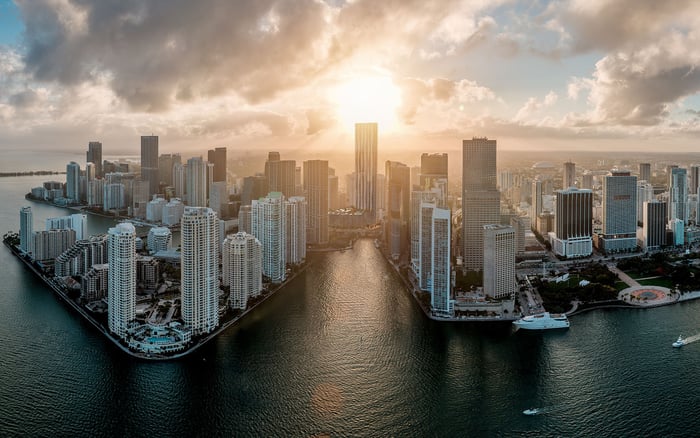
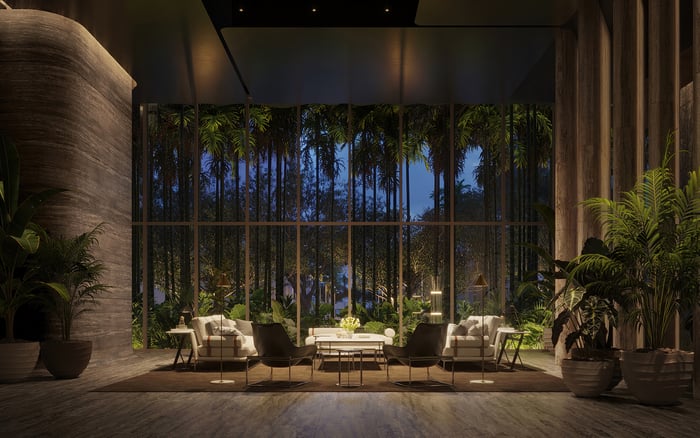
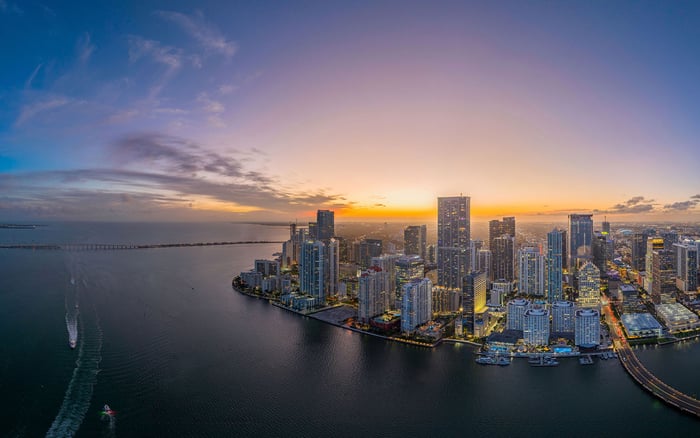
In South Florida’s ultra-prime condo market, “brand” is neither a guarantee of outperformance nor a cosmetic premium. Over time, valuation tends to reward durability: service standards that do not slip after sellout, governance that protects the residential experience, and a building’s ability to feel current a decade later. This editorial frames branded versus unbranded condos as two different operating models and offers a buyer’s framework for underwriting resale strength, rental demand, and downside protection across Miami Beach, Brickell, Sunny Isles, and beyond.
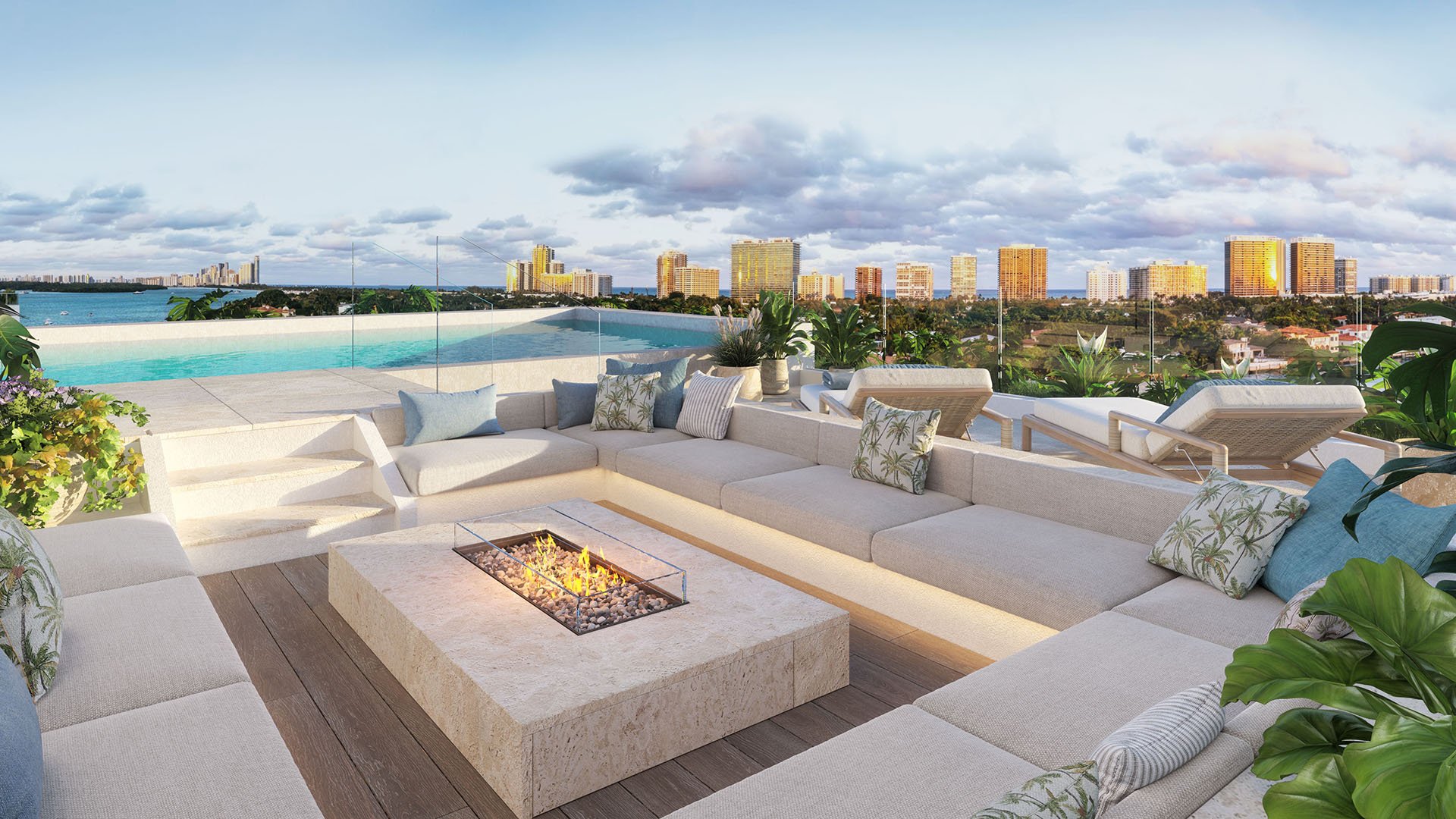
A branded luxury condominium is often discussed as if the logo itself is the asset. In practice, the brand is a form of shorthand for an operating promise: a consistent arrival experience, a predictable service culture, and a maintenance standard buyers can understand from day one.
An unbranded luxury condominium, by contrast, is typically a real-estate-first proposition. Its value narrative leans on architecture, floor plan integrity, land constraints, and a homeowners’ association that can preserve the original intent-without the friction that can accompany a hotel-adjacent model.
For long-term valuation, the distinction is less about prestige and more about whether the building’s experience stays coherent after the developer exits and the board assumes responsibility. When that transition is seamless, branded projects can trade like blue-chip assets. When it isn’t, the market may begin to price the property like any other condominium-just with above-average carrying costs.
Luxury real estate isn’t only about price per foot; it’s also about time-to-sale and the breadth of the buyer pool. Branding can support those levers in three ways.
First, it can compress buyer uncertainty. A purchaser who has never lived in Miami may still have a reference point for what a branded residence should feel like. That familiarity can expand demand during periods when relocation-driven buying is strong.
Second, brand can simplify the story at resale. In a market crowded with glass towers, narrative matters. A recognizable identity can make a listing easier to position across domestic and international audiences, which can support liquidity when comparable inventory is plentiful.
Third, brand can elevate “service as an amenity.” In the ultra-premium segment, value often attaches to intangibles: staff stability, privacy protocols, package handling, valet cadence, and the quiet competence that keeps a building feeling effortless.
Brickell is a useful lens for this dynamic. The neighborhood’s growth has pushed buyers to compare a broad spectrum of luxury propositions, from design-forward residences to hospitality-aligned offerings. A project like 888 Brickell by Dolce & Gabbana reflects how a clear identity can become part of the resale conversation-not merely the opening marketing.
Unbranded does not mean generic. South Florida has a longstanding tradition of residential buildings whose long-term value is anchored by scarcity and execution rather than a flag.
Unbranded strength tends to show up in three places.
Architectural permanence. Buildings with disciplined proportions, intelligent glazing, and floor plans that age well can stay “current” even as trend cycles move on. That matters because resale is often a comparison between what is newly delivered and what is already stabilized.
Governance flexibility. A purely residential HOA can tailor policies to owners without balancing brand standards, hotel-like operations, or complex shared-use agreements. If the board is sophisticated, that flexibility can translate into better cost control and faster decision-making on capital projects.
Pure location leverage. True beachfront and irreplaceable neighborhood adjacencies often outrun labels over time. When a building’s micro-location becomes the brand, the market tends to forgive the absence of a hospitality name.
Miami Beach remains the classic case study for location-led pricing, where ocean proximity, walkability, and privacy can dominate the valuation discussion. A boutique oceanfront building such as 57 Ocean Miami Beach shows how scarcity and a clean residential concept can stand on their own without borrowing credibility.
Over the long arc, buyers and appraisers tend to reward the same fundamentals, regardless of whether the lobby carries a designer signature.
A branded residence may start with a strong staffing blueprint, but long-term value is reinforced when the building keeps talent and operational discipline after the initial sellout period. Look for evidence of continuity-and a culture that remains discreet rather than performative.
Luxury buyers often accept elevated fees when the value is tangible. The risk isn’t high fees; it’s unpredictable fees, thin reserves, or deferred maintenance that eventually triggers disruptive assessments. Even the most iconic name can be diluted by fiscal stress.
Policies around guest screening, move-ins, deliveries, and rentals shape the day-to-day feel of a building, which ultimately influences resale. A property that reads as a private residence tends to price differently than one that feels transient.
Long-term valuation tends to favor units that function as homes-not merely pied-à-terre shells. Ceiling height, storage, elevator privacy, and the ability to entertain comfortably are the details that don’t depreciate.
Lobbies can be refreshed, but mechanical systems, waterproofing, and façade maintenance are the real determinants of longevity. Buildings that plan early, bid intelligently, and execute cleanly are more likely to avoid the “stigma discount” that can surface when major work is overdue.
Brand influence is not uniform. In some submarkets, it can be a meaningful differentiator; in others, land scarcity and lifestyle do the heavy lifting.
Brickell buyers often compare many high-end towers within a tight radius. In that environment, branding can act as a sorting mechanism, especially for buyers who want a clear, curated lifestyle. Even here, the long-term winner is usually the building that controls wear-and-tear and preserves a quiet, residential cadence.
For a more design-led residential alternative in the same corridor, 2200 Brickell illustrates the unbranded-but-elevated approach: a project can compete on architecture, privacy, and execution rather than a hospitality badge.
In Miami Beach, the hierarchy is frequently driven by beachfront access, privacy, and neighborhood positioning. Branding can help with global recognition, but oceanfront scarcity and a building’s long-term stewardship typically define the premium.
Along the oceanfront belt, buyers are unusually sensitive to building condition and governance, largely because salt air is an unforgiving test of workmanship and maintenance. In these locations, the market can quickly distinguish between buildings that planned for longevity and those that are reacting.
In emerging or rapidly evolving pockets, integrated lifestyle offerings and a coherent service model can elevate perception and liquidity. A project like 2000 Ocean Hallandale Beach is a reminder that long-term value is often supported by a building’s ability to feel complete as a residential environment, not simply new.
Luxury condominiums are often bought with emotion, but held with arithmetic. A disciplined buyer can underwrite branded and unbranded opportunities with the same checklist.
Many buildings-branded or not-price higher when new because they are new. Durability premium is different: it’s what remains after the novelty fades. Ask whether the building will still feel special after ten years of daily use.
For branded residences, focus on what is contractually or operationally embedded versus what is marketing. For unbranded residences, look for a proven management culture and a board structure that attracts capable leadership.
A building’s buyer pool narrows as monthly carrying costs climb. Even ultra-high-net-worth owners have preferences, and resale liquidity often favors buildings where the value proposition is easy to rationalize.
Some owners prioritize flexibility; others prioritize privacy. Buildings that are overly permissive can suffer from a perception of transience, while overly restrictive buildings can narrow demand. The long-term “best” stance depends on the neighborhood and the resident profile, but clarity and enforcement are crucial.
Scarcity can come from land constraints, boutique unit counts, protected views, or exceptional floor plate design. Scarcity is the most reliable hedge against the next wave of development.
The next chapter of valuation in South Florida is likely to reward buildings that deliver quiet performance rather than spectacle.
Buildings that treat preventive maintenance as brand protection will command confidence at resale.
Projects that preserve privacy and minimize friction will continue to attract primary residents.
Residences that feel tailored to full-time living will likely outperform pied-à-terre-first layouts when markets normalize.
In other words, long-term value will be less about whether a building is branded and more about whether it behaves like a well-run private club: consistent, discreet, and structurally prepared for time.
Do branded condos always appreciate more than unbranded luxury condos? Not necessarily; long-term outcomes tend to track location, governance, and upkeep more than the presence of a logo.
What is the biggest advantage of buying a branded residence? Brand can reduce perceived risk by signaling a service standard and a readily marketable identity at resale.
What is the biggest risk in branded luxury condominiums? If service levels slip or operating costs rise unpredictably, the market can price the building like a high-fee commodity.
Can an unbranded condo feel just as “luxury” as a branded one? Yes; enduring design, privacy, and strong building management can deliver a more purely residential luxury experience.
Do buyers pay a premium for branding at resale? Often they pay for what the brand represents, but only if the lived experience matches the promise over time.
How should I evaluate HOA fees when comparing buildings? Compare not just the fee level, but also reserve strength, capital plans, and the consistency of past budgeting.
Are rental-friendly buildings better for long-term value? Flexibility can help demand, but too much transient activity can dilute privacy and depress ultra-luxury positioning.
What makes a condo “future-proof” in South Florida? Strong maintenance planning, resilient materials, and layouts that support real living tend to age best.
Is a boutique building safer than a large tower for valuation? It can be, because scarcity helps-but only when the building is well-funded and professionally managed.
What is one simple signal of a well-run luxury building? The property feels quietly seamless, and the board’s decisions consistently protect the resident experience.
If you'd like a private walkthrough and a curated shortlist, connect with MILLION Luxury.
If branded residences are on your mind — as a home or as an allocation — we would be glad to share what we are seeing, privately.
Begin a quiet conversation