Two historic South Florida enclaves offer distinct versions of legacy living: Coral Gables’ master-planned, Mediterranean Revival “City Beautiful” and Palm Beach’s island tradition defined by Mediterranean-inspired architecture, preservation, and luxury retail. This MILLION Luxury editorial frames the decision around architecture, preservation rules, lifestyle corridors, and market positioning, then translates those differences into practical buyer profiles.
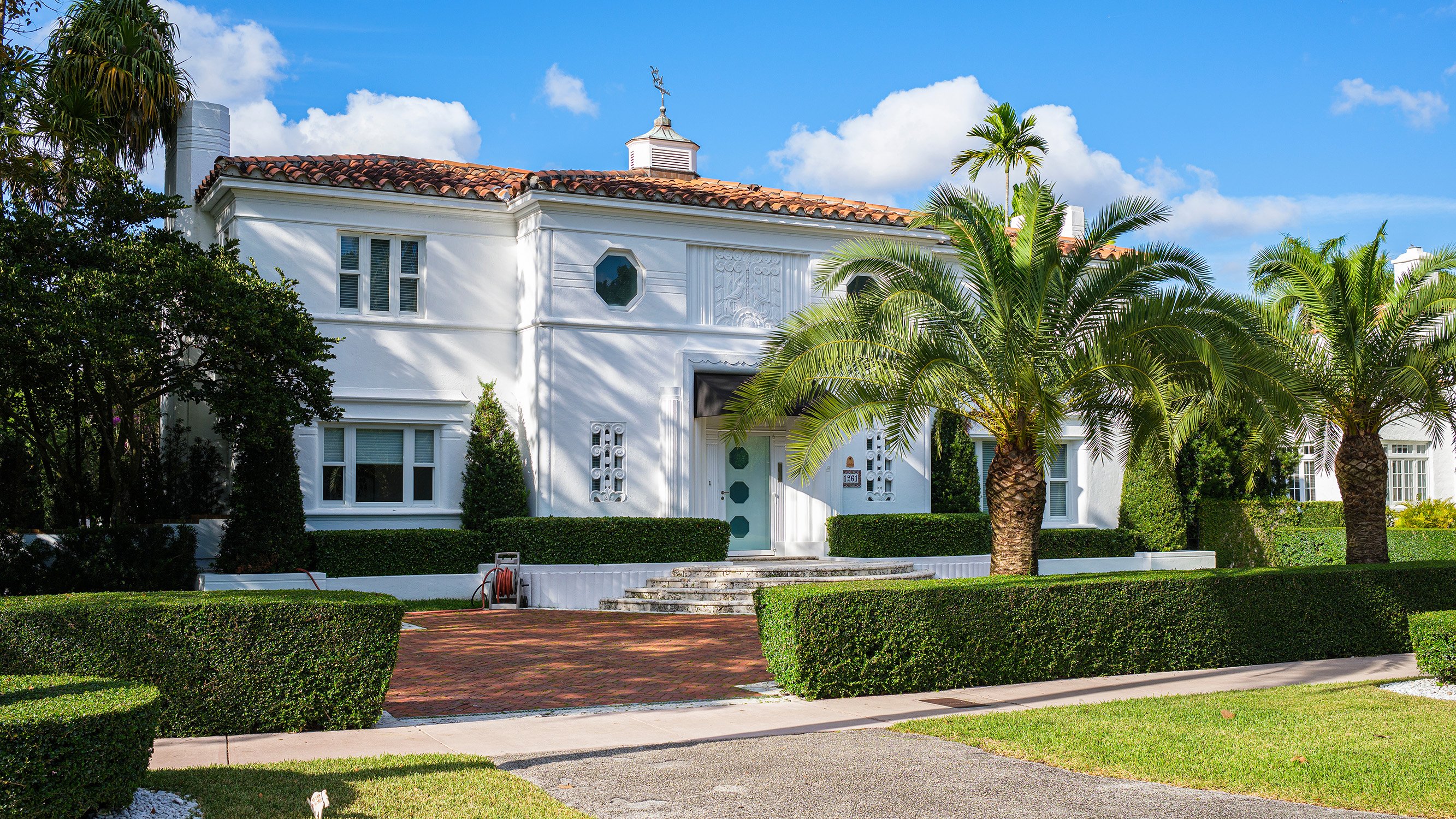
Coral Gables and Palm Beach both trade on permanence, but they deliver it differently: Coral Gables is a deliberately composed “City Beautiful” with Mediterranean Revival continuity, while Palm Beach is an island culture shaped by legacy estates, a Mediterranean-inspired design lineage, and a preservation-first civic posture.
For buyers thinking beyond the next cycle, the decision is less about “which is more prestigious” and more about which environment best protects your aesthetic standards, your daily rhythm, and your long-term optionality.
Coral Gables was formally incorporated on April 29, 1925, born from George Merrick’s early-1920s development campaign. The city’s identity remains unusually coherent for a major metro market because it was conceived as a master-planned whole, grounded in Mediterranean Revival architecture and coordinated civic design.
That planning impulse shows up in details that feel almost European in their discipline: a consistent architectural language, a civic realm designed to be “seen,” and neighborhood concepts that were themed from the start. The result is a place where character is not an accident of time, but the outcome of intent.
Palm Beach’s design identity is equally recognizable, but it arrives through a different mechanism: a constellation of landmark properties, private clubs, and a celebrated Mediterranean-inspired aesthetic associated with early 20th-century tastemakers and architects. The island’s allure is less about a single comprehensive plan and more about a long-running culture of discretionary excellence, reinforced by preservation oversight and a powerful retail and social core.
In Coral Gables, Mediterranean Revival is not merely a style preference; it is the city’s visual logic. Even in neighborhoods that have evolved, the ambient expectation is that new work should harmonize with a historic and architectural character that residents fiercely protect. For buyers, that often translates to a streetscape that reads as curated, even when individual homes vary in scale.
A particularly telling layer is the city’s “historic villages” program, which created themed neighborhood clusters such as the Italian Village, French Normandy Village, Dutch South African Village, and Chinese Village. Whether or not you buy within those boundaries, the concept is the point: this is a place that treats the neighborhood as a design unit, not simply a collection of parcels.
Palm Beach, by contrast, tends to read as a gallery of private statements. The island’s Mediterranean-inspired lineage remains a through-line, but you experience it as a sequence of iconic homes, gardens, and club settings rather than a citywide composition. If your sensibility leans toward estate individuality and a social calendar anchored by private institutions, Palm Beach will feel inherently aligned.
In both enclaves, stability is purchased partly through process.
Coral Gables operates with an established historic preservation framework that includes a Certificate of Appropriateness process for exterior work on designated properties and applies the Secretary of the Interior’s Standards for Rehabilitation. Practically, this affects timelines, consultant selection, and the degree of design freedom for visible changes. For some buyers, that constraint is the feature: it lowers the odds that a neighbor’s renovation will compromise the street.
Palm Beach also signals seriousness through dedicated landmarks oversight, including a Landmarks Preservation Commission and a published landmark property list. The message to owners is direct: legacy is treated as a civic value, not merely a private preference. If you want the island to remain the island, you will likely find that premise embedded in governance.
The strategic takeaway: if you are a hands-on renovator or you envision meaningful exterior transformation, due diligence should begin with the approvals environment, not the floor plan.
Coral Gables’ lifestyle is organized around a few anchors that make the city feel self-contained.
Miracle Mile is the primary shopping and dining corridor, centered on Coral Way between Douglas Road and LeJeune Road. It is not just retail; it is a walkable center of gravity that helps explain why many residents stay local even when they work elsewhere.
Then there is the Venetian Pool, created in 1924 from a coral rock quarry and fed by spring water from an underground aquifer. It is also listed on the National Register of Historic Places, an unusual designation for a swimming facility. In practical terms, it is a signature amenity that reinforces the city’s preference for civic beauty: even leisure is architectural.
Finally, the Biltmore Hotel, opened in 1926, is a landmark that still influences the city’s tone. It sets expectations for how public spaces should look and feel, and it quietly underwrites Coral Gables’ identity as a place where design is not a trend.
Palm Beach’s daily life is anchored differently. Worth Avenue functions as the island’s luxury shopping district, with a legacy narrative embedded in the experience. For buyers who want walking-distance access to high-touch retail, gallery-grade storefronts, and the social density that comes with them, this is a defining advantage.
Coral Gables generally presents as a high-value legacy market within Miami-Dade, with housing metrics that place it around the mid-$1M range by broad citywide measures. It is often described as not very competitive, which can matter if you prefer to negotiate deliberately rather than perform in a frenzied bidding environment.
Palm Beach, by contrast, operates in a different psychological bracket. Median property value has been reported around $2.0M with very high homeownership. Even when individual transaction medians swing, the lived reality is that inventory, privacy, and legacy constraints create a market where conviction and patience matter as much as timing.
Translation for buyers: Coral Gables can deliver architectural pedigree with more room to be selective; Palm Beach more often demands decisive alignment with an island lifestyle and its scarcity dynamics.
Many South Florida buyers are not choosing a single “forever” address; they are building a portfolio of lifestyles: inland charm, island legacy, and oceanfront access.
If you are drawn to Palm Beach for the social fabric but want a modern oceanfront counterpoint for weekends in Miami-Dade, Miami Beach offers turnkey options that keep hospitality and privacy in balance. Consider the residential experience around The Ritz-Carlton Residences® Miami Beach for a service-forward approach, or Setai Residences Miami Beach for buyers who prioritize a globally recognizable standard of calm.
For those who want a more residential, low-key oceanfront posture, 57 Ocean Miami Beach can serve as a contrasting chapter to a classic Coral Gables address, especially when you want your second home to feel intentionally quieter.
And if your lifestyle leans social, with an emphasis on private club energy and beautifully controlled public spaces, Casa Cipriani Miami Beach is a reminder that “legacy” can also be newly minted when the brand standard is uncompromising.
These are not substitutes for Coral Gables or Palm Beach; they are complements that help explain how today’s luxury buyers triangulate between history, service, and shoreline.
Coral Gables tends to suit:
Palm Beach tends to suit:
If you are torn, ask a simple question: do you want your environment to feel planned, or inherited? Coral Gables excels at the first; Palm Beach, at the second.
Before you commit, pressure-test these points:
Answering those questions with precision usually reveals the right enclave - without needing to debate status.
Is Coral Gables officially a planned city? Yes. It was created as a master-planned “City Beautiful” with coordinated design.
When was Coral Gables incorporated? Coral Gables was formally incorporated on April 29, 1925.
What is Miracle Mile in Coral Gables? It is the city’s primary shopping and dining corridor, centered on Coral Way.
Why is the Venetian Pool significant? It was created in 1924 from a coral rock quarry and is fed by spring water.
Is the Venetian Pool historically designated? Yes. It is listed on the National Register of Historic Places.
What role does the Biltmore play in Coral Gables’ identity? Opened in 1926, it is a major Mediterranean Revival landmark that sets the tone.
Does Coral Gables regulate exterior changes to historic properties? Yes. Designated properties can require a Certificate of Appropriateness for exterior work.
What is Worth Avenue known for in Palm Beach? It is the island’s luxury shopping district with a strong legacy narrative.
Does Palm Beach have a preservation body? Yes. The town has a Landmarks Preservation Commission and designated landmark lists.
Which enclave works better for a multi-home lifestyle? Either can, depending on whether you pair it with an oceanfront residence for contrast.
For a confidential assessment and a building-by-building shortlist, connect with MILLION Luxury.
If branded residences are on your mind — as a home or as an allocation — we would be glad to share what we are seeing, privately.
Begin a quiet conversation