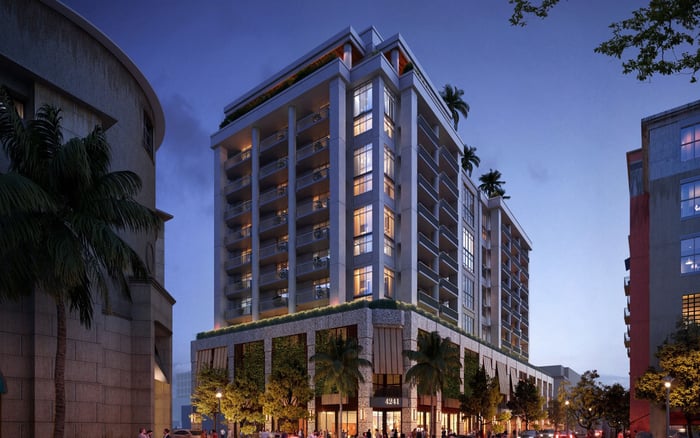
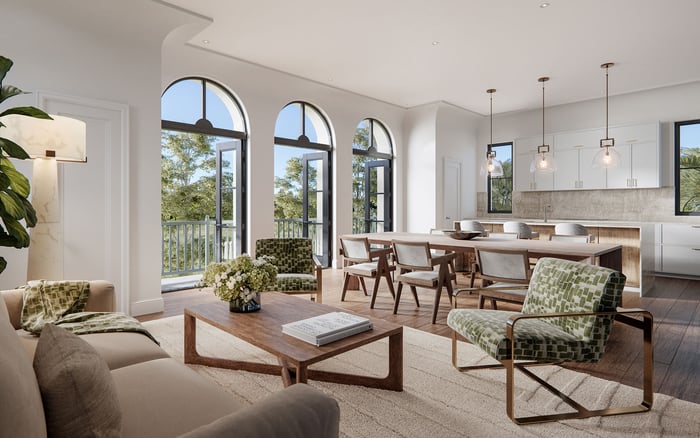
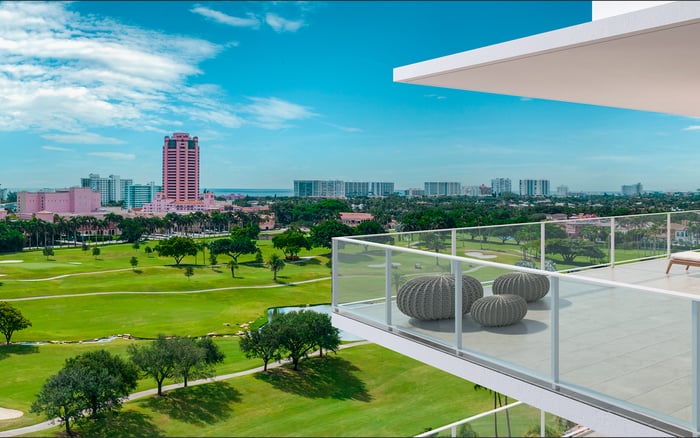
A practical, buyer-oriented guide to approaching private network installation at Cora Merrick Park, with emphasis on planning, security, resilience, and full-time residential use.

At Cora Merrick Park, the most practical technology conversation for a full-time owner is not about a faster router or a more elegant app. It is about treating the in-residence private network as a core residential utility. In a luxury home used every day, connectivity supports work, education, health, entertainment, security, staff coordination, and the expanding range of systems that make a residence feel effortless.
This matters most for owners who expect the home to function as a serious base, not merely a weekend address. A single evening may include simultaneous video meetings, market-data displays, 4K streaming, gaming, staff devices, security cameras, climate controls, lighting, shades, and other IP-connected systems. The question is not simply whether the internet is fast. The question is whether the private network has been designed to remain stable, secure, and discreet under real household demand.
For the MILLION audience, Cora Merrick Park belongs in a broader Coral Gables conversation about refined, full-time living. It may also be evaluated through the lens of Boutique, New-construction, Pre-construction, and Top Project expectations, where invisible infrastructure can matter as much as visible finishes.
The practical starting point is the in-unit low-voltage closet or structured media enclosure. This is where owners and their consultants typically begin decisions about routing, switching, wireless access points, smart-home integration, and the separation of private equipment from building-provided telecom infrastructure.
That distinction matters. Building telecom service, risers, or amenity Wi-Fi should not be confused with the owner’s private in-residence network. The private network generally begins at the unit’s modem, optical network terminal, or structured media point, then extends through the owner’s routing, switching, cabling, wireless coverage, and connected systems. Amenity or building Wi-Fi should not be assumed to provide secure, reliable coverage for private banking, confidential calls, remote work, or sensitive communications.
In luxury residences, reinforced concrete, low-e glass, metal framing, and multi-room layouts can compromise the reliability of common-area or corridor wireless signals inside the home. A thoughtful plan places wireless access points where the residence actually needs them, rather than relying on a single consumer device hidden in a closet.
The cleanest private network installations are usually planned early in the purchase, build-out, or renovation cycle. Early planning allows cabling routes, equipment locations, access-point placement, rack ventilation, backup power, and aesthetic integration to be resolved before decisions become expensive or visually disruptive.
Owners should treat the network as a formal scope of work, not an informal gadget setup. That means drawings, equipment schedules, contractor coordination, and a clear understanding of what may require building management approval. In a condominium environment, wall, ceiling, riser, fire-rated assembly, raceway, and balcony-related work may be subject to review. The earlier those constraints are understood, the easier it is to preserve both performance and finish quality.
The right question is not, “Where can we hide the router?” It is, “How should the residence be wired, powered, secured, and governed so that the owner’s lifestyle can run without friction?”
Luxury owners often begin with a bandwidth number, but peak-hour demand planning is better understood as a reliability and risk-management exercise. A residence may have adequate advertised speed and still suffer from poor wireless coverage, overloaded equipment, noisy interference, limited switching capacity, or weak device management.
For a financial professional, latency and stability may matter more than raw download speed. For legal work, secure document handling and careful separation of devices may be central. For a creative owner, large cloud transfers and media files may shape the design. A family with children, staff, guests, and smart-home systems may need clear rules for who and what belongs on each network segment.
This is where enterprise-grade routing, structured cabling, access-point planning, and device governance become meaningful. The result should feel invisible to the household, while the underlying design remains deliberate.
A basic ISP-supplied modem-router is rarely the right answer for residents with heightened privacy, financial, legal, or business-security needs. It may provide ordinary connectivity, but it is not typically designed for the layered demands of a high-value, full-time residence.
A more practical approach includes traffic segmentation, stronger security controls, controlled guest access, staff-device policies, and a realistic response plan for network incidents. The goal is not to make the home feel complicated. The goal is to limit unnecessary exposure while allowing the household to function normally.
Segmentation can separate owner devices from guest devices, children’s devices, staff devices, entertainment systems, and smart-home equipment. That structure helps prevent a compromised or poorly maintained device from becoming a broader household problem. For owners who move between multiple homes, offices, yachts, or other controlled environments, secure VPN or similar architecture may also be relevant, depending on professional and personal requirements.
South Florida conditions make network resilience a serious part of the conversation. Hurricanes, flooding risk, lightning, power anomalies, and moisture can all affect connectivity and low-voltage systems. This does not mean every residence requires the same technical solution, but it does mean the private network should be planned with local conditions in mind.
Owners may want to discuss surge protection, clean equipment placement, ventilation, backup power for core networking gear, and how connectivity should behave during outages or service interruptions. The point is not to create a commercial data center in the residence. The point is to avoid a fragile system that performs beautifully on a quiet afternoon and fails when the household needs it most.
Resilience also includes documentation. A well-organized network with labeled cables, clear diagrams, administrator credentials handled responsibly, and defined vendor responsibilities is easier to maintain. When a problem occurs, clarity reduces downtime.
The most successful private network installation begins with an owner’s brief. Who works from home? Who handles confidential information? Are there full-time staff? Will children study online? Are there telehealth needs? Will the residence support high-resolution media, gaming, trading screens, or frequent video conferences? Are there other homes or offices that need secure connection?
Only after those lifestyle answers are clear should the technical design be finalized. For Cora Merrick Park owners, the appeal of a refined residence is that complexity should disappear into well-considered systems. A private network, when properly planned, supports that idea. It allows the home to remain calm, responsive, secure, and prepared for the overlapping demands of full-time life.
The best installations are not necessarily the most visible or extravagant. They are the ones that anticipate how the owner actually lives.
Is private network planning necessary for a full-time owner? Yes. A full-time residence often supports work, entertainment, security, staff devices, and smart-home systems at the same time.
Can building Wi-Fi replace an in-residence private network? It should not be assumed to do so. Private work, banking, and confidential communications generally require a controlled in-unit network.
When should an owner begin planning the network? Early in the purchase, build-out, or renovation cycle. Early planning makes cabling, equipment placement, and aesthetic integration easier.
Is a standard ISP modem-router enough? It may be adequate for basic use, but it is often insufficient for owners with privacy, financial, legal, or business-security needs.
What is the practical starting point for design? The structured media enclosure or low-voltage closet is usually the starting point for routing, switching, cabling, and integration decisions.
Why do access points matter in luxury residences? Concrete, low-e glass, metal framing, and large layouts can weaken wireless coverage. Planned access points improve consistency.
Should network work be coordinated with building management? Yes. Work involving walls, ceilings, risers, raceways, or fire-rated assemblies may require approvals and coordination.
What does device segmentation accomplish? It separates owner, guest, staff, entertainment, and smart-home devices to reduce exposure and improve governance.
How do South Florida conditions affect the network? Storms, lightning, moisture, and power anomalies can affect low-voltage systems, making resilience planning important.
Can the network connect multiple owner-controlled environments? Yes. Secure VPN or similar architecture may support links among homes, offices, yachts, or other controlled locations.
For a confidential assessment and a building-by-building shortlist, connect with MILLION.
If branded residences are on your mind — as a home or as an allocation — we would be glad to share what we are seeing, privately.
Begin a quiet conversation