In South Florida’s most rarefied enclaves, a dated mansion can be less a home than a placeholder for something more precise. Buyers sometimes pay a premium to control the land itself: the location, the build envelope, the privacy, and the future optionality. This article explains the financial and practical logic behind tear-down deals, the due diligence that separates a smart land play from an expensive surprise, and how to think about value when the existing structure is no longer the asset.

In Miami, the most valuable part of a property is not always what photographs well. In certain ultra-prime transactions, the existing residence is functionally incidental: it is simply the current occupant of a site the buyer wants to control.
That sounds illogical until you frame the purchase as a land acquisition in a supply-constrained coastal market. A buyer may prize a corner position, a specific orientation for sun and prevailing breezes, an unusually quiet pocket, or a lot shape that supports a clean modern plan. When the existing house represents compromise, the land becomes the luxury.
In a tear-down scenario, the buyer is not paying for granite, millwork, or a formal dining room that will be removed. They are paying for a bundle of rights and possibilities: the ability to build, the ability to improve, and the ability to do so in a place where true replacement opportunities rarely surface.
Land behaves differently than improvements. A house ages, design preferences change, and building systems depreciate. Land is the fixed input that cannot be replicated, particularly in established South Florida neighborhoods where the best locations are already spoken for.
For a buyer intending to commission a bespoke residence, a tear-down can be the most direct way to secure an irreplaceable site while minimizing long-term compromise. Even when the existing home is perfectly livable, it may not align with a modern lifestyle program such as:
These are not universally “better.” They are better for a specific buyer with a specific standard of how a property should live. If the current structure cannot realistically be remodeled into the desired result without major structural and design concessions, starting over can be the clearer path.
In many land-first deals, the premium is not about extra finished area. It is an option on the future, and that option has value because it compresses time and increases certainty.
Optionality often shows up in practical ways. First, the buyer controls a scarce site and can decide later whether to renovate, expand, rebuild, or simply hold. Second, the buyer can conduct professional feasibility work after closing rather than trying to do it while competing against other bidders. Third, in a fast-moving market, controlling the site can serve as a hedge against construction-cost volatility and contractor availability.
This is also why two lots that look similar on paper can trade very differently. The market is not only pricing land area. It is pricing the ease with which a buyer can convert that land into a finished product that meets their standards, with fewer surprises along the way.
A tear-down purchase is often described casually as “buying the dirt.” In reality, the most valuable components are often intangible: constraints, permissions, and the probability that your plan can be executed without costly detours.
At a high level, buyers are acquiring a package that may include:
None of these elements is glamorous, yet each can materially change the outcome. In land-driven deals, the “asset” is often a roadmap that appears clear enough to justify paying up.
South Florida is a market where lifestyle demand and geographic limits collide. That combination makes certain sites unusually valuable even when the existing structure is no longer the highest and best use.
Several forces tend to amplify land value.
Scarcity of replacement opportunities In mature neighborhoods, new lots do not get created. When a desirable property comes to market, buyers may treat it as a rare chance to secure a long-term position.
High sensitivity to location micro-features In coastal and near-coastal areas, small differences in orientation, privacy, and surrounding streetscape can matter. Buyers are often purchasing a particular feeling of arrival and separation from the public realm.
Modern lifestyle programs can exceed what older homes support Many legacy homes were designed for a different era of entertaining, security, and technology. Retrofitting can work, but it can also introduce awkward compromises when ceiling heights, structural grids, or room proportions fight the desired result.
A preference for architectural coherence High-net-worth buyers increasingly want a home that reads as a single, integrated idea. In some cases, the cost and disruption of patchwork remodeling becomes difficult to justify compared with building a clean, cohesive design.
Tear-down buyers are not a monolith. The motivation matters, because it explains why paying a premium can be rational rather than reckless.
Primary-residence end users These buyers are typically commissioning a custom home tailored to daily life. They prioritize privacy, long-term comfort, and a residence that performs well in South Florida conditions. Their underwriting is less about near-term resale and more about living quality and risk control.
Second-home buyers with a “final” vision A second-home buyer may want a property that feels effortless and deeply personal. They can be willing to pay more for a site that allows them to build once, build properly, and stop thinking about real estate as an ongoing project.
Long-horizon capital Some buyers evaluate land as an Investment in optionality. They may hold through market cycles, refine plans over time, and choose the best moment to build. For this profile, the property can function as wealth preservation as much as a lifestyle decision.
These motivations intersect with “single-family-homes” demand in a particular way. In many luxury segments, the buyer is not simply purchasing bedrooms and bathrooms. They are purchasing control: control over sound, access, security, and how the property operates day to day.
When the structure is not the reason for the purchase, due diligence must be reweighted. Traditional inspections still matter, but the largest risks are often hidden in what you cannot see yet: constraints that limit what you can build, when you can build, and how much it will cost.
Here is a pragmatic checklist for a land-first buyer.
Confirm what you can build Ask your architect and land-use counsel to verify zoning and any overlays that can affect setbacks, height, lot coverage, parking, and variances. Buyers often assume that because a large home exists today, a large home can be built tomorrow. That assumption is not always safe.
Order a current survey A survey is essential for understanding boundaries, easements, and encroachments. For waterfront-adjacent sites, it can also clarify where the property begins and ends relative to the water’s edge and any regulatory lines.
Evaluate demolition realities Demolition is not just a budget line item. It can involve permitting, safety, timing, and neighbor coordination. Confirm utility disconnect requirements, tree considerations, and any restrictions that can slow the process.
Look for restrictions that change the design If the property has any special designation or regulatory constraint, it can materially change what is feasible. The objective is not to avoid complexity at all costs. It is to identify complexity early enough to price it and schedule it.
Assess environmental and site conditions South Florida sites can present issues related to drainage, soil, and water management. Without making assumptions about any specific parcel, treat site engineering as an early priority rather than a late surprise.
Review title and recorded documents with a land lens Beyond a clean title, a land buyer focuses on recorded easements, rights-of-way, and agreements that could affect access, drainage, or future construction.
Model carrying costs and timeline conservatively A tear-down is a time-based strategy. Delays can be expensive and exhausting. Model a conservative path that accounts for design, permitting, contractor procurement, and potential revisions.
Choose the right professional stack Strong outcomes often come from assembling the team early: architect, land-use counsel, surveyor, and a contractor who understands high-end execution. The goal is to turn a promising site into a predictable project.
In a conventional sale, value is tied to the home’s condition, design, and immediate livability. In a tear-down, value is tied to what the site can become and how confidently it can become it.
Sophisticated buyers tend to price in layers.
Land value as a baseline They start with comparable site trades, adjusted for desirability and buildability. The existing structure may be treated as neutral, or as a negative if demolition is certain.
Soft costs and entitlement risk Design fees, engineering, and permitting can be meaningful. More important, entitlement risk can be the hidden premium. If a site appears straightforward, buyers may pay more because they believe they can move faster and with fewer revisions.
Construction reality High-end construction is rarely linear. Buyers typically carry contingency in both time and budget. The more custom the program, the more they must price complexity.
Exit logic Even if the buyer is building for themselves, disciplined decision-making usually includes a sanity check: if the home needed to sell later, would the site and the design remain broadly desirable? The land is typically the most durable component of that equation.
Paying a premium for land can be rational. Overpaying is different. The difference usually comes down to process, not bravado.
Use a feasibility-first approach Before removing contingencies, buyers typically aim to confirm that their intended program is plausible. The goal is not perfection. It is to avoid obvious blockers that are expensive to discover after closing.
Avoid designing in a vacuum An early concept study can be useful even if it is only massing and a rough layout test. It forces the right questions: setbacks, access, privacy, and how the home will sit on the site.
Price the timeline, not just the property Time is a cost. A parcel that supports a cleaner path to a building permit can justify a premium because it reduces schedule risk.
Negotiate for information and access When appropriate, negotiate access to conduct surveys and other evaluations. The goal is to reduce uncertainty before you are fully committed.
Not every luxury buyer wants the operational complexity of building a custom estate. For many, vertical living offers a different kind of certainty: professional management, defined rules, and fewer moving parts.
That is one reason a buyer who loves the Miami lifestyle might compare a land-first purchase with a high-end condominium in Brickell. A condo purchase is, in many ways, the opposite of a tear-down. You are buying a finished product, a governance structure, and a predictable set of shared services.
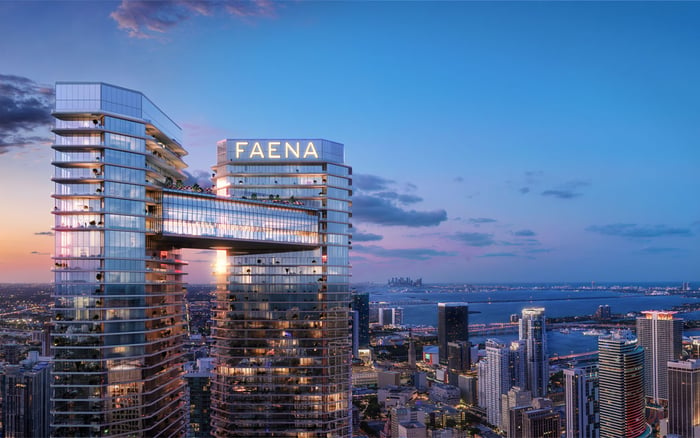
For a neutral point of reference on the new-construction side of the market, explore Una Residences Brickell. Even if you ultimately prefer a custom build, comparing the clarity of a condominium purchase with the complexity of a land-first plan can sharpen decision-making.
This comparison also helps explain why some buyers gravitate toward the tear-down strategy. They want full control over layout, security posture, and outdoor living. Others prefer to outsource the operational layer and focus on location and lifestyle.
In ultra-prime markets, the best land opportunities are not always labeled “tear-downs.” They may be positioned as renovation candidates, legacy estates, or simply homes on exceptional lots. A discreet approach helps buyers secure the right site without unnecessary visibility.
Clarify the non-negotiables Before touring, define what cannot be compromised: privacy, quiet, lot configuration, or proximity to daily life. This keeps the search efficient and reduces decision fatigue.
Treat confidentiality as part of the value High-profile sellers and buyers often prioritize discretion. Work with representation that understands how to structure access, showings, and communication in a way that respects privacy.
Align your timeline with reality The most elegant outcomes typically require patience. If the home will be rebuilt, the buyer is entering a multi-stage process. A calm timeline, plus a team that can execute it, is part of luxury.
Keep your market lens local South Florida is not one market. It is a collection of micro-markets. Even within Miami, site value can shift based on privacy, access, and what the surrounding streetscape is likely to become.
And if you are scanning listings or internal filters, you will often see shorthand labels such as Miami-beach and Coconut-grove used to segment demand. Those labels are not the thesis by themselves, but they can be a useful starting point when you want to focus your search.
How do I decide whether to renovate or tear down? Start by matching the existing structure to your actual program. If the home’s fundamental constraints, such as layout logic, ceiling heights, or how it sits on the lot, fight the outcome you want, the remodel can become a series of expensive compromises. If the bones support your priorities and the changes are surgical, renovation may preserve time and reduce scope.
What should I verify first if I am buying primarily for land value? Verify buildability before you fall in love with the address. Confirm zoning and any overlays that affect setbacks, height, lot coverage, parking, and variance requirements, and pair that with a current survey to understand boundaries, easements, and encroachments.
How can I protect myself from permitting and timeline surprises? Treat the timeline as a key cost and underwrite it conservatively. Use a feasibility-first process, engage the right professionals early, and look for constraints that could force redesign or delay, including recorded documents, permitting steps, and demolition logistics.
Does a land-first strategy make sense as an Investment if I am not building immediately? It can, as long as you are honest about carrying costs, uncertainty, and the time required to create value. Many land-first buyers are paying for optionality: the ability to hold a scarce site while refining a plan and choosing the right moment to execute.
For confidential guidance on evaluating tear-down opportunities and land-first acquisitions across South Florida, connect with MILLION Luxury.
If branded residences are on your mind — as a home or as an allocation — we would be glad to share what we are seeing, privately.
Begin a quiet conversation