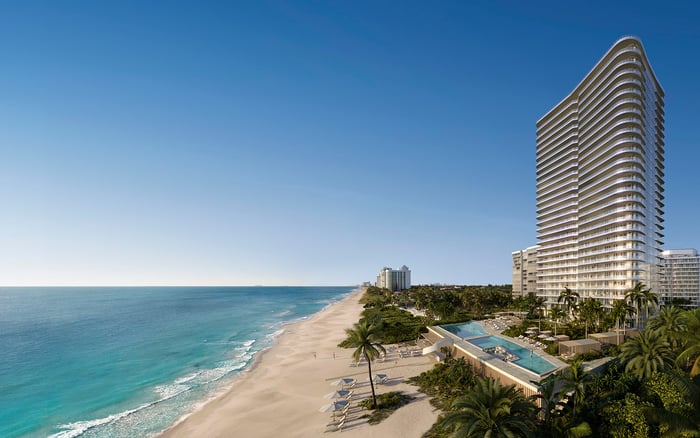
A buyer-oriented comparison of how “resort-style cabanas” tend to function in two distinct Pompano Beach condo experiences: branded, service-forward living versus a more intimate beachfront rhythm.
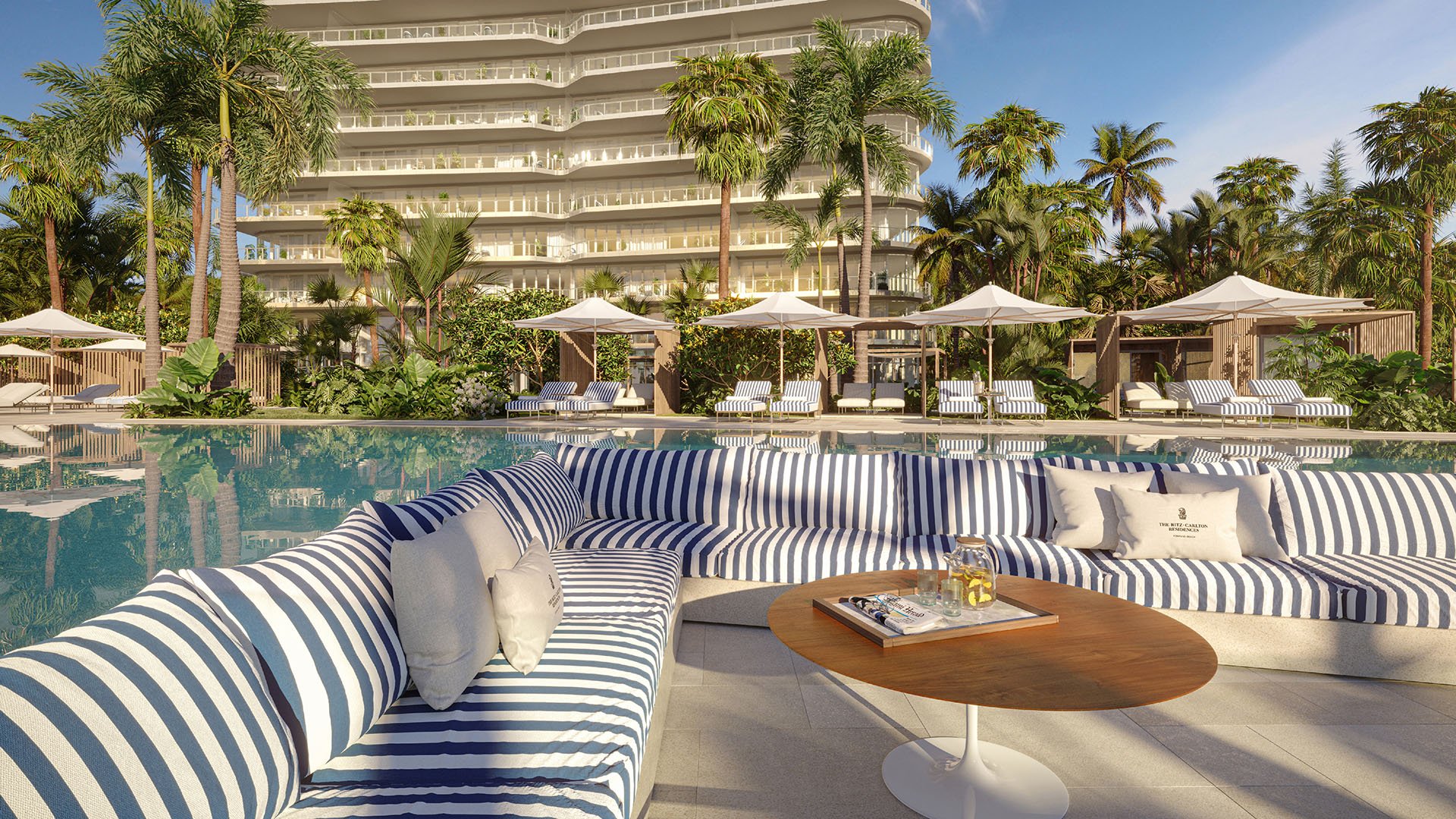
In South Florida’s oceanfront market, “resort-style cabanas” are often positioned as a lifestyle flourish. In reality, they can become the most used amenity a resident enjoys without taking title to it. A well-executed cabana program shapes how often you go down to the pool, how long you stay, how easily you host, and whether the building reads as a private club or a shared deck.
For buyers comparing The Ritz-Carlton Residences® Pompano Beach with Ocean 580 Pompano Beach, the cabana question is really a proxy for a larger one: do you want a staffed, brand-led, service-forward rhythm, or a more intimate, resident-paced beach day where privacy and simplicity are the luxury?
Because publicly available details vary by building and evolve over time, the most useful comparison is not a checklist of promises. It is a framework for evaluating how each property operationalizes the same idea: shade, proximity, and control.
At a branded property, cabanas typically function like a “room” within the resort ecosystem. The design intent is not simply cover from the sun, but an experience that feels deliberately run. You should expect a higher likelihood of consistent setup standards, more formal reservation etiquette, and a staff presence that keeps the pool deck managed rather than improvised.
For the buyer, the key nuance is that a cabana in a service culture is rarely just a place to sit. It becomes a base of operations: arriving to a prepared environment, staying longer because the friction of towels, food, and small needs is reduced, and hosting guests without managing the logistics yourself.
During tours and conversations, listen for operational clarity. Ask how early you can reserve, how no-shows are handled, and how the building balances “resort energy” with resident privacy. The most elevated version of the cabana lifestyle is quiet competence, not spectacle.
In the broader branded-residence landscape, a useful point of reference is the service temperament associated with The Ritz-Carlton Residences® Fort Lauderdale. Even when the architecture and amenity mix differ, the underlying expectation is similar: a managed environment where the day feels frictionless by design.
Ocean 580 speaks to a different luxury instinct: a quieter building where amenities feel personal, not programmed. In that context, cabanas often read less like a “rented room” and more like an architectural tool for privacy. The value is separation and comfort-a shaded pocket that lets you be pool-adjacent without feeling pool-exposed.
For many second-home buyers, especially those who spend long stretches in-residence, that distinction matters. The cabana is where you read, work, take calls, or decompress after a swim without retreating upstairs. In a building with a more boutique character, the experience can feel less transactional. You are not “booking an experience,” you are simply using your building.
The trade-off is that a calmer environment may also mean fewer layers of staff-driven orchestration. For the right buyer, that is not a downside-it is the feature. The ideal is a cabana program that feels easy and resident-first: intuitive access, straightforward rules, and a deck culture that protects quiet.
If you are deciding between a branded environment and a boutique one, calibrate your preference by touring a modern, design-forward beachfront property like Armani Casa Residences Pompano Beach. The goal is not equivalence, but clarity on how different development philosophies shape the mood of shared outdoor space.
Luxury buyers often over-index on finishes and under-index on operations. With cabanas, operations are the product. Use these six factors to compare the two buildings in a way that reflects daily life.
A cabana is only “resort-style” if it is effortless to reach. Evaluate the vertical and horizontal path: elevator ride, security transitions, doorways, and the final steps to the deck. The difference between “a quick drop-down” and “a small journey” is what determines whether you use the amenity daily or only on weekends.
In a branded environment, the path may feel more ceremonial, with staffed touchpoints. In a quieter building, the route may be simpler and more direct. Neither is universally better; the right choice matches your temperament.
The most common friction point is not the cabana itself-it is the social system around it. Ask whether cabanas are first-come-first-served, reservable, assigned, or managed through a concierge-style system. Clarify guest use: can friends reserve when you are not present, and can you hold a cabana while you step to the beach?
A service-forward property often runs on a more formal structure. A boutique building may operate with a lighter touch. What matters is predictability, especially in season.
Look beyond the curtain. Stand inside the cabana and assess what you see-and what sees you. Are lounge chairs aligned in a way that turns the deck into a runway? Are cabanas tucked into corners or placed in a row? Do you hear mechanical noise, music, or street sound?
Privacy is a form of luxury that is difficult to retrofit. If a building’s cabanas protect your sightlines and your conversations, the amenity stays valuable even when the deck is busy.
The difference between a pleasant afternoon and a true resort day is the supporting infrastructure. Confirm whether there are nearby restrooms, outdoor showers, and towel protocols. Ask about storage for small personal items, and whether there are rules around leaving items in place.
This is also where the brand-versus-boutique distinction becomes tangible. Service can solve for comfort, but good design solves for dignity: no long walks in wet cover-ups, no awkward returns to the residence for essentials.
Many buyers assume poolside service exists because the vibe suggests it. Instead of asking “Is there food service?”, ask “How does a resident actually order on a normal Tuesday?” If a service exists, determine whether it is consistent year-round, whether it is limited by hours, and whether it feels resident-calibrated rather than event-calibrated.
In a branded property, food and beverage often feels integrated into the experience. In a more intimate building, you may prioritize BYO simplicity, which can be its own kind of freedom.
Cabanas reveal a building’s culture. Guest rules indicate whether the property optimizes for entertaining or for serenity. Policies around music and gatherings tell you whether the deck is social or hushed. If pets matter to you, ask how pet owners are expected to navigate common areas and whether the deck experience is compatible with that lifestyle.
You are not just buying a cabana. You are buying the social contract around it.
A practical way to decide is to picture a single, repeatable day.
If your ideal is arriving with minimal planning, having things handled, and hosting with a sense of polish, the cabana experience at The Ritz-Carlton Residences® Pompano Beach is conceptually aligned with you. The brand-led approach tends to privilege consistency, staffing, and a curated pace.
If your ideal is slipping downstairs quietly, claiming shade without ceremony, and feeling like the deck is an extension of your home, Ocean 580 Pompano Beach may better match your preferences. The boutique instinct is to make amenities feel personal and low-friction.
And if you are still triangulating your taste, it can help to benchmark a different coastal context, such as the beachfront polish of 57 Ocean Miami Beach. Seeing how another market expresses “resort-style” can clarify what you actually want to live with.
Bring the conversation back to daily operations. A few buyer-caliber prompts:
Ask what happens on peak weekends: is the cabana experience relaxed or competitive? Ask how the building enforces etiquette. Ask whether staff or management proactively resets cabanas throughout the day, and how cleanliness is maintained in real time.
Then ask the most revealing question: “If I lived here full-time, how often would I realistically use the cabanas, and why?” The answer is usually found not in the sales narrative, but in the building’s rhythms.
Are cabanas typically owned or reserved in oceanfront condos? It varies by building; some are reservable amenities while others can be assigned or licensed for use.
Do branded residences usually feel more like a hotel at the pool deck? Often, yes; branding tends to bring more structured service and a more managed deck environment.
Can a boutique building still deliver a true resort-style cabana experience? Yes, if spacing, privacy, and supporting amenities are designed for long, comfortable stays.
What is the single biggest cabana deal-breaker for buyers? Unclear rules and inconsistent access, especially during season when demand is highest.
Should I prioritize cabana privacy or proximity to the pool? Prioritize the one you will use daily; the best setups balance both, but trade-offs are common.
How do guest policies affect cabana enjoyment? They shape the deck’s culture, determining whether it feels serene, social, or frequently crowded.
What should I look for around cabanas besides the shade structure? Nearby restrooms, showers, towel logistics, and a convenient path back to the beach are key.
Is food and beverage service essential for a resort-style feel? Not always; some buyers prefer simplicity, but reliable service can meaningfully extend your day.
Do cabanas meaningfully impact resale value? They can, because they influence lifestyle and daily satisfaction-two drivers buyers pay for.
How can I compare two buildings fairly if details change over time? Focus on operational clarity, privacy design, and how the amenity is actually used by residents.
When you're ready to tour or underwrite the options, connect with MILLION Luxury.
If branded residences are on your mind — as a home or as an allocation — we would be glad to share what we are seeing, privately.
Begin a quiet conversation