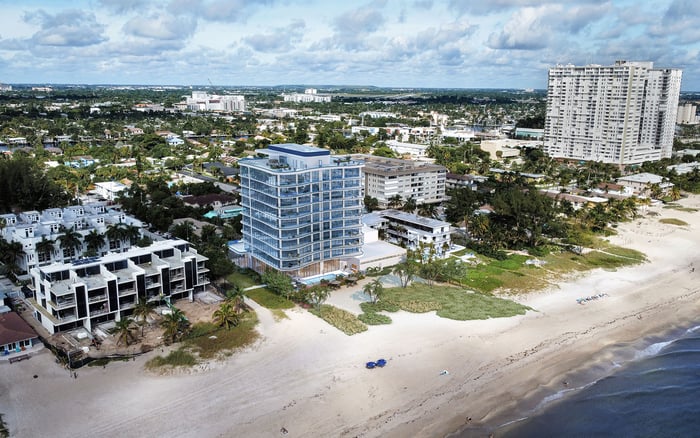
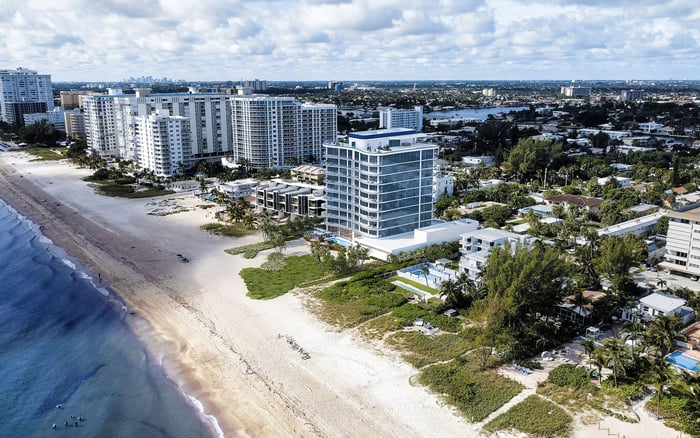
A discreet buyer’s comparison of two Pompano Beach condo propositions: Ocean 580’s ultra-boutique feel versus Armani/Casa’s branded, resort-forward scale, plus how each fits portfolio strategy.
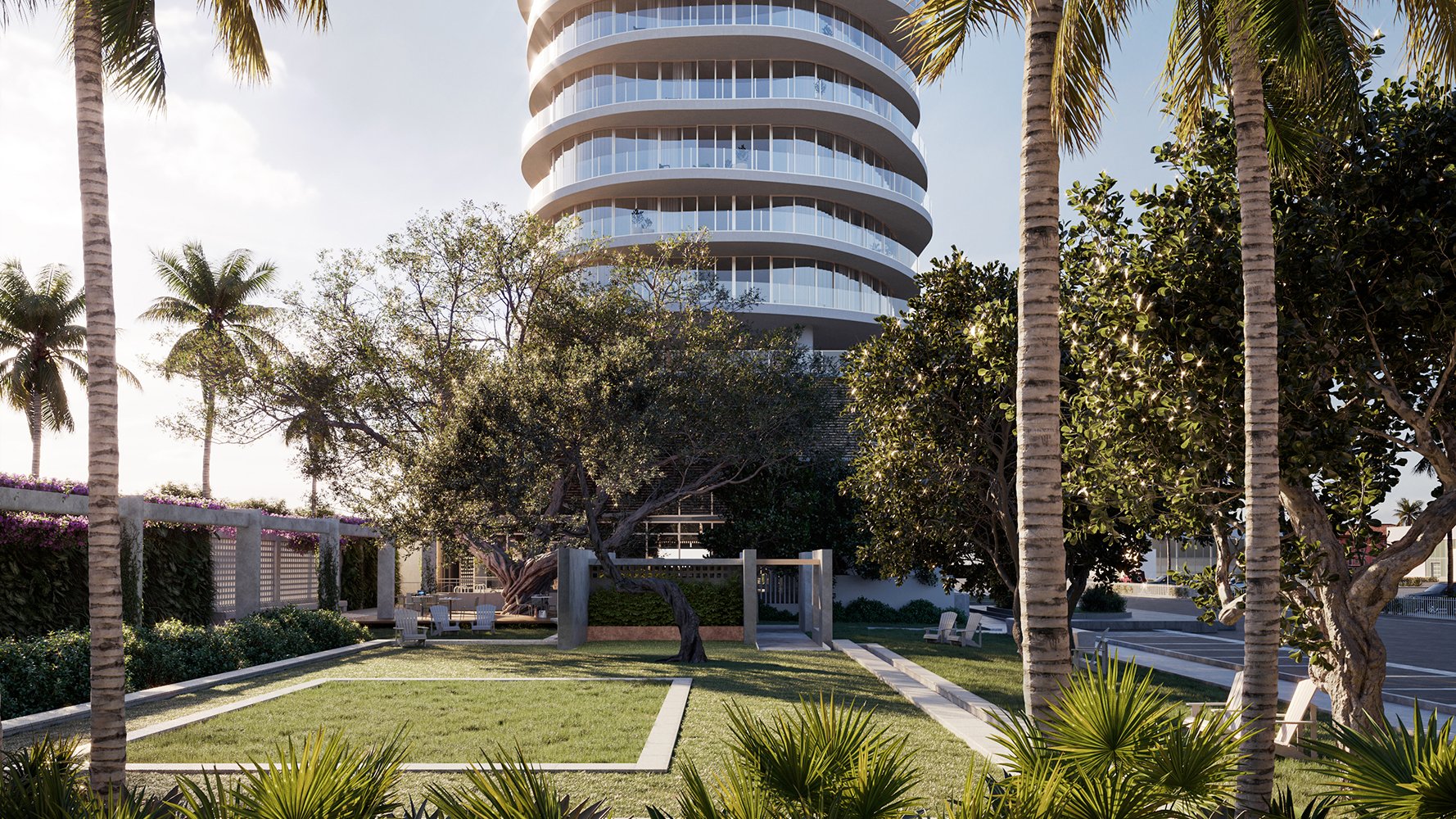
In Pompano Beach, two new-construction narratives are in direct conversation. One is the ultra-boutique play: a building designed to live like a private residence in the sky-fewer daily touchpoints, fewer shared moments, and less friction between you and the ocean. The other is the branded-resort proposition: a lifestyle defined by a recognizable design signature, a more programmed amenity experience, and the expectation that service and presentation stay consistently polished.
That is the clearest lens for comparing Ocean 580 Pompano Beach to Armani Casa Residences Pompano Beach. With limited verified specifics provided for this brief, MILLION Luxury focuses on what can be assessed without overreach: scalability, day-to-day cadence, and the kind of owner each concept typically serves best.
Ultra-boutique buildings win when an owner’s priority is control. The smaller the community, the more predictable the elevator waits, the pool deck atmosphere, and the overall rhythm of arrivals and departures. In practical terms, boutique scalability often means your home behaves like a second single-family residence: low ceremony, high autonomy.
For many second-home buyers, that intimacy is the amenity. You are not competing with a broad resident base for the “best hour” at the fitness room. You are not navigating a constant rotation of visitors. And you can often build stronger rapport with building staff because the circle stays small.
The trade-off is straightforward: boutique buildings cannot always justify the same breadth of on-site programming as a larger, resort-forward tower. If you want a robust slate of hosted experiences, multiple dining concepts, or a sense that the building is always “on,” boutique can read as quiet. For the right buyer, that quiet is the point.
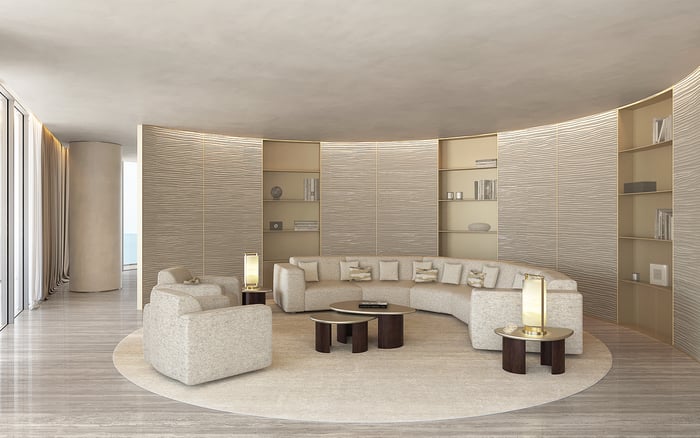
A branded residence, done well, is a promise-of a globally recognizable design vocabulary, an amenity atmosphere that feels curated rather than merely provided, and a service expectation aligned with a luxury hospitality mindset.
Armani/Casa as a concept tends to attract owners who value the signaling and consistency a world-class design brand implies. The lifestyle can feel more social by design: shared spaces are meant to be used, photographed, and remembered. The building is not simply a backdrop to your life; it becomes part of the narrative.
The trade-off is that grandeur requires systems. More expansive amenities and more consistent service typically bring higher operational complexity. That can show up in staffing requirements, vendor relationships, and the overall governance culture of the condominium. None of those are inherently negative-but they are decisions. Some owners want a tuned, hospitality-grade machine. Others prefer fewer moving parts.
In practice, the difference between boutique and branded often becomes obvious in the first five minutes of your day.
Boutique living typically reduces “public” moments. The lobby may be beautiful, but it is not performing. You come and go with less exposure, which matters for privacy-minded owners and for families who want a reliable routine.
Branded living, by contrast, often makes arrival a feature. The lobby, the scent, the lighting, and the way common areas are staged are all part of the design intent. Owners who enjoy that sense of place will experience it as value. Owners who want invisibility may experience it as unnecessary theater.
A useful exercise is to decide which version of luxury you prefer:
Quiet luxury: fewer touchpoints, less audience, more personal control.
Curated luxury: design signature, consistent presentation, and a lifestyle that feels hosted.
It is tempting to compare amenity lists. The more meaningful question is: how do amenities actually get used-and what do they cost to maintain at your standard?
Boutique projects often prioritize a shorter menu executed at a higher level of calm. A pool that is reliably serene can matter more than multiple pools that feel active. A well-considered owner’s lounge can matter more than a sprawling suite of rooms owners rarely enter.
Branded resort style tends to expand the amenity universe and reinforce it with service. That can be a win if you will truly use the spaces, host guests, and value an environment that always feels “ready.” If you are in town for long weekends and mostly want ocean, sleep, and privacy, you may end up funding complexity you do not consume.
For context, buyers weighing Pompano Beach often benchmark the broader coastline’s resort-minded product, including W Pompano Beach Hotel & Residences, to understand how hospitality energy can shape day-to-day living.
Without verified building-by-building numbers in this brief, we cannot responsibly cite dues, reserves, or staffing counts. But we can name the diligence items that typically separate a boutique condo’s stability from a branded tower’s complexity.
Ask for clarity on:
Staffing model and service scope. What is included, what is optional, and what has historically been added over time in similar buildings?
Vendor lock-in. Are there brand-mandated vendors or standards that affect annual budgets and replacement cycles?
Reserve philosophy. Does the association fund replacements proactively, or rely on assessments when capital items come due?
House rules and privacy enforcement. Boutique communities often skew stricter on noise, guests, and short-term behavior. Branded communities may be more accustomed to a higher volume of visitors.
If you value predictability above all, boutique governance can feel more direct. If you value a high standard of presentation and are comfortable paying for it, branded governance can feel like stewardship.
Ultra-boutique buildings can develop an almost club-like desirability. The right buyer will pay for scarcity, and resales can feel curated because the building’s identity is so specific.
Branded residences can widen the buyer pool by offering an instantly legible story. The name itself becomes shorthand for design, lifestyle, and expectations. That can support liquidity, particularly among international buyers who prioritize recognizable cues.
However, brand also invites comparison. Future buyers will ask how this branded project stacks against other branded options across South Florida. In that sense, it can be useful to understand how brand-led positioning performs in other markets, from fashion houses to hospitality flags. For example, 888 Brickell by Dolce & Gabbana illustrates how brand narrative can become a primary purchase driver in Brickell, even when buyers are not choosing purely by square footage.
Ocean 580 tends to fit the buyer who wants:
A quieter building rhythm and a more residential feel.
A “lock-and-leave” routine that does not require engaging a large ecosystem.
Privacy as a defining feature, not an add-on.
Armani/Casa Residences Pompano Beach tends to fit the buyer who wants:
A more immersive, design-forward atmosphere.
Amenities that feel like a resort extension of the home.
A lifestyle designed to be shared, hosted, and experienced.
If you are cross-shopping outside Pompano, it can also be useful to tour a best-in-class boutique oceanfront example such as 57 Ocean Miami Beach to calibrate what “intimate” looks and feels like at the top of the market.
When MILLION Luxury advises clients on boutique versus branded, we encourage a private-club mindset. Ask questions that reveal the lived reality, not just the rendered promise:
When is the building busiest, and what does “busy” actually feel like?
How does the staff handle deliveries, guests, and after-hours arrivals?
What are the quiet rules, and are they enforced consistently?
Does the building feel like a sanctuary or a scene?
The right choice is the one whose operating style matches your temperament. A buyer who prizes serenity will never be fully satisfied by even the most elegant resort energy. And a buyer who loves a curated social cadence will eventually find ultra-boutique calm too quiet.
Both concepts can be “luxury,” but they monetize different definitions of it. Ocean 580 is the argument for fewer neighbors and more control. Armani/Casa is the argument for brand certainty and resort-grade immersion.
Your best decision is not a snapshot of finishes. It is a forecast of how you want to live in the building, what you want your guests to feel, and which form of carrying cost you consider worth it: the premium for privacy, or the premium for performance.
Is Ocean 580 more private than a branded tower? Boutique-scale living often feels more private because there are typically fewer shared moments and fewer residents.
Do branded residences usually have higher ongoing costs? They can, because expanded amenities and higher service standards may require more staffing and maintenance.
Will Armani/Casa feel more like a hotel? Branded projects often prioritize a hosted, resort-like atmosphere, even when the residences are not a hotel.
Which is better for a second home in Pompano Beach? Choose boutique if you want quiet routines; choose branded if you want a more programmed lifestyle for guests.
Is resale easier in a branded building? Brand can broaden appeal by making the product instantly recognizable, though it also invites comparisons.
Do boutique buildings have fewer amenities? Often yes, but the best boutique projects focus on a tighter set of amenities executed at a higher calm.
What should I review first in the condo documents? Start with the budget, reserves, staffing scope, and any rules that affect privacy, guests, and daily use.
How do I evaluate “value” beyond finishes? Measure elevator and arrival friction, noise culture, staff responsiveness, and how often you will use amenities.
Should I tour similar projects outside Pompano Beach? Yes, touring both boutique and branded benchmarks helps you identify your true preference quickly.
Can MILLION Luxury help compare buildings discreetly? Yes, a side-by-side tour plan and document review can clarify lifestyle fit before you commit.
For a confidential assessment and a building-by-building shortlist, connect with MILLION Luxury.
If branded residences are on your mind — as a home or as an allocation — we would be glad to share what we are seeing, privately.
Begin a quiet conversation