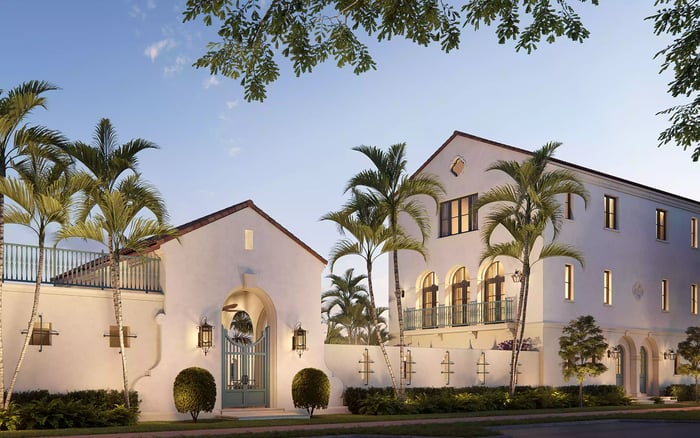
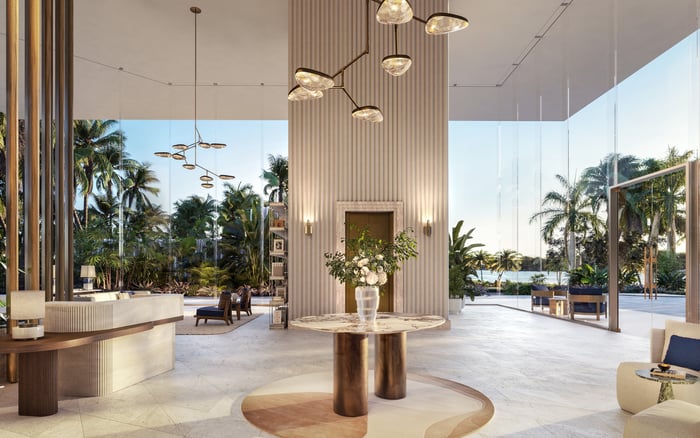
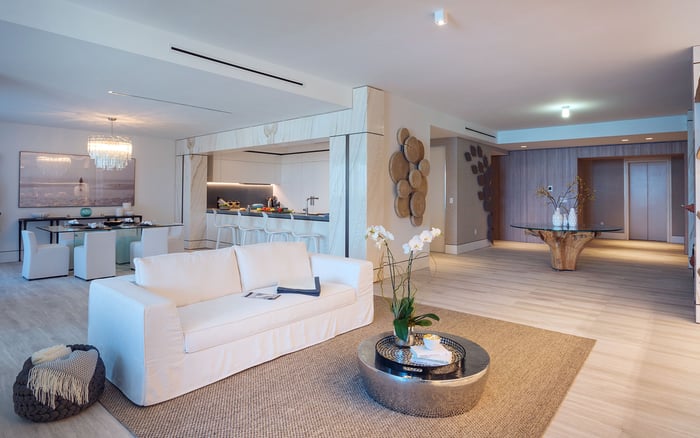
A buyer-oriented comparison of two boutique Bay Harbor Islands addresses, focused on what low-density really changes day to day: arrival, privacy, views, services, and long-term livability.
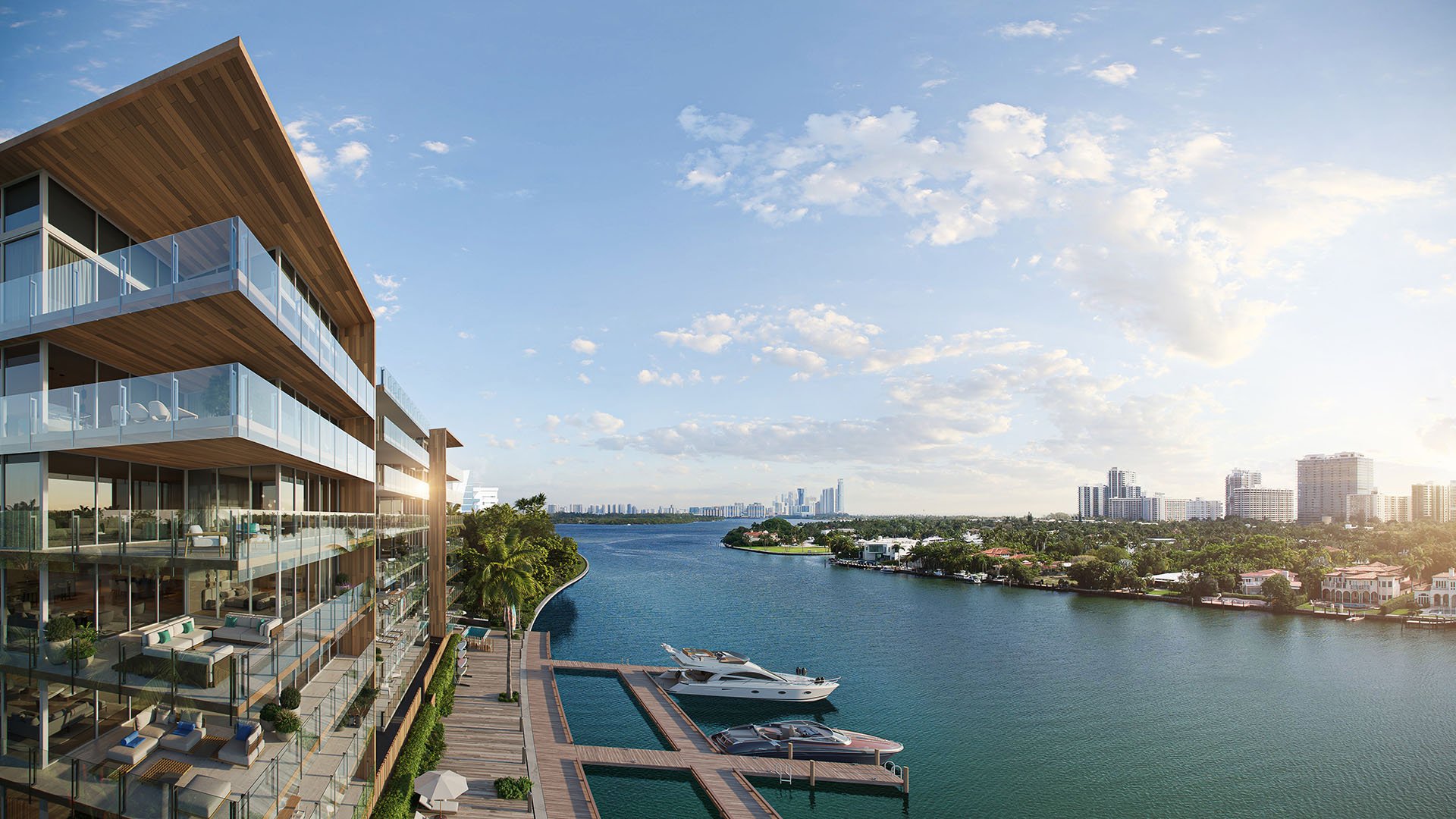
Low-density is often discussed as a unit count, but it’s lived as cadence. On an island, that cadence is amplified because daily life funnels through a finite set of bridges, streets, and waterfront edges. You feel it in how quickly you can arrive and disappear, how many people you pass in the lobby, and how quiet the building stays at the pool on a weekday morning.
For buyers comparing La Maré Bay Harbor Islands and Alma Bay Harbor Islands, the right question isn’t simply which is “more luxurious.” It’s which one delivers the intimacy you actually mean: fewer touchpoints, fewer compromises, and fewer moments when the building’s scale overrides the calm you came to the water for.
In Bay Harbor Islands, that calm is also positional. You’re close enough to the energy of Miami-beach for dinner and culture, yet just far enough removed to keep everyday life discreet. It’s a neighborhood where boutique buildings read as primary residences, not pied-à-terre towers.
When two projects share the same island context, the differentiator is rarely the headline amenity. It’s how the building executes five drivers that determine whether it feels private in real life.
Arrival and transition: The sequence from curb to door to residence. A low-density building can feel almost like a private home when the transition is short, sheltered, and effortless.
Vertical circulation: Elevators, corridors, and vestibules. Privacy is easily diluted by long hallways and shared elevator banks; it’s protected by short, quiet paths that reduce unintended encounters.
View orientation and light: Intimacy isn’t darkness or isolation; it’s control. The strongest residences let you open to the water while maintaining separation from neighboring sightlines.
Amenity philosophy: Boutique living typically prioritizes quality, design, and ease over quantity. You feel the difference when amenities function as natural extensions of the residence-not destinations that generate traffic.
House rules and lifestyle alignment: Low-density can be compromised by turnover. If you want a steady neighbor set and a consistent building rhythm, pay attention to how the project positions itself for end users versus transient occupancy.
Using these drivers, you can assess La Maré and Alma as lived environments-not marketing.
La Maré’s appeal, in broad strokes, is the promise of a composed building where design feels intentional rather than maximal. Buyers drawn to this profile typically want the experience of living within a small collection of residences: fewer strangers, fewer operational variables, and fewer moments that feel like navigating a hotel.
On an island, that distinction matters because the neighborhood already provides the “destination” layer. You can enjoy Bal Harbour’s refinement without pulling that foot traffic into your own lobby. In that context, a boutique project can keep amenities focused-spaces that are beautifully finished, easy to use, and unlikely to become noisy gathering points.
From a buyer’s perspective, the most valuable question to ask at La Maré is straightforward: does the building make it easy to be alone when you want to be, and social only when you choose. Look closely at how residences connect to outdoor space, how private terraces read from the water, and whether the common areas feel like a natural continuation of residential life rather than a separate, public-facing program.
Alma’s positioning tends to resonate with buyers who want new-construction freshness and a crisp, contemporary sensibility-without sacrificing an intimate scale. In low-density projects, “modern” shouldn’t mean exposed; the best modern buildings use proportion, screening, and thoughtful landscape to protect calm.
For Alma, the lived comparison often comes down to the texture of your daily routine: parking to elevator, elevator to front door, and how quickly you’re back in your own quiet. When a building gets these transitions right, the experience can feel closer to a private residence than a conventional condo.
Alma also sits within a Bay Harbor Islands ecosystem where other boutique options create a critical mass of refined, low-rise living. That context matters. A neighborhood that attracts end-user buyers tends to produce a steadier cadence in the building: fewer move-ins and move-outs, fewer late-night hallway moments, and a more predictable sense of who your neighbors are.
In waterfront living, buyers often pursue openness: wide glazing, seamless indoor-outdoor flow, and generous terraces. Intimacy, however, is about command of that openness. The plan that feels most luxurious is often the one that offers multiple modes of living.
When reviewing layouts at La Maré and Alma, evaluate:
Sightlines from entry: A refined plan doesn’t put the living room on display the moment the door opens.
Bedroom placement: True privacy buffers bedrooms from the social core, rather than simply closing a door.
Terrace usability: A terrace feels “intimate” when it’s deep enough to live on and positioned to reduce being looked into.
Service flow: Even in boutique buildings, deliveries and service can interrupt calm. The best buildings handle them quietly and predictably.
If you’re weighing a primary residence, pay attention to acoustics and adjacency. Low-density helps, but it doesn’t solve everything. What matters is how geometry and circulation limit incidental contact.
Ultra-luxury towers often compete on amenity volume: multiple pools, expansive clubs, large gyms, and event spaces. Boutique island living competes differently. At its best, it feels curated, personal, and calm.
Practically, the question is whether amenities make your day easier-not busier. A well-executed boutique environment may offer fewer spaces, but each one is more usable: a fitness room you actually want to enter, a pool deck that remains quiet, and shared areas that never feel like spillover from a public scene.
To ground the comparison, it can help to tour other Bay Harbor Islands projects to calibrate what “boutique” looks like across the neighborhood. Seeing a broader set of options, such as Alana Bay Harbor Islands, can clarify which design language and operational style best matches your expectations for privacy and everyday ease.
Bay Harbor Islands is often chosen by buyers who want proximity without performance. You can be near Bal Harbour and Miami-beach, then return to a more residential rhythm. That rhythm is a form of luxury: quieter streets, less spectacle, and a sense that the neighborhood is lived in-not visited.
This is also why Bay Harbor Islands is frequently compared, in spirit, to other “island-adjacent” boutique environments around the bay. If you’re evaluating the broader market, it’s useful to contrast Bay Harbor Islands with nearby North Bay Village offerings, where scale can shift and the lifestyle can feel more vertical and resort-driven. A project like Continuum Club & Residences North Bay Village can help you see that difference in a single visit: not as a substitute, but as a reference point for how amenity programming and density change the day-to-day experience.
Because the Fact Table for this brief does not specify unit mixes, exact amenity sets, or pricing, the most responsible approach is to match your priorities to the intimacy drivers-and then verify them during a private tour.
Choose La Maré if you value:
A quieter, more residential-first mood
A design approach that feels restrained and timeless
Common areas that read as extensions of home, not destinations
Choose Alma if you value:
A crisp new-construction sensibility and modern detailing
A streamlined daily routine from arrival to residence
A boutique environment that still feels fresh and current
In either case, your advantage as a buyer is specificity. Walk the exact path you’ll take most days: from vehicle to elevator to front door. Stand on the terrace at the time of day you’ll use it. Listen. Count how many doors you pass before you reach yours. Low-density is a promise; intimacy is proof.
Is Bay Harbor Islands a good fit for a primary residence? Yes-especially for buyers who want a residential rhythm near Miami Beach without the constant intensity.
Which feels more private, La Maré or Alma? Privacy depends on circulation and layout; tour both and evaluate entry paths, corridors, and terrace sightlines.
Does low-density automatically mean quieter living? Not always; sound control and building design matter as much as the number of residences.
What should I compare first when touring? Start with arrival, elevator flow, and the transition from public areas to your front door.
Are boutique amenities a downside compared to larger towers? Only if you want resort-scale programming; many buyers prefer fewer spaces that are calmer and better used.
How important are terraces in island living? Extremely; terraces are where the lifestyle happens, so prioritize depth, privacy, and wind exposure.
What is the biggest mistake buyers make with new construction? Focusing on finishes alone instead of how the building operates day to day-especially deliveries and access.
Should I consider other Bay Harbor Islands projects for context? Yes; touring multiple boutique buildings helps you calibrate what you value in scale, design, and service.
Is it better to prioritize water views or privacy? The best residences deliver both through orientation and screening, so evaluate view corridors and neighboring lines.
How do I move forward if I am deciding between these two? Narrow to your top three non-negotiables and confirm them in person with a tour at the times you’ll live there.
If you'd like a private walkthrough and a curated shortlist, connect with MILLION Luxury.
If branded residences are on your mind — as a home or as an allocation — we would be glad to share what we are seeing, privately.
Begin a quiet conversation