A discreet guide for Miami Beach buyers who want privacy, staffed arrival, and controlled access without sacrificing warmth, openness, or the pleasures of coastal living.
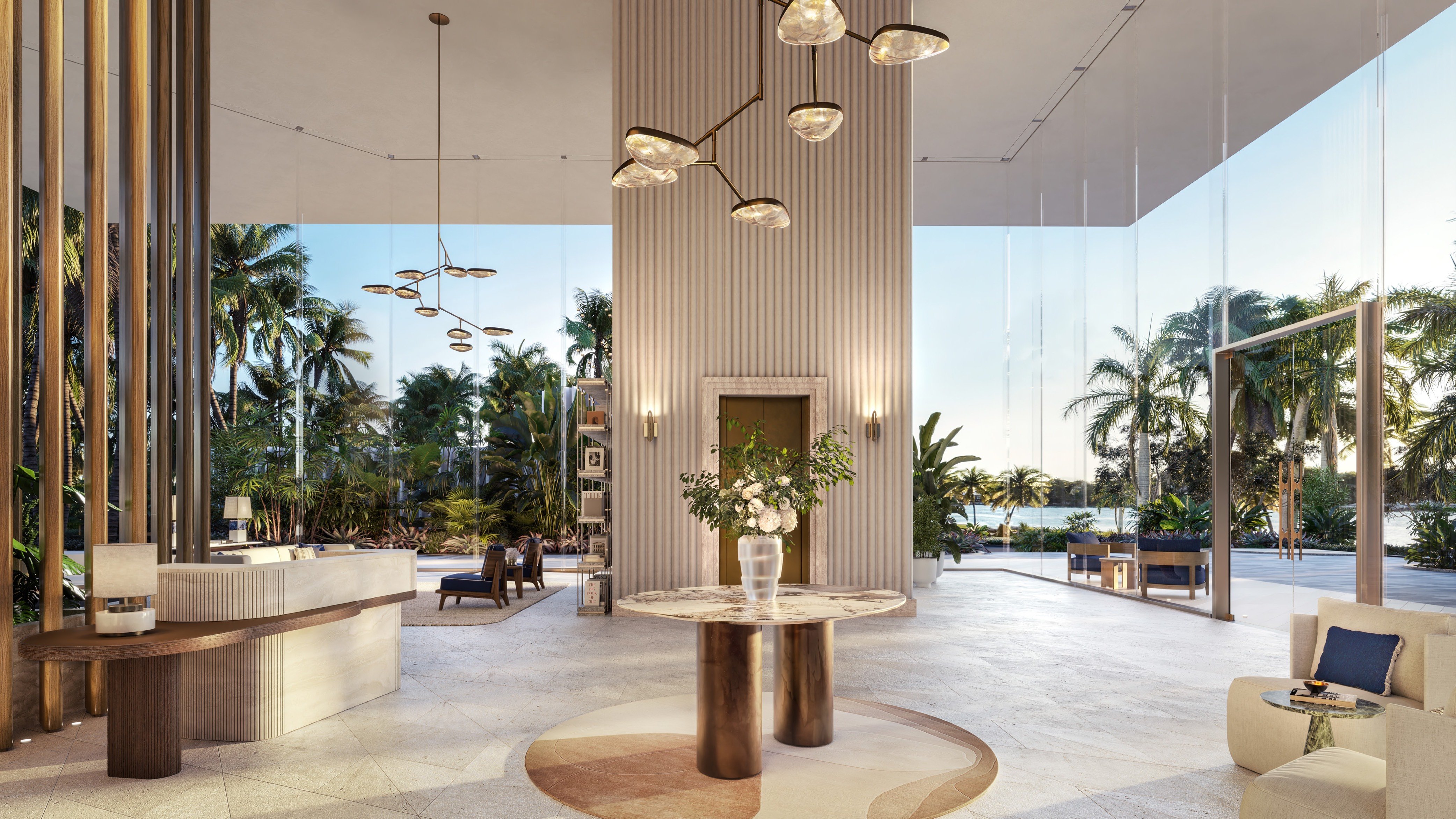
For the Miami Beach buyer, security is no longer a single gate, desk, or camera. It is a sequence. The strongest residences create calm from curb to elevator, with movement that is controlled but never theatrical. The goal is not to announce protection. The goal is to make daily life feel composed, private, and effortless.
That distinction matters for high-profile owners, seasonal residents, families, and anyone who entertains with discretion. A residence can be secure without feeling sealed off from the city, the water, or the light. In the best buildings and enclaves, privacy is embedded in the choreography: how cars arrive, how guests are received, how service providers circulate, how elevators are accessed, and how residents move between home, pool, beach, and lobby.
Miami Beach buyers often begin with location, views, and interior scale. Security belongs at the same level of conversation. Not because the home should feel defensive, but because the right framework allows owners to relax. When access is legible and staffing is attentive, a residence can preserve the softness that makes Miami Beach desirable in the first place.
1. Full-service oceanfront condominium residence - layered arrival
A full-service oceanfront residence is often the most natural fit for buyers who want controlled access without surrendering the openness of coastal living. The key is layered arrival: a considered transition from street to lobby, from lobby to elevator, and from elevator to private residence. When each layer feels gracious rather than guarded, the experience remains residential.
Oceanfront living also places a premium on how residents move between the home, amenities, and beach access. Buyers should look for a layout that reduces unnecessary cross-traffic and keeps private residential circulation separate from busier social zones where possible.
2. Boutique low-density residence - recognizable staff culture
A boutique building can offer a quieter kind of security because fewer residents, guests, and vendors pass through the property each day. The feeling is less institutional and more familiar. Staff recognition, a calm lobby, and predictable movement patterns can matter as much as any visible security feature.
This format suits owners who want privacy without isolation. It can feel especially attractive to buyers who value a building where arrival is personal, not anonymous, and where the rhythm of daily life is easy for staff to understand.
3. South of Fifth condominium residence - neighborhood control without isolation
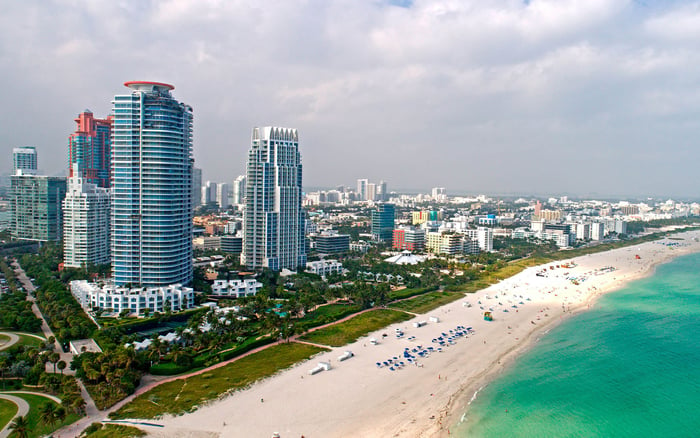
For buyers drawn to the southern tip of Miami Beach, the appeal is often the balance of energy and privacy. South of Fifth and SoFi are used by many buyers as shorthand for a lifestyle that can feel connected to dining, marina, park, and beach settings while still offering a more contained residential mood.
The security question here is not only the building itself. It is also how the residence handles guest arrival, parking, service access, and pedestrian flow. The best fit feels polished but not tense, with enough control to support privacy and enough ease to keep the neighborhood experience intact.
4. Gated enclave residence - privacy at the site line
For certain buyers, a gated-community setting offers the clearest psychological threshold. The sense of privacy begins before the front door, often at the edge of the property or neighborhood. This can appeal to families, collectors, and owners who prefer a more residential cadence than a lobby-centered condominium experience.
The caution is atmosphere. A gate alone does not create elegance. The best version feels landscaped, quiet, and intuitive, with arrival that supports privacy without turning the home into a compound. Buyers should consider whether the experience feels serene in daylight and equally comfortable at night.
5. Private elevator condominium residence - reduced corridor exposure
A private elevator residence appeals to buyers who want fewer shared transitions. Moving directly from controlled elevator access into the home can create an arrival that is both discreet and luxurious. It reduces the friction of corridors and helps the residence feel more like a private house in the sky.
This format is particularly relevant for owners who entertain selectively or travel often. The value is not only security. It is the way the home absorbs daily routines with less visibility, fewer interruptions, and a more composed sense of return.
Views can distract even disciplined buyers. Before choosing a residence, walk the exact path of daily life. Arrive as a resident would arrive. Imagine a guest arriving separately. Picture a delivery, a housekeeper, a driver, and a contractor all moving through the property on the same afternoon. A beautiful residence can lose its sense of privacy if those paths are confused.
Pay close attention to the lobby mood. Does it feel warm or watchful? Is staff presence visible but relaxed? Is there a natural place for guests to be received without drifting into private residential areas? The answers often reveal whether security has been integrated into the architecture of hospitality or added as a separate layer.
Parking and elevator access also deserve careful attention. For many luxury buyers, the most important security moments happen in transition: the garage, the porte cochere, the elevator vestibule, and the route to amenities. A residence that handles these moments gracefully will often feel more secure than one with more obvious but less coordinated features.
The ideal Miami Beach residence should not make its owner feel hidden from the life they came to enjoy. Privacy is valuable because it creates freedom. It should allow a morning swim, a quiet dinner, a family weekend, or a late arrival from the airport without unnecessary exposure or friction.
This is why the best security-minded purchase is rarely the most visibly fortified one. A softer building can outperform a harder-looking one when staffing, circulation, access control, and resident culture are aligned. The property should feel easy to live in, not merely impressive to enter.
Buyers should also consider how the residence will feel over time. A seasonal owner may value lock-and-leave confidence. A full-time resident may care more about the daily relationship with staff. A family may prioritize controlled guest access and predictable service movement. A collector may focus on privacy at arrival and within the residence itself. The right answer is personal, but the standard is consistent: secure, elegant, and calm.
What should security-conscious buyers prioritize first in Miami Beach? Start with the arrival sequence, staffing model, elevator access, and separation between resident, guest, and service circulation.
Can a secure residence still feel warm and social? Yes. The best properties make security feel like hospitality, with attentive staff and intuitive movement rather than visible tension.
Is an oceanfront residence a good fit for privacy-minded buyers? It can be, especially when beach access, amenities, and residential elevators are organized to reduce unnecessary exposure.
Why do some buyers prefer a boutique building? Smaller-scale buildings may offer a more familiar staff culture and a calmer daily rhythm with fewer people moving through shared spaces.
Is a gated community always more secure than a condominium? Not necessarily. A gate provides a clear threshold, but overall privacy depends on design, staffing, circulation, and daily operations.
What makes private elevator access valuable? It reduces shared transitions and gives the residence a more discreet, house-like arrival experience.
Should buyers tour a building at different times of day? Yes. Morning, afternoon, and evening visits can reveal traffic patterns, staffing tone, and how calm the property feels in real use.
How should buyers evaluate guest access? Consider where guests wait, how they are announced, and whether their path respects private residential areas.
Does South of Fifth offer a different privacy profile from busier areas? Many buyers value its residential feel, but each building should still be judged by its own access, staffing, and circulation.
What is the best sign that security has been well designed? The residence feels effortless: controlled where it should be, open where it can be, and calm throughout the owner’s routine.
For a tailored shortlist and next-step guidance, connect with MILLION.
If branded residences are on your mind — as a home or as an allocation — we would be glad to share what we are seeing, privately.
Begin a quiet conversation