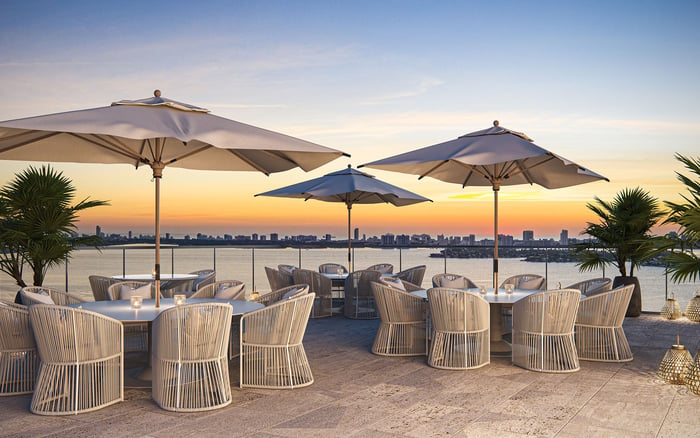
A buyer-oriented 2026 map of South Florida’s New York wealth migration, organized by lifestyle, privacy, schools, waterfront access, and long-term ownership strategy.
For New Yorkers considering South Florida in 2026, the question is no longer whether the move makes sense. It is where the move should land. The answer is rarely one-size-fits-all. A hedge fund principal seeking a discreet weekday base does not shop like a family leaving a townhouse on the Upper East Side. A founder who wants a bayfront condominium with hotel-level service has different priorities than a buyer focused on a gated estate, a dock, and proximity to schools.
The migration map has become more precise. Buyers are sorting themselves by daily rhythm, not just by city name. Commute patterns, club memberships, school calendars, airport habits, boating needs, and tolerance for density now shape the decision as much as views or finishes. South Florida is no longer treated simply as a winter escape. It is increasingly evaluated as a primary or semi-primary base, with the expectations buyers bring to a global capital.
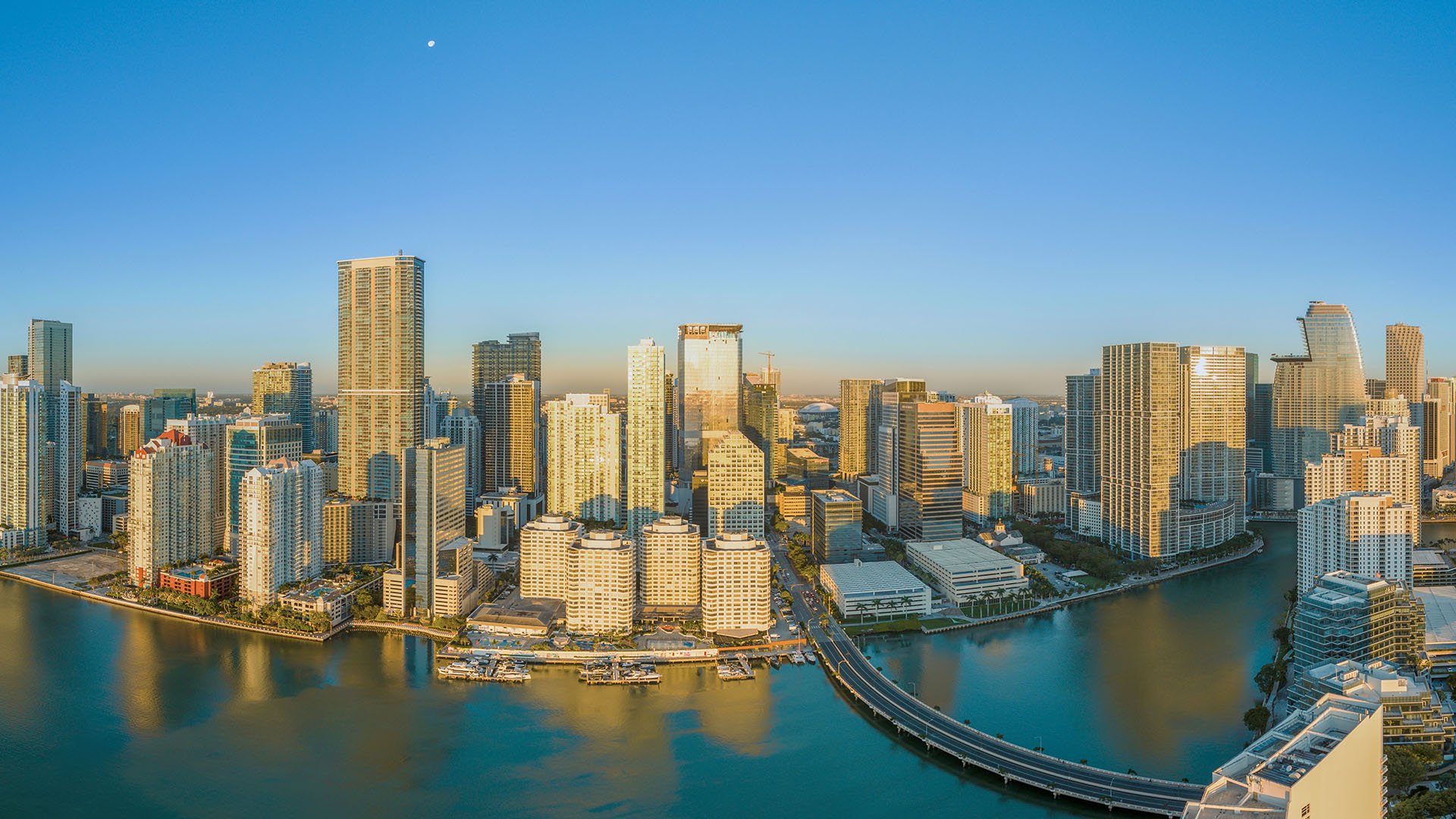
Brickell remains the most direct psychological bridge for New Yorkers who are not ready to give up vertical living. The appeal is familiar: doorman culture, walkable dining, fitness, offices, private banking, and an urban skyline that feels closer to Midtown or Tribeca than to a resort town. For buyers who still travel frequently to New York, London, or Latin America, the lock-and-leave condominium remains highly efficient.
Downtown carries a related but slightly different energy. It offers proximity to culture, sports, arts venues, and Miami’s growing civic core. For younger wealth, finance professionals, and entrepreneurs who want to remain close to the center of movement, this area often functions as the first South Florida address before a later move to waterfront privacy or a family-oriented enclave.
The buyer profile here is pragmatic. These buyers often want valet, security, a strong gym, friction-reducing services, and a residence that can be closed for travel without anxiety. This is the closest South Florida gets to New York apartment logic, but with light, terraces, and a distinctly different tax and lifestyle conversation.
For New Yorkers who arrive with a mature understanding of luxury, Miami Beach and the northern beach corridor offer something more emotional. This is where the move becomes less about replacing Manhattan and more about upgrading the atmosphere of daily life. The draw is ocean proximity, historic neighborhood character, private clubs, and a social circuit that can feel both international and highly curated.
South of Fifth appeals to buyers who want a polished condominium lifestyle near restaurants, marina energy, and beach access. Mid-Beach and the areas farther north tend to attract buyers who value calm, larger residences, and a more residential pace. Surfside and Bal Harbour often speak to those who want discretion, controlled scale, and an environment where luxury is expressed through restraint rather than display.
The New York buyer here is often not looking for the biggest headline. They are looking for the right arrival sequence, the right elevator experience, the right beach service, the right privacy between neighbors, and the right tone in the lobby. That level of discernment is why the beach markets remain deeply personal choices.
When the move is driven by children, schools, and a desire for more breathing room, the map shifts west and south. Coconut Grove offers tree canopy, bay access, a village atmosphere, and a slower texture without abandoning proximity to Miami’s urban center. It is especially appealing to New Yorkers who once imagined they needed a purely vertical lifestyle, then discovered they wanted more outdoor space and neighborhood intimacy.
Coral Gables offers another kind of continuity: architectural order, mature landscaping, private-school access, and a more traditional residential fabric. Buyers coming from Westchester, Greenwich, or brownstone Brooklyn often understand this language immediately. The streets feel established, the homes feel rooted, and the lifestyle can be refined without feeling transient.
These markets are not simply alternatives to the beach. They answer a different question: where can a family build a real life in South Florida while still staying close to culture, airports, restaurants, and the water?
Aventura often attracts buyers who want convenience, shopping, schools, and a practical bridge between Miami and Broward. It is a strategic choice for families and international buyers who value accessibility over scene. The lifestyle is polished but less performative, with strong appeal for those who prefer everyday ease.
Sunny Isles, by contrast, is more vertical and ocean-focused. For New Yorkers accustomed to high-rise luxury, it offers large-format condominium living with a direct beach identity. The towers, views, and amenities can feel familiar in structure, while the setting is unmistakably South Florida.
Together, this corridor works well for buyers who split their attention between Miami, Fort Lauderdale, and private aviation or commercial travel. It is also a logical zone for those who do not want to choose between beach life and regional mobility.
Broward has become increasingly compelling for New Yorkers who want waterfront living with a different pace. Fort Lauderdale, in particular, offers boating culture, canal-front homes, beach access, and a quieter form of affluence. The mood is less about being seen and more about how the property functions.
For buyers with yachts, tenders, or a preference for water access, the Fort Lauderdale area can feel more purpose-built than many parts of Miami. It also gives families and executives a broader set of choices, from condominium residences near the sand to single-family homes with dockage.
The appeal is not that Broward replaces Miami. It is that it solves a separate problem: how to live with space, water, airport access, and privacy while remaining inside the South Florida luxury ecosystem.
Farther north, Boca Raton and Palm Beach appeal to buyers who prioritize order, clubs, schools, golf, philanthropy, and estate-like privacy. This is where the move often feels less experimental and more permanent. The lifestyle is quieter, but not less sophisticated.
Boca Raton speaks to families who want structure and amenities. Palm Beach carries a different weight, rooted in legacy, architecture, and an older register of social capital. New Yorkers who choose this lane are often less interested in Miami’s momentum and more focused on permanence, security, and community rhythm.
For some buyers, the northern lane becomes the final destination after testing Miami first. For others, it is the obvious first choice because it resembles the residential hierarchy they already understand.
Not every high-net-worth migration is coastal. Doral and other inland enclaves can serve buyers who value newer construction, larger floor plans, golf access, private schools, and proximity to business corridors. For executives with operations in logistics, trade, aviation, or regional commerce, inland South Florida can be far more practical than a beachfront address.
This is the quieter side of the map, but it should not be dismissed. Many New Yorkers moving full-time are not buying only for imagery. They are buying for morning routines, children’s activities, household staff logistics, parking, storage, and predictable travel times.
The most successful relocations often begin with this practical lens. Prestige matters, but a residence that works every day matters more.
Investment quality in 2026 is not just about price appreciation. It is about scarcity, building quality, resilience, service consistency, neighborhood durability, and the ability to satisfy future buyers with equally high standards. The best purchase is rarely the loudest one. It is the address that aligns with how the owner actually lives.
A New Yorker choosing South Florida should begin with the week, not the weekend. Where are school drop-offs? How often is the airport used? Is the boat central or aspirational? Is privacy more important than walkability? Is the residence a primary home, seasonal base, or long-term family asset?
Once those answers are clear, the map sharpens quickly. Brickell and Downtown serve urban efficiency. Miami Beach and Surfside serve ocean lifestyle and discretion. Coconut Grove and Coral Gables serve families seeking roots. Aventura and Sunny Isles serve convenience and vertical beach living. Broward and Fort Lauderdale serve water access and space. Boca and Palm Beach serve permanence, clubs, and privacy. Doral and inland enclaves serve practical luxury.
Where do New Yorkers usually start their South Florida search? Many begin with familiar urban or coastal markets such as Brickell, Miami Beach, and Fort Lauderdale before refining by schools, privacy, and daily routine.
Is Brickell the closest match to Manhattan living? For many buyers, yes. Brickell offers the clearest high-rise, service-oriented, walkable lifestyle in South Florida.
Why do some New Yorkers choose Miami Beach instead? Miami Beach offers ocean proximity, social energy, and a more resort-like daily rhythm while still remaining close to Miami’s urban core.
Is Broward a serious luxury alternative to Miami? Yes. Broward, especially Fort Lauderdale, appeals to buyers who value boating, space, privacy, and a calmer waterfront lifestyle.
Where should families focus first? Families often compare Coconut Grove, Coral Gables, Boca Raton, Aventura, and selected inland communities based on schools and commute patterns.
Does Doral work for luxury buyers? Doral can work well for buyers prioritizing newer homes, business access, golf, schools, and practical daily logistics.
Is Palm Beach too quiet for former New Yorkers? It depends on the buyer. Palm Beach suits those who value privacy, legacy, clubs, architecture, and a more settled pace.
Should buyers choose a condo or single-family home? Condos favor security and convenience, while single-family homes offer space, privacy, and more control over daily living.
What matters most when comparing neighborhoods? The strongest criteria are lifestyle fit, service expectations, mobility, privacy, school needs, and long-term asset quality.
Is South Florida still mainly a second-home market? No. Many buyers now evaluate South Florida as a primary or semi-primary base rather than only a seasonal retreat.
To compare the best-fit options with clarity, connect with MILLION.
If branded residences are on your mind — as a home or as an allocation — we would be glad to share what we are seeing, privately.
Begin a quiet conversation