A buyer-oriented comparison of how Himalayan salt rooms function as wellness amenities at two Fort Lauderdale luxury condominium projects, framed through design, operations, and lifestyle fit.
In South Florida, wellness has evolved from a nice-to-have into a defining layer of luxury real estate. Fitness rooms and lap pools are still table stakes; the real differentiator is whether a building can deliver repeatable, low-friction restoration without leaving the property. That is precisely where the Himalayan salt room earns relevance.
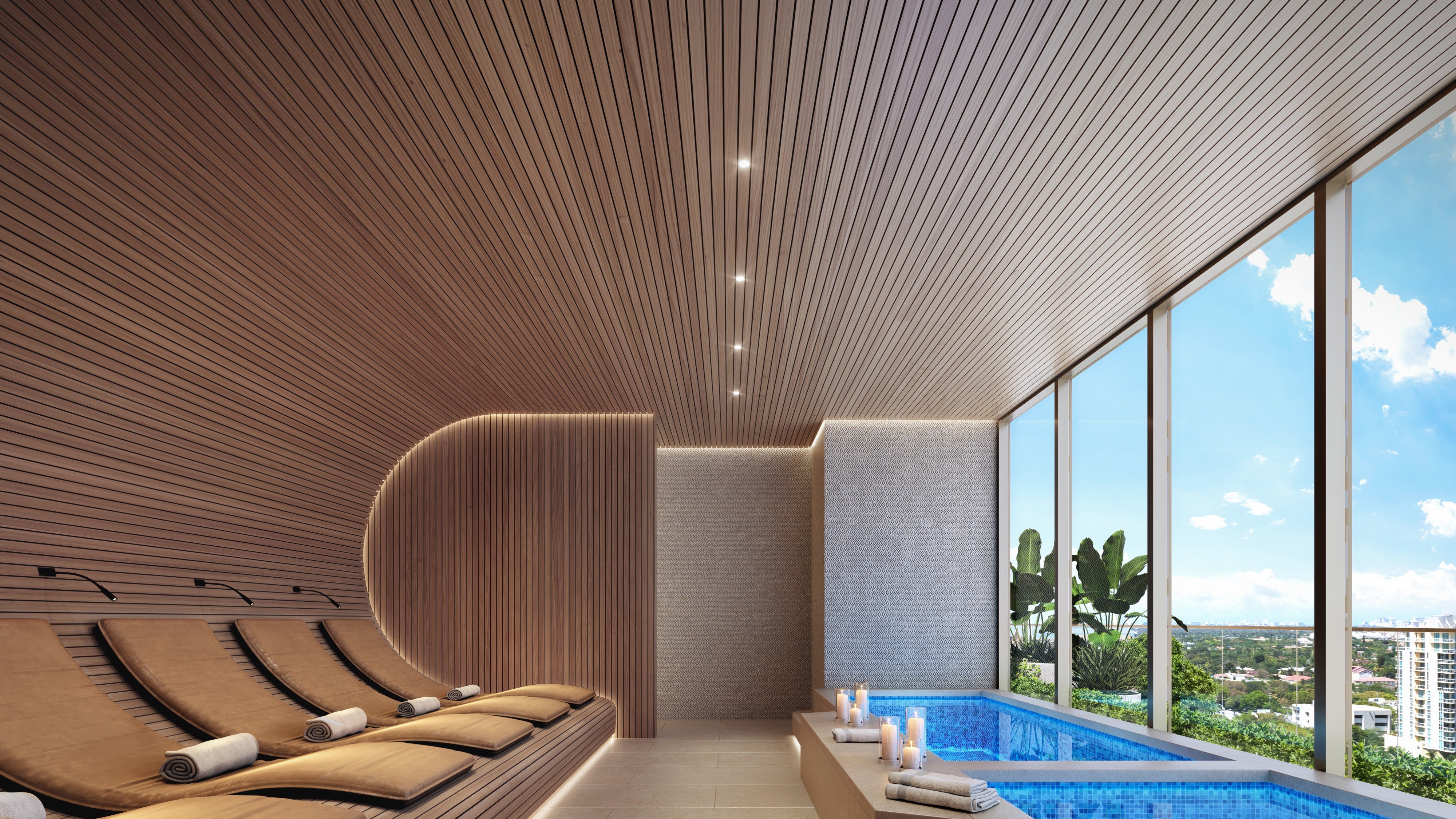
At its best, a salt room is a deliberately tuned environment-warm-toned, quiet, and gently immersive. For residents, it is less about novelty and more about ritual: a non-athletic complement to training and recovery, a social alternative to a lounge, and a private reset that doesn’t require booking a day spa across town.
The buyer question is not “Does the building have a salt room?” It is “How intelligently is the salt room integrated into the spa ecosystem-and will it still feel pristine and usable five years from now?” In this comparison, we look at how that integration tends to present itself in the context of Andare Residences Fort Lauderdale and Riva Residenze Fort Lauderdale, with an emphasis on the practical realities that shape resident experience.
Integration is the difference between a salt room that is merely photogenic and one that becomes part of daily life. In a residential tower, it typically shows up in four places.
First is adjacency. A salt room performs best when it sits within a logical sequence: arrival, changing, showering, thermal experiences, then quiet recovery. If it is isolated, residents treat it as a curiosity. If it is woven into a coherent flow, they return to it.
Second is acoustics and privacy. Salt rooms are often sold on mood-but mood is fragile. Corridor noise, gym-music bleed, or a door that opens directly to high-traffic areas can dilute the experience immediately. A well-integrated room feels tucked away, with controlled entry and a clear sense of separation.
Third is environmental control. Without prescribing any single technical approach, the principle is straightforward: the space needs stable conditions and a maintenance plan aligned with coastal humidity. A salt room is a material-driven environment, and materials telegraph wear quickly when the operational plan is vague.
Finally, integration is cultural. The way a building communicates etiquette, access, and booking determines whether the room reads as calm or chaotic. The strongest resident wellness amenities feel curated, not policed.
Within Fort Lauderdale’s luxury landscape, both Andare Residences and Riva Residenze appeal to buyers who expect wellness to be part of a building’s identity. The finer distinction comes down to how the amenity set is composed and managed-and whether the salt room reads as a core element or a decorative accessory.
Himalayan salt rooms trade in sensory restraint. The palette tends to be warm, with an amber glow and tactile surfaces that invite stillness. In a premium residential context, the most revealing choices are rarely the dramatic ones. They’re the quiet decisions: seating comfort that supports longer sessions, lighting that flatters without glare, and a layout that keeps the room from feeling like an overflow waiting area.
For buyers comparing Andare Residences and Riva Residenze, watch for cues in how the spa spaces are proportioned and how the salt room is positioned relative to other amenities. When it is treated as part of a wellness narrative, it typically has a clear threshold, a sense of arrival, and an intentional pace. When it is treated as a box to check, it often reads like a small room appended to the spa corridor.
A discreet luxury benchmark is whether the room invites silence naturally. In other words: do scale, furnishings, and separation encourage softer voices on their own, or does the building need signage and enforcement to keep the room serene? The former typically ages better.
Buyers often judge spa amenities visually, but longevity is operational. Salt rooms sit at the intersection of material care, cleaning cadence, and resident behavior. In South Florida, humidity is a persistent constraint-which makes upkeep and environmental consistency especially consequential.
The key operational questions to ask, regardless of which building you prefer:
What is the access model? Open access can feel democratic, but it can also create predictable peak-time crowding. A lightly managed reservation window can preserve calm without feeling restrictive.
How is etiquette handled? A salt room can be compromised by phone use, perfume, loud conversations, or damp swimwear. The best buildings solve this through design and staffing, not scolding.
How is the room cleaned and reset? A salt room should feel fresh every time you enter. Inconsistent reset leads to a slow, compounding decline in perceived quality.
Because residents use the room repeatedly, the standard for consistency is higher than at a hotel. A building’s willingness to treat wellness as an ongoing program, rather than a one-time build-out, matters. That is where the difference between two similarly positioned projects can become tangible in everyday life.
Salt rooms draw different resident profiles for different reasons.
For fitness-oriented residents, the salt room often becomes a cooldown ritual: train, shower, then decompress. These users care about proximity to the gym, cold plunge or sauna zones, and straightforward circulation that doesn’t require crossing a public lobby in a robe.
For high-intensity work schedules, the salt room is a mid-day reset-closer to meditation than recovery. These users prioritize quiet, privacy, and the ability to enter and exit without waiting.
For social residents, it becomes a low-key extension of hospitality: a place to bring a guest for a calm experience that still feels curated. These users care about guest policy, how many people the room comfortably supports, and whether the space feels special even when shared.
In Fort Lauderdale, where lifestyle often blends boating, beach time, and dining, a salt room can act as a buffer against the climate: a controlled environment that contrasts with sun and salt air. If you are choosing between Andare Residences and Riva Residenze, the decision may ultimately be less about the amenity’s existence and more about whether the spa’s overall layout supports your personal rhythm.
When you visit, evaluate the salt room like a buyer-not like a tourist.
Start with the approach. Does the route feel private, or do you pass through high-traffic amenity zones? Controlled circulation is a luxury, especially in shared wellness environments.
Next, listen. Stand still and notice whether adjacent spaces carry. A salt room positioned too close to a fitness studio or a busy corridor will struggle to deliver on its promise.
Then, assess comfort. The room should invite time. If the seating looks sculptural but feels rigid, the space will photograph well and underperform in real life.
Finally, ask about management norms. You don’t need a complicated policy-you need clarity: whether the room is first-come-first-served, whether there are session expectations, and how the building keeps the experience serene.
This is also the moment to look beyond Fort Lauderdale for perspective. Buildings that lead with wellness tend to treat the spa as a centerpiece, not a sidebar. If you want to calibrate what “wellness-forward” can look like in the broader market, notice how certain projects position lifestyle programming and resident services as part of the amenity story, such as The Well Coconut Grove and The Well Bay Harbor Islands. Even if you are committed to Fort Lauderdale, that lens can sharpen your questions during tours.
Fort Lauderdale’s luxury condo market has grown increasingly competitive on amenity composition, and wellness features are among the clearest signals of positioning. In this context, a salt room is rarely a standalone value driver. It is a credibility marker.
When a building invests in a coherent spa circuit, residents tend to experience the property as more complete, more service-oriented, and more aligned with contemporary luxury. That perception can shape not only lifestyle satisfaction, but also how the building is discussed, shown, and remembered.
For buyers comparing Andare Residences and Riva Residenze, it helps to treat the salt room as a proxy for the building’s operational philosophy. If the wellness amenities are designed as a cohesive ecosystem, it suggests ongoing attention to resident experience. If they are designed as a set of checkboxes, the risk is that the room looks compelling on day one and feels compromised by year two.
In other words, the salt room isn’t the decision. It’s the diagnostic.
Without leaning on promises, the most prudent approach is to prioritize what you can verify through layout, management clarity, and overall spa composition.
Choose the building where the salt room feels like part of a deliberate sequence-where you can picture using it on a random Tuesday, not only when entertaining guests. Favor privacy, acoustic separation, and an operational model that preserves calm.
If you are the kind of owner who uses wellness amenities frequently, small frictions add up. If you are an occasional user, atmosphere and aesthetics may matter more than logistics. Either way, a thoughtfully integrated salt room is a subtle luxury that tends to reward repeat residents.
What is a Himalayan salt room in a residential spa? It is a dedicated, salt-themed relaxation space designed for quiet recovery and ambiance within the building’s wellness suite.
Is a salt room more valuable than a sauna or steam room? It is different: saunas and steam rooms are more common, while salt rooms tend to be a premium add-on that signals curation.
What should I look for when touring a salt room? Prioritize privacy, acoustics, comfortable seating, and whether it sits naturally within the spa’s overall flow.
Does location within the amenity deck matter? Yes. If the room is too close to noisy fitness zones or main corridors, it can lose the calm it is meant to deliver.
How do buildings typically manage salt room access? Most use either open access or light scheduling; the best approach is the one that keeps the room consistently quiet.
Can guests use a residential salt room? Policies vary by building; ask whether guest access is permitted and how crowding is prevented at peak times.
Will a salt room feel crowded in a luxury tower? It depends on capacity and management norms; smaller rooms benefit from reservation-style controls.
How can I tell if the amenity will hold up over time? Ask about cleaning cadence and upkeep standards, and notice whether the space feels designed for daily use.
Is a salt room mainly an aesthetic feature? In top-tier buildings it is both: atmosphere matters, but operational consistency determines whether residents keep returning.
Which matters more, the salt room itself or the overall spa circuit? The circuit. A salt room works best when integrated into a cohesive, well-managed wellness experience.
For a confidential assessment and a building-by-building shortlist, connect with MILLION Luxury.
If branded residences are on your mind — as a home or as an allocation — we would be glad to share what we are seeing, privately.
Begin a quiet conversation