A practical, discreet framework for affluent households evaluating grandparent-suite planning at Andare Residences Fort Lauderdale, with emphasis on privacy, caregiving, resale logic, and long-term livability.
For households evaluating Andare Residences Fort Lauderdale, grandparent-suite planning is not merely sentimental. It is a practical way to align a residence with how affluent families actually live: fluidly, privately, and across generations. A home may need to welcome a visiting parent for a long weekend, support a grandparent for a season, accommodate a caregiver, or preserve options for an eventual transition no one wants to rush.
In South Florida, the conversation often intersects with second-home use, extended family travel, healthcare access, and the desire to keep family life close without compromising independence. The strongest plans do not make a residence feel clinical or improvised. They create a graceful, self-contained zone where an older family member feels respected while the main household continues to function with discretion.
This is especially relevant for new-construction and pre-construction buyers who still have the opportunity to think ahead. Even when a formal grandparent suite is not part of the initial move-in plan, the logic behind one can guide better decisions around floor plan selection, furniture placement, storage, lighting, and daily circulation.
Before comparing layouts, households should define the most likely use case. A grandparent who visits from the Northeast several times a year requires a different setup than a parent who may eventually live in residence full time. A mobile, socially active grandparent has different needs than someone who may later require assistance with bathing, medication routines, or overnight care.
The first question is duration. Will this be occasional hosting, seasonal co-residence, or a long-term family solution? The second is autonomy. Should the grandparent be able to wake, dress, read, watch television, and receive a visitor without feeling visible to everyone in the home? The third is support. Will another family member, nurse, aide, or companion need to use the space comfortably?
For Fort Lauderdale buyers, the answer may differ from a traditional suburban in-law suite. Vertical living rewards precision. Every door swing, corridor, bathroom location, and seating zone matters because privacy is achieved through layout and habit, not distance alone.
A well-planned grandparent suite begins with emotional intelligence. The bedroom should not read as an overflow guest room. It should feel like a private retreat with enough dignity to support someone accustomed to running a household of their own.
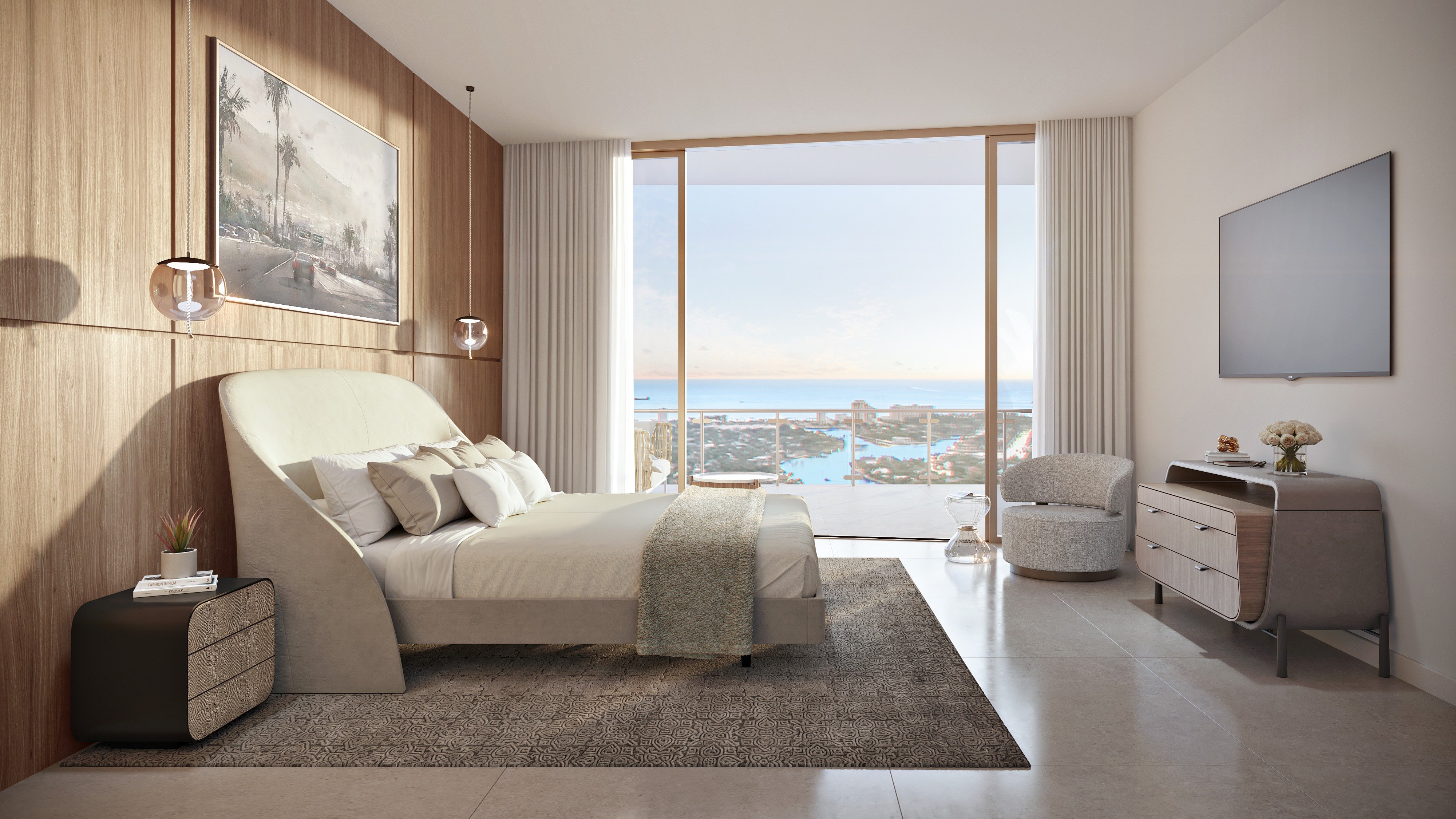
The ideal bedroom zone is quiet, separated from the most social areas of the residence, and easy to reach without unnecessary obstacles. A direct relationship to a bathroom is often more valuable than a dramatic view. Space for a comfortable chair, reading light, nightstands, luggage storage, and personal objects can be just as important as the bed itself.
If the room will function as a guest suite until a grandparent uses it more regularly, choose finishes and furnishings that age well. Avoid overly low beds, fragile accent pieces, complicated window treatments, and furniture arrangements that require tight turns. Luxury should be felt in ease, not only in materials.
Bathrooms are often where multigenerational planning either succeeds quietly or fails publicly. A grandparent-suite bath should be considered through the lens of balance, reach, visibility, and comfort. Walk-in shower access, clear floor space, good lighting, secure towel placement, and intuitive controls all matter.
This does not require a medicalized aesthetic. In a refined residence, accessibility can be integrated through stone, millwork, proper lighting, and thoughtful hardware. The goal is to make the room beautiful now and more forgiving later.
Families should also consider nighttime movement. Is the path from bed to bath clear? Can lighting be softened without becoming dim? Is there a place to sit while dressing? These details are rarely glamorous in a sales conversation, but they become central to daily comfort.
A successful grandparent suite supports togetherness by allowing separation. Older family members should not feel that every phone call, nap, or quiet morning occurs at the center of the household. Likewise, children and hosts should not feel they must lower the energy of the entire residence at all times.
Look for a plan that creates natural thresholds. A short corridor, secondary bedroom wing, or room placement away from the main entertaining area can make a meaningful difference. If the residence includes outdoor space, a terrace may extend the suite’s usefulness, giving a grandparent access to fresh air or quiet morning coffee without requiring a full household outing.
Privacy also applies to service and caregiving. If an aide may occasionally come and go, the household should consider how that person will enter, store essentials, and support the grandparent without making the residence feel crowded.
In most luxury condominium settings, the grandparent-suite conversation is less about creating a second full kitchen and more about supporting small rituals. A grandparent may want morning tea, medication storage, a water glass, or a snack without walking through an active entertaining space.
Families can address this through furniture, storage, and placement rather than overcomplicating the residence. A discreet cabinet, beverage drawer if allowed and appropriate, or dedicated pantry shelf can support independence while preserving the integrity of the home. The larger point is psychological: the grandparent should not feel like a guest who must ask permission for every routine.
Second-home households should pay particular attention to this. When several generations arrive at once, the kitchen can become the most congested room in the residence. Small decisions that decentralize daily habits can make the home feel calmer.
Grandparent-suite planning is not only for households with an immediate eldercare need. It can also enhance a residence’s long-term flexibility. A room that works beautifully for a grandparent can also serve as a refined guest suite, an adult child’s room, a quiet office, or staff accommodation, depending on household needs and building rules.
The key is to avoid over-specialization. Permanent design choices should be elegant enough for ordinary luxury living and practical enough for future support. A highly personalized eldercare buildout may feel limiting to a later buyer, while a subtly planned suite can read as a premium secondary bedroom.
For Andare Residences Fort Lauderdale, the strongest buyer mindset is not to ask whether a grandparent suite is needed today. It is to ask whether the residence can adapt gracefully if family circumstances change.
Begin with room hierarchy. Decide which bedroom would be most appropriate for an older family member and why. Consider distance from the primary suite, adjacency to bathrooms, exposure to noise, and ease of movement.
Then study the daily path. Imagine the grandparent waking, dressing, bathing, reaching breakfast, resting in the afternoon, joining dinner, and returning at night. Any friction in that sequence is worth addressing before it becomes a daily problem.
Finally, review the human layer. Who will visit? Who may provide care? Where will luggage, prescriptions, mobility aids, linens, and personal belongings live? The most refined residences are those where practical objects have dignified places to disappear.
What is grandparent-suite planning? It is the process of designing or selecting part of a residence to support an older family member with privacy, comfort, and flexibility.
Does a grandparent suite need to be a separate apartment? Not necessarily. In many luxury residences, it is a well-positioned bedroom and bath with thoughtful storage, lighting, and circulation.
Why does this matter for Andare Residences Fort Lauderdale buyers? Multigenerational planning can help households choose a residence that works for guests, aging parents, caregivers, and future resale needs.
What is the most important room feature to evaluate? The relationship between bedroom and bathroom is critical, especially for nighttime comfort, privacy, and ease of movement.
Should buyers prioritize views or accessibility? Views are valuable, but for grandparent use, ease of access, quiet, and bathroom convenience may matter more day to day.
Can grandparent-suite planning still feel luxurious? Yes. The best approach integrates practical features through elegant lighting, materials, furniture, and spatial planning.
Is this only relevant for full-time residents? No. Seasonal households and second-home owners often benefit because extended family visits can place pressure on daily routines.
How early should families think about this? Ideally, buyers should consider it before selecting a floor plan, committing to furniture, or finalizing customization decisions.
What should families avoid? Avoid treating the suite as an afterthought, choosing awkward room placement, or adding features that feel overly medicalized.
Can this planning help resale? Yes, when handled discreetly. A flexible suite can appeal to future buyers who value guest comfort, office potential, or multigenerational use.
For a discreet conversation and a curated building-by-building shortlist, connect with MILLION.
If branded residences are on your mind — as a home or as an allocation — we would be glad to share what we are seeing, privately.
Begin a quiet conversation