A buyer-oriented comparison of how Arbor Coconut Grove and Park Grove Coconut Grove interpret biophilic design through public realm, privacy, ecological intent, and luxury experience.
Biophilic design is often reduced to a visual shorthand: trees, planted terraces, generous glazing, and a softened threshold between architecture and landscape. In Coconut Grove, that shorthand falls short. Buyers, developers, and design-minded residents typically expect something more fully integrated, where site planning, planting strategy, circulation, and environmental response shape the lived experience.
That is where the comparison between Arbor Coconut Grove and Park Grove Coconut Grove becomes especially revealing. Both are rooted in the neighborhood’s lush, village-like identity. Both favor regionally appropriate planting over landscape treated as a purely decorative import. Yet the way each development translates nature into residential value is materially different.
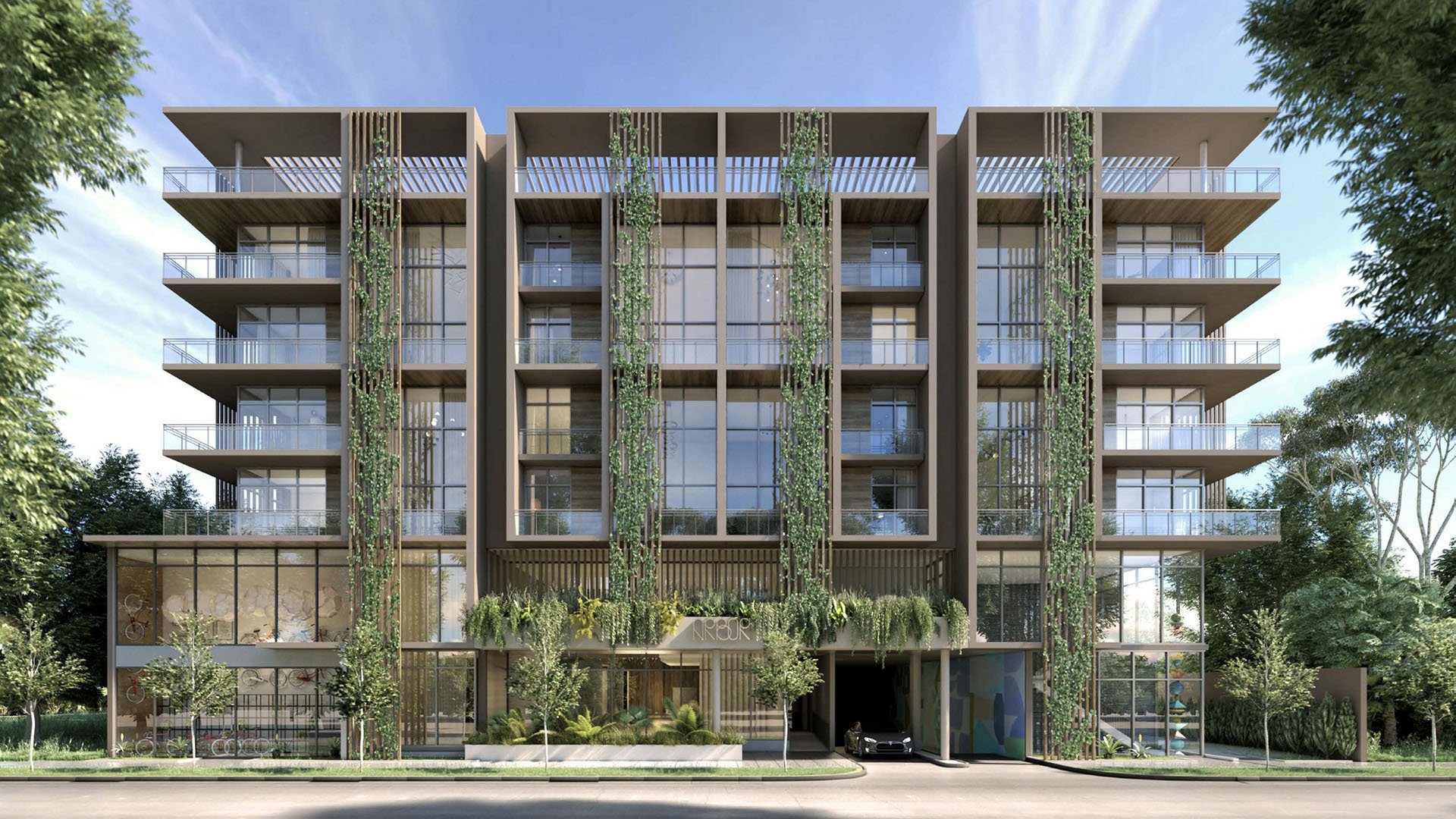
Arbor presents biophilic design as a civic and ecological gesture. Its concept centers on ground-level public plazas, native landscaping, pedestrian-oriented planning, and improved access toward the waterfront and surrounding village fabric. Park Grove, by contrast, interprets biophilia through a more rarefied luxury lens: multi-level park systems, planted courtyards, landscaped promenades, bay-oriented open space, and a resident-focused garden experience shaped around privacy and exclusivity.
For MILLION Luxury readers, the important question is not which project has more greenery in the abstract. It is how that greenery is deployed. At Arbor, landscape reads as part of the neighborhood interface. At Park Grove, it is more closely aligned with a controlled residential environment.
Arbor stands apart because its green identity is not framed solely as a resident amenity package. The project has been associated with a broader mixed-income concept of roughly 120 residences, with public-space planning and pedestrian access playing a central role in its positioning. That distinction matters because it shifts biophilic design away from private spectacle and toward shared urban experience.
In practical terms, Arbor’s approach is rooted in native planting, open plazas, and walkability. The landscape is intended to support movement through the site and strengthen the relationship between the project, nearby shops, and the waterfront. That makes Arbor less of a sealed compound and more of a connective element within Coconut Grove’s public-facing fabric.
Its most compelling design note is ecological. Arbor has been described as incorporating wetland preservation and restoration into the project concept, giving the development a more reparative environmental narrative than many projects that simply layer tropical planting around a new building. For buyers and observers who define biophilic design as an authentic engagement with place, rather than an upscale garden aesthetic, that is an important distinction.
This also explains why Arbor should not be read as a direct analog to a purely ultra-luxury tower. Its mixed-income profile, including a reported affordable component, shapes the design conversation. The biophilic language is tied not only to wellness and beauty, but also to access, permeability, and civic benefit.
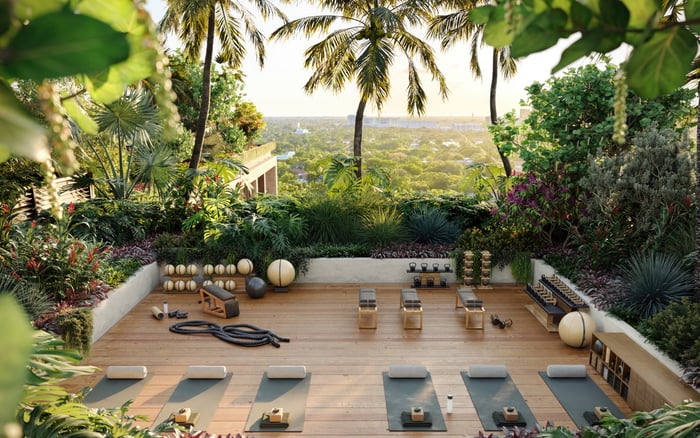
Park Grove is the more traditionally luxury-forward expression of biophilic design. As a larger master-planned residential community, it uses landscape to create a layered sense of arrival, enclosure, and retreat. The composition is more immersive and more controlled, with planted courtyards, landscaped promenades, tropical gardens, and open areas linked to Biscayne Bay.
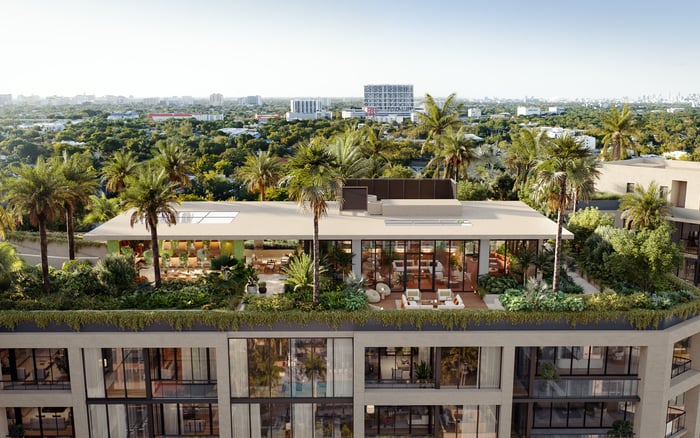
In Park Grove, nature is not only something experienced at ground level. The design has been characterized by greenery integrated into the towers themselves, creating vertical garden effects that extend the landscape upward. This matters because it aligns biophilic design with architectural identity, not just site decoration. The result is a more complete luxury image, where the building and the planting strategy appear to share the same design vocabulary.
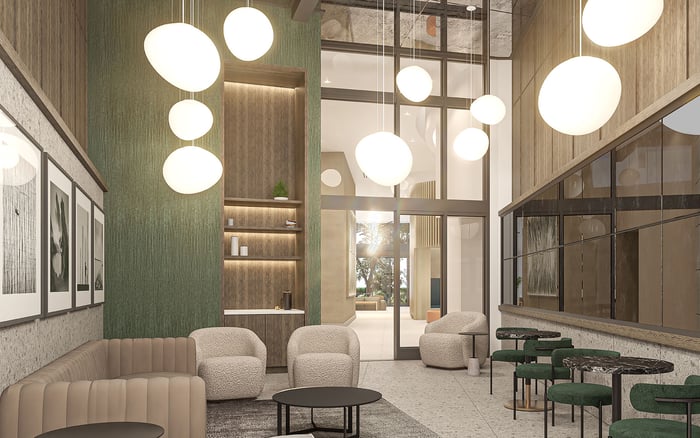
For the high-end buyer, that distinction can be persuasive. Landscape at Park Grove is curated to support privacy, exclusivity, and resident experience. It is less about public access and more about the feeling of living within a private tropical estate by the bay. In Coconut Grove, that places it closer in spirit to other neighborhood addresses that emphasize design-led sanctuary, such as Vita at Grove Isle or Mr. C Tigertail Coconut Grove, where the setting itself becomes part of the luxury proposition.
The most useful comparison is not aesthetic but territorial. Arbor extends biophilic design into publicly accessible civic space. Park Grove concentrates much of its landscape experience within resident-controlled areas. Both approaches are valid, but they serve different ideas of value.
At Arbor, greenery helps negotiate the edge between development and neighborhood. The implied reward is belonging: a site that participates in Coconut Grove rather than withdrawing from it. At Park Grove, greenery is part of a carefully edited residential atmosphere. The implied reward is refuge: a sense of distance from the city, even while remaining in one of Miami’s most storied enclaves.
This difference may also shape buyer psychology. Someone drawn to public realm quality, ecological restoration, and a more porous relationship with the neighborhood may find Arbor’s concept intellectually richer. Someone seeking a more polished, more private luxury environment may respond more strongly to Park Grove’s garden-forward exclusivity.
Even within the broader Coconut Grove market, this split is instructive. Projects such as The Well Coconut Grove and Opus Coconut Grove show how wellness, architecture, and neighborhood intimacy increasingly overlap in the district. Arbor and Park Grove sit within that same conversation, but their priorities differ.
In coastal Miami, biophilic design cannot be separated from resilience. In Coconut Grove, environmental permitting, waterfront conditions, and stormwater-sensitive landscape planning are not side notes. They are part of the design brief. That means lush planting has to do more than photograph well. It also has to help a project respond to a demanding climate context.
Both Arbor and Park Grove sit within that reality. Both have been framed in relation to regionally appropriate planting and green-infrastructure thinking. Yet the public narrative differs. Arbor’s ecological identity is more explicitly tied to restoration and public-facing landscape planning. Park Grove’s narrative is more firmly centered on luxury outdoor living and the refinement of tropical circulation spaces.
For sophisticated buyers, this is a subtle but meaningful distinction. One project suggests nature as a shared urban and environmental asset. The other suggests nature as an elevated private experience. Neither position is inherently superior, but they are not interchangeable.
A strict quantitative comparison remains limited because standardized biophilic performance metrics, such as clearly disclosed green-space percentages or third-party wellness benchmarks, have not been publicly detailed in a way that allows a like-for-like test. Pricing, occupancy, and presale disclosures also do not support a precise market comparison on this topic alone.
Still, the qualitative picture is clear enough for a luxury audience. Arbor appears to use biophilic design to broaden access, reinforce walkability, and connect development with ecological repair. Park Grove uses biophilic design to deepen privacy, intensify luxury atmosphere, and create a vertically and horizontally integrated garden setting.
In other words, Arbor treats landscape as an urban contribution. Park Grove treats landscape as a residential indulgence. In Coconut Grove, both are compelling. The deciding factor is whether a buyer values the idea of nature as community interface or as private sanctuary.
What is the main biophilic difference between Arbor and Park Grove? Arbor emphasizes public-facing landscape, walkability, and ecological restoration, while Park Grove emphasizes private gardens, curated outdoor spaces, and luxury retreat.
Is Arbor Coconut Grove positioned as a pure ultra-luxury condo project? No. Arbor has been characterized as a mixed-income residential concept rather than a purely ultra-luxury tower.
Is Park Grove more luxury-forward in its landscape expression? Yes. Its outdoor design is closely tied to privacy, resident amenities, and a more exclusive bayfront lifestyle.
Do both projects reflect Coconut Grove’s natural character? Yes. Each is framed as responding to the neighborhood’s lush, village-like identity rather than ignoring it.
Does Arbor include an ecological restoration component? Arbor has been described as incorporating wetland preservation and restoration into its overall project concept.
Does Park Grove integrate greenery into the architecture itself? Yes. The project has been described as extending landscape expression upward through tower-integrated greenery and vertical garden effects.
Which project is more connected to public space? Arbor appears more closely tied to public plazas, pedestrian access, and a neighborhood-facing site plan.
Which project is more aligned with private luxury living? Park Grove is more clearly aligned with resident-controlled outdoor spaces and a curated private garden experience.
Can buyers compare the two using hard sustainability metrics? Not precisely. Publicly disclosed standardized biophilic metrics have not been detailed enough for a strict side-by-side measurement.
Why does this comparison matter for luxury buyers? Because biophilic design affects not just aesthetics, but privacy, walkability, neighborhood connection, and the overall character of residential living.
For a tailored shortlist and next-step guidance, connect with MILLION Luxury.
If branded residences are on your mind — as a home or as an allocation — we would be glad to share what we are seeing, privately.
Begin a quiet conversation