In 2026, resilience is not a marketing adjective for South Florida oceanfront development. It is a design brief shaped by the Florida Building Code, insurer scrutiny, lender checklists, and buyer expectations for continuity of comfort before, during, and after a storm. For purchasers considering Oceanfront condominiums from Miami Beach to Sunny Isles and Fort Lauderdale, the most meaningful changes often show up in quiet, expensive decisions: how water is kept out, how power is restored, how glazing behaves under pressure, and how the building returns to service when municipal systems are stressed. This MILLION Luxury guide translates the practical implications of code-driven resilience upgrades without drifting into engineering jargon. Use it to ask better questions in a sales gallery, to compare one tower’s “hardened” narrative to another’s actual assemblies, and to understand why 2026-era oceanfront buildings may feel different to own, operate, and insure.
For a luxury buyer, “resilience” is less about enduring the headline event and more about preserving the day-to-day experience that justifies oceanfront ownership. The Florida Building Code establishes the baseline, while the premium segment often targets a higher standard: tighter building envelopes, better-protected mechanical spaces, and systems designed to support faster re-occupancy.
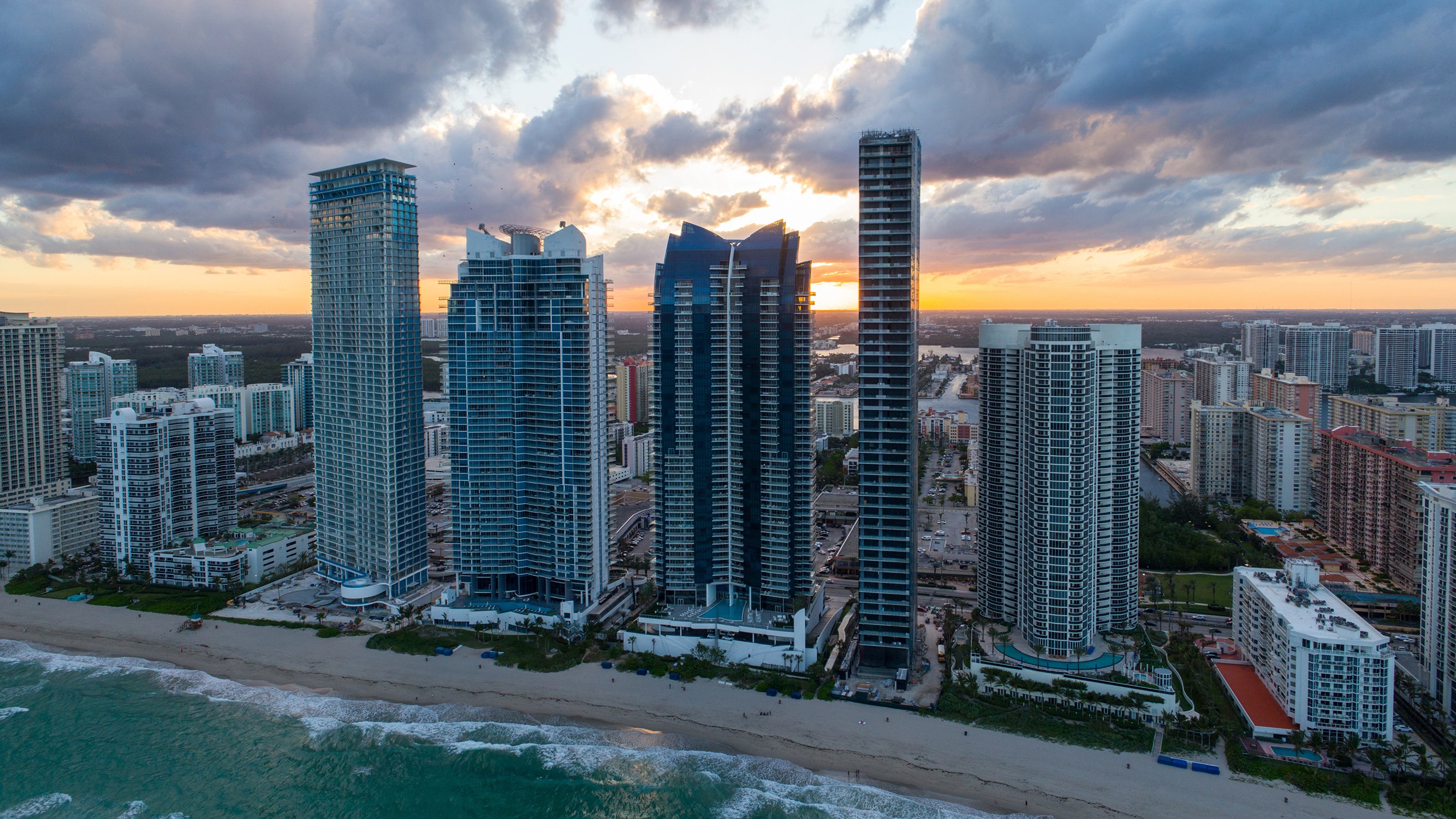
In oceanfront corridors like Miami-beach and Sunny-isles, the value proposition is increasingly defined by operational continuity as much as by views. A building that can contend with salt air, wind-driven rain, short-term utility interruptions, and coastal groundwater realities is a building that protects interiors, finishes, art, and time.
You will also notice a quiet shift in disclosure culture. Developers and condominium teams are more prepared to walk through their decisions: where critical equipment is located, how water is redirected, and what the building does when power drops. That conversation now sits squarely within luxury due diligence-alongside design pedigree and amenity programming.
Even without reciting chapter-and-verse language, you can evaluate resilience through four ownership outcomes: keeping water out, resisting pressure and impact, maintaining life-safety and comfort, and streamlining recovery.
First, water management is the new status marker. Oceanfront sites contend with storm surge risk, heavy rainfall events, and saturated soils. In practical terms, buyers should expect more sophisticated site grading, perimeter drainage strategies, and garage protections. The most credible projects treat the podium and lower levels as zones to defend and drain-not merely to finish.
Second, the building envelope is becoming more exacting. Impact-resistant glazing is only the starting point; what separates a refined tower is how the full assembly performs under wind pressure and wind-driven rain. Look for strength in the details: robust balcony door thresholds, disciplined transitions at slab edges, and façade systems designed to manage water that will inevitably reach them.
Third, power continuity is shifting from “emergency lighting” to “livability.” Owners increasingly want elevators that return predictably, garage gates that operate, and common-area conditioning that limits post-storm humidity. Full-building backup is not universal, but the trajectory is clear: more on-site generation capacity, better-protected electrical rooms, and more segmented loads so essential systems can operate when the grid is unstable.
Finally, recovery is being designed rather than improvised. Materials, access, and controls all matter. When mechanical rooms are elevated and protected, when pumps are redundant, and when building automation can isolate issues quickly, the property returns to normal sooner. That speed affects not only convenience, but also long-term maintenance and the building’s reputation.
On an oceanfront site, the most consequential resilience decisions often sit at street level and below. That is where water concentrates-and where the cost of a misstep becomes immediate and unmistakable.
Buyers should look closely at how the building treats the garage and service entries. A resilient approach typically includes intentional ramp geometry, drainage trenches, sump-and-pump redundancy, and door or gate detailing that anticipates wind-driven water. Ask how water is managed if municipal storm drains are overwhelmed, and where pumped water is ultimately routed.
Also consider where critical equipment lives. When electrical switchgear, fire pump rooms, and building management controls are kept out of the most vulnerable zones, the building is better positioned to avoid cascading failures that make post-storm life uncomfortable. In luxury oceanfront towers, that planning is often invisible by design-which is exactly the point.
For buyers comparing Miami-beach options, treat the lowest occupied and service levels as a “resilience tour.” In that context, The Perigon Miami Beach reflects the kind of modern development where buyers commonly expect a clear narrative on envelope performance, protected systems, and how the building operates after extreme weather.
South Florida purchasers already assume impact-resistant glazing. The 2026 discussion is more precise: how does the façade drain, how are openings detailed, and how does the building handle pressure cycling without letting minor leakage become interior damage.
Balconies are an underexamined resilience interface. Their doors, thresholds, and drainage points sit directly in the path of salt spray and wind-driven rain. A well-executed design protects interior flooring and base conditions-and does so without relying on last-minute homeowner preparations.
In towers with extensive terrace exposure, you will also see more deliberate material choices: corrosion-resistant hardware, robust waterproofing layers, and façade maintenance strategies that are workable for a condominium association. Resilience is not just the day of the storm; it is the decade that follows.
In Surfside, where the market rewards architectural minimalism, the strongest examples make performance feel effortless. The Delmore Surfside sits in a submarket where buyers tend to scrutinize build quality closely-particularly around envelope execution, coastal durability, and long-term association operating discipline.
Mechanical, electrical, and plumbing decisions rarely appear in renderings, yet they determine whether a building feels secure once you are living in it. After a storm, humidity control can be as consequential as power. If air-handling systems cannot operate, interiors can deteriorate quickly in South Florida’s climate.
Expect greater emphasis on protected shafts, elevated equipment, and redundancy. In a strong resilience posture, essential pumps have backups, controls are safeguarded, and the building can sustain a baseline level of ventilation and dehumidification even when normal operations are disrupted.
For the luxury buyer, the question is not whether a building meets the Florida Building Code, but whether it is configured to reduce disruption. Ask what emergency power actually supports, how long it can run under typical assumptions, and what the plan is for fuel logistics and maintenance.
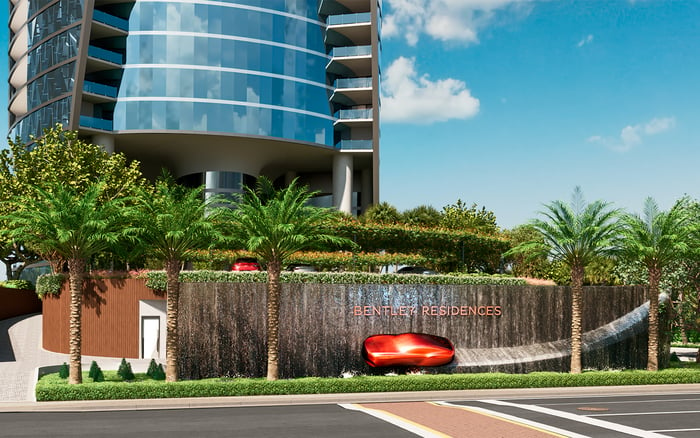
In Sunny-isles, where vertical living is defined by glassy exposure and high-wind conditions, the resilience narrative is naturally central. Bentley Residences Sunny Isles is the type of project where buyers often balance lifestyle signature amenities with practical considerations: elevator operations, garage access, and how the building maintains comfort when conditions outside are hostile.
Resilience upgrades increasingly map to three financial realities: insurance underwriting, lender comfort, and resale liquidity.
Insurers and lenders tend to respond to clarity. Buildings that can explain their envelope strategy, flood defenses, and backup-power capabilities reduce uncertainty in the review process. That does not guarantee outcomes, but it frames risk in concrete, comparable terms.
On resale, the buyer pool is becoming more exacting. Oceanfront purchasers now compare buildings not only on finishes and amenity decks, but also on the building’s ability to remain functional. A 2026-era tower that can demonstrate protected MEP locations, thoughtfully detailed openings, and a credible recovery plan may hold an advantage when two properties are otherwise comparable.
This is particularly relevant when weighing oceanfront residences in Miami-beach against newer boutique inventory that prioritizes privacy and lower density. 57 Ocean Miami Beach is an example of a Miami-beach project category where buyers often want both intimate scale and robust building systems, since fewer units can also mean fewer owners sharing the cost of major post-storm remediation.
Luxury due diligence is about asking questions that are difficult to answer vaguely. Consider bringing these topics into your conversations with the developer team, your attorney, and your inspector:
Elevation and water routing: How does stormwater leave the site when municipal capacity is limited?
Garage and entry defenses: What happens at the lowest openings and ramp conditions?
Critical equipment placement: Where are switchgear, generators, pumps, fire systems, and controls?
Envelope detailing: How are balcony doors, operable windows, and façade transitions designed to drain?
Emergency power scope: Which systems run, and what is the operational philosophy during an outage?
Humidity strategy: Can the building maintain dehumidification to protect interiors after a storm?
Maintenance realism: Are façade access, sealant cycles, and corrosion management planned and budgeted?
Association readiness: Is there a documented plan for shutdown, restart, and contractor access?
These questions are not about fear; they are about protecting a coastal asset. In 2026, the most sophisticated buildings treat resilience as part of luxury service: predictable performance, clear operating procedures, and fewer unpleasant surprises.
Will 2026 oceanfront buildings be “hurricane-proof”? No building is invulnerable, but newer designs can materially reduce damage and downtime.
Is impact glass enough to qualify a building as resilient? Not by itself; the full envelope, openings, and water-management details matter just as much.
What should I ask about backup power in a luxury condo? Ask which loads are supported, how long operations can run, and what the restart plan is.
Why does humidity control come up in resilience conversations? Without ventilation and dehumidification, interiors can deteriorate quickly even after minor water events.
Do elevated mechanical rooms really change outcomes? Often, yes; keeping critical equipment out of vulnerable zones can prevent cascading building outages.
How can I evaluate a building’s garage flood risk? Review ramp/entry design, drainage capacity, pump redundancy, and where water is discharged.
Will resilience features affect monthly condo fees? They can, because stronger systems require maintenance, testing, and reserves to operate responsibly.
Does resilience influence resale value in oceanfront markets? Increasingly, yes; buyers compare downtime risk and operating credibility alongside lifestyle features.
Are boutique Miami-beach buildings automatically less resilient than towers? Not necessarily; smaller scale can be excellent if systems and maintenance planning are robust.
What is the simplest way to compare two new developments? Compare elevation, critical-equipment placement, envelope detailing, and the scope of emergency power.
For a confidential assessment and a building-by-building shortlist, connect with MILLION Luxury.
If branded residences are on your mind — as a home or as an allocation — we would be glad to share what we are seeing, privately.
Begin a quiet conversation