A buyer-oriented look at two headline new-construction offerings in Coconut Grove, from brand-operated privacy to ultra-boutique, design-forward living.
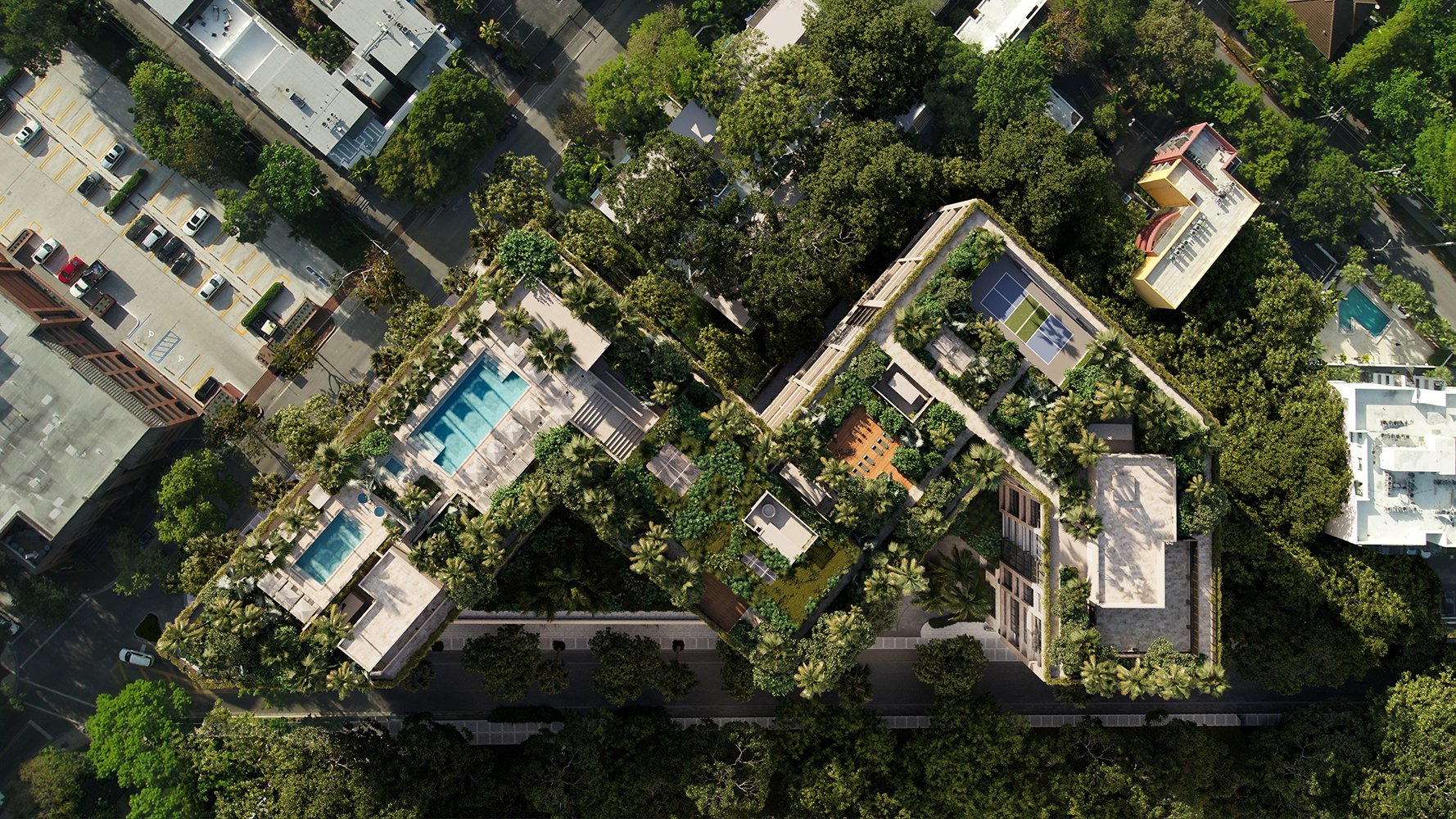
Coconut Grove has long appealed to buyers who prefer quiet confidence over performative glamour. The draw is lived-in and local: a walkable village rhythm, a dense canopy of mature trees, and a waterfront setting that can feel surprisingly intimate for Miami.
That context matters because two headline new-construction offerings now frame a decision that is less about surface finishes and more about philosophy. One is a fully branded, service-forward residential tower planned for 2699 S Bayshore Dr. The other is an ultra-boutique, design-authored concept on a prominent corner parcel at 3101 Grand Avenue. Both are pre-construction, and both pursue the same core instinct: privacy as a daily lifestyle, not a marketing line.
This guide from MILLION Luxury is built to help you choose the worldview that matches how you actually want to live.
Both projects put privacy at the center, including private elevator access, and both sell the idea that you can step out of Miami without leaving South Florida. The difference is what supports that promise.
Four Seasons Private Residences Coconut Grove is positioned as a standalone, no-attached-hotel Four Seasons branded residential tower planned as 20 stories with 70 residences. Public reporting has described it as the first standalone Four Seasons branded residences in Florida, with a groundbreaking reported in November 2025.
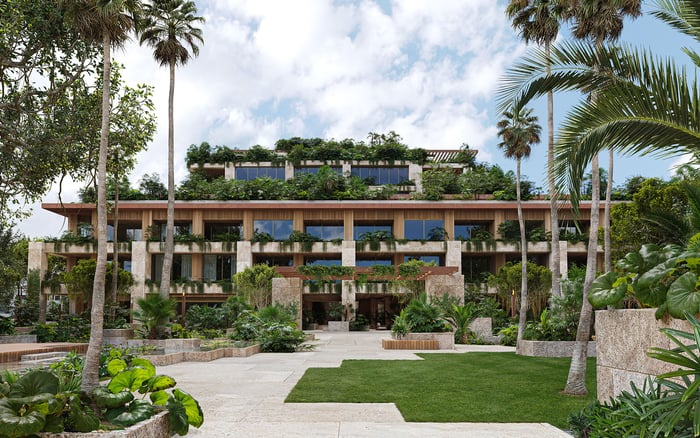
Ziggurat Coconut Grove, developed by Allen Morris Company, is intentionally small with just 19 residences. Its identity leans on architecture and landscape, with a stepped form and a biophilic narrative rather than a hotel brand and operating platform.
For buyers who value certainty, the Four Seasons proposition is clear: the residence is the asset, and the operating platform is the differentiator. In a standalone private-residences format, the intent is to protect resident life from public-facing activity through dedicated services, staffing, and amenity programming.
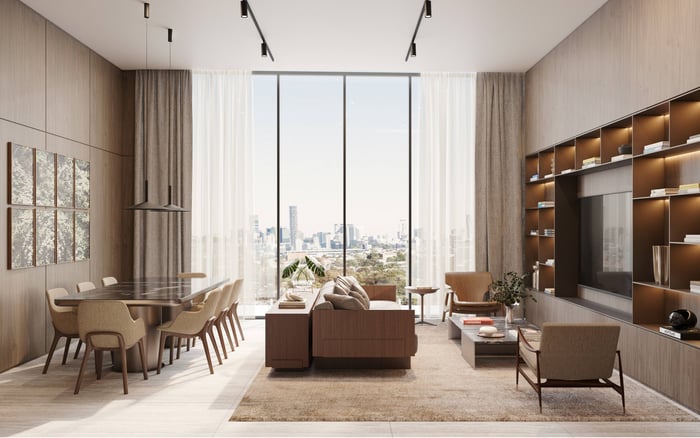
Design authorship matters here, too. The project has been disclosed as designed by architect Luis Revuelta with interiors by Michele Bönan. Sales materials emphasize floor-to-ceiling glass and outdoor terraces or balconies, positioning “unobstructed” Biscayne Bay views as a defining lifestyle advantage.
The typical buyer profile is someone who prioritizes consistent service standards, a predictable resident experience, and a building culture that feels curated without being social theater. If you have owned within a branded environment before, this will feel familiar.
For readers benchmarking options in the neighborhood, the branded-residence entry point can be useful, including Four Seasons Residences Coconut Grove.
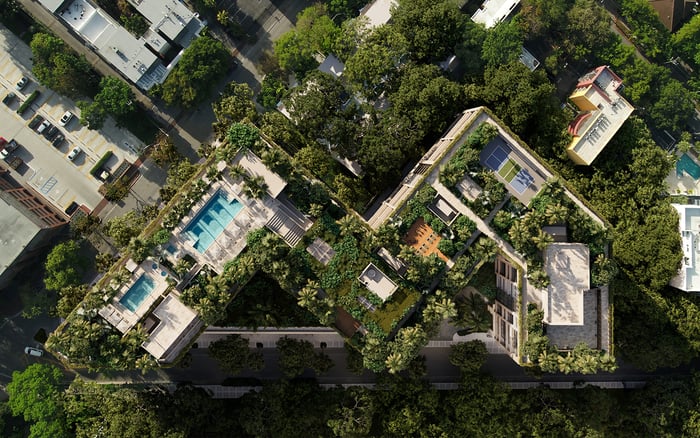
Ziggurat Coconut Grove is a different conversation. The question is not “What brand operates the building?” but “Who authored it, and what will daily life feel like?” It is described as a stepped, ziggurat-inspired form that integrates landscaping and greenery as a central feature. The team includes Oppenheim Architecture (architecture) and Collarte Interiors (interiors), reinforcing a design-led positioning.
The practical differentiator is scale. With only 19 residences, boutique is not a mood, it is an operating reality. Fewer homes can translate into fewer elevator trips, fewer shared moments in common areas, and a smaller overall social footprint. For some buyers, that is the entire point.
Marketing also highlights private elevator access and a rooftop amenity program with a pool and hydrotherapy-style wellness elements. A signature claim is a residents-only rooftop restaurant led by a Michelin-starred chef, framing exclusivity as something experienced through small, repeatable rituals rather than grand, crowded amenity decks.
To follow the project directly, Ziggurat Coconut Grove is positioned as a distinctive alternative to the larger tower model.
In Coconut Grove, “views” are not a single category. They are a choice with lifestyle consequences.
Four Seasons emphasizes elevated, unobstructed bay exposure, with marketing centered on Biscayne Bay outlooks. Floor-to-ceiling glass and expansive outdoor living are presented as essential to how the residences function, especially for buyers who want sunrise water light and long horizon lines.
Ziggurat’s view logic is different. Its positioning leans toward outlooks tied to the Grove’s village texture, layered greenery, and park adjacency. The lifestyle reads less as “tower over the bay” and more as “within a landscaped envelope,” where the view can be canopy and architecture as much as open water.
Practical takeaway: if you equate luxury with distance and horizon, you will naturally gravitate toward the taller, waterfront-forward proposition. If you equate luxury with intimacy and a controlled visual field, the stepped, biophilic approach may feel closer to a private villa in the sky.
The most valuable amenities are rarely the ones that photograph best. They are the ones you will actually use on a Tuesday.
At Four Seasons, wellness is positioned as a centerpiece. Public coverage has highlighted a Roman-bath-inspired spa and wellness concept described as “The Caesar Experience,” signaling a hotel-caliber approach even without an attached hotel.
At Ziggurat, wellness is expressed through smaller-scale, rooftop-oriented programming including hydrotherapy-style elements, alongside a broader emphasis on landscape integration. The rooftop restaurant concept is equally revealing. It suggests the building is curating a resident experience that feels like membership, where access itself is the amenity.
If your routine is structured around training, treatment, and recovery, the Four Seasons framing may align naturally. If your routine favors privacy, small gatherings, and a sense of belonging to a tiny community, Ziggurat can feel more personal.
Privacy is often treated like a single checkbox. In real life, it is a sequence of moments.
Both projects call out private elevator access in marketing materials, and that is meaningful. The more important nuance is choreography: where you park, how you transition from car to lobby, how often you share space, and whether your front-door experience reads as a home or a suite.
Four Seasons also highlights private elevator entry via a private foyer or elevator vestibule, reinforcing controlled thresholds and quiet separation between resident life and building operations.
Ziggurat’s ultra-low residence count changes the privacy math. With only 19 homes, circulation and exposure can feel inherently limited, even before you account for layout and design choices.
Your best next step is to treat “privacy” like a site-visit checklist, not a brochure promise.
Pricing is not just a number. It signals intent.
Four Seasons materials show pricing from $5.6M+ and describe a lineup that includes large residences and penthouses. It reads as a trophy, long-term hold for buyers who want a full-service environment and premium positioning.
Ziggurat pricing has been marketed in an approximate $2.3M to $8M range, creating a broader entry point while still reaching serious end-user territory. Public reporting has also noted a $138.5M construction loan and a targeted late-2027 delivery window, which many buyers interpret as forward momentum.
One clean way to read the split: Four Seasons sells operating certainty at the top of the market. Ziggurat sells scarcity and authorship, with boutique scale doing much of the work.
Some Grove buyers cross-shop Miami Beach for a different social tempo and a more beach-forward lifestyle. If that is you, the helpful comparison is not Grove versus Beach. It is operating model versus operating model.
A tower like Five Park Miami Beach can appeal to buyers who want a newer, design-conscious high-rise experience. If your interest leans more hospitality-anchored, Shore Club Private Collections Miami Beach and Setai Residences Miami Beach are natural references as you define how much service, branding, and lifestyle programming you actually want.
The point is not to equate buildings. It is to clarify your preference: a residential environment that feels like a private club, a quietly managed home base, or an extension of luxury hospitality.
Before you commit to either address, focus on decisions that materially affect long-term livability.
First, verify view corridors from your exact stack and elevation, and be precise about what you will consider “unobstructed.”
Second, confirm the privacy sequence: elevator access, foyer layout, and how residents and staff share, or do not share, circulation.
Third, review the operating plan. In brand-operated residences, services are part of the value proposition. In boutique projects, intimacy is the value proposition. Both come with tradeoffs.
Finally, align timeline expectations with what has been publicly disclosed. New construction can reward patient buyers, but patience is a strategy, not a personality trait.
Which is more private day to day? Ziggurat Coconut Grove can feel more secluded by scale, while Four Seasons emphasizes a privacy-forward operating model.
Is Four Seasons connected to a hotel at this address? It has been marketed as a standalone Four Seasons branded residential tower with no attached hotel.
What is the reported building scale for Four Seasons in the Grove? Public reporting describes a 20-story tower planned with 70 residences.
Who are the disclosed designers for Four Seasons? The architecture has been attributed to Luis Revuelta with interiors by Michele Bönan.
How many residences are planned at Ziggurat? Marketing and project information describe 19 residences.
Do both projects offer private elevator access? Both have marketed private elevator access, and you should confirm the details for your specific residence.
What is the wellness emphasis at Four Seasons? Wellness has been highlighted as hotel-caliber, including a Roman-bath-inspired spa concept described as The Caesar Experience.
What is a signature lifestyle feature at Ziggurat? Marketing highlights a residents-only rooftop restaurant led by a Michelin-starred chef, plus rooftop wellness elements.
What are the marketed price signals? Four Seasons has been shown from $5.6M+ in sales materials, while Ziggurat has been marketed around $2.3M to $8M.
What should I verify before signing in Pre-construction? Confirm view corridors, the privacy sequence, and the operating plan, then align your timeline with publicly disclosed milestones.
For tailored guidance on Coconut Grove inventory and positioning, connect with MILLION Luxury.
If branded residences are on your mind — as a home or as an allocation — we would be glad to share what we are seeing, privately.
Begin a quiet conversation