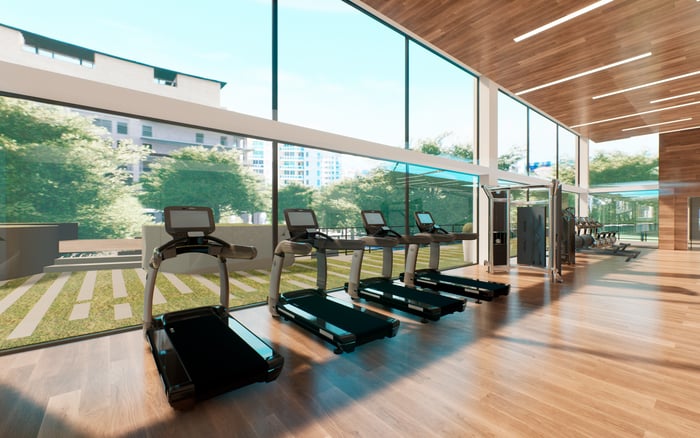
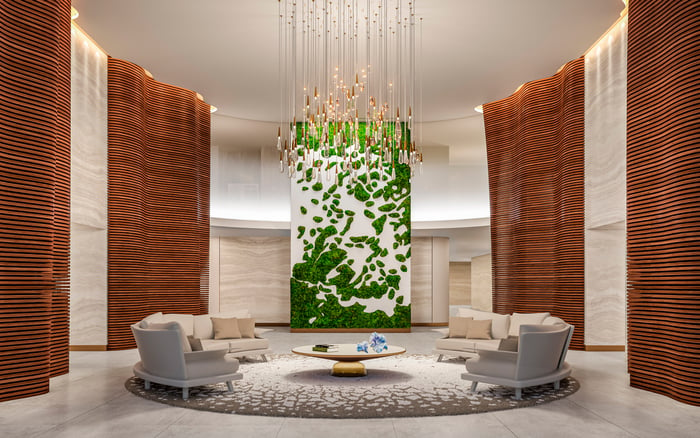
A buyer-oriented comparison of Boca Raton’s Alina Residences and Hallandale Beach’s Shell Bay by Auberge, focused on what golfers actually live with day to day: course character, access expectations, and lifestyle fit.
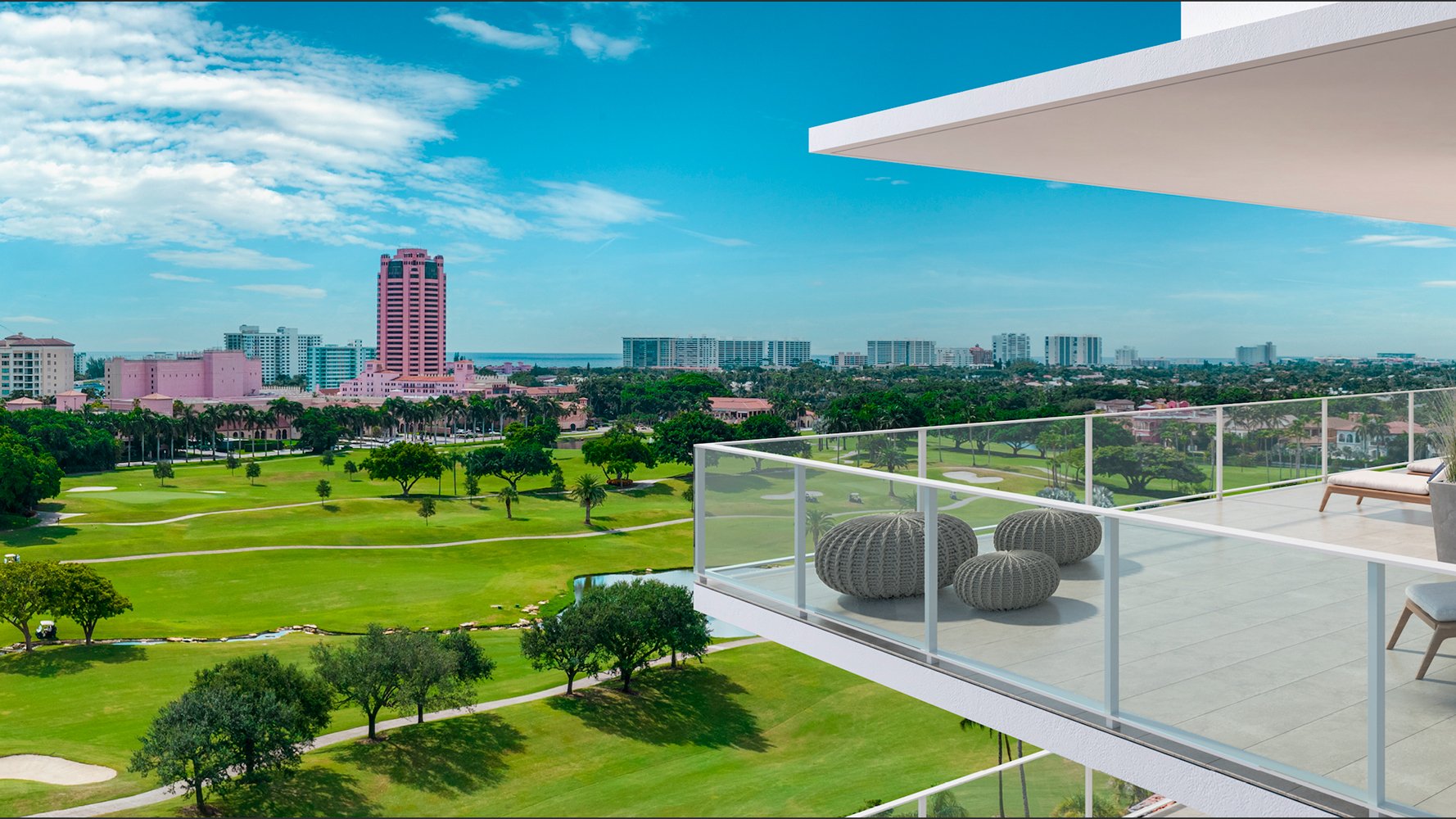
Golf-oriented real estate marketing often begins with a photo: a manicured ribbon of green, a water feature catching late light, and a balcony that suggests you will play whenever you feel like it. In practice, elite buyers in South Florida understand that the deciding factor is governance, not scenery. Architecture matters-but tee-time access is the lived experience.
That is why a comparison between Alina Residences Boca Raton and Shell Bay by Auberge Hallandale is so instructive. Both speak to a luxury audience, yet they typically serve different golfer profiles. One reads as an urban, design-forward base in Boca-ratón with optionality across private clubs. The other leans into a resort-led ecosystem where golf is positioned as a primary lifestyle pillar.
Because purchase decisions at this level are rarely about a single amenity, this editorial focuses on what a golfer actually experiences day to day: how courses tend to play, how access is commonly managed, and what to verify before committing capital.
Architecture is not simply about who drew the routing or how photogenic the finishing hole looks. For owners who play often, architecture shows up as pace, variety, and whether the course continues to hold your attention across seasons.
In Boca-ratón, many luxury buyers who choose a residence like Alina are not necessarily buying a golf property. They are buying a high-comfort, low-friction home base near dining, culture, and the city’s private-club landscape. That shifts the architecture conversation: rather than living on one course, you are choosing a home that can support multiple golf identities. You may prefer an old-Florida club vibe one day and a more modern, tournament-minded test the next-depending on where you secure membership.
In Hallandale, Shell Bay’s positioning tends to register differently. When a project is oriented around a branded hospitality experience, course architecture is often curated as part of a larger arrival sequence: the first-tee moment, the practice environment, service standards, and how the day flows from drop-off to the 19th hole. Shot values still matter, but so does how the course performs as a resort-grade product.
If you are a purist, you will care about green contours, run-off options, the way hazards shape decision-making, and whether the course rewards imagination rather than simply penalizing misses. If you are a lifestyle golfer, you may care more about conditioning, caddie culture, practice facilities, and the predictability of your round. The right choice depends on which kind of “architecture” you actually mean.
At this end of the market, tee times are an access issue before they are a scheduling issue.
For an owner at Alina, the practical advantage is flexibility. A premier Boca-ratón address can place you within reach of multiple clubs, and that optionality can be strategically valuable. If your preferred club becomes crowded seasonally, changes policies, or no longer aligns with your social circle, your residence does not lose its relevance. You can pivot.
The trade-off is that access is rarely inherent. Unless your purchase includes a defined relationship with a specific club, tee-time priority depends on membership terms and a club’s internal rules. Even in very high-end environments, there can be meaningful distinctions between membership categories, seasonal usage patterns, and how guest play is handled.
For Shell Bay by Auberge, the appeal is often the inverse: a more vertically integrated experience where golf is a centerpiece of the lifestyle narrative. In that model, tee-time access may feel more direct, but it can also be more formal. Resort-led environments tend to be policy-driven, with explicit rules around booking windows, guest privileges, event closures, and how access is prioritized across different user groups.
In both cases, sophisticated buyers should treat tee-time access as due diligence-not assumption. Get clarity on what is contractual, what is customary, and what could change.
Luxury golf living in South Florida is as much about what happens off the course as what happens on it.
Boca-ratón often attracts buyers who value a composed, established cadence: mornings that can begin with a workout and a round, then end with a quiet dinner-without feeling like you are living inside a tourism corridor. A residence like Alina can suit buyers who want high design and lock-and-leave convenience while maintaining a broader social radius. For many, it is a second-home solution that does not force all leisure into one club’s calendar.
Hallandale, by contrast, can feel more animated and more elastic-closer to the rhythm of coastal resort life and the broader energy of Broward and North Miami-Dade. A golf-centered environment anchored by a hospitality brand may suit buyers who want service to be part of the routine, and who enjoy a social scene that expands when friends visit.
If your golf is tied to entertaining, a more resort-coded ecosystem can be compelling. If your golf is tied to ritual and discretion, Boca-ratón can feel like a cleaner fit.
Because the Fact Table provided for this topic does not specify access terms, architecture credits, or membership categories, the most responsible approach is to focus on the verification process buyers should require from sellers and clubs before relying on any implied promise.
Here is a practical framework to use with your attorney and advisors:
Is golf access deeded, contractual, or simply an amenity adjacent to the residence? If it is contractual, what triggers termination or policy changes?
Ask how far in advance you can book, whether there are resident-preferred windows, and how peak-season demand is handled.
If you plan to entertain, clarify guest limits, fees, and whether a member must be present.
Tournament calendars, aeration schedules, and private buyouts matter more than you think when you play regularly.
Parking, bag storage, locker availability, practice facility access, and the time from door to first tee are the real luxury metrics.
Some buyers want a fast, athletic pace. Others prefer a social round. Ask what is encouraged and what is discouraged.
This is also where a broader South Florida lens can help. Some buyers split time between multiple markets, using different residences as lifestyle anchors. A Brickell base like 2200 Brickell can function as a city-week hub, while Boca-ratón or Hallandale becomes the golf-and-coast counterpart. The point is not to collect addresses, but to design a calendar that reflects how you actually live.
If you are the kind of player who studies greens complexes and wants a course that rewards nuance, architecture will feel primary. But even architecture-driven buyers eventually confront access reality: you cannot enjoy design if you cannot secure the times that suit your life.
For many high-net-worth households, the most useful hierarchy is:
First, verify access rights and predictability.
Second, evaluate course character and whether you will still enjoy it after 40 rounds.
Third, confirm that the residential experience matches your day-to-day standards.
In this framing, Alina’s advantage is that it is not a single-course bet. It can be an elegant platform for Boca-ratón life with a range of golf pathways. Shell Bay by Auberge can be compelling when you want a more concentrated ecosystem, where the golf experience sits inside a larger, service-driven narrative.
If you want to sharpen the comparison further, it helps to look at how other coastal luxury residences express lifestyle priorities. For example, 2000 Ocean Hallandale Beach signals a different kind of oceanfront privacy and design-an important distinction if your priority is water-first living with golf as an occasional pursuit rather than the organizing principle.
Buyers are rarely monolithic, but patterns do emerge.
Tends to resonate with:
Golfers who want club choice and the ability to change course “identity” over time.
Owners who value a refined, walkable Boca-ratón routine and a quieter social profile.
Second-home buyers who prioritize design, convenience, and low operational overhead.
Shell Bay by Auberge Hallandale
Tends to resonate with:
Golfers who want the course and the service culture to operate as a single ecosystem.
Entertainers who prefer a more resort-adjacent social tempo.
Buyers who want a branded, experience-forward environment where leisure is curated.
Neither preference is more sophisticated. They simply reflect different philosophies of luxury: flexibility and discretion versus integration and service.
In golf-adjacent real estate, the most durable value is not a fairway view. It is clarity around what you are buying.
If you are purchasing for golf, insist on written definitions of access, priority, and any financial obligations that come with participation. If the relationship is optional, treat it like a separate acquisition with its own risk profile. If the relationship is integral, treat it like a shared-governance asset whose rules can evolve.
Approached this way, architecture becomes what it should be: a pleasure metric. Access becomes what it must be: a contractual metric.
Is Alina Residences Boca Raton a golf community? It is better understood as a luxury Boca-ratón residence, with golf typically pursued through nearby clubs rather than an in-community course.
Is Shell Bay by Auberge oriented around golf? It is commonly positioned as a resort-led lifestyle environment where golf is a central feature of the overall experience.
What matters more for daily enjoyment: course design or tee-time priority? Tee-time priority usually wins, because even a great course loses value if access is inconsistent.
Do fairway views guarantee golf access? No. Views are real estate; access is policy, membership, and contractual rights.
How should I verify tee-time access before buying? Request written terms covering booking windows, priority, guest play, fees, and closure schedules.
Can tee-time rules change after purchase? Yes. Club policies and operating rules can evolve, so clarity on change mechanisms is important.
Which location feels more discreet day to day, Boca-ratón or Hallandale? Many buyers experience Boca-ratón as more quietly established, while Hallandale can feel more resort-energetic.
Is it smarter to live on one course or keep club optionality? Optionality can reduce lifestyle risk, especially if your preferences or club dynamics shift over time.
What should I ask about guest golf for entertaining? Ask about guest limits, required accompaniment, fees, and whether prime times are restricted.
Do I need a golf-focus residence if I only play seasonally? Not necessarily; a design-forward home base can pair well with seasonal memberships or guest arrangements.
For a discreet conversation and a curated building-by-building shortlist, connect with MILLION Luxury.
If branded residences are on your mind — as a home or as an allocation — we would be glad to share what we are seeing, privately.
Begin a quiet conversation