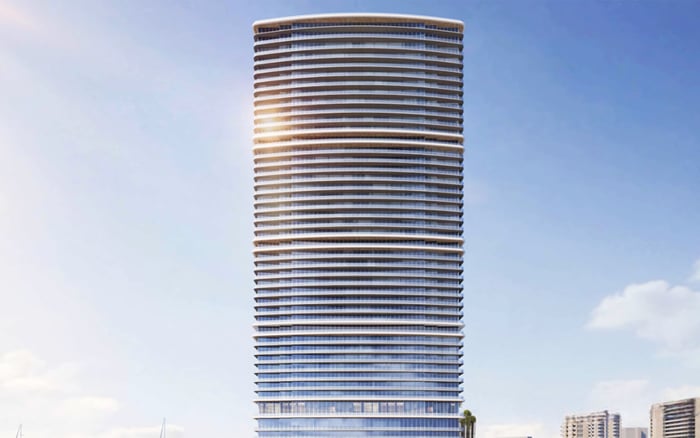
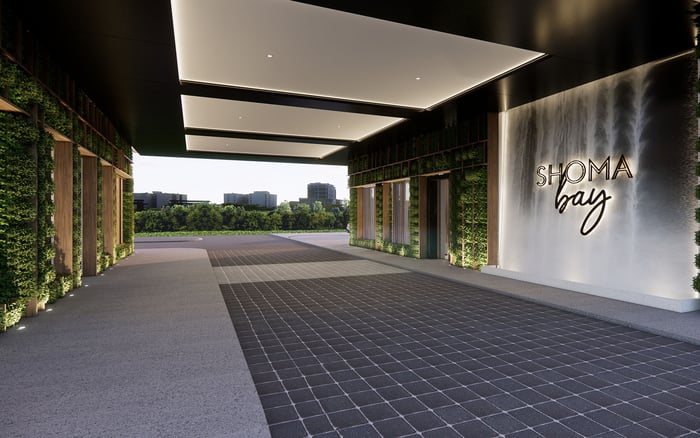
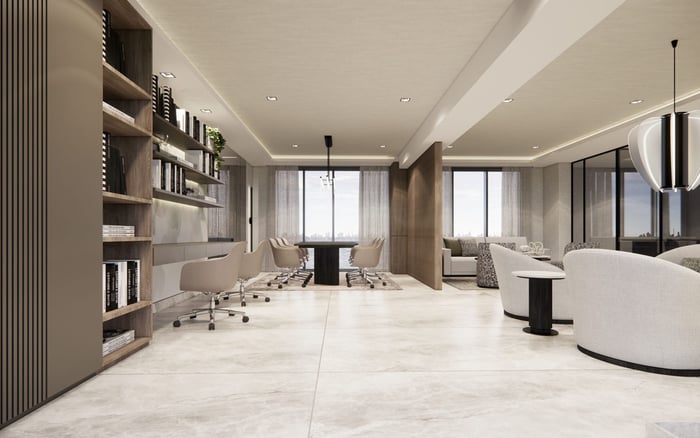
Shoma Bay in North Bay Village presents a quieter waterfront luxury argument, pairing mixed-use convenience with bay-oriented living and a measured view of Brightline access.
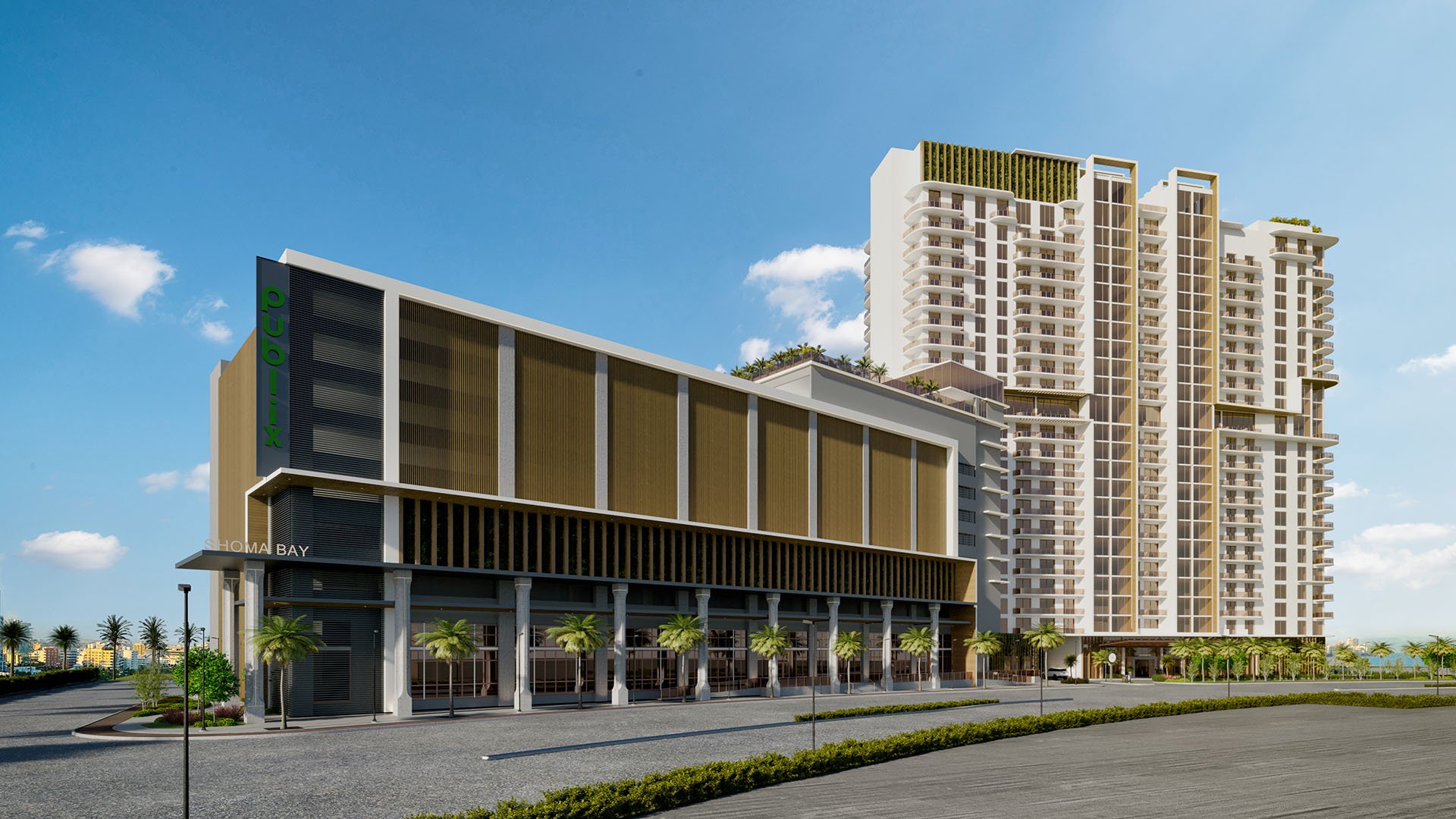
Shoma Bay North Bay Village belongs to a specific shift in South Florida luxury: a move away from visibility as the primary amenity and toward daily ease, discretion, and waterfront calm. In North Bay Village, the appeal is not about competing with the region’s loudest addresses. It is about living between mainland Miami and Miami Beach while preserving a softer residential rhythm close to the water.
That distinction matters. South Florida buyers who already understand South Beach, Brickell, and Wynwood also understand the tradeoff that comes with high-energy districts. They deliver restaurants, nightlife, offices, and cultural density, but they also bring congestion and a constant public tempo. Shoma Bay is framed for a buyer who wants the city within reach without making that intensity the center of the home experience.
The project’s waterfront setting gives the concept its emotional anchor. Bay and skyline views are not merely decorative here. They are part of the privacy calculus, shaping a day that can begin and end with a visual sense of space. The emphasis on indoor-outdoor living reinforces that quieter luxury language, where terraces, light, and water carry as much weight as traditional status markers.
Shoma Bay is positioned as a mixed-use development rather than a standalone condominium tower, and that distinction is central to its buyer case. Its program combines residences, amenities, and a retail component, creating a version of convenience that feels residential rather than theatrical. For primary residents, that can make everyday routines feel more contained. For pied-à-terre buyers, it can make shorter stays more efficient and less dependent on constant driving.
The better way to read Shoma Bay is as a lifestyle platform: waterfront residence, serviceable daily setting, and access to surrounding Miami nodes without choosing the highest-traffic neighborhood as home base.
This is why the vocabulary around the property is precise: Shoma Bay North Bay Village, North-bay-village, Waterview, New Project, Second-home, Investment. Those terms describe more than search behavior. They describe a preference for new residential product in a calmer waterfront pocket, with enough practical infrastructure to support both full-time use and episodic ownership.
The title question around Brightline proximity should be handled with discipline. The case for Shoma Bay is not that the rail station is at the doorstep, nor should buyers rely on unsupported timing claims when evaluating a purchase. The stronger argument is access optionality: North Bay Village’s location between mainland Miami and Miami Beach can fit a lifestyle in which regional mobility matters, while the residence itself remains removed from the most active urban cores.
For a buyer who uses Brightline as part of a broader South Florida pattern, the relevant question is not simply, “How close is the station?” It is, “Can I preserve a quieter waterfront home environment while maintaining workable access to the mainland?” Shoma Bay’s setting allows that question to be considered seriously, especially for residents who value Miami Beach proximity but do not want to live inside a nightlife district.
This is quiet luxury in its most practical form. It does not depend on excessive claims. It depends on a residential address that can serve multiple versions of life: weekday routines, seasonal use, family visits, work travel, and regional movement. Brightline becomes part of the larger access conversation, not the sole reason to buy.
Shoma Bay’s strongest audience includes buyers who want waterfront living without necessarily seeking Miami’s most visible address. A primary resident may see value in a calmer setting with bay orientation and mixed-use convenience. A pied-à-terre buyer may see value in a lock-and-leave lifestyle that feels more grounded than a hotel-branded scene.
The project also speaks to buyers fatigued by over-animated luxury. In this segment, restraint is not a compromise. It is the amenity. A residence that provides water, skyline outlooks, indoor-outdoor flow, and practical retail adjacency can feel more valuable than a property defined primarily by social energy.
That does not make Shoma Bay isolated. Its North Bay Village position is precisely the point: balanced between mainland Miami and Miami Beach, close enough to participate in the region, but set apart enough to support privacy and decompression. For the right buyer, that balance is the luxury.
The most important due diligence is personal, not generic. Buyers should study how they actually move through Miami: mainland meetings, beach dinners, airport patterns, Brightline use, school needs, boating habits, and weekend routines. A waterfront home that feels serene on paper must also support the real cadence of daily life.
Buyers should also evaluate the mixed-use component carefully. Retail within a residential development can be a major convenience, but the quality of that experience depends on execution, programming, and how it interacts with privacy. The best outcome is not simply having retail nearby. It is having retail that supports daily life without overwhelming the residential atmosphere.
Finally, view orientation should be considered part of the value proposition. Bay and skyline outlooks are central to the Shoma Bay story, and indoor-outdoor living is part of the reason the project reads as a quieter alternative to more intense Miami districts. For buyers prioritizing calm, the residence should feel as composed at sunset as it does on a sales floor.
Is Shoma Bay presented as a waterfront project? Yes. The project is discussed here as a waterfront residential option in North Bay Village.
Is Shoma Bay only a condominium tower? No. It is positioned as a mixed-use development combining residences, amenities, and a retail component.
Where is North Bay Village located in relation to Miami? North Bay Village sits between mainland Miami and Miami Beach, giving it a balanced residential position.
What type of buyer may consider Shoma Bay? It may appeal to buyers who want a quieter waterfront setting with practical access to surrounding Miami destinations.
Does Shoma Bay suit primary residents? Yes. The project is presented as appealing to primary residents who want waterfront living with convenience.
Does Shoma Bay suit pied-à-terre buyers? Yes. Its quieter setting and mixed-use format may appeal to buyers seeking a South Florida second home.
Is Brightline proximity the main reason to buy? It should be viewed as part of a broader access conversation, not as a standalone purchase thesis.
Can buyers rely on exact Brightline drive times here? Buyers should verify current routes and timing independently, since the stronger case is lifestyle access rather than a fixed commute claim.
How does Shoma Bay differ from South Beach or Brickell living? It is framed as a calmer waterfront alternative to higher-traffic Miami luxury districts.
What is the main luxury argument for Shoma Bay? The argument is quiet waterfront living with bay and skyline views, indoor-outdoor flow, and mixed-use convenience.
When you're ready to tour or underwrite the options, connect with MILLION.
If branded residences are on your mind — as a home or as an allocation — we would be glad to share what we are seeing, privately.
Begin a quiet conversation