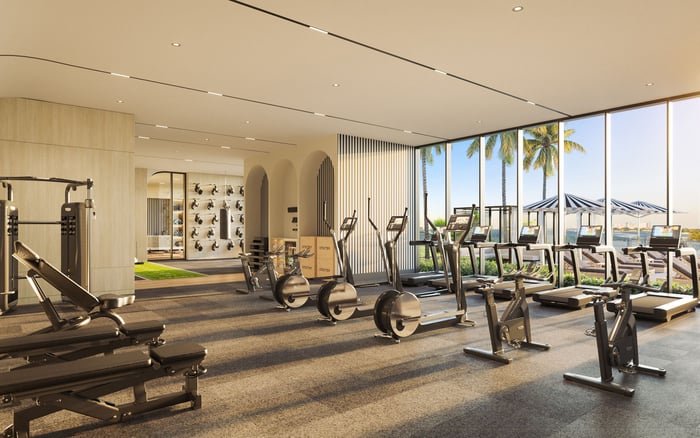
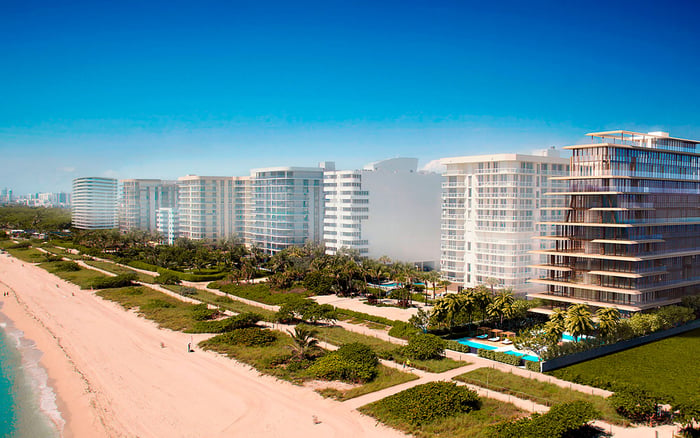
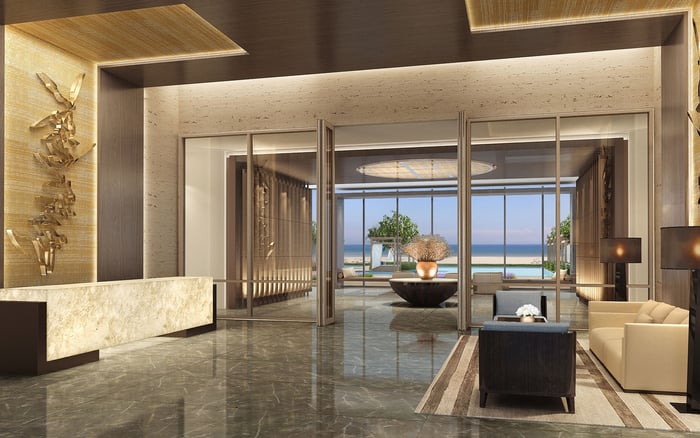
A buyer-focused MILLION guide to the five beachfront residence profiles best suited to cold plunge access, recovery routines, and wellness-led coastal living in South Florida.
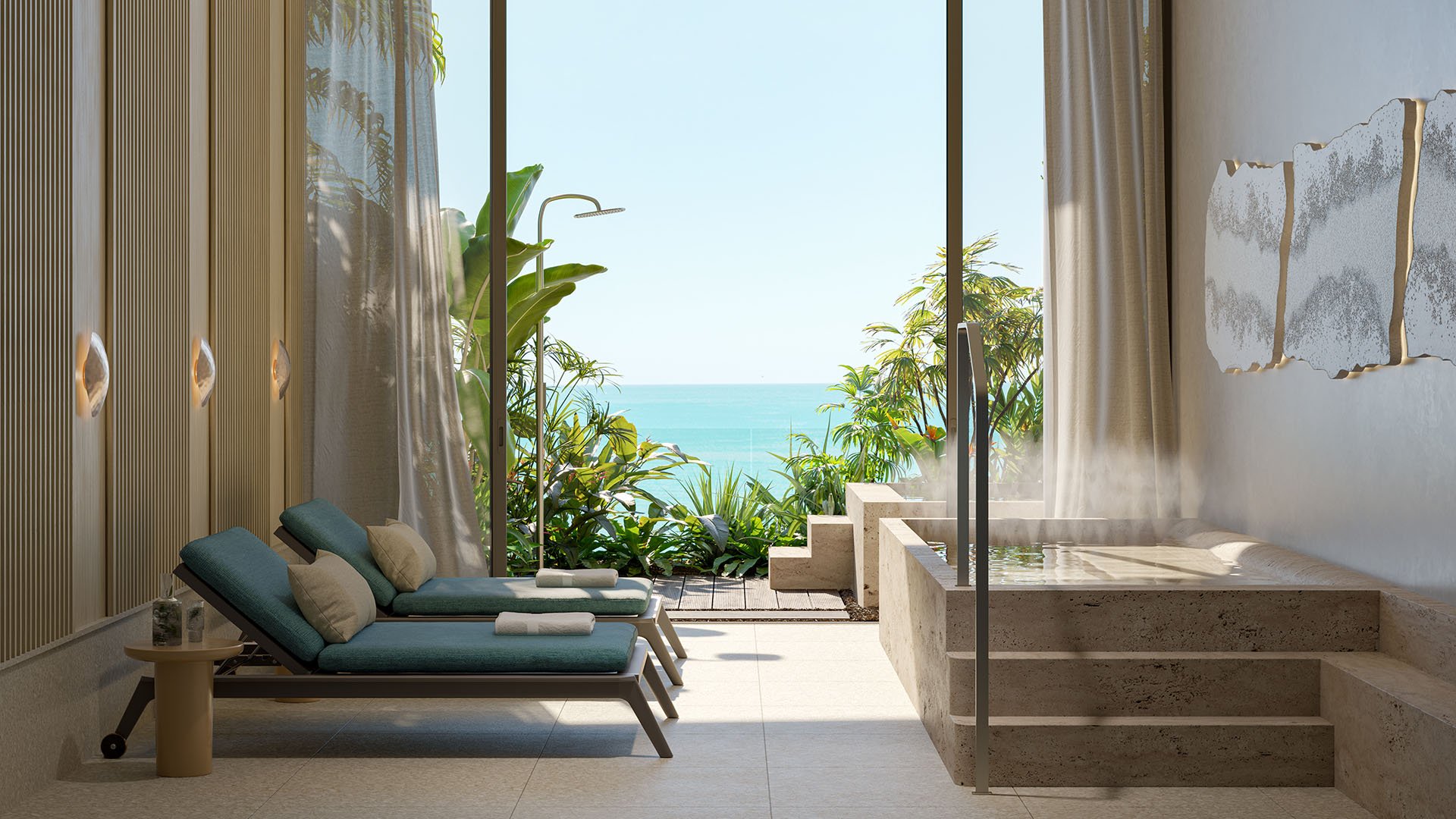
For a certain South Florida buyer, the beachfront residence is no longer judged by sand, glass, and sunrise alone. The more precise question is whether the home supports how the owner actually lives: early training, cold immersion, mobility work, sauna sessions, massage, hydration, and a return to privacy before the first call of the day.
Cold plunge access has become shorthand for a broader wellness standard. It is not simply a tub of chilled water. It is sequence, proximity, discretion, and consistency. A plunge that requires a car, an elevator maze, or a crowded amenity deck is fundamentally different from one integrated into a private terrace, spa suite, club level, or service-rich residential environment.
For MILLION readers, the most compelling beachfront residences treat recovery as infrastructure. Ocean views still matter. So do ceiling heights, arrival experience, staff quality, and floor plan. But for buyers who train, travel, and entertain at a high level, the recovery circuit has moved from indulgence to operating system.
1. Direct beachfront residence - key identifier
The strongest choice is the residence where the recovery routine sits closest to the shoreline experience. The ideal daily rhythm is simple: beach walk, swim, training session, cold plunge, shower, breakfast, and work. The fewer transitions involved, the more likely the routine becomes permanent rather than aspirational.
Buyers should look for a residence where wellness access is not hidden behind complicated scheduling. Direct beachfront living is most powerful when the plunge, pool, spa, and changing areas feel connected to the home rather than treated as remote amenities.
2. Spa-level condominium residence - key identifier
A spa-level condominium residence suits the buyer who wants recovery without managing every detail personally. The defining feature is not one amenity, but a complete circuit: cold exposure, heat therapy, treatment rooms, quiet lounge space, and a seamless path back to the private residence.
This profile is particularly attractive for owners who divide time between cities. When the building’s wellness environment is intuitive, polished, and well staffed, the owner can return after travel and reestablish a routine immediately.
3. Private-pool residence - key identifier
A private-pool residence appeals to buyers who want control over timing and atmosphere. Even when a building offers an amenity-level plunge, a residence with its own outdoor water environment can create a more personal recovery ritual, especially after evening training or a long-haul arrival.
The key is privacy. A terrace, cabana, or secluded pool area can support a quiet sequence of cold water, warm shower, stretching, and rest without the social pressure of shared spaces. For many luxury buyers, privacy is the real amenity.
4. Wellness-club residence - key identifier
The wellness-club residence is for the buyer who wants structure around recovery. Rather than treating cold plunge as a standalone feature, this profile places it within a larger lifestyle of fitness, bodywork, nutrition, and performance maintenance.
The best version has recovery access that feels curated but not theatrical. It should support serious daily use while remaining discreet enough for owners who do not want their wellness habits to become part of the social scene.
5. Lock-and-leave beachfront residence - key identifier
The lock-and-leave beachfront residence is designed for owners who arrive, reset, and depart without friction. Recovery access matters here because the owner may not have time to reassemble routines from scratch during each stay.
For this buyer, service and predictability are essential. A residence that makes the plunge, pool, spa, trainer, and treatment room easy to access can turn a three-day stay into a restorative interval rather than simply another beautiful weekend by the water.
A cold plunge can photograph well and still disappoint in daily life. The real test is operational. Is it available when owners are most likely to use it? Is it positioned near showers, towels, lockers, or changing areas? Does the route feel discreet? Is the plunge part of a coherent wellness sequence, or is it simply a decorative amenity?
For buyers comparing South Florida beachfront addresses, the language of search often begins broadly: oceanfront setting, beach access, pool environment, Miami Beach, Sunny Isles, and Surfside. Those labels are useful, but they do not answer the deeper question. The deeper question is whether the property supports recovery as a repeated habit.
That distinction is where the luxury market becomes more nuanced. A spectacular lobby may impress guests, but a thoughtful spa corridor may matter more to the owner. A dramatic pool deck may look compelling, but a quiet plunge area with privacy, service, and immediate shower access may deliver more value over time.
Start with the daily path. Imagine leaving the residence at 6:30 a.m. after a short workout or beach run. Count the doors, elevators, turns, conversations, and staff interactions between your home and the recovery area. In luxury real estate, friction often hides in the route.
Next, consider social exposure. Some buyers enjoy an active amenity deck. Others want recovery to feel almost invisible. Neither preference is wrong, but the building has to match the owner’s personality. Cold immersion is intensely personal, and the best environment is the one the owner will actually use.
Finally, look at the relationship between wellness and service. A refined recovery offering should feel maintained, calm, and easy to access. Temperature, cleanliness, towel service, reservation policy, and quiet hours can be as important as design. For a buyer who values routine, the backstage details are the luxury.
Beachfront living already offers a natural recovery setting: salt air, open horizon, morning light, and immediate contact with water. Cold plunge access amplifies that setting by adding intentionality. It gives the owner a defined reset point between exertion and the rest of the day.
This is why recovery-focused buyers often think beyond traditional amenity comparisons. They are not simply asking which property has more features. They are asking which residence can help them feel better, sleep better, travel better, and maintain a high-performance lifestyle with less effort.
For South Florida’s premium market, that question is becoming central. The best beachfront residence is no longer only a place to look at the ocean. It is a place to recover beside it.
What should buyers prioritize first in a recovery-focused beachfront residence? Prioritize proximity and ease of use. A cold plunge that is simple to reach will usually be more valuable than one that looks impressive but is inconvenient.
Is a private cold plunge better than a shared building plunge? It depends on the owner’s habits. Private access favors discretion, while a well-run shared wellness area may offer broader spa and service support.
Does cold plunge access add lifestyle value for second-home owners? Yes, especially when visits are short. A ready-to-use recovery circuit can help owners reset quickly after travel.
Should buyers inspect the recovery areas in person? Yes. The route, privacy, maintenance, and atmosphere are difficult to judge without walking the property.
How important is the pool environment for recovery-minded buyers? Very important. A calm pool setting can extend the recovery ritual beyond the plunge itself.
Are beachfront residences naturally better for wellness routines? They can be. Immediate access to light, water, and outdoor movement can support a more consistent routine.
What makes a spa amenity feel truly luxury? Discretion, maintenance, intuitive layout, and service quality usually matter more than the number of features.
Should buyers consider privacy before amenity count? Yes. For many owners, a quieter recovery experience will be more useful than a larger but more public amenity deck.
Can a lock-and-leave residence still support serious wellness habits? Yes, if the building makes fitness, plunge access, spa treatment, and daily service easy to activate.
What is the best way to compare recovery-oriented residences? Compare the daily routine, not just the brochure. The best residence is the one that makes recovery feel effortless.
When you're ready to tour or underwrite the options, connect with MILLION.
If branded residences are on your mind — as a home or as an allocation — we would be glad to share what we are seeing, privately.
Begin a quiet conversation