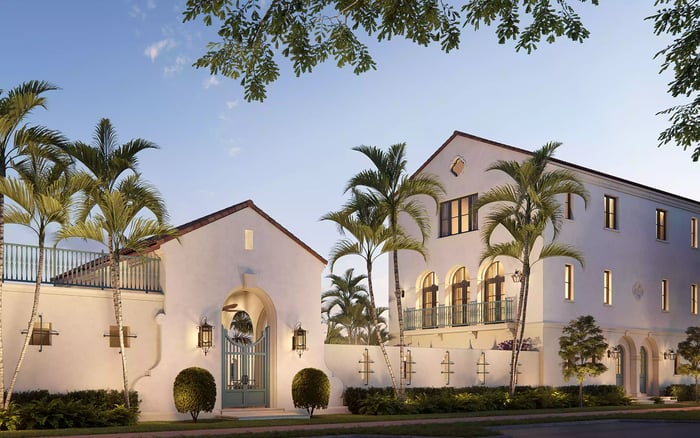
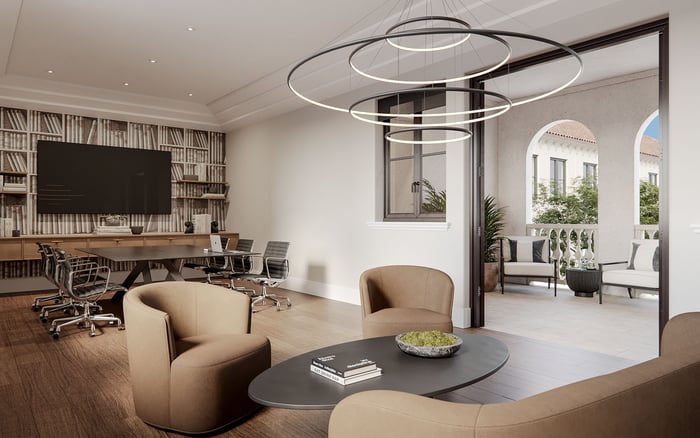
For Coral Gables buyers, the luxury conversation often turns practical the moment children enter the picture. The question is not simply which building feels more refined. It is which address makes school life workable: admissions timelines, daily drop-off patterns, after-school activities, and the commute reality that quietly governs family time. This guide frames Coral Gables living through two lenses: the near-term mechanics of private-school waitlists, and the long-term ease of moving through the city. We compare decision-making considerations for **The Village at Coral Gables** and **Ponce Park Coral Gables**, then expand the view to nearby lifestyle anchors that can further reduce friction for families balancing demanding schedules.
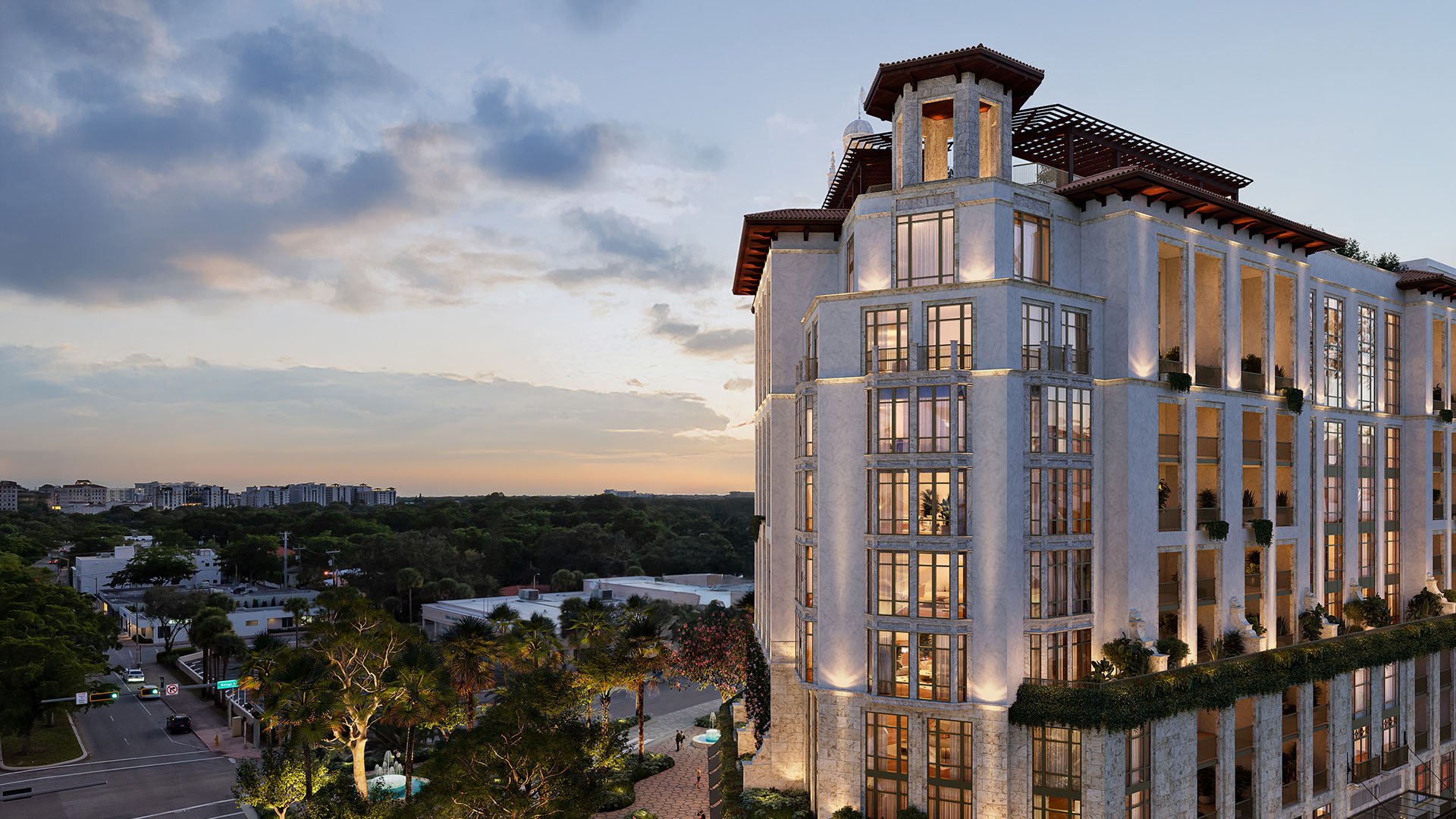
In Coral Gables, luxury is rarely loud. It shows up in proportion, shade, and the simple ability to stay on time without rushing. For households navigating private-school admissions, the home you choose becomes a scheduling instrument: a base that either streamlines the day into something elegant, or turns it into a chain of small compromises.
Comparing The Village at Coral Gables and Ponce Park Coral Gables is less about declaring a universal “winner” and more about identifying which one aligns with your family’s operating system. The most satisfied buyers tend to decide from the calendar outward: application cycles, sibling schedules, carpool contingencies, and the reality that a 20-minute delay becomes an hour when it repeats every weekday.
Because private-school demand can shift, the most resilient strategy is to select an address that stays convenient even if your plan changes. In practice, that means choosing for commute optionality, walkable daily needs, and routes that remain workable during peak congestion.
Waitlists can feel opaque because the variables are personal: grade-level capacity, family fit, and timing. What stays consistent is the advantage held by families who prepare for more than one outcome.
A buyer evaluating Coral Gables should think about admissions in three lanes:
First, timing. A move that closes after application deadlines can create a year of logistical improvisation. When a purchase aligns with the admissions cycle, it becomes easier to present stability and avoid mid-year pivots.
Second, redundancy. A single “dream school” plan is emotionally clean and operationally risky. The more experienced approach is to maintain at least one backup option-and to choose a home that doesn’t penalize you if the backup becomes the primary.
Third, flexibility. Even when a child lands exactly where you hoped, the daily schedule evolves. Activities, tutoring, sports, and arts expand the radius. Your home should be positioned so your weekly routine can grow without becoming inefficient.
In Coral Gables, this is where the building choice starts to matter. An address that supports multiple route options and nearby services can reduce friction at every stage, from preschool drop-off to the later years of after-school commitments.
For families who thrive on structure, The Village at Coral Gables can be assessed as a hub. The question is not only how the residence lives, but how the surrounding area behaves during the school week.
Consider the morning pattern: do you prefer a consistent departure time, a predictable route, and a routine that doesn’t require multiple detours for coffee, errands, or forgotten items? A residence close to daily essentials can materially change how calm mornings feel-especially with multiple children and staggered start times.
Another advantage for structured households is consolidation. The best “family luxury” is often not an extra room, but fewer stops. When groceries, quick pharmacy runs, and casual meals are close enough to fold into the day, the school run stays the primary event rather than the first link in a long chain.
From a buyer’s perspective, the evaluation should include:
How quickly you can re-enter major routes after drop-off.
Whether common errands can be handled without crossing the most congested corridors.
Whether weekends feel effortless, not only weekdays.
If your household values polished predictability, a Coral Gables base can also be complemented by lifestyle destinations that keep leisure close to home. For example, some families maintain a second “city key” for weekends or business adjacency, using a Brickell residence like 2200 Brickell as a strategic counterpart when schedules extend beyond the Gables.
Ponce Park Coral Gables appeals to the family that wants logistics to feel lighter. Some households prefer a rhythm where the day can change without consequence: a last-minute playdate, an earlier pickup, an unplanned appointment, or an after-school event that shifts the route.
In that scenario, what matters is not merely drive time, but the number of decisions required to make the day work. Walkable convenience and nearby services reduce the mental overhead of planning.
Buyers should also evaluate the “between times,” the quiet hours that ultimately determine quality of life: the 30 minutes after drop-off, the window before pickup, and the short gaps between activities. The right address turns those gaps into usable time-whether that means a quick workout, a coffee meeting, or handling a few tasks without repeatedly returning to the car.
This is also where Coral Gables becomes part of a broader South Florida map. If you frequently move between Coral Gables and the water, a coastal option for reset days can be a valuable complement. A place like 57 Ocean Miami Beach can serve as a weekend counterpart for families who want the ocean within reach without rethinking their primary weekday base.
Families often underestimate how quickly commutes become emotional. Every repeated delay compounds. In the luxury category, commute efficiency isn’t a practical footnote. It’s a lifestyle asset.
When comparing The Village at Coral Gables and Ponce Park Coral Gables, treat commute planning like a design brief:
Route optionality matters. If one route fails, do you have an alternate that doesn’t add meaningful time? Coral Gables can be forgiving if you can pivot.
Peak-hour resilience matters. Your “best case” drive time is less important than the drive time you can count on during school traffic.
Staging matters. Where do you park for a quick pickup? Can you arrive early and wait comfortably? Is it easy to leave without a bottleneck?
Carpool logic matters. If your household participates in carpools, an address that’s easy for other parents to access becomes a social advantage as well as a time saver.
This is also where some households choose to hedge their week with a second location that reduces cross-town pressure for work or events. A Downtown Miami residence like Aston Martin Residences Downtown Miami can be a deliberate choice for buyers who want a polished base near the city core while keeping the primary family routine anchored in Coral Gables.
If private-school outcomes can shift, the safest move is to choose a home that performs well across multiple futures. Here is a discreet framework that tends to drive better decisions.
Start with the week, not the weekend. Many residences “sell” beautifully on Saturday. But school life is Monday through Friday. Picture your actual day: the start time, the pickup, the after-school activity, and the evening reset.
Run the two-scenario test. Scenario A is your first-choice school. Scenario B is the plausible alternate. In both scenarios, ask whether the home still feels effortless.
Measure the hidden commute. Not just school to home, but school to activities, home to appointments, and the constant short drives that create the texture of family life.
Decide your tolerance for variability. Some families want a consistent, predictable flow. Others can handle a day that changes shape. The Village at Coral Gables can be evaluated for how well it supports a composed, repeatable routine. Ponce Park Coral Gables can be evaluated for how gracefully it absorbs improvisation.
Ultra-premium buyers increasingly treat South Florida like a network rather than a single pin. A second residence is not always about glamour. Often, it’s about reducing friction at specific times of year.
During admissions season, families may be attending events, interviews, or meetings that pull them across the city. During certain weeks, a residence closer to the coast, the core, or a different corridor can be a pragmatic asset.
For example, some families choose a wellness-oriented retreat that becomes an antidote to a packed calendar. A Bay Harbor Islands option such as The Well Bay Harbor Islands can function as a decompression setting for weekends, while Coral Gables remains the operational base for school.
The point is not to complicate life with multiple homes. It is to ensure the home portfolio reflects how your family actually lives-where time is lost, and where it can be reclaimed.
Even with the most elegant finish package, the purchase should be evaluated like a family-operations decision.
Confirm daily needs within the neighborhood: quick dining, basic retail, fitness, and services that keep weekdays efficient.
Plan for caregiver and household staff logistics: arrival windows, parking, and predictable access. Small frictions here amplify quickly.
Stress-test pickup days: when you’re running late, what is the least painful path to recover? Your home should not require heroics to stay on schedule.
Design the home for reality: mudroom-like entry habits, storage for backpacks and sports gear, and a dedicated spot for charging devices and organizing the next day. True luxury is when order is built in.
The Village at Coral Gables vs. Ponce Park Coral Gables is best decided by how you want your days to feel. One household values structured predictability. Another wants walkable ease and flexibility. Both can be “right,” but only one will feel effortless when the school year is in full motion.
If your goal is to reduce stress while navigating private-school uncertainty, choose the residence that stays convenient under multiple outcomes. In Coral Gables, the finest upgrade is often not a view or a finish. It is time.
Is it normal to be on multiple private-school waitlists at once? Yes. Many families maintain options to reduce risk and keep timing flexible.
Should we buy before school acceptance is confirmed? It depends on your risk tolerance, but a home that works for multiple routes is safer.
What matters more: distance or route predictability? Predictability is often more valuable because it protects the daily schedule.
How do we evaluate an address for carpool convenience? Prioritize easy access, quick turnarounds, and routes that do not bottleneck at peak times.
Does walkability truly help with school logistics? Yes. Being able to handle errands on foot can keep the school run clean and efficient.
Should we prioritize a second bedroom or a flexible den for school life? A flexible space often wins because it can become tutoring, study, or activity storage.
How do after-school activities change the “best” location? They widen your weekly radius, so choose an address that makes multiple directions workable.
If we later switch schools, will our location still work? The best Coral Gables choices are those that remain convenient across different routes.
Is it worth considering a second residence to support the school year? For some families, yes, especially if work and activities regularly pull you across the city.
What is the simplest way to reduce weekday stress after moving? Build a repeatable morning and evening routine around your home’s easiest routes and services.
To compare the best-fit options with clarity, connect with MILLION Luxury.
If branded residences are on your mind — as a home or as an allocation — we would be glad to share what we are seeing, privately.
Begin a quiet conversation