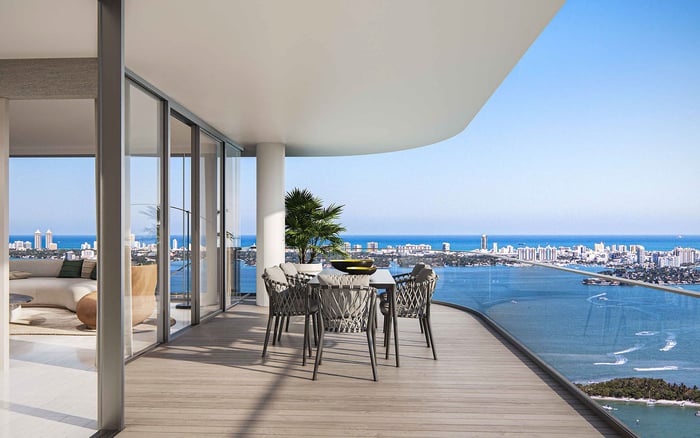
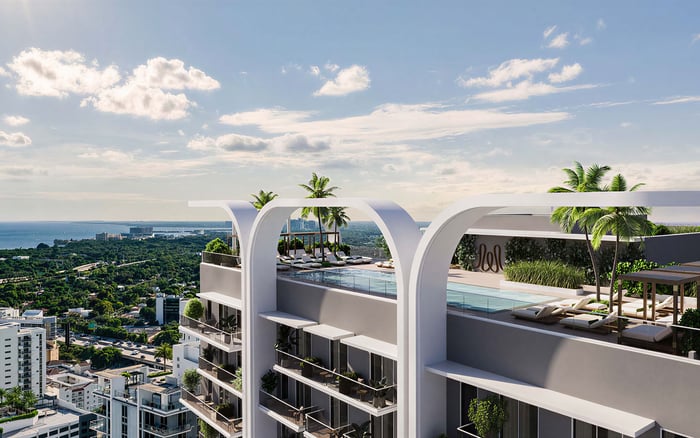
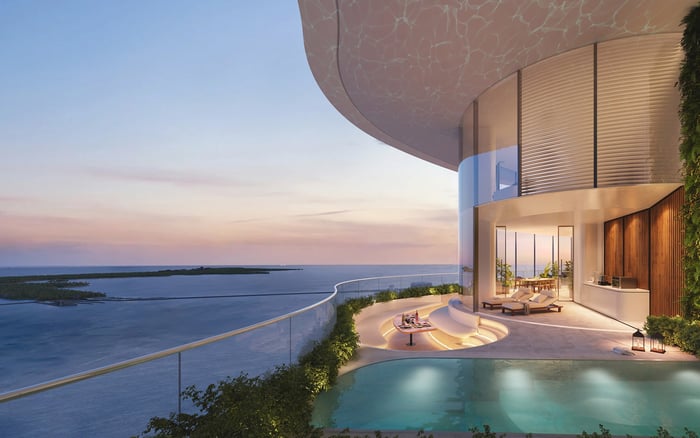
A buyer-focused due-diligence guide for evaluating balcony rules, outdoor kitchen permissions, and weather tolerance at Cipriani Residences Brickell and One Thousand Museum Downtown Miami.
For a South Florida luxury buyer, a balcony or terrace is rarely a decorative add-on. It is a private dining room, a sunrise observatory, a social salon, and, in certain seasons, a highly exposed architectural element. That is why exterior space deserves the same rigor applied to views, floor plans, finishes, and building services.
Cipriani Residences Brickell and One Thousand Museum Downtown Miami belong squarely in that conversation. Each carries a distinct urban identity, and each appeals to buyers who are not simply acquiring square footage. They are buying a way of living above the city, with exterior space woven into the daily rhythm. The essential question is not merely whether a residence has outdoor space. It is how that space may be used, improved, maintained, insured, and enjoyed over time.
This is especially important in Brickell and Downtown, where high-rise living intersects with wind exposure, water views, dense urban adjacency, and exacting condominium governance. A buyer who understands the rules before contract is better positioned to avoid friction after closing.
Balcony rules can shape far more than aesthetics. They may determine what furniture is permitted, whether planters can be placed outside, how umbrellas are handled, where cushions are stored, and whether decorative lighting is allowed. In many luxury towers, the balcony is both private domain and visible architectural façade, which means individual taste is balanced against the building’s collective appearance.
That balance is not inherently limiting. It is often what preserves a tower’s visual discipline and long-term value. Still, buyers should read governing documents carefully, including condominium rules, architectural guidelines, alteration procedures, and any restrictions that apply to exterior elements. A beautifully staged terrace during a showing may not reveal what is allowed day to day.
For a buyer considering Cipriani Residences Brickell, the due-diligence lens should be especially practical: how will morning coffee, evening entertaining, seasonal guests, and service access actually function? For One Thousand Museum Downtown Miami, the same inquiry applies, particularly when a buyer is focused on visual prominence and skyline presence. The more visible the exterior space, the more important it becomes to understand what the building allows.
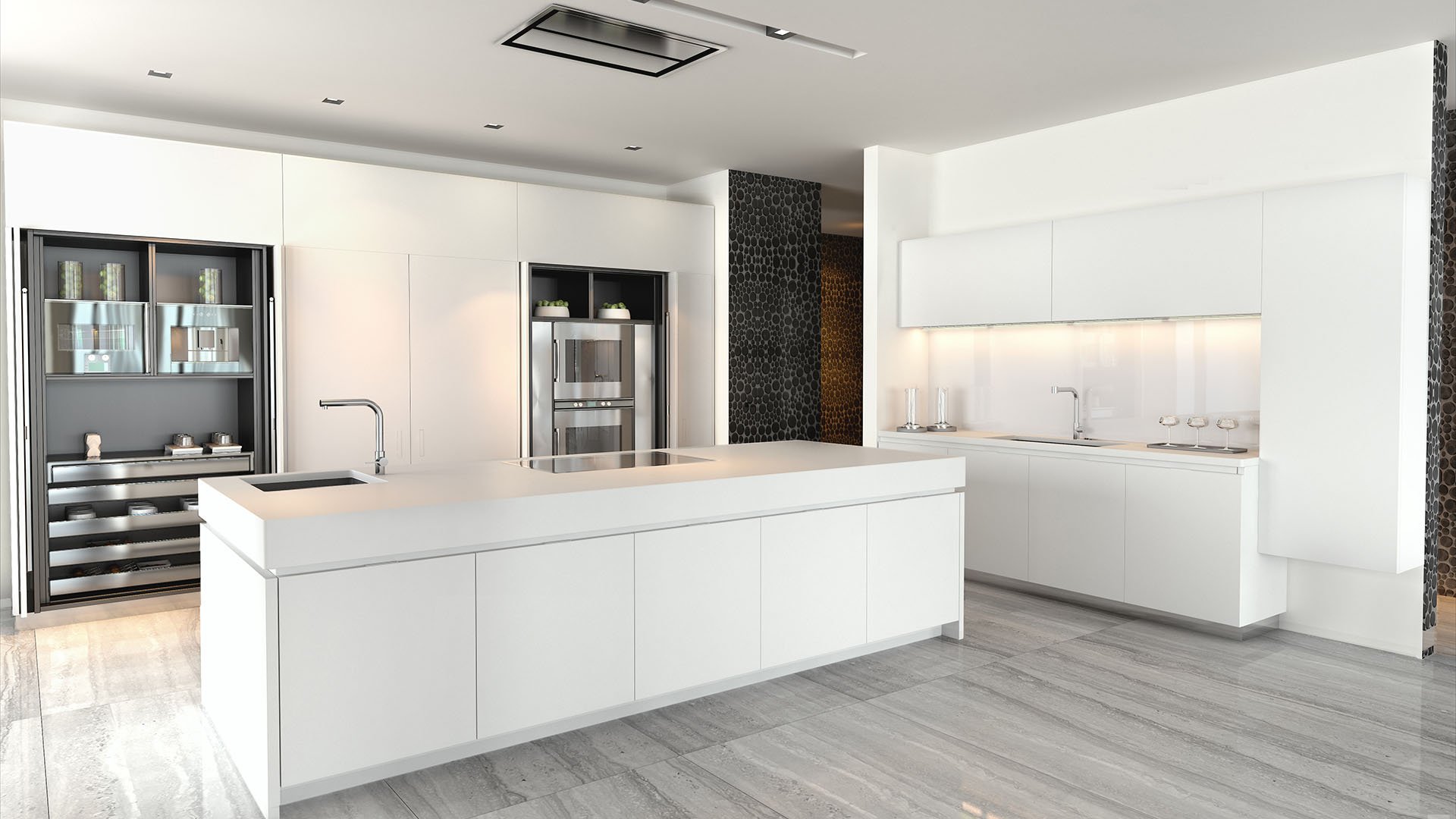
Outdoor kitchens are among the most desired amenities in private residential design, but in condominium settings they require careful scrutiny. A built-in grill, refrigeration drawer, sink, counter, venting element, gas connection, electrical upgrade, or plumbing modification may trigger different levels of review. Even when a terrace appears large enough to accommodate a kitchen, approval is never something a buyer should assume.
The first question is whether the building’s rules allow cooking equipment on exterior areas. The second is whether existing infrastructure supports the intended design. The third is whether the addition would require association consent, professional plans, permits, licensed contractors, or ongoing maintenance obligations. In luxury buildings, the answer may depend on unit location, terrace configuration, fire-safety standards, and the effect on neighboring residences.
Buyers should also distinguish between portable entertaining and permanent installation. A movable serving cart is not the same due-diligence issue as a fixed outdoor kitchen. Similarly, an elegant outdoor dining arrangement may be straightforward, while any appliance involving heat, water, power, or ventilation can become more complex.
The most discreet approach is to ask direct questions early, before emotional attachment hardens. If an outdoor kitchen is central to the lifestyle plan, it should be treated as a condition of suitability, not an afterthought.
In Miami, terrace performance is inseparable from climate. Sun, humidity, salt air, driving rain, and wind can affect finishes, fabrics, furniture, metal components, cabinetry, lighting, and planters. Even a sheltered balcony can experience moisture and heat cycles that are far more demanding than an indoor environment.
A high-caliber buyer should evaluate exposure at different times of day. Morning light may be prized by one household and avoided by another. Afternoon sun can transform the usability of an outdoor area, especially in warmer months. Wind patterns may affect dining comfort, cushion storage, glassware, umbrellas, and plant selection. Rain behavior matters too, since water can enter terraces laterally rather than simply from above.
The key is not to seek a perfectly controlled exterior environment. South Florida outdoor living is valuable precisely because it is connected to the atmosphere. The goal is to understand the tolerance of the space and select materials accordingly. Marine-grade furniture, solution-dyed fabrics, appropriate stone, corrosion-resistant hardware, and well-drained planters are not merely design preferences. They are part of responsible ownership.
Brickell is defined by density, energy, walkability, and financial-district intensity. For buyers focused on Cipriani Residences Brickell, exterior space due diligence should include the practicalities of privacy, sound, view corridors, and the transition between indoor service areas and outdoor entertaining. A balcony in Brickell may be a retreat above a highly active neighborhood, so the details of comfort and screening can matter as much as the view itself.
Downtown has its own character. One Thousand Museum Downtown Miami belongs to a skyline environment where architecture, distance, light, and urban drama are central to the experience. For buyers considering this setting, terrace due diligence should examine how the residence feels during different weather conditions and how exterior use aligns with the building’s standards.
Neither location should be reduced to a simple comparison. Brickell and Downtown can both deliver compelling vertical living. The stronger approach is to match the household’s rituals to the rules and tolerances of the specific residence. Does the buyer want quiet breakfasts outdoors, formal entertaining, sunset cocktails, child-friendly exterior space, pet routines, or a sculptural outdoor room that is mostly visual? Each answer changes the due-diligence priorities.
The most important documents are often the least glamorous. Buyers should review condominium declarations, bylaws, house rules, alteration policies, architectural review procedures, insurance responsibilities, maintenance obligations, and any specific language related to exterior limited common elements. If the terrace or balcony is categorized in a particular way, that classification can influence who maintains what and what alterations are permitted.
Questions should be specific. Are rugs allowed outside? Are planters limited by height or weight? Are storage boxes permitted? Can balcony furniture remain in place during storms? Are shutters, shades, screens, heaters, speakers, lighting, or cameras restricted? Are contractors allowed to work on exterior areas, and if so, under what procedures?
The answers may not diminish the appeal of a residence. In fact, they often clarify it. A highly governed building can be ideal for a buyer who values order, consistency, and discretion. A buyer who wants maximum customization should verify that the intended lifestyle fits within the building’s framework.
The best outdoor design in a luxury condominium is elegant, durable, and reversible when necessary. It respects the architecture while allowing the owner’s lifestyle to come through. Heavy furniture should be considered in relation to building rules and surface tolerance. Planters should be chosen for drainage, stability, and maintenance access. Fabrics should be selected for climate, not showroom appeal alone.
Lighting deserves equal restraint. Exterior lighting can transform a balcony, but it may also affect neighbors or the building façade. Audio should be treated with similar sensitivity. A residence that feels private in the daytime may transmit sound differently at night, particularly in a vertical urban setting.
For buyers, the goal is not to overcomplicate pleasure. It is to protect it. A terrace designed within the rules, with weather-aware materials and realistic maintenance expectations, becomes easier to enjoy and easier to preserve.
Why should balcony rules be reviewed before buying? Balcony rules can affect furniture, planters, lighting, storage, and the overall way the space is used.
Can a buyer assume an outdoor kitchen is allowed? No. Outdoor kitchens should be reviewed against building rules, infrastructure, approvals, and permit requirements.
Does a large terrace automatically mean more flexibility? Not necessarily. Size may improve usability, but permissions still depend on the building’s governing documents.
What weather factors matter most in Miami? Sun, humidity, salt air, wind, and rain exposure can all influence comfort, materials, and maintenance.
Is Brickell outdoor living different from Downtown outdoor living? Yes. Brickell and Downtown each have distinct patterns of density, sound, views, and daily movement.
What should buyers ask about balcony furniture? Buyers should ask what styles, weights, storage practices, and storm procedures are permitted.
Are planters usually a due-diligence item? Yes. Planters can raise questions about drainage, weight, height, maintenance, and façade appearance.
Should terrace design be planned before closing? Ideally, yes. Early planning helps confirm whether the desired lifestyle fits the residence and rules.
Can association rules protect value? They can. Clear standards may preserve the building’s appearance, consistency, and resident experience.
What is the best way to shortlist comparable options for touring? Start with location fit, delivery status, and daily lifestyle priorities, then compare stacks and elevations to validate views and privacy.
When you're ready to tour or underwrite the options, connect with MILLION.
If branded residences are on your mind — as a home or as an allocation — we would be glad to share what we are seeing, privately.
Begin a quiet conversation