A refined buyer’s guide to choosing a South Florida pied-à-terre for Miami Music Week, weighing access, services, privacy, maintenance, outdoor space and long-term usability.
Miami Music Week has a way of making South Florida feel both expansive and intimate. A buyer may arrive for a compressed calendar of late nights, private dinners, hotel takeovers and waterfront afternoons, then leave with a more permanent question: should the next move be a pied-à-terre rather than a house?
For many ultra-premium buyers, the answer is not about downsizing ambition. It is about aligning an address with a precise lifestyle. A pied-à-terre can offer the ease of arrival, the discipline of lock-and-leave ownership and proximity to the social center of gravity without the full operational rhythm of a single-family home. A house, by contrast, can provide privacy, land, staff flexibility and a more rooted domestic experience.
The distinction becomes especially clear around event weeks. The right base is not simply the property that feels most glamorous in March. It is the one that remains intuitive in May, July and November, when the calendar is quieter and convenience becomes the truest luxury.
Before choosing a South Florida base, buyers should map the week they actually intend to live, not the fantasy version. If the day begins with a workout, a few calls and lunch before evening events, the building’s service culture and neighborhood walkability may matter more than additional bedrooms. If the household includes family, guests or staff, a larger residence or house may create a more graceful pattern.
The pied-à-terre buyer should also decide whether the residence is primarily a solo base, a couple’s retreat or an entertainment platform. These are distinct acquisitions. A compact, high-service condominium can be exceptional for quick arrivals and departures. A larger residence with meaningful outdoor space may better support pre-event hosting, recovery mornings and longer stays.
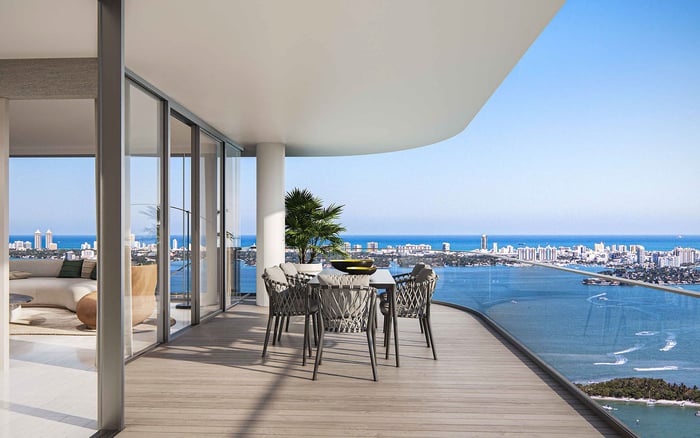
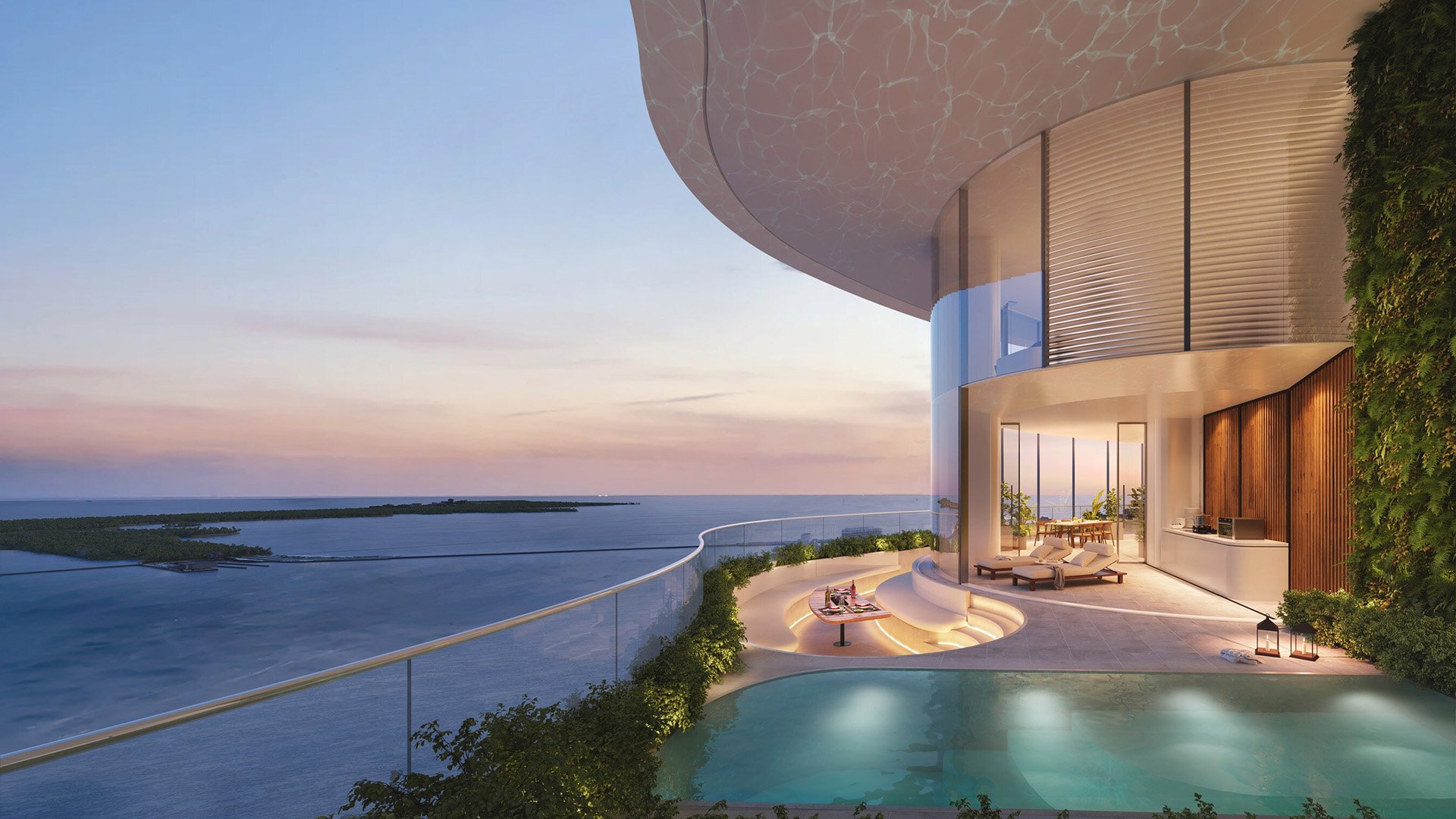
This is where pool, balcony and terrace decisions become more than amenity preferences. A private terrace may be more valuable than a seldom-used extra room. A balcony that captures a calming view can make a brief stay feel restorative. A pool environment that suits the owner’s rhythm can define how the residence functions between commitments.
The strongest argument for a pied-à-terre is operational simplicity. For buyers who visit in defined windows, the ability to arrive to a managed building, step into a prepared residence and leave without coordinating the full choreography of a house is compelling. The trade-off is governance. Condominium rules, guest policies, rental restrictions, pet policies, renovation protocols and service access should be reviewed with the same seriousness as floor plan and view.
A house offers a different kind of freedom. It can support more cars, more guests, more privacy and a less structured daily rhythm. It may also require ongoing attention, from landscaping to security to storm preparation. For owners who use South Florida frequently and want a true domestic compound, that autonomy may be worth the responsibility. For those who come for concentrated cultural, business or seasonal moments, the condominium model often aligns better with real usage.
The key is to avoid treating square footage as a proxy for luxury. In South Florida, ease is a luxury category of its own. The right elevator, arrival sequence, valet experience, storage solution and building staff can shape the ownership experience as much as finishes.
Brickell remains a natural consideration for buyers who want a polished urban base, particularly when dining, business meetings and evening movement are central to the trip. A residence such as 2200 Brickell belongs in the conversation for buyers who want the neighborhood’s energy without defaulting to a house they may rarely use.
For others, the appeal is a more hospitality-inflected version of the same idea. Cipriani Residences Brickell may resonate with buyers who see the pied-à-terre as an extension of a curated social life, where arrival, dining and service language matter as much as the residence itself.
Downtown can appeal to buyers seeking a vertical, skyline-oriented base with a strong sense of arrival. Waldorf Astoria Residences Downtown Miami is relevant for those who want a statement address and the simplicity of a managed residential environment. Edgewater, meanwhile, offers a waterfront sensibility while preserving an urban relationship to Miami. Buyers considering EDITION Edgewater may be drawn to that balance: close enough to the city’s current, yet softened by water, light and residential calm.
If the urban mainland is about proximity and pace, Miami Beach is about contrast. For some buyers, the true luxury after a late night is waking near the ocean, stepping into a calmer morning and letting the day reset before the next commitment. A pied-à-terre here is less about escaping the week than balancing it.
The beach buyer should be precise about preferred atmosphere. South Beach, Mid-Beach, North Beach and the quieter luxury enclaves each have distinct rhythms. Some owners want immediate access to restaurants and nightlife. Others prefer a more discreet residential setting, with the option to engage the scene selectively.
A project such as Five Park Miami Beach fits naturally into the conversation for buyers evaluating the Miami Beach lifestyle through the lens of convenience, design presence and the ability to use the residence beyond one event-driven week. In this segment, the question is not only whether the beach is nearby. It is whether the building’s personality suits the owner’s public and private lives.
Not every Miami Music Week buyer needs to sleep in Miami. Some want the week, but not the daily intensity. A South Florida pied-à-terre can be calibrated for selective participation, allowing the owner to come into Miami for key moments while preserving a quieter home base elsewhere.
Fort Lauderdale may appeal to buyers who value a more relaxed coastal cadence, boating culture or a different style of urban waterfront living. Palm Beach and West Palm Beach can make sense for buyers whose South Florida life includes galleries, private clubs, dining and seasonal social calendars beyond Miami. Bay Harbor Islands, Surfside, Bal Harbour and Sunny Isles can offer alternatives for those who want proximity to Miami with a more residential feel.
The point is not to choose the most famous address. It is to choose the address that reduces friction. For a frequent traveler, a slightly quieter base with excellent services may outperform a larger house that sits empty and demands attention.
A pied-à-terre purchase should be underwritten around use. How often will the owner stay? Will friends or family use the residence independently? Is rental flexibility important, or is privacy the priority? Are short-term rentals permitted, restricted or irrelevant to the plan? These details can materially affect fit, even when the residence itself is beautiful.
Buyers should also evaluate storage, parking, package handling, service elevators, housekeeping access, pet rules, security procedures and renovation limitations. The less time an owner spends in residence, the more important these operational points become. A second home should not require first-home levels of management unless that is the buyer’s intention.
Finally, consider emotional durability. Miami Music Week may trigger the search, but the residence must make sense when the city is quieter. The best pied-à-terre is not merely a place to sleep after events. It is a private South Florida rhythm, compressed into an address that feels effortless every time the door opens.
Is a pied-à-terre better than a house for Miami Music Week? It can be, if the buyer values service, simplicity and proximity over land, autonomy and larger private entertaining areas.
Which Miami area is best for an event-focused buyer? Brickell, Downtown and Edgewater often suit buyers who want an urban base with efficient movement and a strong residential setting.
Should a beach buyer prioritize Miami Beach over the mainland? A beach base can be ideal for buyers who want recovery, ocean proximity and a softer morning rhythm after late nights.
Are condominium rules important for a pied-à-terre? Yes. Guest policies, rental rules, pet restrictions, renovations and service access should be reviewed before making an offer.
Does a larger residence always perform better as a second home? Not necessarily. The better choice is the residence that matches actual use, maintenance tolerance and desired arrival experience.
Should buyers consider Fort Lauderdale or Palm Beach? Yes, if they want South Florida access without making Miami’s highest-energy neighborhoods their daily base.
How important is outdoor space in a pied-à-terre? Very important for many buyers. A terrace or balcony can make short stays feel more restorative and complete.
Can a pied-à-terre work for entertaining? It can, especially when the layout, building policies and arrival sequence support guests comfortably and discreetly.
What should frequent travelers prioritize? They should prioritize lock-and-leave convenience, security, parking, storage, staff coordination and predictable building services.
When does a house make more sense than a condominium? A house may suit buyers who want more privacy, land, staff flexibility, guest capacity and year-round domestic control.
When you're ready to tour or underwrite the options, connect with MILLION.
If branded residences are on your mind — as a home or as an allocation — we would be glad to share what we are seeing, privately.
Begin a quiet conversation