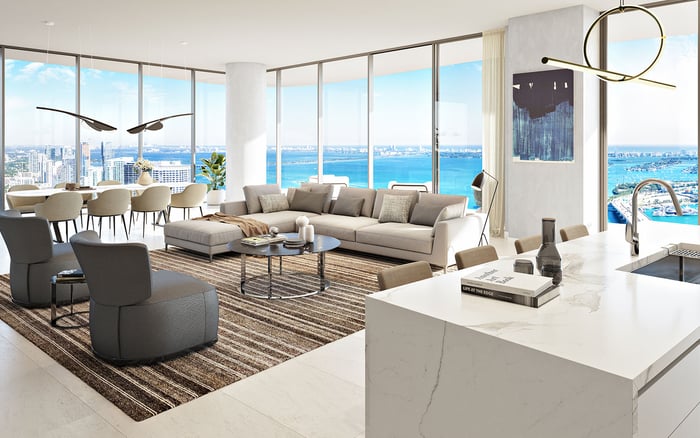
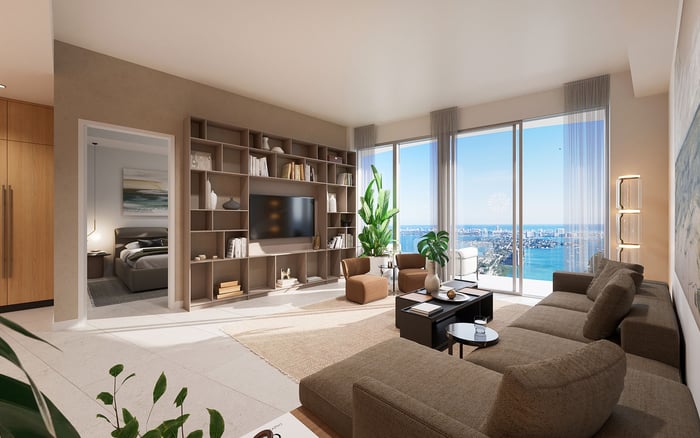
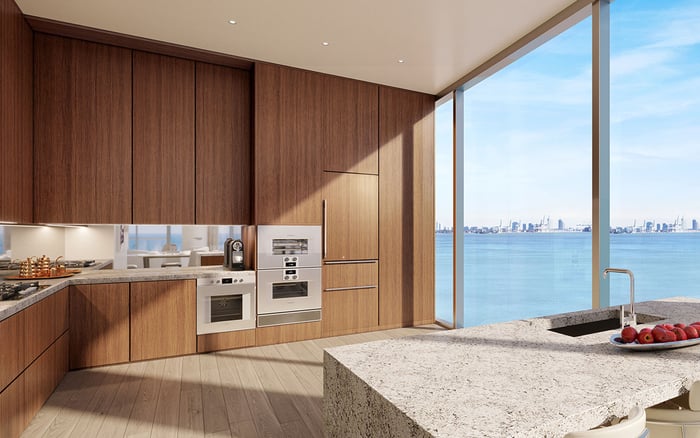
A design-led look at Casa Bella by B&B Italia in Downtown Miami, where wine storage is best understood as a discreet in-residence planning choice for quiet-luxury buyers.
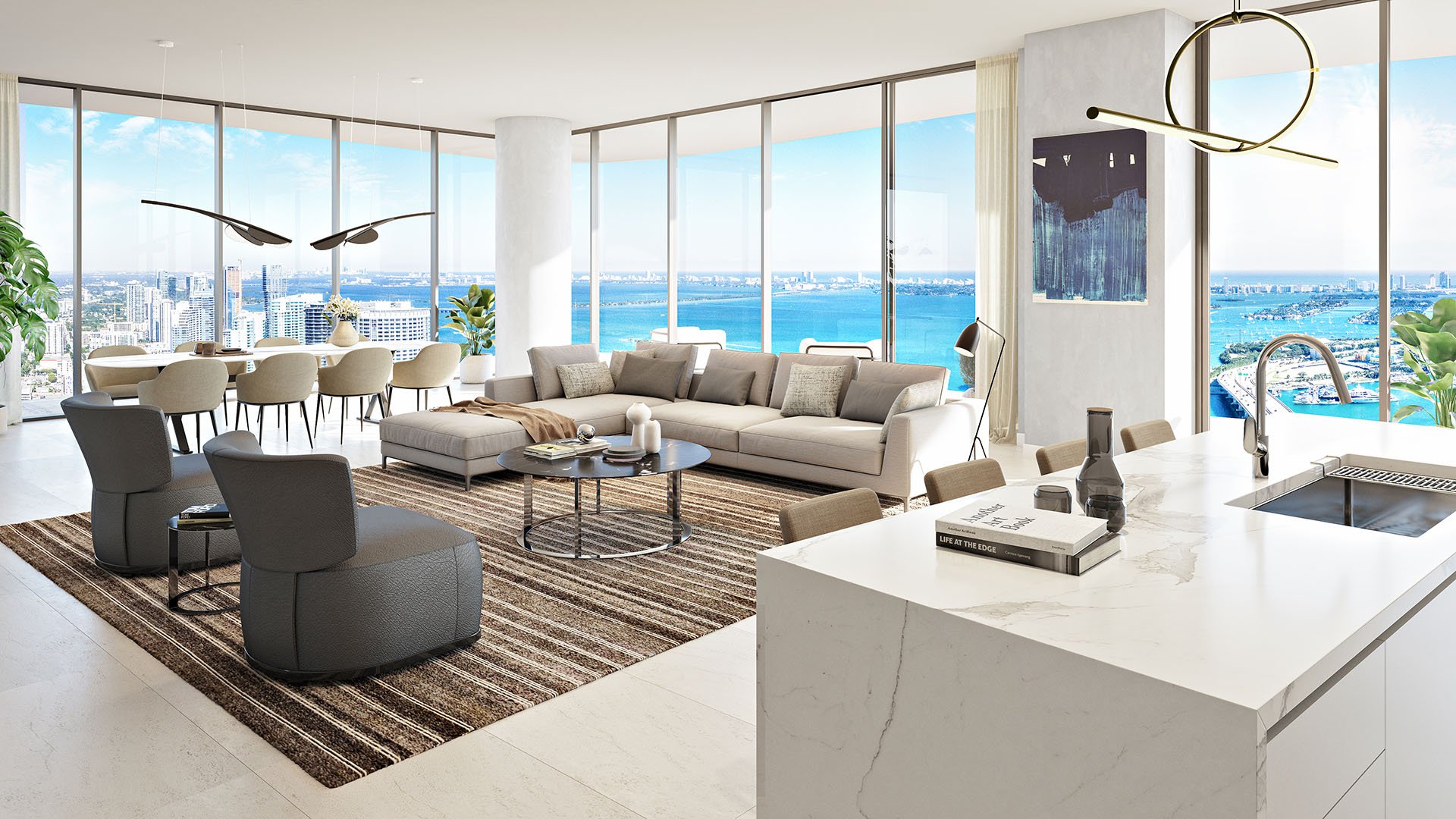
Casa Bella by B&B Italia Downtown Miami occupies a category where the most persuasive luxuries are not always the loudest. In a design-led residence, the buyer is not simply asking whether a home can accommodate fine wine. The sharper question is whether wine can be stored, served, and enjoyed without interrupting the architectural discipline of the space.
That distinction matters at Casa Bella by B&B Italia Downtown Miami because the B&B Italia association is central to the property’s identity. This is not a generic Downtown condominium narrative. It is a design conversation, and wine storage belongs inside that frame: concealed when appropriate, beautifully detailed when visible, and always secondary to proportion, materiality, and daily use.
For the collector, quiet luxury does not mean indifference. It means precision. A wine solution should support stable conditions, controlled light exposure, minimal vibration, and convenient access while remaining visually calm. In this context, the most elegant option is often not a dramatic glass room, but a well-integrated system that feels inevitable within the residence.
The practical approach is to separate project positioning from buyer customization. Casa Bella Residences is a Downtown Miami, design-led luxury condominium associated with B&B Italia. Wine storage, however, should be treated as an in-residence planning consideration unless a dedicated building wine amenity is specifically confirmed in purchase materials.
That makes the buyer’s own planning process more important. A serious residence can accommodate wine through undercounter refrigeration, integrated cabinetry, display niches, or custom climate-controlled storage. Each option carries a different aesthetic message. The wrong installation turns bottles into decoration. The right installation turns hospitality into architecture.
In South Florida, where open plans, glass, terraces, and light are part of the lifestyle, wine storage deserves restraint. A collector may want visibility, but not heat or glare. A host may want access near the kitchen or dining area, but not a refrigerator that reads as an appliance afterthought. The quiet-luxury solution is not merely hidden. It is resolved.
The most flexible entry point is undercounter wine refrigeration. It works for buyers who keep a curated rotation rather than a large cellar, and it can be integrated near a kitchen, bar area, or entertaining wall. The key is alignment: paneling, handle selection, and adjacent millwork should feel consistent with the broader interior language.
A second option is integrated cabinetry with dedicated bottle storage. This is less about long-term preservation and more about presentation, access, and rhythm. In the right setting, a small section of bottles can soften a kitchen or dining composition. The effect should be architectural, not retail. A few carefully framed bottles can say more than a wall of labels.
For collectors with deeper needs, custom climate-controlled storage becomes the more serious conversation. This can be built into a service zone, pantry-adjacent area, den, or private entertaining room, depending on the residence. The design challenge is to manage equipment, ventilation, lighting, and vibration without compromising the finish level expected in an ultra-modern home.
Balcony culture also shapes the conversation. In Miami, entertaining often moves between interior rooms and outdoor views, but wine itself should not be treated as a sun-facing display object. Balcony planning is about flow, not storage. The bottles belong in stable interior conditions, while the service experience can extend naturally to the terrace.
Downtown is a different luxury setting from a resort-only beach address. It supports a more urban rhythm: dinners before a performance, tastings after work, a quieter night in with a small group of guests. Within that lifestyle, wine storage becomes part of how the residence functions day to day.
This is why comparisons across Downtown and nearby Brickell can be useful. A buyer considering Aston Martin Residences Downtown Miami or Waldorf Astoria Residences Downtown Miami may be thinking about skyline living, brand identity, and the feel of arrival. At Casa Bella, the distinction is design restraint: the home should feel collected rather than staged.
Brickell adds another layer. It is close enough to shape buyer expectations, yet it often carries a different financial-district energy. Residences such as 2200 Brickell and Baccarat Residences Brickell show how brand, location, and residential ritual can influence what buyers expect from entertaining spaces. For a Casa Bella buyer, the wine question becomes less about spectacle and more about whether every detail feels intelligently placed.
Start with the collection. A buyer who stores a few cases for entertaining does not need the same solution as a collector protecting age-worthy bottles. Overbuilding can feel performative. Underbuilding can become inconvenient. The right answer is scaled to the owner’s actual rhythm.
Next, study adjacency. Wine should be near how it is used: dining, cooking, hosting, or private relaxation. But it should also be away from harsh light and unnecessary movement. A beautiful location that damages the purpose of storage is not luxury. It is decoration.
Then, insist on visual discipline. B&B Italia’s relevance to Casa Bella supports a design mindset where furniture, millwork, and spatial proportion should feel deliberate. Wine storage should not fight that language. Panel-ready refrigeration, integrated lighting, and quiet cabinetry details are often more compelling than theatrical displays.
Finally, think about resale without designing for a stranger. A clean, reversible, well-built wine solution can broaden appeal. A highly personal showpiece can narrow it. The most valuable upgrades in new-construction residences often feel as if they were always intended to be there.
The luxury real estate market has spent years adding visible signals: branded towers, dramatic amenity decks, sculptural lobbies, and destination wellness spaces. Casa Bella’s strongest wine-storage argument is subtler. In a design-led Downtown residence, the best amenity may be a home that supports pleasure without announcing it.
That is the essence of quiet luxury. A bottle is ready at the right temperature. The cabinetry is aligned. The lighting is soft. The service path is intuitive. Guests notice the ease before they notice the equipment. For Casa Bella buyers, that may be the point: wine storage as part of a sophisticated domestic system, not as a trophy wall.
Does Casa Bella by B&B Italia confirm a building wine cellar? This article treats wine storage as an in-residence buyer consideration, not as a confirmed shared wine amenity.
What is the most discreet wine-storage option for a Casa Bella residence? Undercounter wine refrigeration with integrated panels is often the quietest visual solution for a curated collection.
Can wine storage work in an open-plan Downtown Miami condo? Yes, if it is positioned away from harsh light and integrated into cabinetry or an entertaining zone.
Is a glass wine display always a good idea? Not always. A display should be controlled for light and temperature; otherwise, it can become decorative rather than functional.
How should collectors think about custom climate-controlled storage? Collectors should plan around collection size, access, lighting, ventilation, and vibration before selecting a final location.
Does the B&B Italia connection influence the wine-storage decision? It should encourage a more restrained, design-conscious approach where storage supports the residence rather than dominating it.
Should wine be stored near a balcony or terrace door? Generally, wine should remain in stable interior conditions, while serving can flow naturally toward outdoor entertaining areas.
How does Brickell influence buyer expectations? Brickell reinforces the importance of polished entertaining spaces, but Casa Bella’s case is more about design integration.
Is wine storage mainly for serious collectors? No. Even casual hosts benefit from a small, well-placed solution that keeps bottles organized and ready.
What is the quiet-luxury principle for wine storage? Make it functional, integrated, and visually calm, so the experience feels effortless rather than staged.
For a tailored shortlist and next-step guidance, connect with MILLION.
If branded residences are on your mind — as a home or as an allocation — we would be glad to share what we are seeing, privately.
Begin a quiet conversation