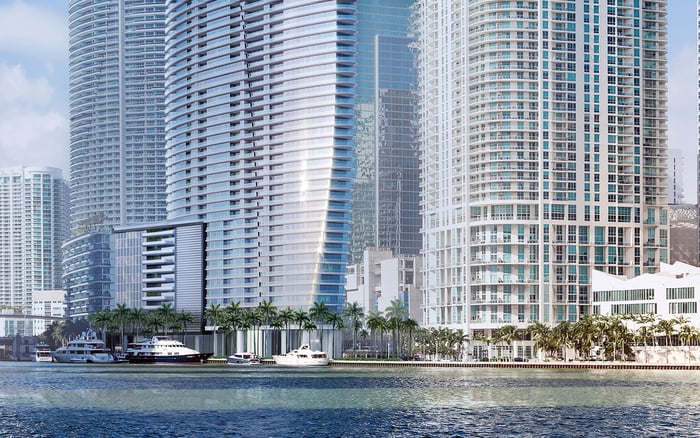
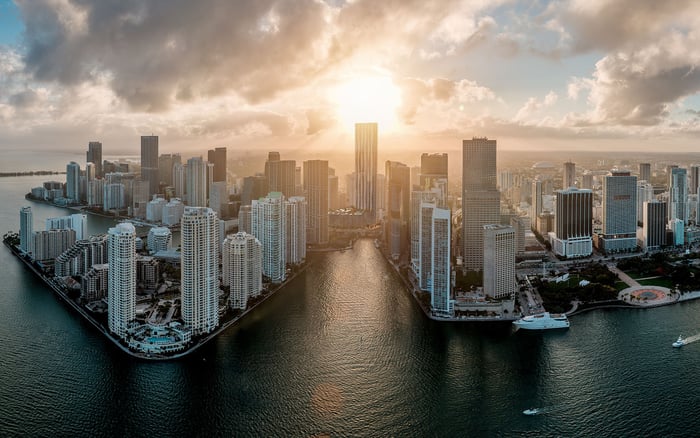
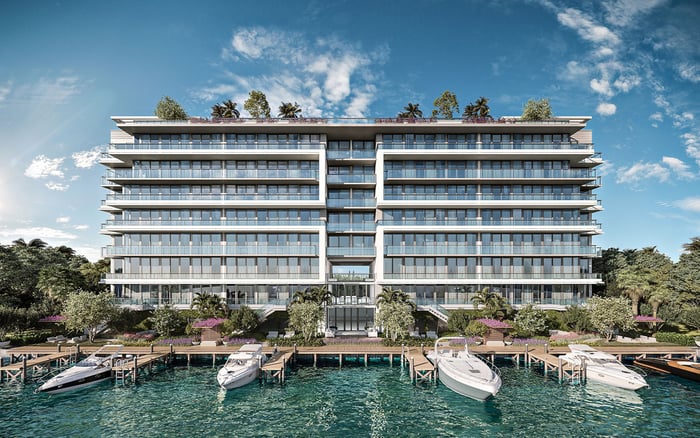
A discreet buyer’s guide to comparing Aston Martin Residences Downtown Miami with Miami Design Residences Midtown Miami through the practical lens of art installation, delivery control, waterfront rights, dock protocols, and insurance documentation.
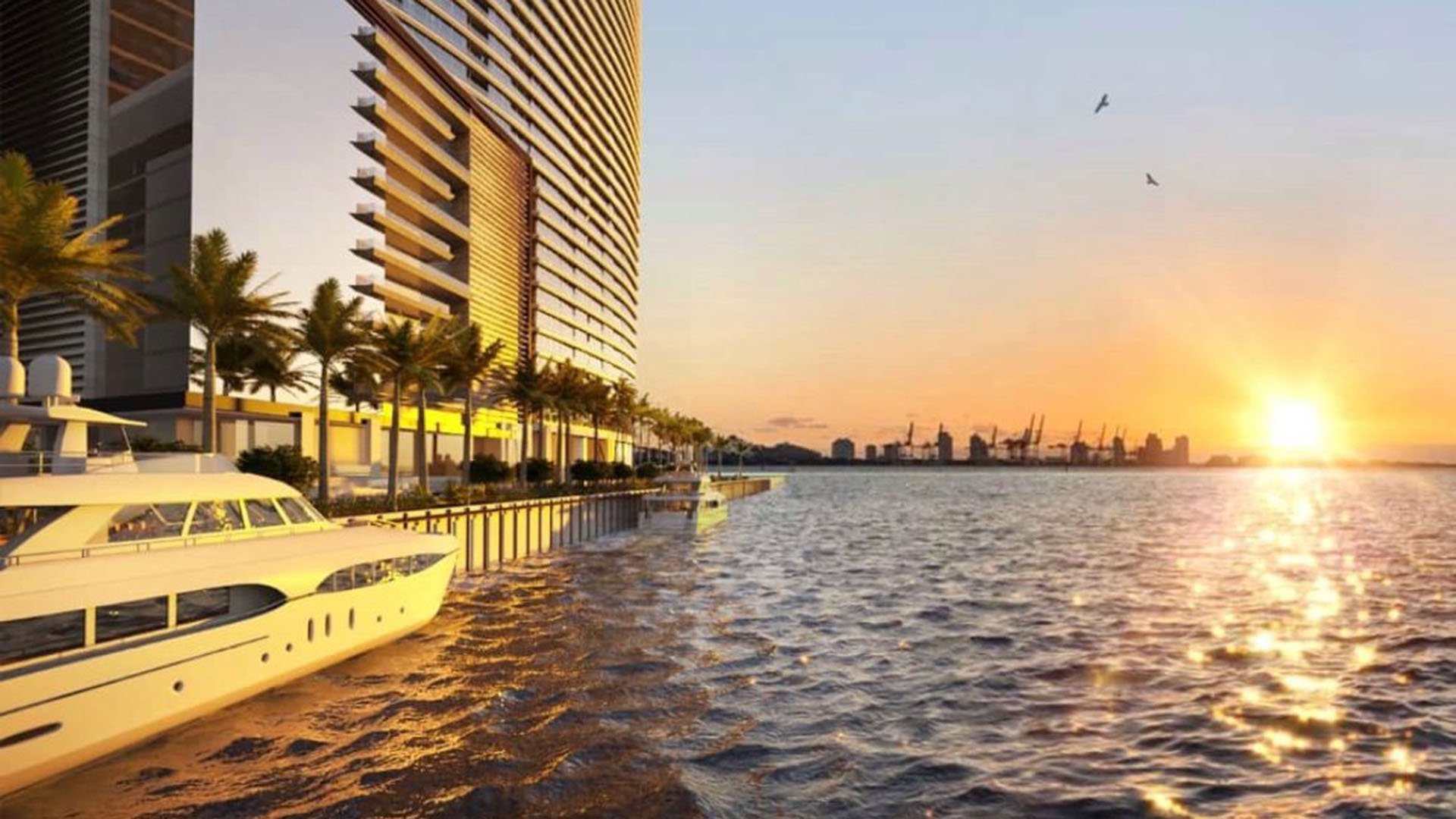
For a collector, a residence is more than a place to live. It is a receiving room, a private gallery, a logistics corridor, and, in Miami, often a defined relationship with the water. That is why the comparison between Aston Martin Residences Downtown Miami and Miami Design Residences Midtown Miami should not begin with finishes alone. It should begin with control.
Aston Martin Residences Downtown Miami is the clearer Downtown waterfront-side comparator in this matchup, and its branded residence identity places design at the center of the buyer conversation. Miami Design Residences Midtown Miami, by contrast, calls for a verification-first approach to project-specific claims about art walls, deliveries, water access, dockage, and insurance rules.
The practical question is not which name sounds more design-forward. It is which building’s documents, association practices, and physical infrastructure will support a collector’s real life after closing.
Collectors often hear phrases such as gallery-like, artful, or museum-inspired. Those words may help establish mood, but they are not sufficient for acquisition due diligence. A serious art-ready residence should be reviewed for wall blocking, load capacity, wall-penetration policies, humidity considerations, freight elevator dimensions, and installation permissions.
For Aston Martin Residences Downtown Miami, the essential art-collector checks are specific: confirm wall blocking and load capacity, freight or service elevator dimensions, loading-dock rules, certificate-of-insurance requirements, and after-hours delivery permissions. If a large-scale work requires crating, rigging, multiple installers, or a climate-controlled delivery window, those details should be approved before the buyer assumes the residence can receive the piece.
The same discipline applies to Miami Design Residences Midtown Miami, but buyers should not assume that a design-oriented name automatically means art-installation readiness. Request the condominium declaration, association rules, vendor-access policy, and any written rules governing wall penetrations, anchor systems, elevator pads, and protected finishes.
Buyers also comparing urban design-led projects such as Casa Bella by B&B Italia Downtown Miami or Waldorf Astoria Residences Downtown Miami should use the same test. Design pedigree may shape the experience, but documentation governs what can actually be installed.
Waterfront language in Miami can be seductive. It can also be imprecise. For Aston Martin Residences Downtown Miami, buyers should verify whether any waterfront access is deeded, licensed, assigned by the association, or simply available as an amenity privilege. These categories are not interchangeable.
A deeded right may travel differently than a revocable amenity privilege. A licensed arrangement may carry conditions. An association-assigned benefit may be subject to rules, waitlists, operational changes, or board oversight. A waterfront setting may enhance daily life, but a buyer who expects guaranteed use should identify exactly what is being transferred, what is reserved, and what can change.
This is where language such as Downtown, Marina, Boat-slip, New-construction, and Waterview must be treated as a vocabulary of legal and operational questions, not merely lifestyle cues. A Waterview residence may not include any water-use rights. A Marina reference may not mean private vessel control. A Boat-slip may be deeded, licensed, leased, shared, or unavailable. New-construction documents still require careful review because early marketing language and final recorded rules can differ in practical effect.
For Miami Design Residences Midtown Miami, waterfront-rights analysis should be handled carefully and without assumptions. If water access, docking, or vessel services are important to the buyer, require written confirmation in the governing documents or formal project materials rather than relying on verbal shorthand.
For certain buyers, the question is not simply whether water is nearby. It is whether a vessel can arrive, wait, be managed, or be accommodated under a reliable protocol. Aston Martin Residences Downtown Miami is the stronger candidate for waterfront-rights analysis in this comparison because it is positioned as the Downtown waterfront comparator. Even so, buyers should request written confirmation before relying on maritime services.
That confirmation should address dockmaster service, marina procedures, valet protocols, vessel storage, guest docking, reservation rules, cancellation rules, access hours, security clearance, and the process for peak-event periods. If a captain, yacht manager, or family office will coordinate usage, those parties should review the rules directly.
The purpose is not to turn a residence search into a legal seminar. It is to avoid a common luxury-market mismatch: the buyer assumes a lifestyle is included, while the documents describe a more limited privilege. The most sophisticated purchasers resolve that gap before contract, not after the first attempted arrival by water.
Controlled delivery logistics are a form of privacy. A buyer receiving major art, collectible design, couture storage systems, or custom furnishings needs predictable access, not improvisation at the loading bay.
For Aston Martin Residences Downtown Miami, the due-diligence list should include loading-dock policy, service elevator dimensions, elevator reservation requirements, protective covering rules, vendor certificate-of-insurance requirements, staging areas, after-hours delivery permissions, and rules for oversized crates. These are not minor administrative points. They determine whether an installation can happen discreetly, safely, and on schedule.
For Miami Design Residences Midtown Miami, buyers should request the same package before comparing the two properties. If the project’s appeal is rooted in design, the operational layer deserves equal scrutiny. Ask who approves art handlers, whether installers need separate insurance endorsements, how many days a delivery may be staged, and whether weekend or evening work is permitted.
A collector who already owns works requiring specialty rigging should bring the art adviser, installer, or logistics firm into the purchase process early. A floor plan may look generous, while the actual path from truck to wall may be constrained by elevator dimensions, turns, thresholds, and building rules.
Insurance is often discussed late, but it should be part of the initial comparison. The building may require vendor certificates of insurance before movers, art handlers, or installers enter. The association may specify coverage amounts, additional insured language, indemnity requirements, elevator protection, or damage deposits. Buyers should collect these requirements before scheduling any delivery.
This is especially important when comparing a branded Downtown waterfront residence with a Midtown design-oriented option. At Aston Martin Residences Downtown Miami, insurance clarity should be paired with art-wall and delivery checks. At Miami Design Residences Midtown Miami, the buyer should confirm whether comparable rules exist and how they are administered.
The broader lesson is simple: luxury is not only the caliber of the room. It is the ease with which valuable objects can move through the building, be insured, be installed, and be protected.
Aston Martin Residences Downtown Miami can be evaluated as the more concrete waterfront-side comparator, with branded design identity and a stronger reason to examine waterfront rights, dockmaster procedures, and marine-related operations. Miami Design Residences Midtown Miami should be evaluated through requests for written confirmation rather than assumptions about its name, location language, or design positioning.
The recommended document set is practical: condominium declaration, association rules, marina or dock rules, loading-dock policy, move-in and move-out policy, vendor certificate-of-insurance requirements, freight elevator dimensions, and any art-installation or wall-penetration rules. If water use matters, add guest-docking procedures, reservation protocols, and written definitions of any slip, license, assignment, or amenity privilege.
For the right buyer, either residence may be compelling. The deciding factor is whether the property’s physical and legal framework supports the buyer’s specific way of living with art, design, water, and privacy.
Which project is the clearer waterfront-side comparator? Aston Martin Residences Downtown Miami is the clearer Downtown waterfront-side comparator in this matchup.
Should buyers assume waterfront access is deeded? No. Buyers should verify whether any access is deeded, licensed, association-assigned, or an amenity privilege.
What should art collectors verify first? Start with wall blocking, load capacity, elevator dimensions, loading rules, insurance requirements, and after-hours permissions.
Why does dockmaster service need written confirmation? Dockmaster, marina, valet, storage, guest-docking, and reservation protocols can vary and should be documented before reliance.
Is a design-oriented name enough for art installation confidence? No. The buyer should confirm installation rules, wall-penetration policies, freight access, and vendor insurance requirements.
What documents should be requested before contract? Request the declaration, association rules, loading-dock policy, move policies, certificate-of-insurance requirements, elevator dimensions, and installation rules.
Can a Waterview residence include no vessel rights? Yes. A view and a transferable water-use right are separate issues and should be reviewed separately.
When should an art installer join the process? Early, especially if the collection includes oversized works, specialty rigging, heavy pieces, or climate-sensitive deliveries.
What is the main risk in comparing these projects? The main risk is assuming lifestyle privileges exist without confirming them in governing documents or written protocols.
How should buyers make the final decision? Compare the documents, physical delivery path, waterfront-rights language, and insurance rules against the way you actually live.
For a discreet conversation and a curated building-by-building shortlist, connect with MILLION.
If branded residences are on your mind — as a home or as an allocation — we would be glad to share what we are seeing, privately.
Begin a quiet conversation