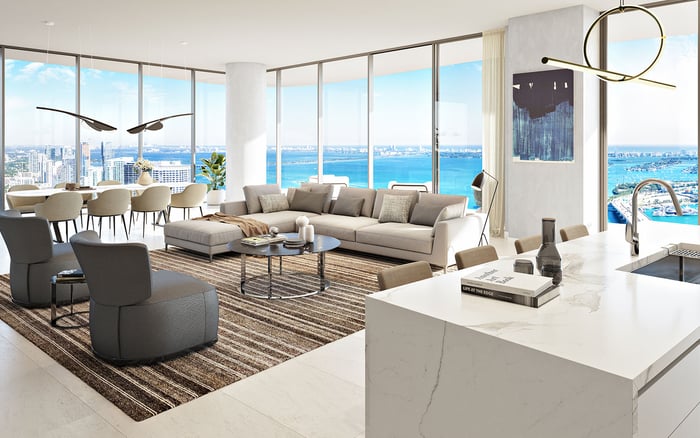
A practical buyer’s guide to security guard coverage at Casa Bella by B&B Italia Downtown Miami, focused on what full-time owners should verify before relying on assumptions.

Casa Bella Residences by B&B Italia is positioned as a Downtown Miami condominium with natural appeal for buyers seeking an urban-core Miami residence with elevated design credentials. For full-time owners, however, the discussion should move beyond finishes, views, and amenities to a more operational question: how will security guard coverage function day to day?
That distinction matters. In a luxury high-rise, security is often discussed in broad strokes, but a resident who lives in the building every week experiences it in specific moments: arriving late, receiving deliveries, sending a contractor upstairs, authorizing a family member, leaving town, or returning after an extended trip. The real concern is not simply whether security exists, but whether the system is clear, consistent, appropriately staffed, and supported by procedures the association and management can enforce.
Casa Bella by B&B Italia Downtown Miami sits in a market where buyers often expect a polished front-of-house experience. Yet expectations are not the same as confirmed operating policy. The practical approach is to treat security as a due diligence item, reviewed with the same seriousness as the budget, rules, insurance, reserves, and management structure.
The project is relevant to full-time residents as well as second-home and international buyers, but the security question differs for each group. A seasonal owner may focus on access while away. A full-time owner needs to understand the building’s daily choreography: lobby flow, guest access, package intake, amenity movement, garage entry, elevator controls, and after-hours response.
At this stage, a verified staffing roster, guard schedule, or post-order document should not be assumed from marketing language alone. Exact guard coverage, including the number of personnel, shifts, armed or unarmed status, patrol frequency, and whether coverage is continuous, should be treated as unconfirmed unless supported by condominium documents, management confirmation, or the security contractor’s operating materials.
That does not diminish Casa Bella’s luxury positioning. It simply separates design and market expectation from the operational details that make a building livable over time. For a full-time owner, the highest standard is not ambiguity dressed as reassurance. It is a documented security program that can be understood before move-in and adjusted responsibly once the condominium association and service providers are fully operating.
A careful buyer should begin with the lobby. Who is physically present at the main entrance? Is that person acting as concierge, security, front desk attendant, or some combination of roles? If the same person handles resident requests, vendor calls, guest approvals, and access oversight, the owner should understand how those duties are prioritized during busy periods.
Visitor screening is the next practical concern. Full-time owners have recurring visitors, domestic staff, relatives, healthcare providers, children’s friends, and business guests. A credible protocol should explain how guests are announced, how recurring visitors are handled, how identity is checked, and whether residents can pre-authorize access through a formal process.
Deliveries deserve the same attention. Luxury residents may receive high-value packages, furniture, wine, wardrobe items, art, or medical deliveries. The relevant questions are straightforward: where are packages received, who logs them, how are oversized deliveries scheduled, and how is the loading area controlled? A beautiful residence can still become frustrating if delivery and contractor access are improvised.
Garage oversight is also essential. In Downtown Miami, arrival by car, rideshare, valet, and service vehicle can all occur within the same daily rhythm. Owners should verify whether garage entry, elevator access from parking levels, and after-hours movements are monitored through staff, technology, access credentials, or a combination of controls.
Downtown Miami offers the energy many luxury buyers want: culture, dining, business access, and a dense urban setting. That same convenience makes procedure more important. A full-time resident is not simply visiting the city. The building becomes a private threshold between a public urban environment and a personal residence.
This is where security guard coverage becomes more than a checkbox. The question is not only whether someone is posted somewhere in the property. It is whether the building has layered access control and a staff culture that can distinguish residents, guests, vendors, delivery personnel, and unexpected visitors without turning daily life into a burden.
For new-construction and pre-construction buyers, this can be especially important because final procedures may not be fully visible until the building is operating. A buyer evaluating Casa Bella should ask for the most current governing materials, proposed operating assumptions, and any available service structure. If details are still evolving, the buyer should understand who will make final decisions and how owners will be informed.
This is not only a Downtown Miami lifestyle question; it is also a second-home and investment consideration. Even if the residence will eventually be used part time, the building’s access protocols influence owner confidence, guest coordination, property care, and the ease of managing the home during travel periods.
The most useful security review begins with documents, not impressions. Buyers should request condominium rules, any available management materials, access control policies, delivery procedures, move-in and move-out rules, vendor registration requirements, and any operating guidance that explains the role of front desk, concierge, security, valet, and property management.
If a formal security post order is available, it can be one of the most practical documents in the review. It may clarify where personnel are stationed, what they are responsible for, how incidents are escalated, and how resident requests are handled. If that document is not yet available, a buyer can still ask direct questions and request written clarification from the appropriate party before relying on assumptions.
Key questions include: Is lobby presence separate from concierge service? Are visitors screened before elevator access? Are loading dock and service corridors monitored? Are amenity areas controlled after hours? What happens when a resident is traveling? How are vendors approved for recurring access? Is there a written protocol for lost access credentials, emergency contacts, or suspicious activity?
The answers do not need to be theatrical. In fact, the best answers are often concise and procedural. A sophisticated building should be able to explain how it manages ordinary risks quietly, consistently, and without disrupting the residential experience.
A buyer should listen for specificity. Vague assurances such as “the building will have security” are less useful than a clear description of front desk coverage, visitor authorization, package flow, garage control, after-hours protocol, and management oversight. The goal is not to demand an unrealistic fortress. The goal is to understand how the property will protect privacy, order, and everyday convenience.
It is also useful to distinguish human staffing from technology. Cameras, access credentials, elevators, intercoms, package systems, and garage controls can support a strong security environment, but they are not identical to guard coverage. Conversely, staffed areas are most effective when personnel have clear authority, written procedures, and management support.
Full-time owners should also consider lifestyle fit. A family may prioritize predictable guest approval and elevator control. A frequent traveler may care more about away-from-home protocols and package holds. An owner who hosts often may focus on visitor flow and front desk communication. The right security program is not only robust, but also aligned with how residents actually live.
Casa Bella’s Downtown Miami location places it within the expectations of Miami’s luxury condominium market. For the owner who intends to live there full time, security guard coverage should be evaluated as core residential infrastructure. It is part of the home’s daily performance, just like elevators, parking, maintenance, management, and package handling.
The prudent position is clear: expect a luxury building to take security seriously, but do not assume exact coverage until it is documented. Ask for the current procedures, identify who makes final staffing decisions, and confirm how the system will handle real life: arrivals, guests, vendors, deliveries, family movement, travel, and after-hours events.
For discerning buyers, this is not a skeptical exercise. It is a refined one. The most comfortable residences are often those where the invisible systems work smoothly, service feels natural, privacy is protected, and residents know exactly what to expect before they need it.
Does Casa Bella have confirmed 24/7 security guard coverage? Exact 24/7 guard coverage should not be assumed unless confirmed in condominium documents, management materials, or security contractor information.
Why does security matter more for full-time owners? Full-time owners rely on building procedures every day, including arrivals, guests, deliveries, contractors, garage access, and after-hours support.
Is concierge service the same as security? Not necessarily. Buyers should ask whether concierge and security are separate roles, shared duties, or coordinated through different staff members.
What should buyers ask about visitor access? They should ask how guests are announced, approved, identified, and allowed into elevators or residential areas.
Should package handling be part of the security review? Yes. Package intake, logging, storage, oversized deliveries, and release procedures are important daily-use safeguards.
What about contractors and service providers? Owners should verify vendor registration rules, service elevator use, loading access, time restrictions, and recurring access procedures.
Who will determine final security procedures? Final staffing and procedures will likely be determined by the condominium association with management and its contracted security provider.
Can technology replace guard coverage? Technology can support access control, but buyers should understand how cameras, credentials, elevators, staff, and management work together.
Is this only a concern for primary residents? No. Second-home owners also benefit from clear travel protocols, package handling, guest access, and property oversight.
What is the best way to proceed before closing? Request the most current rules, procedures, staffing descriptions, and management explanations before relying on informal expectations.
When you're ready to tour or underwrite the options, connect with MILLION.
If branded residences are on your mind — as a home or as an allocation — we would be glad to share what we are seeing, privately.
Begin a quiet conversation