In Brickell, “best view” is rarely a single direction or altitude. Bayfront towers reward closeness to the water, while core towers use height, orientation, and volume to turn the skyline into an everyday amenity.
In South Florida luxury real estate, “the view” gets treated like a single commodity: higher is better, water is better, corner is better. Discerning Brickell buyers tend to evaluate something more specific. They are buying a daily ritual, not a postcard.
That ritual might be early light across Biscayne Bay, a twilight skyline from a dining terrace, or the steady calm of boat traffic seen close to the seawall. In Brickell, those moments are typically created through two different strategies: true bayfront adjacency and high-floor elevation.
The distinction matters because each strategy performs differently across time of day, weather, and the way an interior feels. A Waterview can read expansive but emotionally distant from the shoreline. An outlook that sits closer to the water can feel immersive and textured, yet more affected by nearby geometry, sightlines, and future construction.
Bayfront adjacency is about the foreground. When a tower sits directly on Biscayne Bay, the view often begins immediately outside the glass. Water movement, the baywalk, and the scale of the seawall become part of what you live with every day. This is why a lower altitude residence can feel surprisingly generous: the visual experience starts close, stays active, and holds detail.
Height-driven panorama is about the horizon. In a tower that rises well above its neighbors, especially on High-floors, the city and bay begin to behave like a single cinematic plane. You gain broader visibility of Biscayne Bay, Brickell Key, and farther horizons, along with more separation from street-level noise and visual clutter.
Neither is inherently superior. The better fit depends on whether you prefer immersion or overview, and whether you want your view anchored by water at close range or framed by distance.
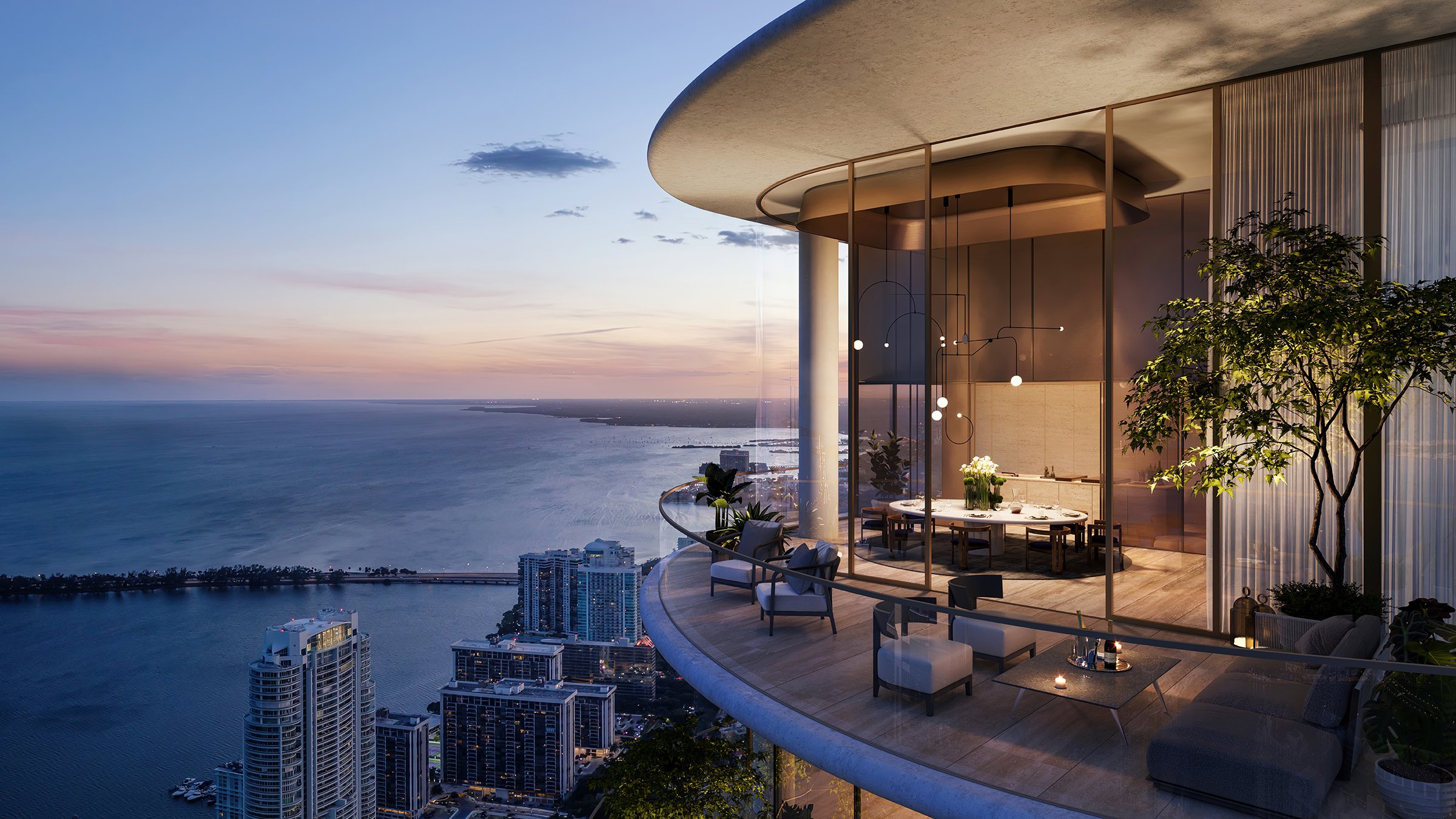
South Brickell’s most coveted addresses tend to prioritize closeness. Una Residences is a 47-story ultra-luxury condominium tower at 175 SE 25th Road, positioned directly on Biscayne Bay. Its yacht-inspired, curved silhouette is intended to maximize water-oriented outlooks, and its residences are marketed with floor-to-ceiling windows and expansive terraces to emphasize unobstructed water and city views.
For many buyers, the appeal is that the visual experience is not limited to the unit. Una’s amenities are positioned around an at-the-water lifestyle, including bayfront pool areas and baywalk access. The view starts at the amenity deck, then continues through the residence, which reinforces a sense of continuity between waterfront living and interior calm. Publicly disclosed design collaborations also point to landscape as part of the visual composition, shaping how the waterfront is experienced rather than simply reached.
A parallel bayfront narrative is found at St. Regis Residences Miami (Brickell), planned as an approximately 50-story branded ultra-luxury tower at 1809 Brickell Avenue in South Brickell. The project emphasizes bayfront views of Biscayne Bay and the Miami skyline, and is marketed with private elevators, floor-to-ceiling glass, and expansive terraces designed to maximize those water and city outlooks. Notably, the shared experience is framed through a Sky Lounge concept, a social viewing space in the mid to upper tower, rather than a singular rooftop observatory focus.
For buyers evaluating South Brickell, the key is to think beyond “bayfront equals perfect.” Floor and stack matter, and future neighborhood construction can change what feels open. Even a direct waterfront address can present partial obstructions depending on adjacent towers and sightlines.
If the waterfront, brand, and service culture are central to your criteria, St. Regis® Residences Brickell is one of the clearest expressions of this bayfront-first philosophy in Brickell.
By contrast, The Residences at 1428 Brickell is a 70-story ultra-luxury residential tower at 1428 Brickell Avenue, positioned in Brickell’s core financial district rather than directly on the bayfront. Here, the view proposition is elevation: upper-floor panoramas marketed to capture broad outlooks that can include Biscayne Bay, Brickell Key, and the Atlantic.
A buyer-relevant detail is the emphasis on east-facing orientation for residences toward the water, positioned as a way to deliver more consistent water views than towers where many stacks face inland. That consistency can matter as much as height for an end user, particularly if the residence is intended for daily living instead of occasional use.
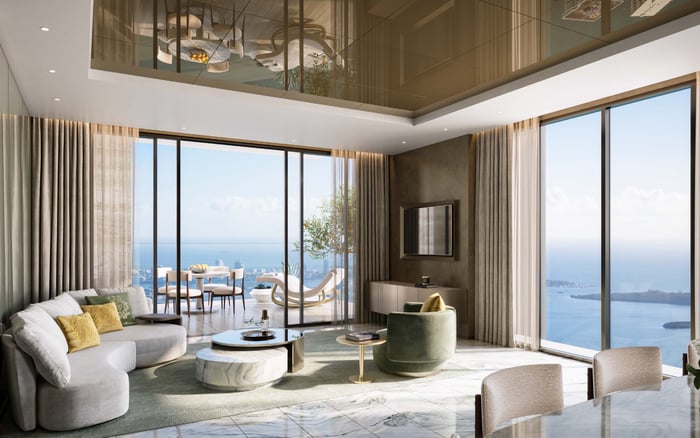
Interior scale can amplify a panorama. Public materials describe high ceiling-height ranges, including double-height layouts in certain configurations, which can change how a skyline reads from inside. More volume expands the field of view and makes the horizon feel present even when seated. Floorplans also show terraces ranging from small balconies to very large outdoor spaces depending on residence type, reminding buyers that outdoor living varies dramatically by layout.
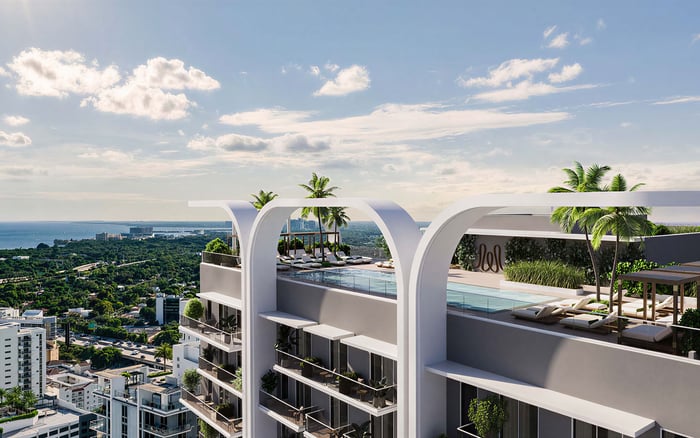
1428 Brickell also introduces a distinctive exterior element described as a “Solar Backbone,” using photovoltaic-integrated glass on the west façade. Beyond the sustainability narrative, this type of feature can influence how west-side light and shading feel, which is ultimately part of view enjoyment. Its amenity stack is marketed with a Level 70 rooftop observatory and pool concept, designed as a high-altitude view platform.
For buyers prioritizing skyline drama and a true High-floors experience in the heart of Brickell, The Residences at 1428 Brickell is an essential reference point.
Luxury buyers often focus on direction and elevation, but the way a view is framed can be just as decisive.
Floor-to-ceiling glazing is frequently highlighted because it reduces visual interruption. Even so, a view can still feel segmented if mullions, columns, or a corridor-like plan breaks the primary sightline from the living room and dining area. When evaluating any tower, consider how the main living spaces and the primary suite align with the strongest outlook, and whether seating and bed walls are positioned to actually use it.
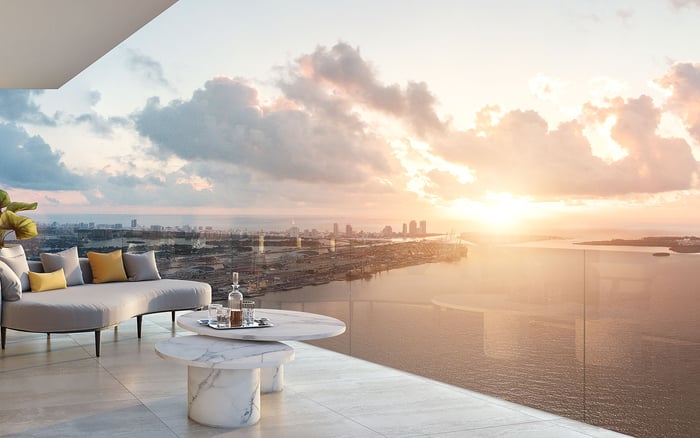
Outdoor space is equally strategic. A Terrace that is deep enough for dining changes behavior. You stop visiting the view and start living in it. In many cases, the most valuable outdoor moments are not the widest panoramas, but the most comfortable, protected spaces that can be used more often across seasons.
Pre-construction buyers benefit from a disciplined view strategy.
Start with your non-negotiable: sunrise over water, sunset and skyline, or a balanced mix. Then treat stack selection as a separate decision from floor selection. The best floors in the wrong stack still disappoint.
Next, analyze the view in layers:
In a bayfront tower, foreground quality can be the differentiator. In a core tower, background breadth tends to dominate, but midground obstructions still matter.
Finally, be honest about how you will use the view. If your lifestyle is terrace dinners and outdoor mornings, prioritize a functional outdoor footprint. If the view is primarily enjoyed from inside, focus on ceiling height, glass coverage, and how the plan places you in front of the best sightlines.
Sophisticated view buyers often compare Brickell to Miami-beach because the two markets offer different visual experiences. Brickell tends to deliver urban-water compositions: bridges, towers, and traffic lines stitched to the bay. Miami-beach can skew toward open sky, ocean adjacency, and the glow of sunset across the skyline.
If your goal is to pair an urban residence with a second setting that feels more resort-like, Miami Beach’s newer luxury inventory can provide that contrast. Five Park Miami Beach is positioned to capture Miami Beach’s evolving skyline outlooks while keeping you close to the water-centric lifestyle the barrier island is known for.
For buyers who prefer a club-like, service-forward residential experience, Shore Club Private Collections Miami Beach speaks to a different kind of Waterview, one where hospitality and social spaces are designed to make the outlook part of the daily cadence, not just a backdrop.
Are bayfront views always better than skyline views?
Not always. Bayfront views can feel immersive and textured, while skyline views can feel more cinematic and expansive, particularly on higher floors.
What makes South Brickell different from Brickell’s core for views?
South Brickell can offer more direct bay adjacency, while the core often competes through height and broader panoramas.
Why do buyers care about orientation so much?
Orientation can determine whether a water view is consistent across stacks, and it can influence light quality throughout the day.
Does higher always mean better in Brickell?
Higher can mean more horizon and fewer obstructions, but it can also reduce the sense of connection to the water and neighborhood texture.
How important is a terrace compared to interior square footage?
A usable Terrace can materially change daily living and entertaining, often delivering more perceived value than incremental interior area.
What is the main view idea behind Una Residences?
Una is positioned as a bayfront, water-first experience, with architecture and amenities that emphasize closeness to Biscayne Bay.
What is the main view idea behind The Residences at 1428 Brickell?
1428 Brickell is positioned around height-driven panoramas, with marketing that emphasizes broad outlooks and an observatory-style rooftop concept.
How does a Sky Lounge differ from a rooftop observatory?
A Sky Lounge is typically a shared viewing and social space within the tower, while a rooftop observatory is designed as a top-of-building vantage point.
Can future development change my view?
Yes. Even in prime corridors, nearby construction and new towers can alter midground sightlines over time.
Where can I get a discreet, buyer-focused view strategy for Brickell and Miami-beach?
For a private view brief and short list tailored to your priorities, connect with MILLION Luxury.
If branded residences are on your mind — as a home or as an allocation — we would be glad to share what we are seeing, privately.
Begin a quiet conversation