In South Florida, the most persuasive luxury is increasingly the least performative. “Quiet luxury” in residential design favors restraint, craftsmanship, and architectural coherence, while still answering the region’s non-negotiables: sun, salt air, humidity, and hurricanes. For buyers, that shift changes what to look for at a showing, what to demand in specifications, and which neighborhoods and building typologies best deliver privacy-forward, long-horizon value.
Quiet luxury is not “less luxury.” It’s a more disciplined expression of luxury-one where the signal comes from proportion, craftsmanship, and architectural coherence rather than spectacle or logo-driven branding. In a market known for bold visual statements and nightlife-adjacent energy, restraint reads as intentional. For many ultra-prime buyers, that intention has become the new status.
In practice, quiet luxury feels calm: fewer visual interruptions, more tactile surfaces, and details that reveal themselves over time. The goal is an environment that supports privacy and daily ritual, with a palette and layout that won’t date quickly. In Miami, the strongest examples pair that composure with performance, because the climate doesn’t forgive fragile design.
South Florida’s sun, humidity, salt air, and hurricane exposure put a harder edge on the definition of “quality.” Here, high design and high performance converge. Quiet luxury often shows up in what you don’t see: assemblies that manage heat gain, materials that resist corrosion, and glazing and envelopes that feel substantial.
That’s why passive strategies matter. Deep terraces, loggias, and other shading moves aren’t decorative gestures-they’re comfort infrastructure, reducing glare and moderating solar load so interiors stay serene through long afternoons. When executed well, shading becomes architectural character, not an afterthought.
In Brickell, the idea of performance as luxury has become part of the storyline for The Residences at 1428 Brickell, which centers the experience on privacy and understatement and frames solar management as a design-forward advantage. The lesson for buyers is straightforward: ask how the building handles sun and heat, not only how the lobby photographs.
Quiet luxury is easy to misread as “minimal.” The difference is that minimalism can be reductive, while quiet luxury is additive in its precision. On a tour, look for proof of invested thinking.
Start with sight lines and proportion. Do thresholds align? Do wall planes feel deliberate, or do they read like value engineering? Then move to touch: surfaces should feel grounded, not thin. Handcrafted finishes are returning to the luxury conversation because they create depth without visual noise. Venetian plaster, for example, has regained relevance precisely because it reads as artisanal and tactile rather than flashy.
Finally, evaluate how the home edits complexity. Does storage eliminate clutter without stripping character? Do lighting layers flatter surfaces at night? Quiet luxury is often a choreography of the unseen: acoustic comfort, soft transitions, and hardware that disappears into the background because it’s properly specified.
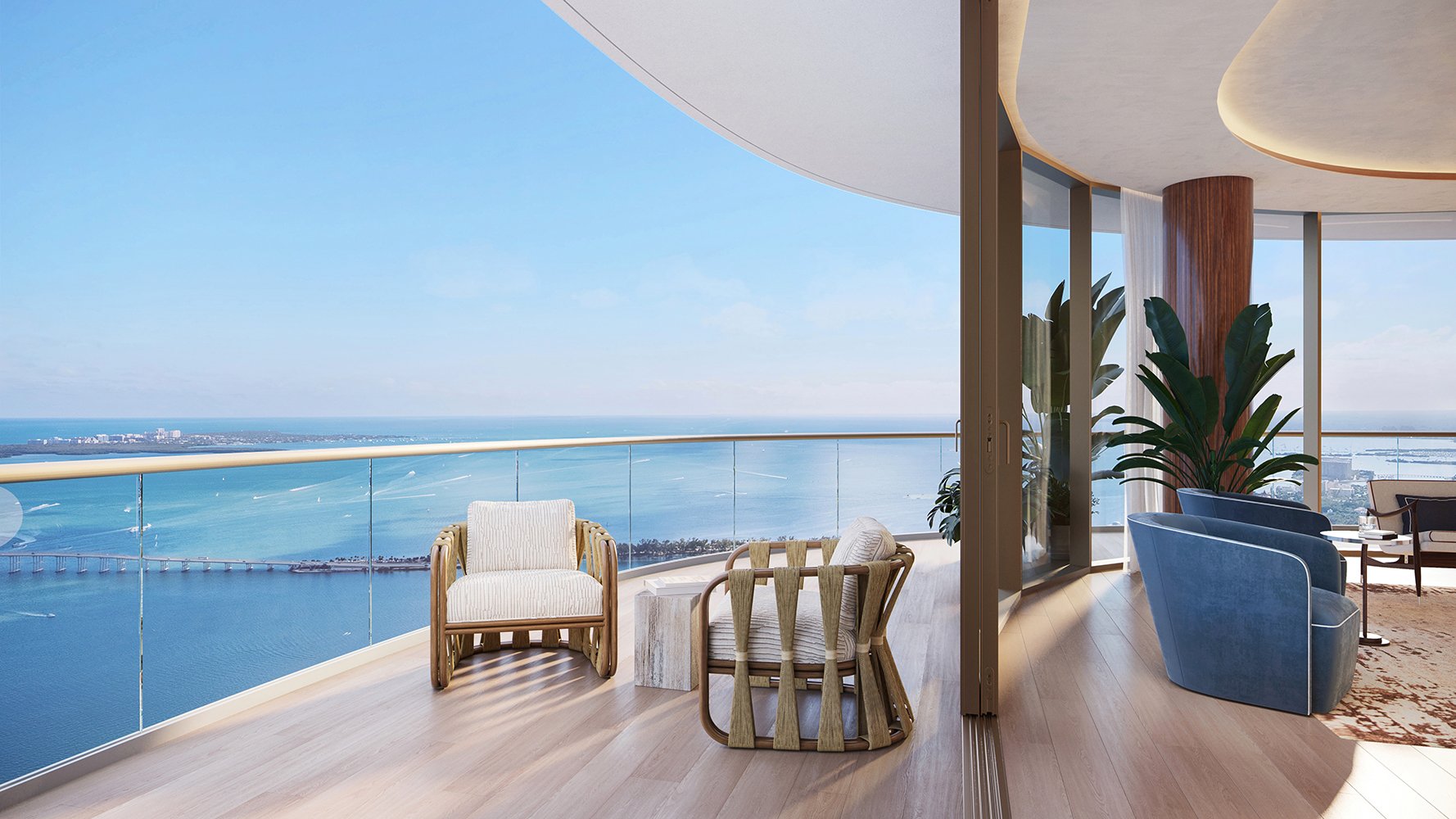
In South Florida, a terrace isn’t a balcony. At the top end, it’s a second living room-and often the most-used one. Deep outdoor rooms are also among the clearest expressions of quiet luxury because they prioritize comfort over display.
When evaluating a terrace, focus on depth and usability, not just the view. A shallow perimeter ledge may look dramatic, but it won’t support real living. By contrast, projects that treat outdoor space as primary architecture can feel immediately more private and resort-like.
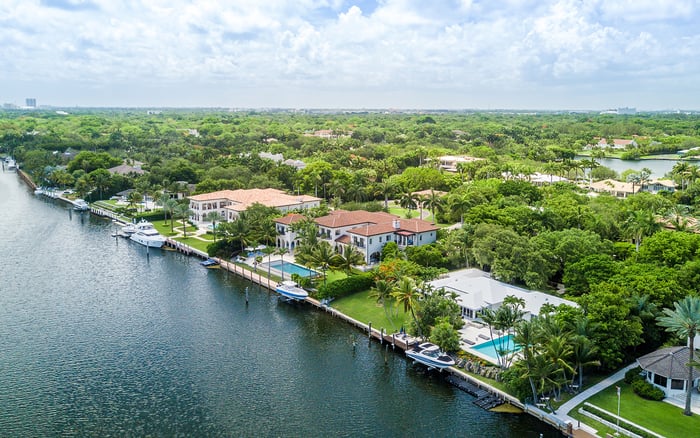
Coconut Grove’s boutique mood pairs naturally with this approach. Ziggurat Coconut Grove has been described as a nature-wrapped, low-rise concept with a very small residence count, and with notably deep terraces and summer kitchens. That combination is quintessential quiet luxury for the Grove: indoor-outdoor living, material intelligence, and a sense that the building is made for residents rather than for passing traffic.
A subtle shift is underway in how exclusivity is expressed. Instead of scale for its own sake, many buyers now prioritize privacy cues: fewer residences, more controlled arrival experiences, and layouts that reduce random encounters.
This isn’t only about celebrity discretion. It’s about lowering friction in daily life. Quiet luxury treats privacy as an amenity: a lobby that feels more like a private residence, a drop-off that stays calm, and circulation that doesn’t broadcast who is coming and going.
Miami Beach offers a particularly sharp contrast because the city’s visual identity has long embraced boldness, from historic MiMo exuberance to contemporary statement towers. Against that backdrop, understated elegance reads as a decision. For buyers who want Miami Beach energy at arm’s length, a refined, coastal composition can be a better fit than overt theatrics. 57 Ocean Miami Beach reflects the cleaner, calmer coastal vocabulary many buyers gravitate toward when they want the beach without the noise.
Quiet luxury is often about authorship-not just a name on a brochure, but a legible point of view that carries from massing to interiors. Buyers feel the difference when spaces operate with consistent logic: proportions that repeat, materials that belong together, and details that are resolved rather than improvised.
In branded and hospitality-adjacent residences, this can show up as an emphasis on interior experience and amenity programming as the real luxury, not an exterior gesture. When amenities are curated like a private club and interiors are treated as destination spaces, quiet luxury becomes livability.
In Brickell, that “designed, not just labeled” sensibility is part of why properties such as St. Regis® Residences Brickell resonate with buyers who value interior atmosphere as much as skyline presence. The takeaway: prioritize projects that invest in how you feel inside the building at 7 a.m., not only how it looks at 7 p.m.
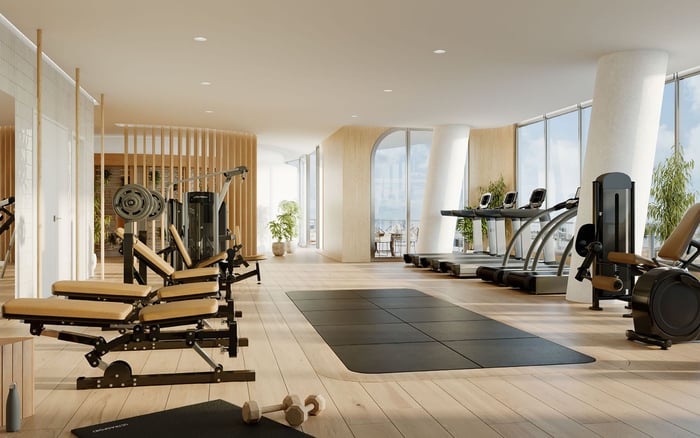
Wellness has moved beyond a token gym. In the luxury conversation heading into 2026, buyers increasingly expect dedicated, purpose-built wellness environments-spaces that support training, recovery, and calm rather than simply checking a box.
Quiet luxury complements this perfectly because it values continuity and ritual. The most persuasive wellness programming feels integrated with daily life: temperature control that is predictable, acoustics that are kind, materials that do not off-gas, and spaces that invite repetition. Even if a building markets a grand spa, the real question is whether the experience is designed for regular use.
In Coconut Grove, where the lifestyle already leans health-conscious and outdoors-oriented, wellness-forward concepts can feel especially aligned. The Well Coconut Grove fits naturally in that conversation as the neighborhood continues to attract buyers seeking a leafy sanctuary with high design standards.
Quiet luxury isn’t limited to one zip code, but certain contexts help it land.
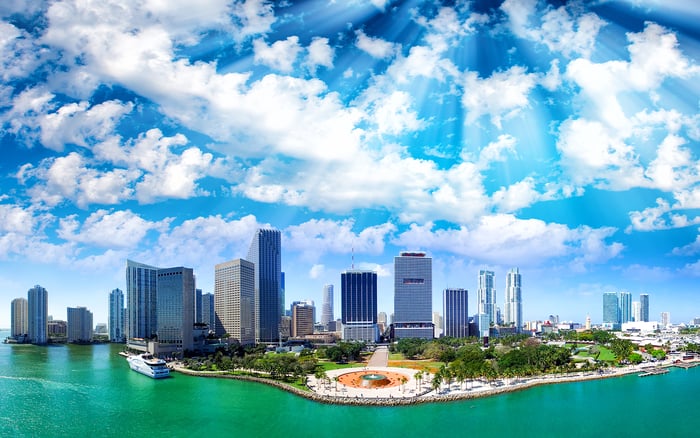
Brickell can deliver quiet luxury when it’s expressed as privacy plus performance-especially in buildings that treat solar control and envelope quality as core design moves.
Coconut-grove tends to reward low-rise and boutique-scale living where terraces, landscape, and material warmth feel native rather than imported. In the Grove, quiet luxury reads as a conversation with the canopy.
Miami-beach offers a compelling backdrop because restraint becomes more noticeable. Understatement there isn’t blandness-it’s a deliberate refusal to compete.
Across South Florida, these preferences reflect a broader luxury-market shift: more consumers are prioritizing understated signals of quality over conspicuous branding. In residential real estate, that translates into demand for homes that age well, protect privacy, and feel deeply resolved.
Use this framework to separate truly quiet luxury from simply “white and minimal.”
Shading strategy: Look for deep overhangs, loggias, and terrace usability. Comfort is the tell.
Material durability: In salt air, materials must be chosen to endure. Ask what ages well and what gets replaced.
Impact-rated assemblies and envelope confidence: The best buildings make resilience feel invisible.
Interior craft: Tactile finishes, carefully specified hardware, and lighting layers that flatter surfaces.
Privacy cues: Boutique residence counts, calm arrival sequences, and circulation that minimizes exposure.
Quiet luxury isn’t a single feature. It’s a system. When the system is coherent, the residence feels effortless.
What does “quiet luxury” mean in South Florida real estate? It refers to a restrained, craftsmanship-forward approach where quality is felt in materials, proportion, and privacy rather than overt flash.
Why is quiet luxury gaining traction in Miami now? Many buyers are prioritizing understated signals of quality and long-term livability over conspicuous branding.
What design element matters most for comfort in South Florida? Effective shading, often through deep terraces and loggias, is central to managing glare and heat.
How can I tell if a minimalist home is truly “luxury”? Look for precision in details: tactile finishes, resolved transitions, solid hardware, and thoughtful lighting layers.
Do boutique buildings really feel more private? Often yes, because fewer residences and calmer circulation reduce day-to-day exposure and friction.
Which finishes align with quiet luxury interiors? Handcrafted, tactile finishes such as Venetian plaster can add depth without visual noise.
How does climate change what “high-end” means here? The best luxury emphasizes durability and performance, including assemblies designed for sun, humidity, and storms.
Is indoor-outdoor living still a priority at the top end? Yes, especially when terraces are deep enough to function as true outdoor rooms, not just view platforms.
Are amenities still important in quiet luxury buildings? Yes, but buyers often value wellness-forward, usable spaces and an elevated interior experience over showy spectacle.
What’s the simplest way to shop for quiet luxury? Focus on comfort, privacy cues, and architectural coherence, then verify that the specs support those promises.
For a discreet conversation and a curated building-by-building shortlist, connect with MILLION Luxury.
If branded residences are on your mind — as a home or as an allocation — we would be glad to share what we are seeing, privately.
Begin a quiet conversation