Branded residences are reshaping South Florida’s ultra-luxury landscape, pairing real estate with hospitality-level service and global name recognition. But the premium is not automatic value. This MILLION Luxury guide breaks down where the uplift tends to come from, what it costs to maintain, and the contract details sophisticated buyers should confirm before closing.
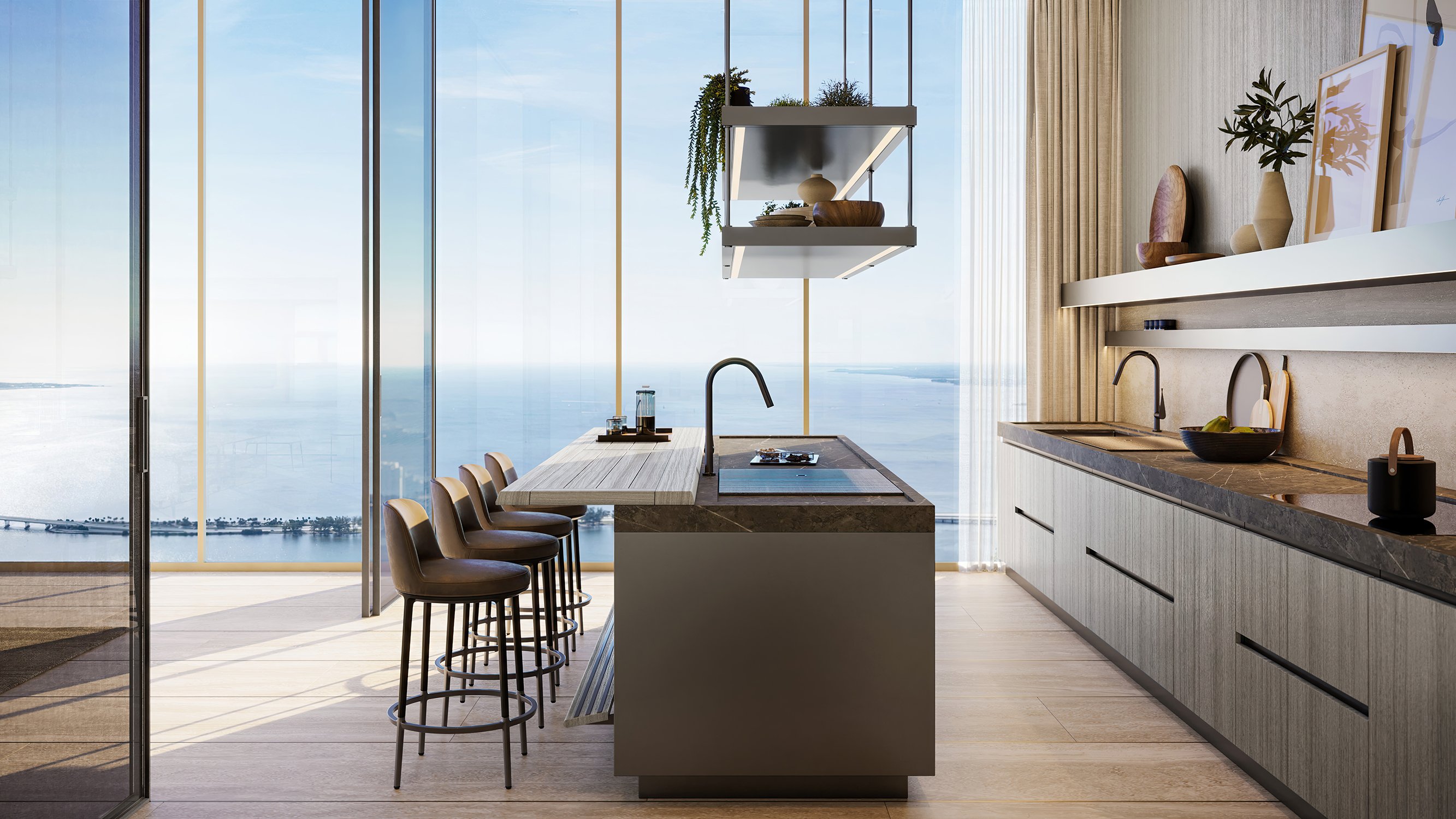
South Florida attracts buyers who move between cities and expect a residence to perform on demand. Branded residences answer that expectation with a clear promise: a home that can run like a five-star hotel when you want the support, and like a private residence when you prefer distance. As the category has matured, that promise has become easier to compare building by building. Industry reporting places the branded-residences sector at roughly 910 completed projects worldwide in 2025, with hundreds more in development through 2032.
Miami sits squarely inside that momentum. It is frequently cited as a branded-residence hotspot, and industry coverage has described the local pipeline as second only to Dubai in scale. For buyers focused on Miami-beach lifestyle, discretion, and turnkey ownership, this density creates both opportunity and a requirement: sharper discernment. Not every “brand” delivers the same operational reality, and not every buyer values the same parts of the package.
Global research referenced by Savills-style analysis often cites an average branded-residence price premium of about 33% versus comparable non-branded luxury homes, with meaningful variation by market type. The number is a starting point, not a conclusion. To decide whether the uplift is rational, you have to translate the premium into components you can verify at the building level.
In practice, the pricing uplift is typically supported by three levers.
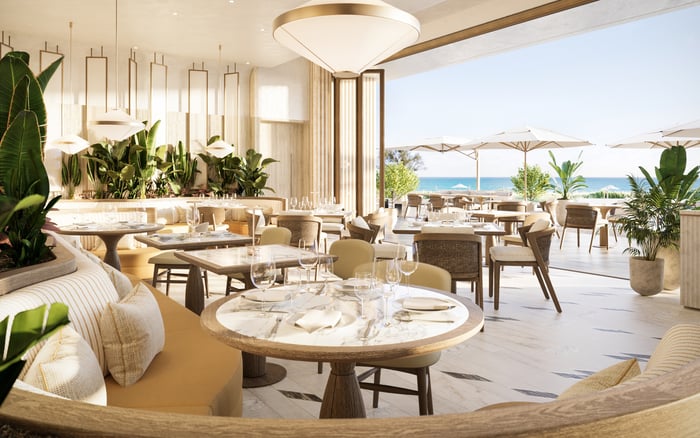
First is service delivery. Branded residences are designed around hotel-style operations such as concierge, housekeeping, valet, and access to food and beverage. These are not abstract amenities. They are staffing models, training standards, and service culture. When executed well, they reduce the friction of ownership, which is a tangible luxury for second-home owners and frequent travelers.
Second is quality control and specification. Branded projects can cost more to deliver because brand standards, higher specifications, and brand-related fees increase development costs relative to a non-branded peer. That can show up in better sound attenuation, more polished common areas, and more consistent fit-and-finish. Still, every building should be underwritten as its own product, not assumed to be superior by name alone.
Third is global signaling. A recognizable name can position a property instantly for international buyers. In a market where many purchasers are not local, the brand can function as a trust shortcut, particularly when Miami-beach inventory spans everything from legacy condos to new ultra-prime product.
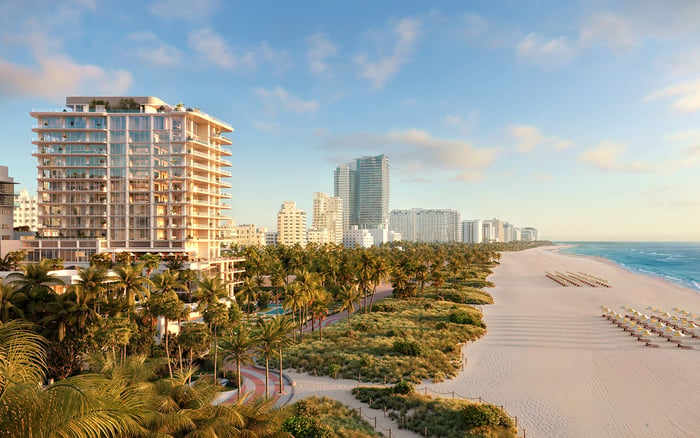
The Miami-beach appeal is straightforward: oceanfront or near-ocean living, cultural energy, and a hospitality ecosystem that can support service-forward residences year-round. The more strategic driver is lifestyle continuity. Many buyers want a residence that feels familiar whether they are arriving from New York, London, Dubai, or Los Angeles.
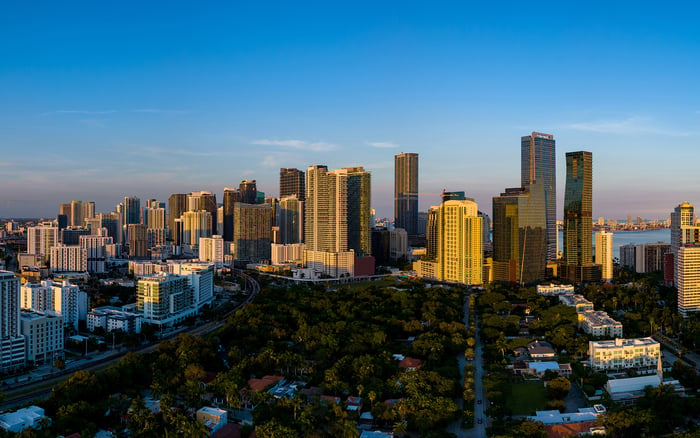
This same logic helps explain Brickell’s staying power as a magnet for branded and hospitality-adjacent development. Brickell often draws a blend of primary residents and globally active investors. Branding can reduce perceived risk when an owner is not occupying the unit full-time. The keyword here is Investment, but sophistication comes from defining it precisely. For some buyers, Investment means total return. For others, it means hassle reduction, steadier demand, or improved resale liquidity.
On Miami-beach, the turnkey promise is frequently discussed alongside projects such as Setai Residences Miami Beach and The Ritz-Carlton Residences® Miami Beach. In both cases, buyers tend to weigh service culture and operational consistency as carefully as they weigh views.
A branded residence feels effortless because the building assumes the effort. The tradeoff is that the ongoing operating model often looks more like luxury hospitality than a conventional condominium.
That reality shows up in service charges and HOA costs that can be meaningfully higher, driven by staffing levels, training requirements, uniform standards, and round-the-clock expectations. Even if you can easily absorb the monthly line item, the more strategic question is usage: will you actually rely on the services enough to justify the recurring expense? For a true second-home owner who arrives with short notice and expects the residence to be fully set, the answer is often yes. For a buyer who prioritizes privacy and minimal touchpoints, paying for a full hospitality layer can feel redundant.
This is where personal preference matters as much as pricing. Some oceanfront buyers want a quieter, boutique rhythm with an emphasis on residence-first living, which is why discussions often include projects like 57 Ocean Miami Beach. Others want a more social, design-forward environment where the building itself functions as a destination, one reason Faena House Miami Beach remains a reference point in Miami-beach conversations.
Branded residences are rarely governed by a single agreement. The legal structure commonly involves multiple documents that can include trademark or licensing arrangements, technical services, management or services contracts, HOA governance documents, and, where applicable, rental program terms.
For a luxury buyer, two implications deserve special attention.
First, confirm what the brand is obligated to do. Is there a defined menu of services delivered by the operator, or is the building simply permitted to use a name and design guidelines? The lived experience hinges on operational accountability, not marketing language.
Second, understand the risk of change. Industry legal commentary has highlighted that brand affiliation can change or be terminated depending on the underlying agreements. That does not mean it will happen. It does mean the “brand premium” should not be treated as permanent by default. If your purchase thesis depends on name recognition to support resale, this diligence is not optional.
Buyers drawn to private-club positioning should apply the same rigor. The lifestyle narrative can be compelling, but it must be matched by governance clarity and service definition. In Miami-beach, this is part of the appeal around Casa Cipriani Miami Beach, where the decision is often about curated service, social access, and discretion, not just square footage.
Many branded residences offer operator-run rental programs that market and manage rentals on behalf of owners. The appeal is straightforward: you can monetize vacancy windows while maintaining a consistent guest standard that protects the building’s positioning.
The nuance is in the fine print. These programs typically come with rules, fees, and revenue splits. Some owners appreciate the structure because it reduces friction and reputational risk. Others prefer more autonomy, particularly if their priority is maximizing yield rather than preserving a uniform brand experience.
If you are buying with Investment in mind, ask a better question than “can I rent?” Ask: “Under what conditions does renting align with the building’s standards and my return expectations?” In many cases, the branded option is best viewed as a convenience and asset-protection strategy, not an optimization strategy.
Branded living is easiest to justify when your priorities are service, turnkey ownership, and global recognition. It is harder to justify if you are optimizing for value per square foot or minimal monthly carrying costs.
Before you accept a premium, pressure-test it.
Start with your use case. If Miami-beach is a high-frequency base, service becomes a daily utility. If it is a few weeks a year, ask whether you are buying a feeling more than a function.
Interrogate the service stack. Concierge is not concierge. Confirm what is staffed, what is outsourced, what is truly 24/7, and what is available only by request.
Model the full cost of ownership. Higher operating costs are not automatically negative, but they should be treated as part of the effective purchase price.
Review brand durability. Understand the contract framework and the conditions under which the brand could change.
Compare the non-branded alternative. In certain pockets of Miami-beach and Brickell, a best-in-class non-branded building can deliver comparable finishes with fewer operational layers. The decision then becomes lifestyle preference, not a simple value judgment.
What is a branded residence, in practical terms? A residence tied to a luxury brand that typically influences design standards and delivers hospitality-style services.
How large is the branded-residence market today? Industry reporting estimates roughly 910 completed projects worldwide in 2025, with hundreds more planned through 2032.
Do branded residences usually cost more than non-branded luxury condos? Often, yes. Global research frequently cites an average premium around 33%, though it varies widely by market and execution.
What is the biggest reason buyers pay the premium? Service delivery, including concierge, housekeeping, valet, and a hotel-caliber operating culture that supports turnkey living.
Are HOA and service fees typically higher? They can be, because staffing and service expectations resemble luxury hospitality operations.
Can the brand ever change after I buy? It can, depending on the underlying agreements. Buyers should review the contract structure and brand obligations.
Are branded residences always better built? Not always, but they are often more expensive to deliver due to brand standards, specifications, and brand-related costs.
Can I rent out my unit in a branded building? Often yes, sometimes through an operator-run rental program, typically with rules, fees, and revenue splits.
Is a branded residence a good Investment in South Florida? It can be, especially if services and brand recognition support demand, but buyers should evaluate total costs and rental constraints.
Which South Florida neighborhoods benefit most from branding? Miami-beach and Brickell are frequently cited as strong fits due to global buyer demand and year-round lifestyle infrastructure.
For tailored guidance on branded and ultra-prime residences across South Florida, connect with MILLION Luxury.
If branded residences are on your mind — as a home or as an allocation — we would be glad to share what we are seeing, privately.
Begin a quiet conversation