EB-5 capital is increasingly discussed alongside South Florida’s branded and waterfront development pipeline. This guide explains how the program actually works, what changed under the Reform and Integrity Act, and how to evaluate EB-5 exposure when you are considering a New-construction purchase in Miami-beach, Fort-lauderdale, or Pompano-beach.
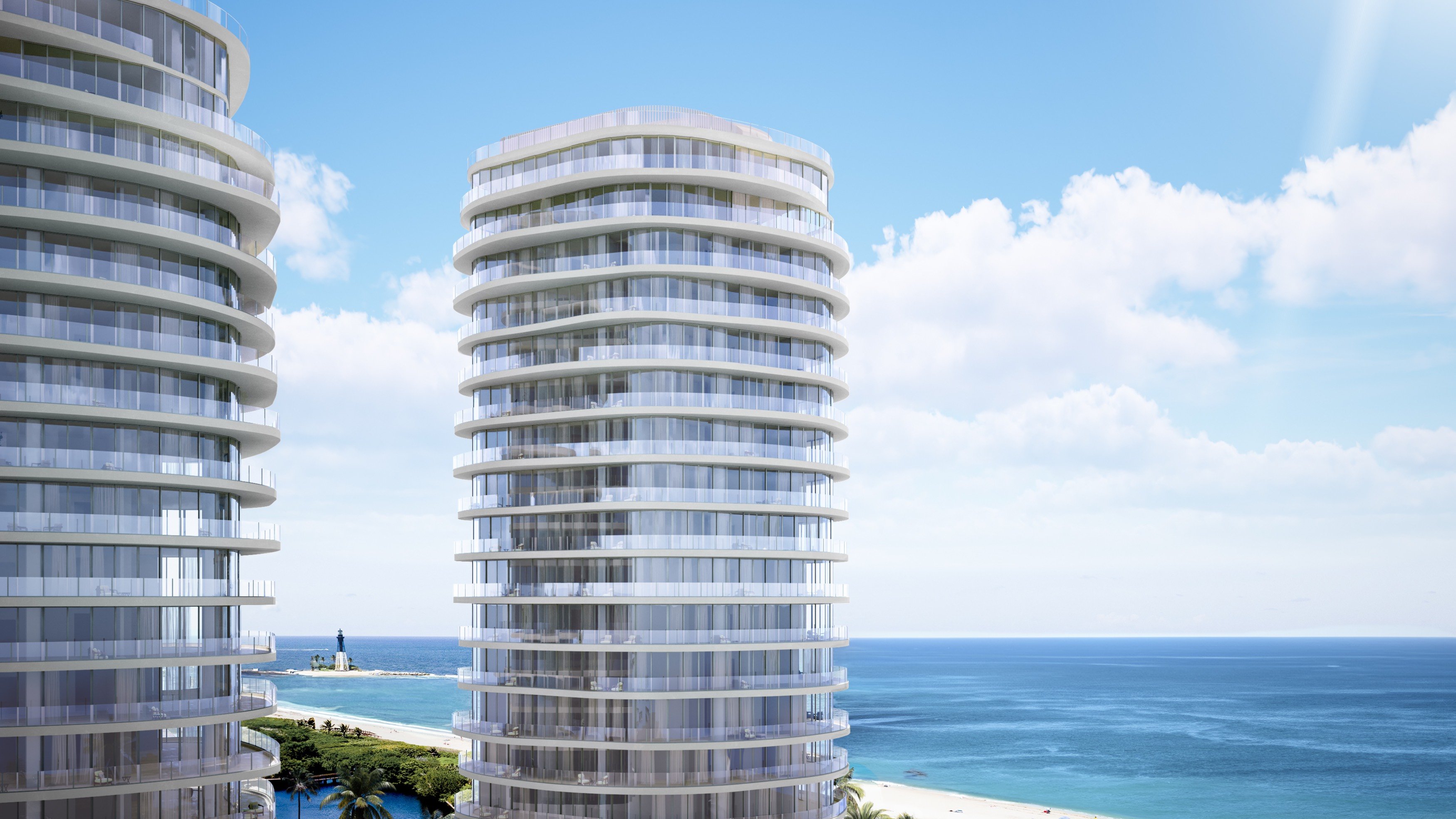
In South Florida, EB-5 now surfaces alongside branded residences, waterfront entitlements, and mixed-use megaprojects. For sophisticated buyers, the right posture is not fascination or reflexive skepticism. It is precision.
EB-5 is not “buy a condo, get a green card.” It is a federal immigrant investor program created by Congress in 1990 to channel capital into job-creating U.S. enterprises. In 1992, the regional center model was introduced, allowing pooled investment into projects where job creation can be measured through accepted economic modeling, not only W-2 payroll.
Under current law, the minimum investment is generally $800,000 if the project qualifies in a Targeted Employment Area (TEA), or $1,050,000 outside a TEA. In both cases, each investor’s capital must be tied to at least 10 full-time U.S. jobs. In real estate, most EB-5 investors gravitate to regional-center projects because indirect and induced jobs can be counted, which tends to fit construction-driven development better than a strict direct-hire test.
For a luxury buyer evaluating new construction, the practical question is narrower: if EB-5 is part of a project’s capital stack, what does it indicate about financing, execution risk, and timelines, and what does it not indicate?
Two dates define the current EB-5 cycle in a way South Florida buyers should understand.
First, the EB-5 Reform and Integrity Act reauthorized the regional-center program through Sept. 30, 2027. Projects do not suddenly stop on Oct. 1, 2027, but market behavior often gravitates toward the statutory horizon. Sponsors, lenders, and investors tend to plan, raise, and deploy capital with that runway in mind, particularly when a deal relies on regional-center sponsorship.
Second, the law requires inflation adjustments to EB-5 minimum investment amounts every five years starting Jan. 1, 2027. That introduces a moving target. Even if you are not pursuing EB-5 yourself, shifts in minimums can affect how quickly capital is raised and funded, which can matter when EB-5 represents a meaningful tranche of construction liquidity.
The program also includes reserved visa categories: 20% set aside for rural areas, 10% for high-unemployment areas, and 2% for infrastructure. TEA positioning is therefore more than a pricing line item. It can shape marketing strategy, investor demand, and the timing assumptions embedded in a developer’s schedule.
In many structures, EB-5 capital behaves more like debt than equity. It may be a subordinate loan or otherwise slotted into a broader plan that includes a senior construction loan, sponsor equity, and purchaser deposits. That can be perfectly rational, but it changes the questions a buyer should ask about dependency, sequencing, and contingency.
Publicly discussed examples in Florida illustrate the point. Nexo Residences in North Miami Beach was reported to secure a $73.27 million construction loan (arranged by Berkadia, with Bank Hapoalim as lender) alongside condo sales and EB-5 capital. The takeaway is not that EB-5 is inherently positive or negative, but that it can be one ingredient among many. Your diligence should focus on whether the stack is balanced and whether any tranche is doing too much work.
Repayment milestones also matter. Water Club North Palm Beach (Kolter) was reported to have repaid a $24.5 million EB-5 loan. For EB-5 participants, repayment can be a marker of execution maturity. For purchasers evaluating a sponsor narrative, it is a reminder that development ultimately resolves to fundamentals: delivery, stabilization, refinance, or sale.
Fort Lauderdale’s waterfront transformation makes capital-stack complexity especially visible. The St. Regis Residences Bahia Mar has been described as part of a roughly $2 billion redevelopment of the 40-acre Bahia Mar waterfront and marina site. On a project of that scale, a layered financing plan and long planning horizon are normal. If your lifestyle thesis is marina adjacency and a resort ecosystem, that can be a feature. If your risk tolerance is low for multi-phase construction, it is a meaningful constraint.
In Pompano Beach, luxury scarcity is often expressed through lower density. Armani/Casa Residences Pompano Beach has been marketed as two 19-story towers with one residence per floor, a posture that appeals to buyers who value privacy as much as views. The relevant detail is not the brand alone, but whether the financing plan and delivery schedule align with your personal timeline.
(For readers exploring these markets, examples include St. Regis® Residences Bahia Mar Fort Lauderdale and Armani Casa Residences Pompano Beach.)
Even if you never touch immigration filings, EB-5 can sit close enough to your purchase to merit deliberate diligence. The goal is simple: translate an immigration-linked capital source into standard real estate underwriting.
Job creation methodology. Regional-center projects often rely on economic modeling to count indirect and induced jobs. That can be appropriate, but assumptions should be consistent with the construction budget, phasing, and schedule. Aggressive sequencing or uncertain starts can introduce fragility into the job math and, by extension, the fundraising narrative.
Schedule realism. EB-5 timelines typically move from petition to conditional residence, then to an I-829 filing to remove conditions. Some investors may be eligible for concurrent filing if they are already in the U.S. and a visa is available. For buyers, the translation is practical: EB-5 capital does not always arrive with the simplicity or speed of a single wire. Funding may be staged, escrowed, and timing-sensitive.
Exit and refinance assumptions. In many structures, EB-5 funds are expected to be repaid through refinancing after completion or stabilization. A buyer should pressure-test whether the refinance story remains plausible under changing interest-rate regimes and absorption conditions.
Governance and reporting. Post-RIA, integrity measures and disclosures are more central to the program’s positioning. Even so, execution risk remains. Public discussion around the Legacy Hotel & Residences at Miami Worldcenter underscores that high-profile projects can still face major complications, including litigation and foreclosure-related issues. That is not a verdict on a neighborhood. It is a reminder to separate marketing certainty from construction reality.
In Downtown Miami, the EB-5 conversation has been especially active around landmark mixed-use. Okan Tower has been described as a 70-story, approximately 902-foot tower at 555 N. Miami Ave with hotel, condo, and office components. It has also been reported as becoming EB-5 eligible, opening investor slots tied to immigration-linked capital. For buyers, Downtown’s appeal is access: cultural gravity, new infrastructure, and a dense amenity stack. The diligence is equally dense: phasing, capital sources, and what is actually delivered versus what remains aspirational.
In Coral Gables, EB-5 has entered the discourse through offerings such as Alhambra Parc, which has been reported as providing an EB-5 option. Gables buyers often choose the market for architectural restraint and walkable refinement. If EB-5 appears in the pitch, treat it as a financing attribute, not a proxy for quality.
In Miami Beach, luxury demand is typically lifestyle-led, and that can intersect with EB-5 in subtler ways. Hospitality-adjacent development can pair naturally with job creation because hotels generate payroll and ongoing services. Wynwood Moxy Hotel by Marriott, for example, has been marketed as an EB-5 project, illustrating how hospitality structures can align with EB-5 job math differently than pure condominium inventory.
For those whose thesis is beachfront quiet rather than density, projects like 57 Ocean Miami Beach and the private-club posture of Casa Cipriani Miami Beach reflect the market’s tilt toward curated living. Branding and service concept are lifestyle advantages. Delivery risk still belongs to the actual project and its capital stack.
The Reform and Integrity Act improved structure, oversight, and transparency relative to earlier eras. It also formalized reserved visa set-asides and codified an updated approval framework for projects.
Even with those improvements, the central truth remains: EB-5 is an at-risk investment tied to a job-creating enterprise. Capital return is not guaranteed, and underperformance can put repayment at risk. In a luxury real estate context, that can matter even if you are “only” a purchaser, because a strained stack can pressure timelines, force value engineering, or create refinancing stress.
A disciplined buyer treats EB-5 as one data point in a broader view: sponsor track record, third-party lender involvement, budget credibility, and construction sequencing. EB-5 is not a luxury feature. It is a financing mechanism with specific rules, and it rewards the same trait every trophy acquisition requires: sober underwriting.
Is EB-5 a way to buy a condo and get a green card? No. EB-5 is an at-risk investment tied to job creation, not a real estate purchase benefit.
What are the current EB-5 minimum investment amounts? Generally $800,000 in a TEA and $1,050,000 outside a TEA, under current law.
How many jobs must be created per EB-5 investor? At least 10 full-time U.S. jobs per investor.
Why do many EB-5 investors use regional centers? Regional-center projects can count indirect and induced jobs, not only direct W-2 jobs.
What are the reserved visa set-asides? 20% rural, 10% high-unemployment, and 2% infrastructure.
Why does TEA status matter beyond the lower amount? TEA qualification can affect both minimum investment levels and visa availability dynamics.
What happens in 2027 that buyers should watch? Minimum investment amounts are scheduled for inflation adjustments starting Jan. 1, 2027.
When does the regional-center program authorization run through? It is reauthorized through Sept. 30, 2027 under current law.
What is a common EB-5 filing pathway? Typically a petition, then conditional residence, then an I-829 filing to remove conditions.
What is the simplest buyer takeaway if a project uses EB-5? Treat it as financing: ask how it affects timelines, reporting, and repayment assumptions.
For curated guidance on South Florida trophy real estate, connect with MILLION Luxury.
If branded residences are on your mind — as a home or as an allocation — we would be glad to share what we are seeing, privately.
Begin a quiet conversation